
Pack a sturdy fixed‑blade knife (4‑7 inches) for carving and chopping, a reliable folding saw with an 8‑10 inch blade for precise wood work, a 20‑inch handle axe or hatchet for heavy tasks, a ferro rod for fire in any weather, and a sturdy bush pot for cooking and water; keep a pocket sharpening stone handy. Build a quick A‑frame tarp shelter by tying a ridge line between two trees, draping the tarp, threading rope through the grommets, and staking the corners. Start fires with a ferro rod or bow‑drill, using feather‑stick tinder and a teepee of kindling, and protect your hands with a small first‑aid kit. Find clear water, pre‑filter with cloth, boil for a minute, and for larger groups use a gravity‑fed filter plus chlorine or UV. Identify edible plants like dandelion rosettes and chickweed, test them safely, set simple deadfall or snare traps on trails, and conserve phone battery by switching to airplane mode while keeping offline maps ready; the next steps will expand your skills further.
TLDR
- Carry a versatile fixed‑blade knife, folding saw, hatchet, ferro rod, and bush pot as essential bushcraft tools.
- Build a quick A‑frame tarp shelter by rigging a ridge line between two trees and securing the tarp corners with knots or pegs.
- Start fires reliably with a ferro rod and feather‑stick tinder; practice bow‑drill for skill and backup.
- Ensure safe drinking water by pre‑filtering, then boiling at least one minute, or using gravity filtration with chlorine/UV for larger groups.
- Identify edible wild plants, set simple deadfall or snare traps, and use offline maps on airplane mode for navigation.
Select the Five Must‑Have Bushcraft Tools for Your First Trip
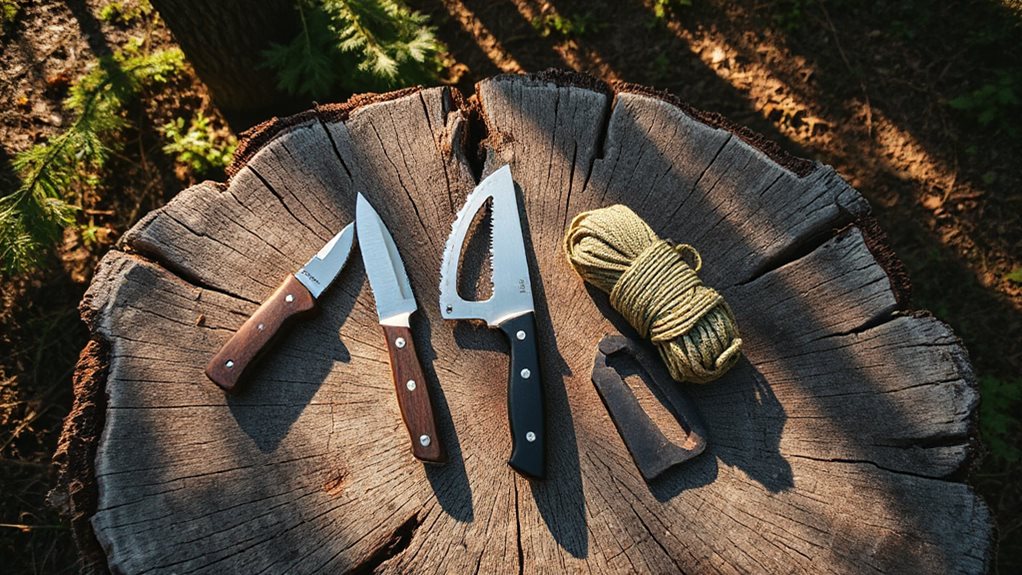
Where do you start when packing for a first bushcraft journey? Choose a fixed‑blade knife, 4‑7 inches long, thick enough for carving and chopping, and a reliable folding saw with an 8‑10 inch blade for precise wood work. Scopes can help with accuracy when practicing target placement and gauging distance before setting up camp.
Add a 20‑inch handle axe or hatchet for heavy tasks, a ferro rod for fire in any weather, and a sturdy bush pot for cooking and water. These five tools give you freedom, safety, and self‑sufficiency. Pocket sharpening stone ensures your knife stays sharp throughout the trip.
Build a 5‑Minute Bushcraft A‑Frame Tarp Shelter
How do you get a reliable shelter up in under five minutes? Find two trees, tie a taut ridge line at waist height with a timber hitch, then drape the tarp over the center.
Thread rope through each corner grommet, secure with prusik knots or makeshift pegs, and stake the corners firmly. Tension the sides, adjust for wind, and you’ve got a sturdy A‑frame ready for freedom. Add a lightweight sleep system like an inflatable pad and down sleeping bag to stay warm and dry overnight.
Start a Reliable Bushcraft Fire With Bow‑Drill or Ferro‑Rod
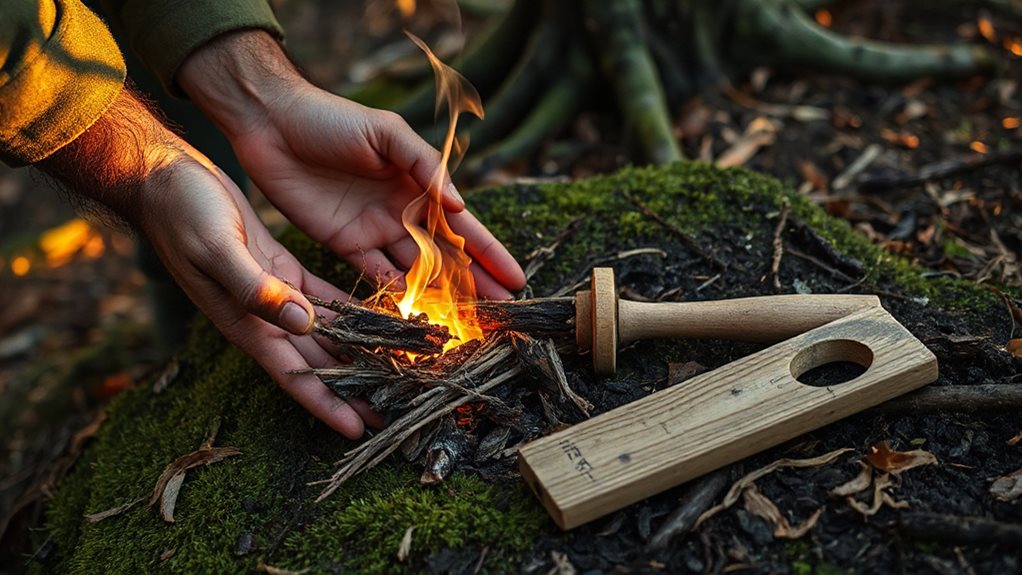
Ever wonder which fire‑starting method will get a flame going fastest when you’re out in the wild? Grab a ferro‑rod, point it at dry tinder—leaves, grass, bark—strike at the right angle, and sparks will kiss the material instantly. Prepare a teepee of feather sticks, then add progressively larger kindling.
Bow‑drill offers skill practice, but ferro‑rod wins reliability, especially in emergencies. Consider keeping a small first‑aid kit with clean dressings to protect any hand blisters that can arise from prolonged friction when practicing bow‑drill.
Find, Filter, and Boil Bushcraft Water Safely
When you’re out in the wilderness, locating safe drinking water is the first step toward staying healthy, and you’ll quickly learn that not every source is created equal. Seek clear streams, rain, or dew; pre‑filter with a cloth or bag to strip sediment, then boil for at least one minute. For larger groups, use a gravity‑fed filter and finish with chlorine tablets or UV if water’s clear. Store in clean containers. Consider carrying a compact water filter designed for gravity-fed setups to speed treatment for groups.
Identify Edible Plants & Set Simple Traps for Food
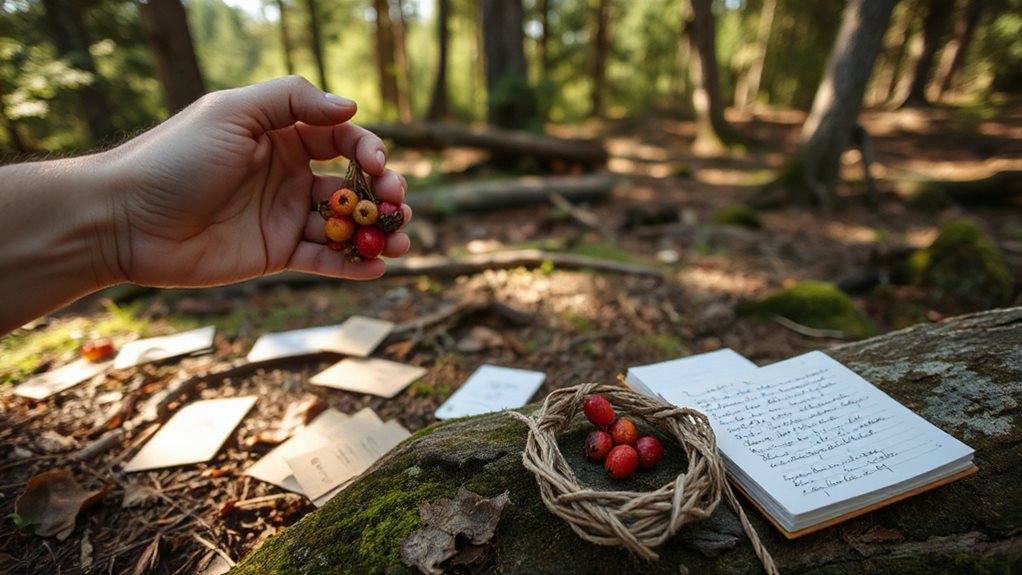
After securing clean water, the next step in staying alive out here is to turn the land into a source of food.
Spot dandelion rosettes, chickweed, wild onion, and plantain by leaf shape, hollow stems, and garlic scent; test each part on skin, then lips, before swallowing a tiny bite.
Set a simple deadfall or snare on animal trails, using a baited stick or cord loop, and check daily for catch.
Turn on airplane mode at the trailhead to conserve phone battery so your pre-downloaded maps and GPX waypoints remain available for navigation.
Final Note
Now you’ve got the essential tools, a quick‑to‑set shelter, a reliable fire method, safe water handling, and basic food sourcing. By mastering these fundamentals, you’ll feel confident navigating the wilderness, handling unexpected challenges, and enjoying the outdoors responsibly. Keep practicing each skill, stay observant, and respect the environment—your next bushcraft adventure will be smoother, safer, and more rewarding.


