
Your feet swell on long hikes because tight boots and restrictive socks compress tissues, while gravity pulls fluid down into your ankles and toes as you walk for hours. Exercise raises cardiac output and capillary pressure, causing fluid to leak into the foot’s soft tissue, and the lymphatic system can’t keep up, especially when the calf muscle‑pump tires. Heat and uneven terrain add micro‑injuries that increase inflammation, and dehydration or excess sodium worsen the edema. If you keep going, you’ll learn more ways to prevent and treat it.
TLDR
- Tight boots and restrictive socks compress foot tissues, limiting circulation and promoting fluid buildup.
- Prolonged walking causes gravity‑driven hydrostatic pressure, pooling blood and plasma in the ankles and toes.
- Exercise‑induced vasodilation raises capillary pressure, allowing fluid to leak into foot tissues.
- Muscle fatigue reduces the effectiveness of the calf “pump,” slowing venous return and increasing swelling.
- Heat, micro‑injuries from uneven terrain, and inadequate hydration/electrolyte balance exacerbate fluid accumulation.
What Causes Hiking Foot Swelling and How to Prevent It?
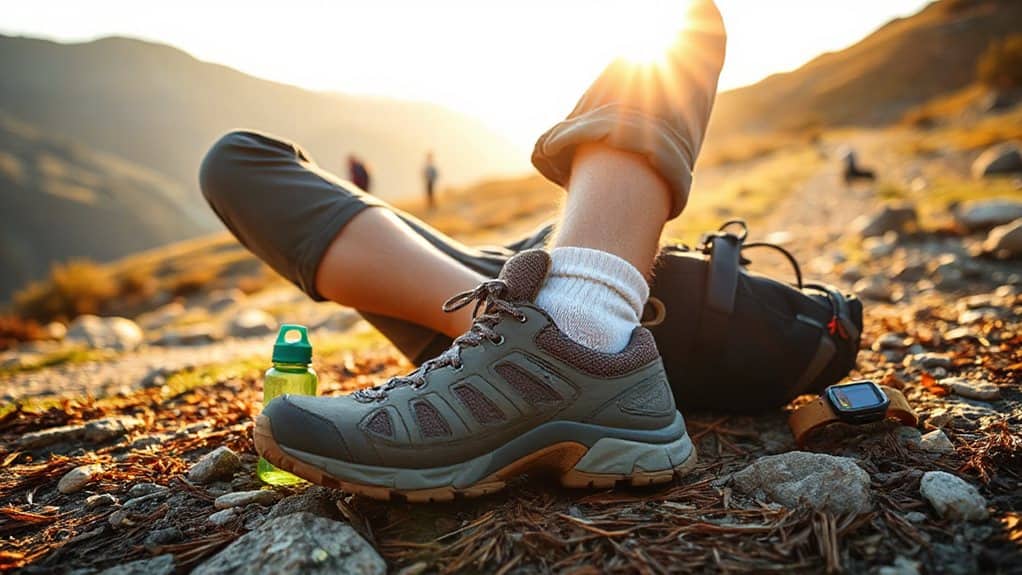
Why do your feet swell after a long hike? Tight boots, binding socks, and a growing foot size compress vessels, while gravity pools fluid in ankles and toes during endless walking. Choose roomy footwear and moisture‑wicking socks to reduce swelling and friction from prolonged activity moisture-wicking.
Overuse fatigues muscles, causing micro‑injuries that invite swelling.
Counteract this by choosing roomy footwear, wearing loose socks, taking regular rest breaks, elevating feet when possible, and matching water intake with electrolytes. Peripheral edema can also be reduced by briefly elevating the feet during rest stops.
Why Blood Flow & Exercise‑Induced Edema Lead to Swollen Feet?
When you hike, your heart pumps more blood and redirects it toward the muscles working hardest—especially those in your lower legs and feet.
Exercise raises cardiac output, dilates vessels, and raises capillary pressure, so fluid leaks into tissue.
The lymphatic system lags, especially during long, weight‑bearing climbs, and fatigue reduces muscle‑pump efficiency, letting swelling build temporarily.
Proper hydration, balanced sodium, and ankle motion help keep fluid moving.
Detect dehydration early by tracking body‑mass loss ≥ 2% with a scale or wearable to prevent worsening dehydration.
How Gravity Makes Hiking Foot Swelling Worse?
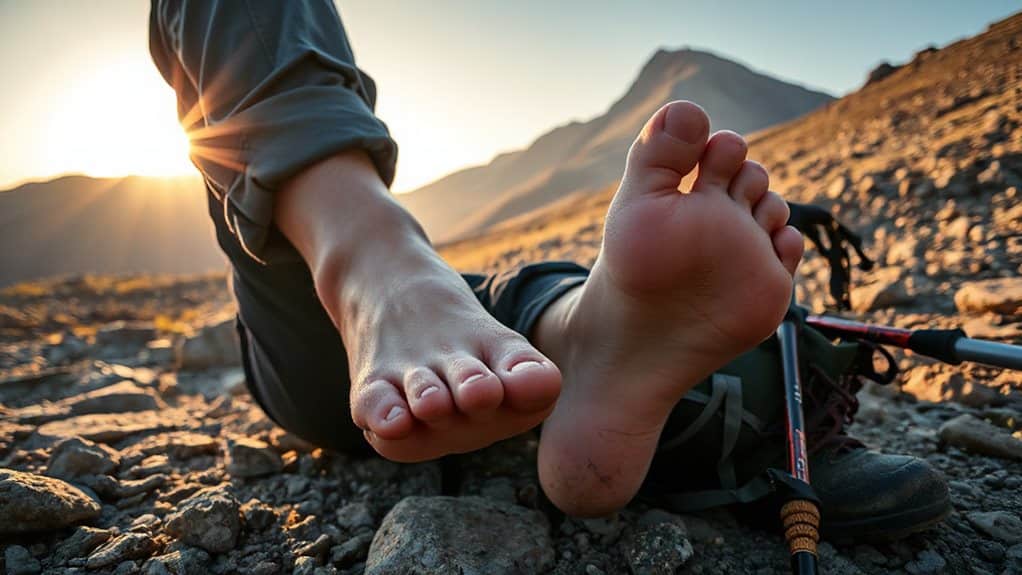
When you hike for hours, gravity pulls blood and interstitial fluid down into your calves and feet, creating low‑body fluid accumulation that feels like a heavy, tight band.
This constant downward pull slows venous return, so the veins in your lower legs become stagnant, leading to gravity‑driven venous stasis and swelling.
The longer you stay upright, especially on steep ascents or descents, the more fluid pools, making your feet progressively tighter and more uncomfortable.
Low‑Body Fluid Accumulation
Feel the pull of gravity as it drags blood and interstitial fluid down toward your feet, and you’ll understand why hiking long distances often leaves your toes and ankles swollen.
Blood vessels expand, hydrostatic pressure rises, and capillaries leak fluid into tissues; your legs’ muscles struggle to pump it upward, especially when you pause.
Heat further dilates vessels, slowing reabsorption, so fluid pools, increasing foot volume and causing persistent swelling.
Gravity‑Driven Venous Stasis
Gravity pulls blood and interstitial fluid down toward your feet, so as you keep walking or standing upright on a long hike the hydrostatic pressure in your leg veins climbs steadily, making it harder for the veins to push blood back up toward the heart.
This pressure forces fluid into ankle tissues, especially when heat dilates vessels and calf pumps tire.
Valves strain, reflux worsens, and swelling builds, but staying active, elevating when possible, and using compression keep you moving freely.
How Uneven Terrain Triggers Foot‑Ankle Inflammation?
Because uneven terrain forces your feet and ankles to constantly readjust, the muscles, tendons and ligaments around them experience repeated micro‑stresses that quickly add up.
Those micro‑adjustments load stabilizers, stretch ligaments, irritate the Achilles and plantar fascia, and trigger inflammation.
Over long distances, fatigue reduces control, amplifying strain, swelling, warmth, and tenderness, especially on steep, wet, or slippery sections.
Covering vulnerable spots with blister pads can help protect skin from friction and reduce additional irritation.
How Proper Boots and Socks Reduce Hiking Foot Swelling?
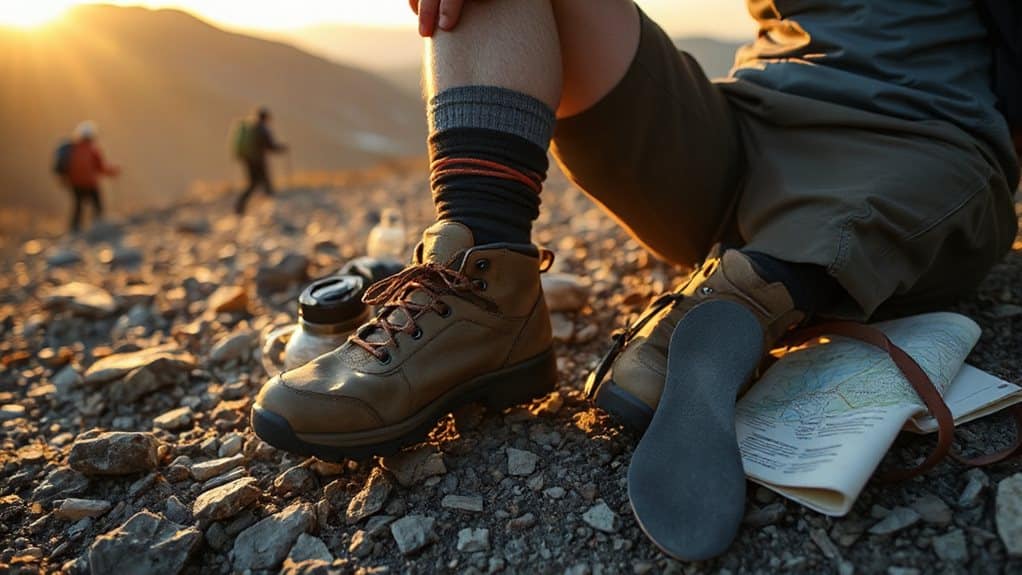
Choose boots in the evening, when your feet are naturally a bit swollen, and you’ll avoid the tight‑fit compression that restricts circulation later on the trail.
A thumb’s width between toe and toe box, snug mid‑foot, and secure ankle lacing keep your foot stable, while higher ankle support and heel lockdown limit motion‑induced puffiness.
Pair with wool or thin‑nylon socks, use a two‑sock system if needed, and add padded insoles for extra cushioning and arch support, preventing hot spots and swelling.
Try different footwear types like trail runners to match the terrain and reduce unnecessary foot fatigue.
Balance Hydration & Electrolytes to Control Swelling
Most hikers find that staying properly hydrated while balancing electrolytes is the key to preventing that familiar puffiness in the feet and ankles.
Sip steady amounts—about a liter per hour—mixing 500–1,000 mg sodium per liter, or more if you sweat heavily.
Add potassium‑rich foods like bananas and magnesium from nuts to support fluid regulation.
Avoid gulping plain water alone; it dilutes sodium and can trigger swelling.
Stop activity and move to shade if you develop persistent cramps or dizziness, since early signs like muscle cramps can indicate heat-related electrolyte loss.
Normal Swelling vs. Medical Red Flags While Hiking
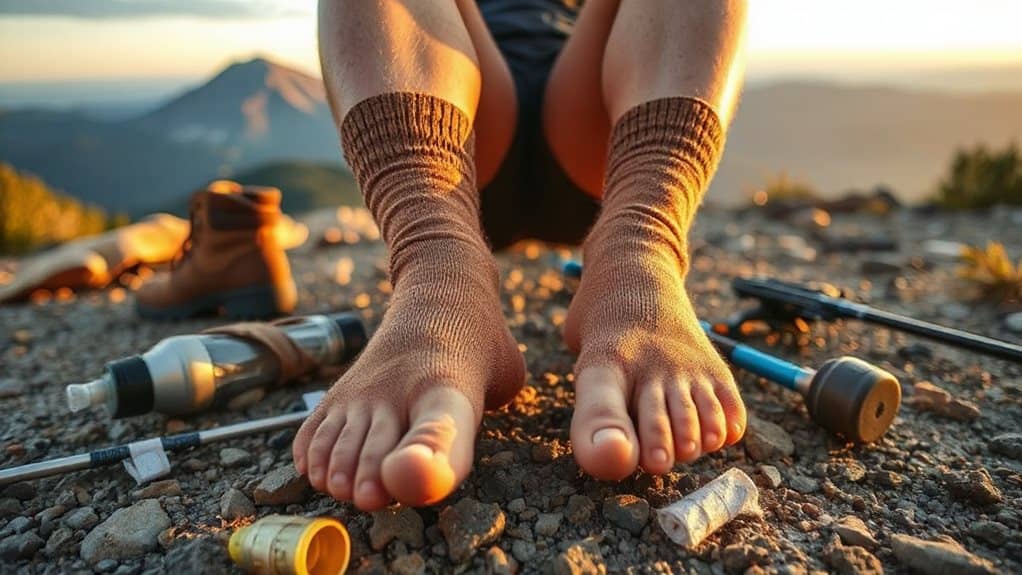
When you finish a long hike and notice a gentle puffiness in both feet and ankles, it’s usually just the body’s normal response to prolonged standing, walking, and the pull of gravity on fluid distribution.
Expect swelling that appears after hours, is mild, bilateral, and eases with rest and elevation.
Watch for one‑sided swelling, sharp pain, persistent puffiness, or shiny skin—these are red flags that merit medical evaluation.
On‑Trail Hacks to Reduce Foot Puffiness Instantly
If you’re on a ridge and your feet start to feel like balloons, a few simple actions can bring instant relief without cutting the hike short.
Raise your legs on a rock or pack for twenty minutes, do ankle pumps and heel raises, slip on properly fitted compression socks, splash cold water over your feet, and loosen tight laces.
These quick moves keep circulation flowing, reduce fluid buildup, and let you keep moving freely.
Post‑Hike Recovery Steps to Keep Feet Comfortable for the Next Trek
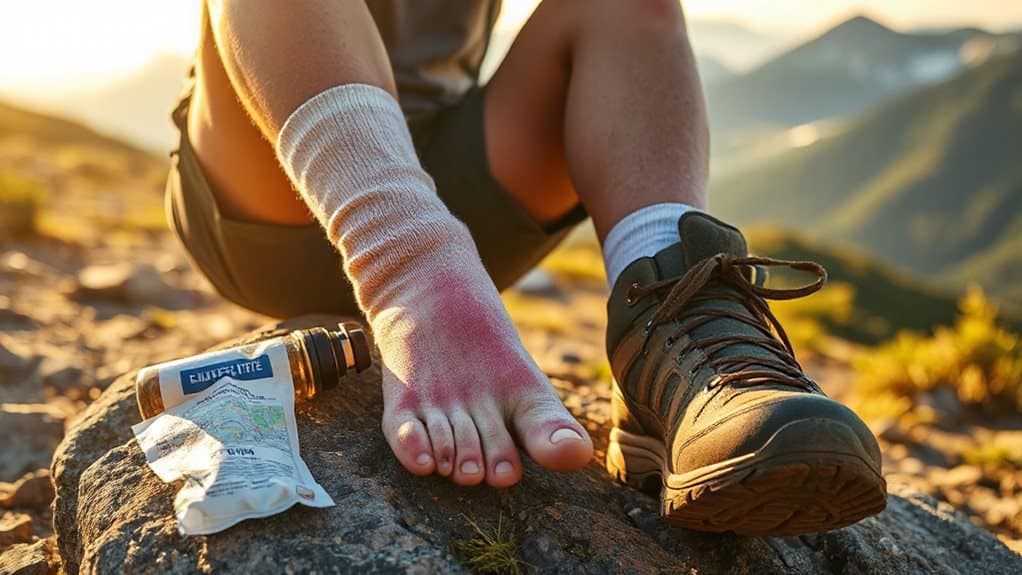
After you’ve finished the hike and taken those quick on‑trail tricks, the next step is to give your feet the proper care they need to bounce back for tomorrow’s trip.
Soak them in warm Epsom water for fifteen minutes, then alternate with cool baths; raise legs, apply ice packs, stretch calves, roll foot arches with a frozen bottle, and slip on compression socks while you hydrate and rest.
This routine reduces swelling, restores circulation, and prepares you for the next trek.
And Finally
By understanding why your feet swell—gravity, blood flow, terrain, and footwear—you can take concrete steps to keep them comfortable on long hikes. Choose supportive boots, wear moisture‑wicking socks, stay hydrated with balanced electrolytes, and use on‑trail hacks like elevation changes and compression. After each trek, raise, ice, and stretch to reduce lingering swelling. Consistent prevention and recovery will let you enjoy the trail without painful puffiness.


