
You get tired fast when you skip calories, sip water too rarely, or ignore electrolytes, because your muscles run out of glycogen and cramp. Altitude thins the air, so oxygen drops and you breathe harder, while cold, wind, and sudden weather drain extra energy and dehydrate you. Heavy or ill‑fitting shoes and a high‑packed load force constant balance corrections, and uneven terrain makes every step cost more stamina. Lack of sleep and poor training lower your reaction speed, and starting too fast or “just keeping going” spikes heart rate and burns fuel early. If you keep going, you’ll figure out how to reset your mind and body when fatigue hits.
TLDR
- Insufficient water and electrolytes cause early dehydration, leading to rapid fatigue and muscle cramps.
- High altitude reduces oxygen availability, increasing heart rate and oxygen demand even at moderate pace.
- Heavy or ill‑fitted footwear and overloaded packs force extra stabilizer muscle work, draining stamina.
- Skipping meals or consuming low‑glycemic carbs results in low blood glucose, causing quick energy loss.
- Starting too fast or maintaining an unsustainable pace spikes glycogen use, leading to early exhaustion.
How to Stop Hiking Fatigue by Managing Calories & Water
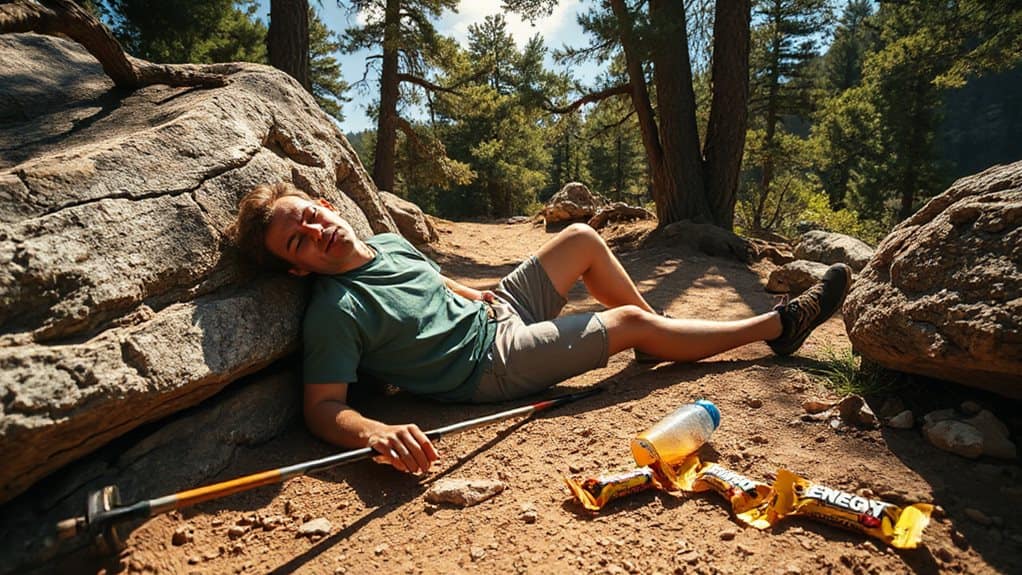
When you hit the trail, your body’s energy demands skyrocket, so it’s crucial to keep calories and water flowing steadily. Pack easy‑to‑digest carbs, sip water every 15 minutes, and add a pinch of salt or a potassium‑rich snack to replace electrolytes. Small, frequent bites sustain blood glucose, while regular hydration prevents cramps and fatigue, letting you stay free and strong. Hydration is essential because dehydration is the main cause of post‑hike fatigue and muscle cramps. Detect dehydration early by watching for body‑mass loss of 2% or more and adjust fluids accordingly.
How Altitude, Temperature, and Weather Accelerate Hiking Fatigue
When you climb above 2,500 meters, the thinner air cuts the oxygen you breathe, so even a steady pace feels harder and your muscles tire faster.
Cold temperatures and wind add another layer of strain, forcing your body to burn extra calories to stay warm while your muscles work less efficiently.
On top of that, dry, high‑altitude air and sudden weather shifts dehydrate you and irritate your airways, accelerating the overall energy drain and pushing fatigue to appear sooner.
Carrying the right gear and knowing basic avalanche awareness can make a critical difference in both safety and conserving energy on demanding winter hikes.
Altitude-Induced Oxygen Deficit
If you climb above roughly 10,000 ft, the air gets thinner fast, and the drop in pressure means each breath carries far fewer oxygen molecules even though the percentage of oxygen stays around 21 %.
Your muscles receive less oxygen, so aerobic metabolism drops, ventilation rises, and fatigue sets in earlier.
Cold, dry air worsens the deficit, making every step feel harder and draining energy faster.
Weather-Driven Energy Drain
Altitude already taxes your oxygen supply, but the weather on top of that can sap your energy even faster.
Heat forces blood to skin, leaving muscles starved; humidity stalls sweat, raising core temperature.
Cold rain and wind demand constant heat production, draining calories.
Dehydration sneaks in, impairing stamina and focus.
Wind‑chill, wet gear, and slippery footing increase effort, so hydrate, layer wisely, and adjust pace to stay free on the trail.
How Footwear, Pack Weight, and Terrain Increase Hiking Fatigue Through Balance Loss
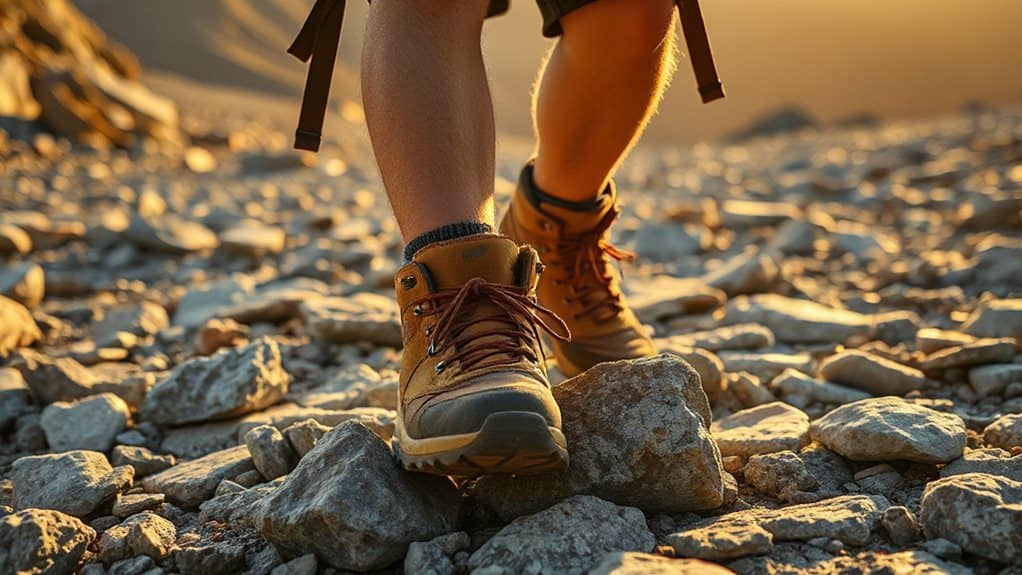
When your shoes are heavy or poorly fitted, they rob you of stability and force constant micro‑corrections, so you spend extra energy just staying upright.
A pack that’s overloaded or positioned too high shifts your center of gravity, making each step feel like a balancing act and pulling your torso sideways.
On uneven terrain you must place every foot precisely, and the combination of unstable footwear, an off‑center load, and tricky ground quickly drains your stamina.
In addition, inadequate toe room in hiking boots can cause discomfort and force inefficient foot placement, increasing fatigue with every step toe room.
Heavy Shoes Reduce Stability
Because heavier shoes add extra weight directly to your feet, every step demands more muscle effort, and that extra load quickly drains your stamina.
The added mass forces your stabilizer muscles to work harder, especially on uneven ground, while stiff soles limit ankle flexion, shortening stride and reducing balance.
Lateral support suffers, so you make micro‑adjustments constantly, which saps energy and makes each mile feel heavier.
Overloaded Packs Shift Center of Gravity
Ever wonder why a seemingly modest pack can feel like a heavyweight on a rugged trail? When you load beyond 10‑20 % of your body weight, the center of gravity shifts, pulling you backward or side‑to‑side; each step demands extra muscle correction.
Keep heavy items close to your spine, centered, and balanced, so your posture stays natural, energy stays conserved, and fatigue delays.
Uneven Terrain Demands Precise Footwork
If the trail throws rocks, roots, and sudden slopes at you, your body must constantly adjust its balance, and those micro‑corrections quickly add up to noticeable fatigue.
Precise footwork forces shorter, deliberate steps, engaging ankle, knee, and core stabilizers, while uneven ground spikes joint work and muscle co‑activation.
Even supportive boots can’t erase the balance demand, so you’ll feel extra strain and mental load, accelerating overall exhaustion.
Why Skipping Sleep and Training Makes the Trail Feel Impossible
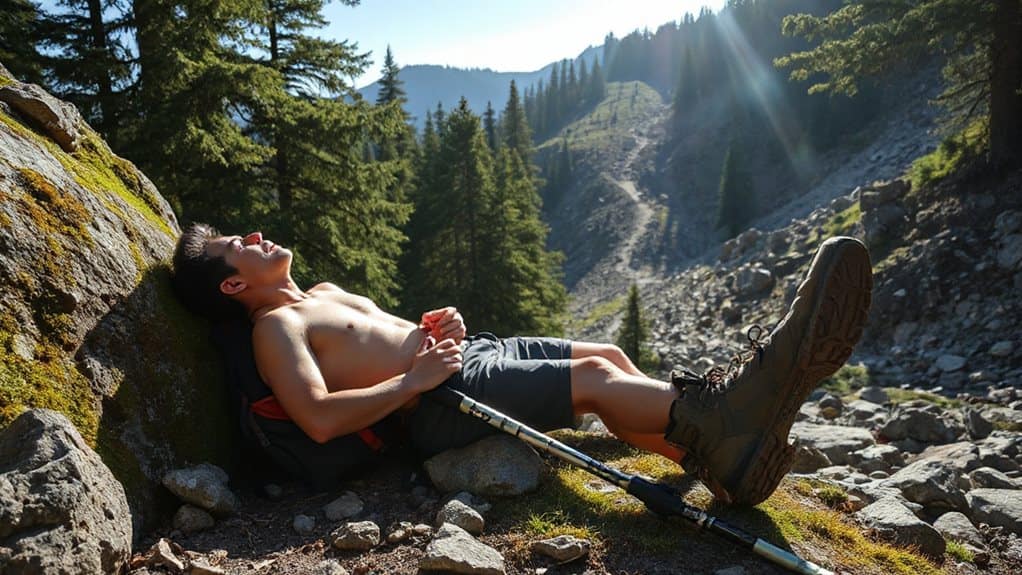
Skipping sleep and neglecting proper training can turn a manageable hike into an exhausting ordeal, because the body’s energy systems, balance, and decision‑making processes all suffer when rest is insufficient.
You’ll notice slower reactions, wobblier footing on uneven ground, and foggy judgment that leads to poor food choices and misreading trail signs.
Hormone dips reduce hunger control, while muscles stay sore longer, making each ascent feel impossible.
Implementing techniques to stay calm using methods like STOP can help you prioritize shelter, water, and rest while conserving energy.
How Mis‑Pacing and the “Just Keep Going” Mindset Drain Energy Quickly
On the trail, a too‑fast start or the “just keep going” mantra can drain your energy faster than the distance you cover.
You spike oxygen demand, heart rate, and muscular load before warming up, burning glycogen early and making climbs feel brutal.
Rushing decisions wastes effort, leads to wrong turns, and skips water or snack breaks, turning a manageable hike into a safety and endurance problem.
Start with short, manageable habits like walk–run intervals to build endurance and avoid early fatigue run–walk intervals.
How to Reset Your Mind and Body When Fatigue Hits
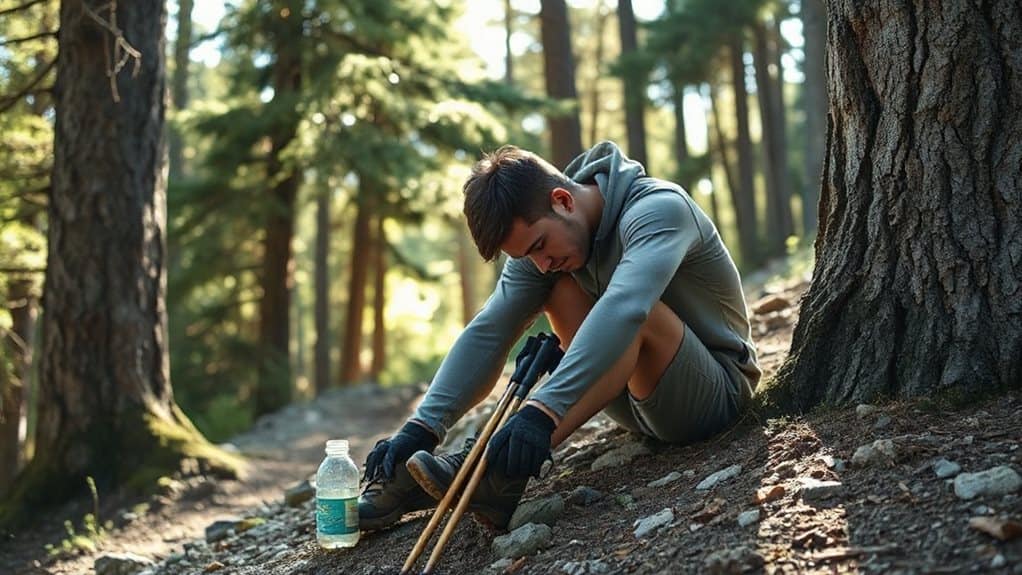
When fatigue hits on the trail, resetting both mind and body starts with a deliberate pause that lets your system shift from high‑intensity effort to recovery mode. Sip water before thirst, munch protein‑rich carbs, breathe deeply, and slow your pace.
Stretch calves, quads, hamstrings for about 20 seconds, then linger outdoors quietly. Prioritize sleep later; the nervous system will unwind, restoring freedom for the next journey.
And Finally
By balancing calories, hydration, and pacing, you’ll keep fatigue at bay; choose appropriate footwear, limit pack weight, and respect altitude, temperature, and terrain to preserve energy. Prioritize sleep and regular training, and avoid the “just keep going” mindset that ignores warning signs. When exhaustion hits, pause, refuel, rehydrate, and reset your rhythm. These practical steps let you enjoy the trail longer, feeling stronger and more in control.


