
Start by staying calm with the STOP method: stop moving, sit, breathe deeply for a minute, then review your situation, set priorities like water, shelter, and first aid, observe hazards and resources, and plan a clear next step while keeping a positive mental attitude. Choose a tarp layout that fits the terrain—A‑frame on windy ridges, lean‑to when trees are scarce, or C‑fly wedge for ventilation—and site it on an elevated spot with a natural windbreak. Build a star‑fire using four thick logs radiating from tinder, shield it with rocks or snow, and add dry feather‑sticks and fatwood shavings to keep it burning in wet weather. Find water by following animal tracks downhill, look for springs in low valleys, collect dew, sap, or rain, then filter through sand, charcoal, and gravel before boiling vigorously. Use a map and compass together, align north, match landmarks, and triangulate bearings, marking your path with flagging tape. Signal with a three‑fire triangle, whistle, mirror, or PLB, and apply basic first‑aid while minimizing movement; continue for and you’ll uncover deeper strategies.
TLDR
- Prioritize immediate needs: assess shelter, water, fire, and first‑aid before moving; use the STOP method to stay calm and plan.
- Choose a shelter suited to terrain: A‑frame for windy ridges, lean‑to when trees are scarce, and site it elevated with a windbreak and proper anchoring.
- Build a reliable fire using a star‑fire foundation, protect it with rocks or snow, and keep dry tinder (feather‑sticks, fatwood) for wet conditions.
- Locate and purify water: follow animal tracks downhill, collect dew or sap, filter through sand‑charcoal‑gravel, then boil vigorously.
- Navigate and signal safely: align compass with map, triangulate landmarks, mark the route, and use smoke, whistles, mirrors, or a PLB for rescue.
Wilderness Survival: Stay Calm With the STOP Method
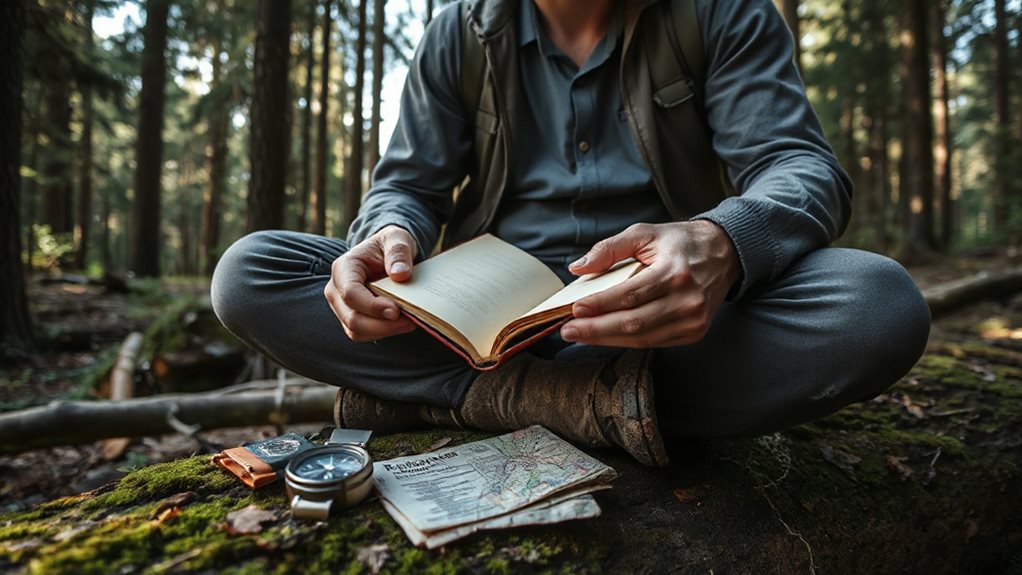
Ever found yourself suddenly lost in the woods, heart racing, thoughts spiraling? You can halt panic by using STOP: Stop moving, sit, breathe deeply for a minute, then Think—review how you got here, list priorities like water, shelter, first aid. Observe your surroundings for hazards, resources, daylight. Finally, Plan a clear, practical next step, whether staying put, signaling, or backtracking, conserving energy all along. Research shows that over 80% of successful wilderness resc are linked to a positive mental attitude. If you decide to stay, build a simple shelter and manage body temperature by insulating from the ground with pine boughs.
Wilderness Survival Shelter: Pick Tarp Layouts and Natural Sites
How do you choose the right tarp layout and natural spot for a shelter that will keep you dry, warm, and safe?
Pick an A‑frame for wind‑swept ridges, a lean‑to when trees are scarce, a C‑fly wedge for ventilation, or a tarp‑tent for storm protection.
Choose a slightly elevated site with a natural windbreak, keep the entrance away from prevailing gusts, and ensure anchors are 10‑15 feet apart on firm ground.
Use durable silnylon or Cuben Fiber for longevity.
Check forecasts regularly and be prepared for sudden storms and temperature swings, especially in mountainous areas, to avoid dangerous surprises and flash floods.
Wilderness Survival Fire: Build a Star‑Fire, Shield It, and Keep It Burning in Wet Weather
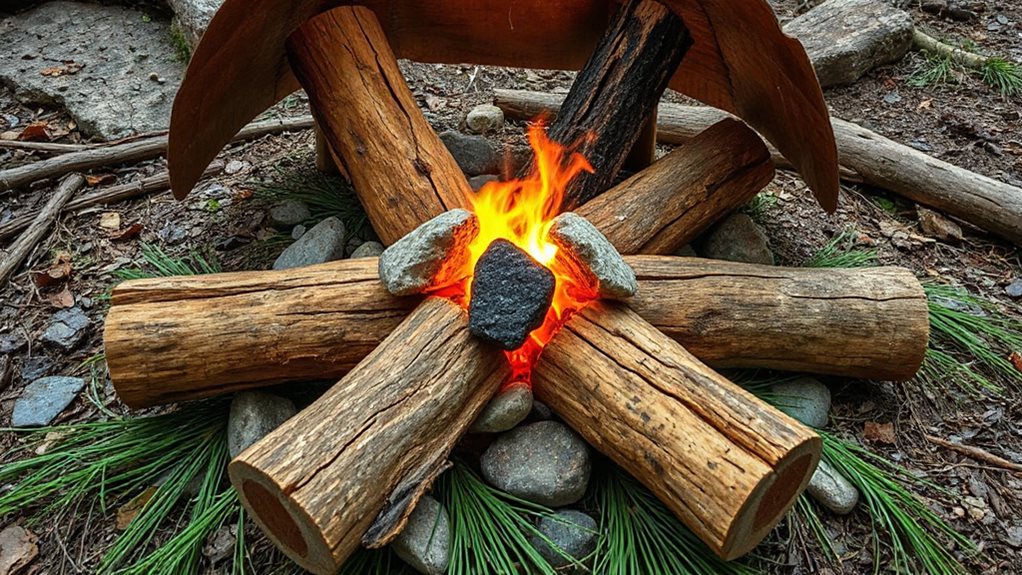
A solid fire is the backbone of any wilderness shelter, and the star‑fire design gives you a reliable, wind‑resistant flame that pairs perfectly with the tarp setups you’ve just learned about.
Arrange four thumb‑thick logs radiating from a fluffy tinder bundle, shield the blaze with a rock or snow windbreak, and add dry feather‑sticks and fatwood shavings to keep it roaring even when rain falls.
Wilderness Survival Water: Locate, Collect, and Purify Safely
Where can you find water when the terrain looks dry? Follow animal tracks downhill, spot green vegetation, birds, or insects, and check low‑lying valleys or cottonwood groves for hidden springs. Collect dew with cloths, tap tree sap, or catch rain in barrels. Build a simple sand‑charcoal‑gravel filter, then boil the clear water vigorously. Combine filtration and boiling for safe, reliable drinking. Many freshwater sources are generally safe to eat fish from, so consider foraging for fish as an additional water‑adjacent food source and nutrition boost, especially species like trout that are often safe and tasty.
Wilderness Survival Navigation: Use Map, Compass, and Landmarks Effectively
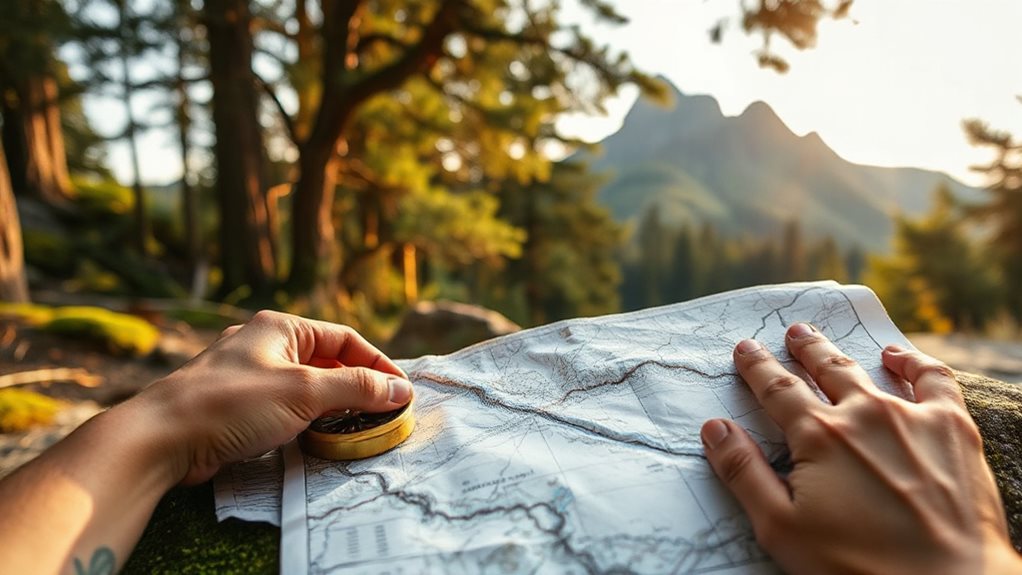
Governing orienteering in the wilderness starts with a solid grasp of how a map, compass, and landmarks work together, and you’ll quickly see that aligning the compass needle with the map’s north, then rotating the map until the two match, creates a reliable reference point for every step you take.
Lay the map flat, match hills, streams, and peaks to symbols, adjust for declination, and use contour lines to gauge steepness; triangulate between two landmarks, mark your path with flagging tape, and periodically verify your bearing so you stay on course and retain the freedom to investigate confidently. Be sure to adjust declination for your area so your compass bearings match the map.
Wilderness Survival Signaling & First Aid: Three‑Fire Triangle, Rescue Tools, and Basic Treatment
Ever wondered how to make sure rescuers spot you quickly and stay safe while you wait for help?
Arrange three dry fires in a triangle, add green foliage for white smoke, and repeat every ten minutes for aerial visibility.
Use whistles, mirrors, or a PLB for audio and satellite alerts.
While injured, minimize movement, wear bright gear, and mark the ground with fabric strips.
Maintain steady tension when securing signal materials to prevent loss or tangling, and consider starting with mono backing when attaching cords or lines to gear.
Final Note
By mastering the STOP method, selecting the right tarp layout, building a star‑fire that endures wet conditions, locating and purifying water, navigating with map and compass, and signaling effectively, you’ll be equipped for most wilderness challenges. Keep your gear simple, practice each skill repeatedly, and stay aware of your surroundings. With these fundamentals in place, you’ll increase your safety, confidence, and chances of a successful, stress‑free adventure.


