
First, pre‑filter the river water with a gravity or pump filter to catch bacteria, protozoa, and most contaminants, then run the clear output through a UV pen, chemical tablet, or boil it for at least one minute to kill any viruses the filter misses. Use a sturdy reservoir and secure connections, prime the filter to purge air, and check that flow stays steady—about 27 L per hour for gravity systems. Keep the filter clean with regular backflushing and store it dry; the next sections will show you how to choose the right gear for any trip.
TLDR
- Choose a filtration method (gravity, pump, or squeeze) that matches your trip length and group size, then pre‑filter to remove sediment.
- Prime the filter by running water through it before the first use to eliminate air bubbles and ensure steady flow.
- Verify that the filtered water is clear, tastes normal, and meets the expected flow rate (≈27 L/hr for gravity systems).
- Follow up with a chemical tablet, UV purifier, or boiling to in viruses and any remaining pathogens.
- Maintain the filter by back‑flushing, sanitizing after use, and storing it dry to preserve performance.
Identify River‑Water Contaminants and Their Risks
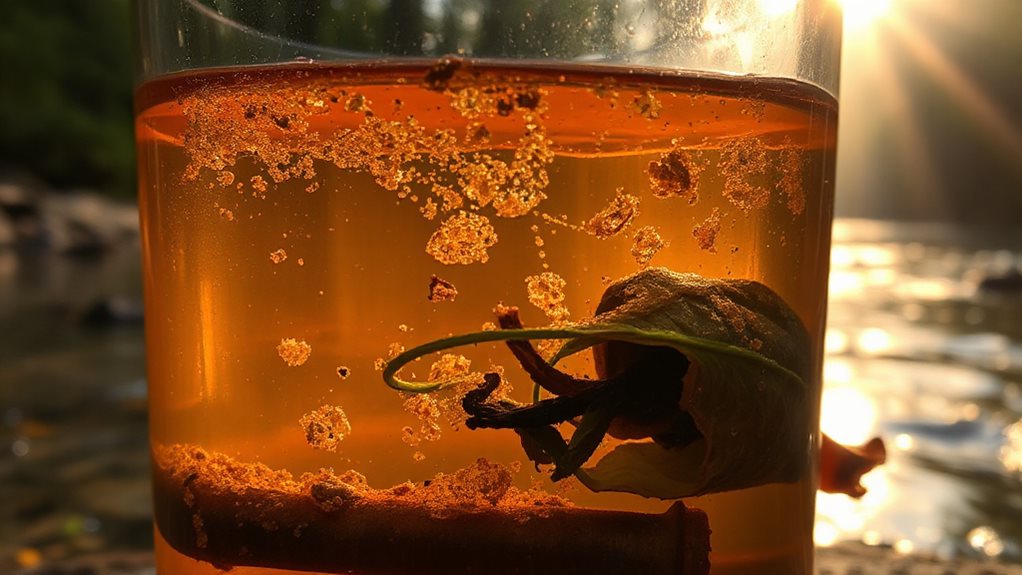
What’s in the water you’re about to sip? River water can hide E. coli, Salmonella, Giardia, Cryptosporidium, hepatitis A, polio, heavy metals like lead, mercury, arsenic, and pesticide residues. These microbes cause diarrhea, cholera, typhoid, liver inflammation, and long‑term cancers; metals disrupt hormones, damage kidneys, and impair brain function. Rainfall, runoff, wildlife, and poor sanitation amplify these hazards, so you must know what you’re drinking. High turbidity can conceal pathogens, making visual inspection unreliable. Always carry emergency essentials and know basic survival steps when camping near water sources.
Choose the Right Filtration Method for Your Trip
Where you’re heading—backpacking, canoeing, or a weekend family camp—will dictate which filtration system works best.
For multi‑day groups, a gravity filter like Platypus GravityWorks moves large volumes without pumping, while a pump filter such as MSR Guardian handles turbid water and removes viruses.
Solo hikers may prefer ultra‑light squeeze or straw filters, and cheap chemical tablets provide a lightweight backup for any method.
Some specialized gear, like filters used for rare vipers care, can be pricier due to low demand and limited supply.
Set Up a Gravity Filter for River‑Water Purification
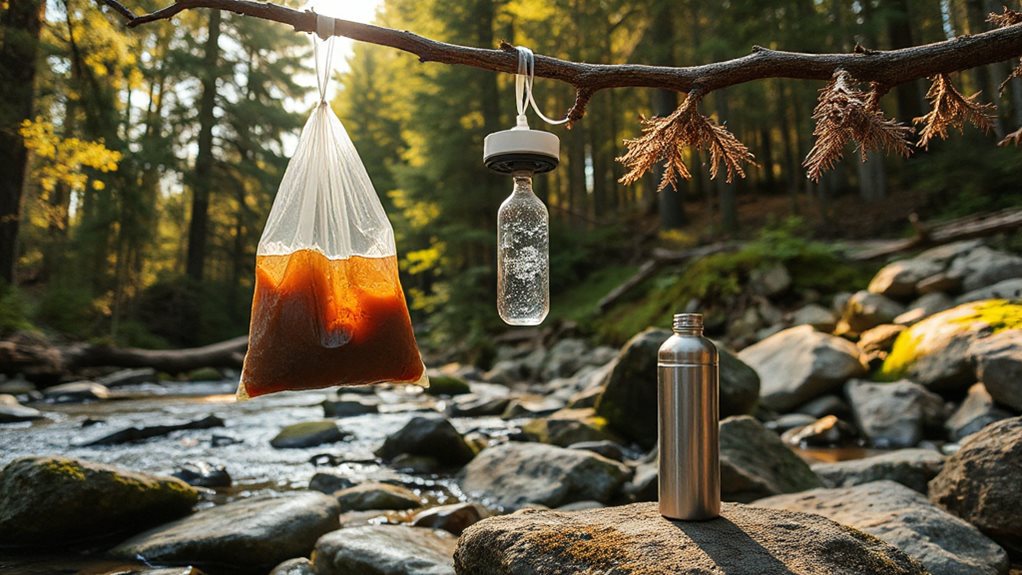
First, pick a sturdy reservoir and a slip‑on bag that fits it, then secure the filter’s hose clamps and connections tightly so nothing leaks.
Next, prime the system by letting water run through the filter until the air is purged, checking for a steady flow before you start filling the clean‑water container.
Finally, test the output by tasting a small amount and confirming the flow rate meets the expected 27 L per hour, adjusting the height or clamps if needed.
For navigation and planning during longer trips, consider carrying an offline map app like Gaia GPS to help you find reliable water sources and routes.
Choose Reservoir and Slip
How do you pick the right reservoir for a gravity‑filter setup? Choose a container that matches your water volume and flow needs: the CNOC Vecto offers a wide opening for easy scooping, MSR AutoFlow XL and Katadyn BeFree hold ten liters, while Platypus GravityWorks gives six liters and a steady 2.75 L/min. Ensure the reservoir threads fit your filter, and suspend it higher than the clean bag for gravity‑driven flow.
Secure Filter Connections
After you’ve chosen the right reservoir, the next step is to secure the filter connections so water can flow smoothly from the dirty‑water bag to the clean container. Attach the 28 mm threaded filter to the dirty‑water bag, clamp the hose, then link the output hose to the clean container. Hang the bag high using a tree strap or rock, remove air from the hose, and verify a tight, leak‑free seal before gravity pulls clean water down.
Prime and Test Flow
Ever wonder how to get that first steady stream of clean water flowing from your gravity filter? Fill the dirty reservoir with at least a liter, hang it higher than the clean container, and open the hose valve fully to push out air. Watch for a steady drip, then time one liter; 30‑34 seconds is ideal. If flow stalls, purge air, clamp, and re‑prime. Test rate over five minutes, ensuring you hit roughly one liter per minute, and backflush if needed.
Use a Pump or Straw Filter for Fast Purification
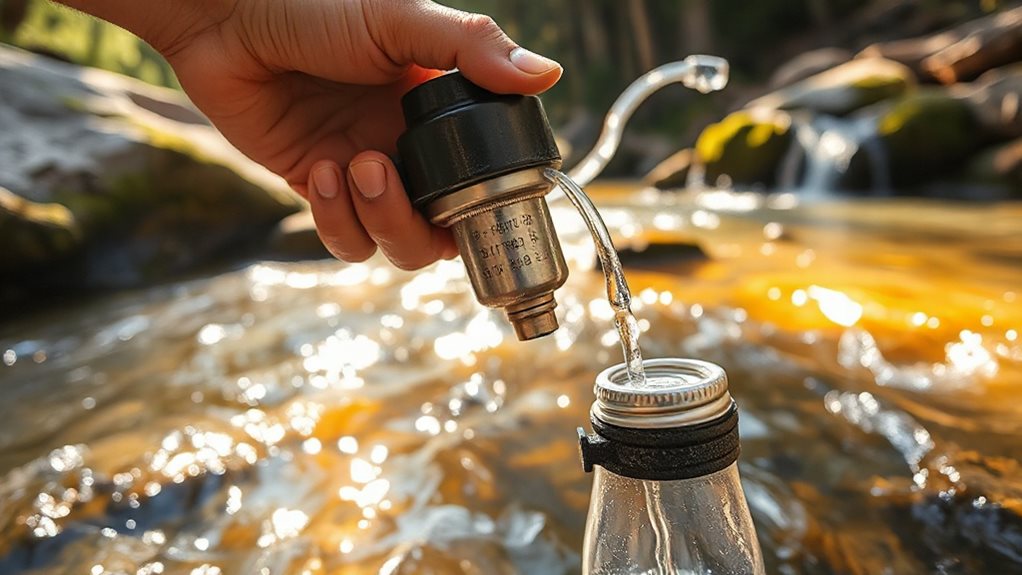
Ever wondered which tool will get you clean water fastest when you’re out in the wilderness? A pump filter like the MSR Hyperflow delivers a liter in about 27 seconds, great for groups, while the MSR Guardian handles murky water and viruses.
Straw filters are ultra‑light, sip‑directly from streams, and suit solo hikers. Choose pumps for bulk, straws for weightless, on‑the‑go sipping.
Apply Chemical or UV Treatment for Virus Elimination
Pump or straw filters get water clean quickly, but they don’t guarantee virus removal—especially when the source is murky or you’re dealing with tiny pathogens that slip through filter pores.
Add chlorine‑dioxide drops, wait 15‑30 minutes (longer for Cryptosporidium), or dunk a UV purifier for 90 seconds after pre‑filtering.
Both kill viruses, UV leaves no taste, and chemicals stay lightweight, giving you reliable protection on the trail.
Boil and Prefilter River Water When Power Is Unavailable
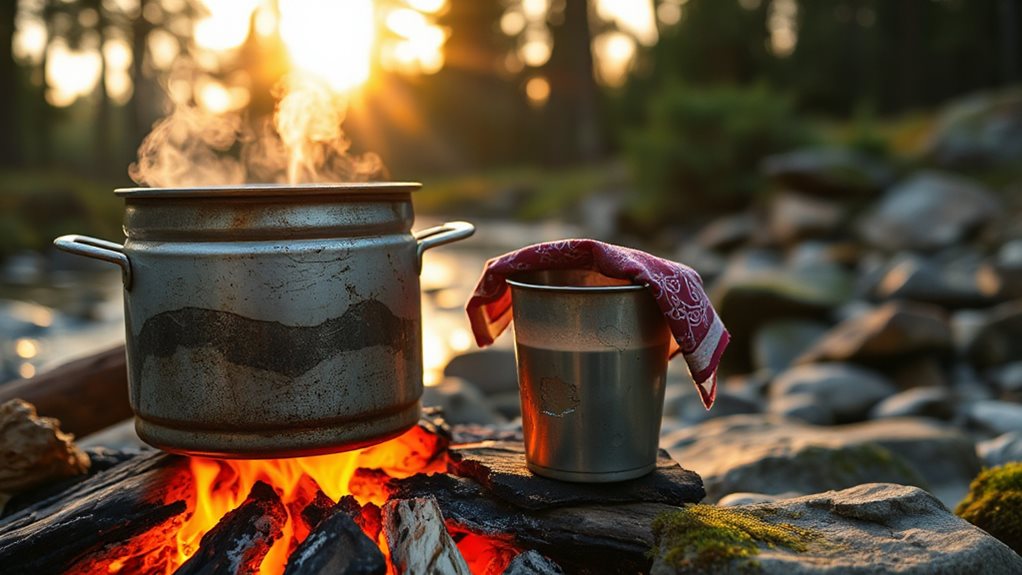
You’ll first gather the cleanest water you can find, then run it through a bandana or coffee filter to strip out sand and debris before you heat it. When you boil, keep the pot rolling for at least one minute at sea level—or three minutes if you’re above 6,500 feet—to kill most pathogens. This combo of pre‑filtering and proper boiling gives you safe, grit‑free drinking water even when you have no power. Regularly inspect and maintain your cookware and fuel supplies to ensure safe, reliable boiling before trips.
Gather Clean Water
A reliable way to get safe drinking water while camping without power starts with a simple prefilter and a boil.
Choose flowing water downstream, far from shorelines and human activity, and avoid recent rain‑soaked spots.
Use a bandana or coffee filter to catch grit, let the water sit or add a pinch of alum to settle sediment, then decant the clear top layer before boiling.
This prefilter and settle routine maximizes taste and reduces clogging.
Boil Properly at Elevation
Where does the altitude you’re camping at affect the safety of your water?
At 7,500 ft the boil drops to about 198 °F, so you must keep a vigorous rolling boil for at least one minute, often longer—think double the sea‑level time.
First, prefilter through a cloth or coffee filter to strip sediment, then boil, maintaining the boil throughout the extended period.
This clears pathogens despite lower temperatures.
Keep Your Filters Working: Cleaning & Troubleshooting Tips
Ever wondered how to keep your camping water filter humming along for every trek?
Backflush with a syringe when flow slows, alternating reverse and forward until water runs clear.
Pre‑filter using calm pools, bandanas, or mesh screens to cut sediment.
Sanitize with diluted bleach for 30 minutes, rinse, dry fully.
Store dry, avoid freezing, and replace gray ceramic membranes promptly.
Wear boots with good traction when walking to water sources in winter to reduce slipping risk.
Final Note
Stay focused on the basics: identify the contaminants, pick a filtration method that fits your trip, and follow the setup steps exactly. Keep your filter clean, use a backup chemical or UV treatment for viruses, and boil when you can’t power a device. Regular maintenance and quick troubleshooting will keep your system reliable, so you’ll have safe drinking water every time you camp by a river.


