
You’ll pick a daypack when you need something lightweight, breathable, and easy to access for short hikes, commutes, or city strolls—typically 10–35 L and under 25 lb, with top‑loading pockets or side zippers for quick grabs. Choose a backpack for larger loads, internal frames, padded hip belts, and capacity from 30 L up to 70 L, supporting 20–40 lb or more with thicker foam, gel padding, and better weight distribution. Materials range from nylon and ripstop for durability to Dyneema for ultra‑light waterproof strength, and each design balances comfort, access, and weather resistance. Keep exploring to discover which features best match your next adventure.
TLDR
- Daypacks are lightweight (10‑35 L) for short hikes, commutes, or city use, while backpacks start at 30 L and suit longer, heavier trips.
- Daypacks prioritize easy access with top‑loading or side zippers; backpacks often use clamshell or U‑shaped openings for full interior visibility.
- Comfort features differ: daypacks have thin padding and basic webbing, whereas backpacks include thick gel‑foam padding, curved straps, and hip belts for weight distribution.
- Capacity and load: daypacks handle 5‑25 lb loads; backpacks are designed for 20‑30 lb and can scale up to 70 L for 40 lb+ loads.
- Materials vary: nylon and ripstop give lightweight durability; Cordura and Dyneema add abrasion resistance and waterproofness for rugged use.
When to Choose a Daypack or Backpack
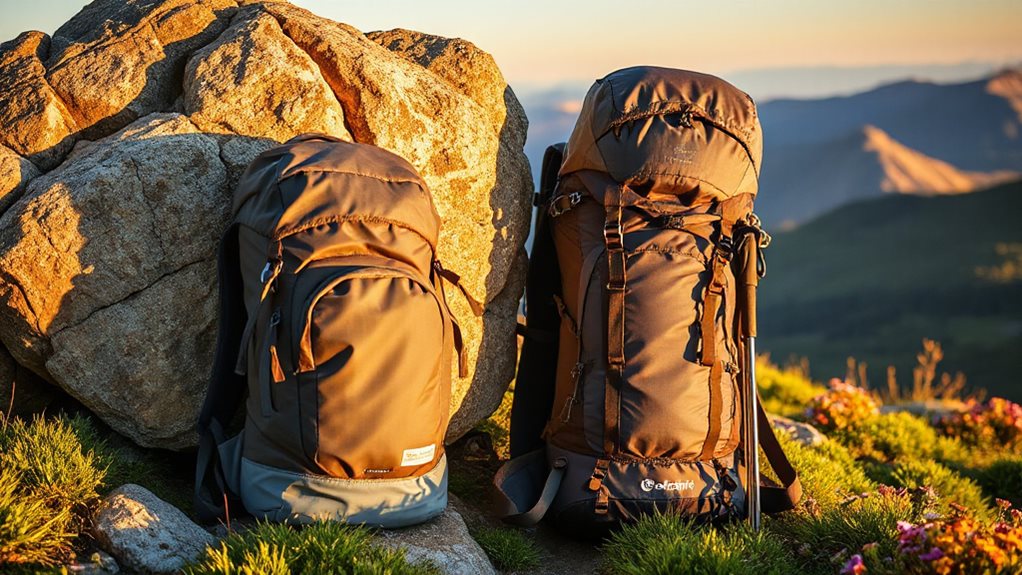
When deciding between a daypack and a backpack, ask yourself how long you’ll be out and what you need to carry. If you’re heading out for a short hike, a quick commute, or a city stroll, a daypack’s lightweight, breathable design and top‑loading pockets keep essentials within reach without bulk. Choose a backpack when you need internal frames, padded hip belts, or larger capacity for overnight gear, extended travel, or heavy equipment. This split lets you match comfort and versatility to each adventure. Daypacks typically have a capacity of 15‑35 L and prioritize lightness and easy access. Outdoor play and nature-based activities also help kids develop confidence and resilience, which can inform how families choose pack types and capacities.
Daypack vs Backpack Size & Capacity: Weight Limits
How much you can comfortably carry hinges on both the bag’s volume and its weight limits, so understanding the size‑capacity ranges for daypacks and backpacks is essential.
Daypacks sit at 10‑35 L, typically holding 5‑25 lb; under 20 L suits ultralight runs, while 21‑35 L handles full‑day hikes.
Backpacks start at 30 L, supporting 20‑30 lb, and scale to 70 L for 40+ lb loads, matching weekend trips or longer expeditions.
Regularly checking and maintaining components like straps, zippers, and seals can help preserve load capacity and comfort, especially for bags exposed to moisture or heavy use; see maintenance tips for more.
Daypack vs Backpack Comfort: Padding, Straps, and Frames
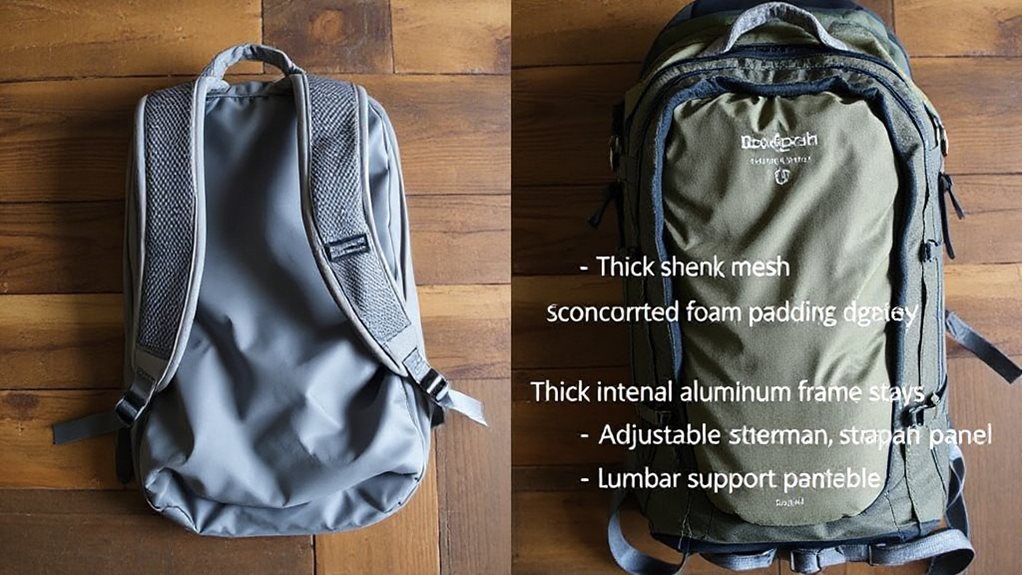
Your pack’s capacity tells you how much you can haul, but comfort determines whether you’ll actually want to carry it. Daypacks use thin padding and basic webbing, so they’re light but can dig in on long hikes, while backpacks sport thick, gel‑infused foam, curved straps, and wide hip belts that spread weight.
Backpacks also add internal frames or mesh panels, preventing sag and improving ventilation for extended freedom.
Daypack vs Backpack Access: Top, Side, and Bottom Openings
So, which opening will keep your gear most reachable? A top lid gives quick, all‑in‑one access, perfect for hikes, but you must empty the bag to see bottom items.
Side zippers let you snag essentials without exposing everything—ideal for commuters or rainy rides.
U‑shaped or clamshell fronts flatten the pack, showing every piece at once, great for travel, yet they add weight and rely on zippers.
Choose the style that matches your freedom‑focused routine. For easier packing and to prevent tangles, consider spooling accessories and cords with consistent tension and proper line lay.
Daypack vs Backpack Materials: Durability & Weather Resistance
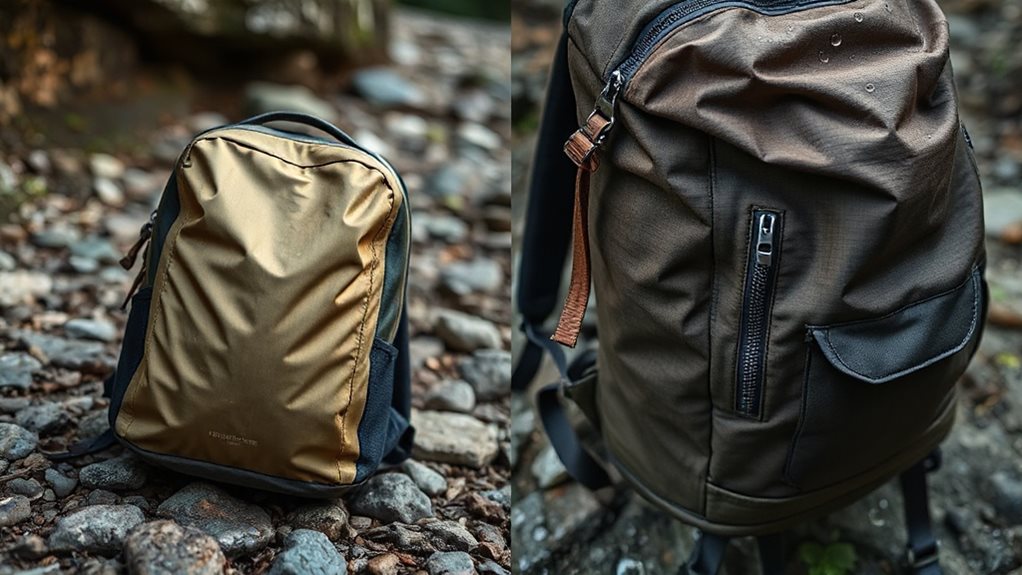
Choosing the right material determines whether your daypack or backpack will stand up to daily wear and the elements, just as the opening style you pick affects accessibility.
Nylon offers lightweight strength and abrasion resistance, yet UV can weaken it; ripstop adds tear‑proofing, Cordura brings heavy‑duty durability, Dyneema supplies ultra‑light strength and waterproofness, while polyester delivers cost‑effective UV resistance but lower abrasion resilience.
Pick the fabric that matches your adventure’s demands. Camping on durable surfaces like established sites or in dense forests also helps protect gear and the environment by minimizing vegetation damage and soil erosion, making designated sites a responsible choice.
Final Note
Choose a daypack when you need lightweight, quick‑access gear for short trips, hikes, or daily commutes; its compact size, simple straps, and easy‑open top keep things fast and flexible. Opt for a backpack if you require larger capacity, added support from padded backs or frames, and multiple access points for organized storage. Both can be durable and weather‑resistant, but the right pick hinges on your load, comfort needs, and how you’ll retrieve items. Pick the one that matches your activity and you’ll stay comfortable and prepared.


