
Down gives you a higher warm‑to‑weight ratio—up to 30% more loft per ounce—so a 700‑fill bag can be lighter and pack smaller than a 600‑fill bag with the same rating, while synthetic stays warm when wet, dries quickly, and usually costs less upfront. Down compresses 20‑40:1, making it easier to fit in a backpack, but it loses insulation if soaked unless you treat it or use a dry bag. Synthetic is bulkier, but it tolerates rain and rough handling with minimal maintenance. Down bags tend to last longer with proper care, whereas synthetics may fade after a few years of heavy use. If you keep reading, you’ll discover which option best matches your climate and camping style.
TLDR
- Down offers higher warmth‑to‑weight ratio, providing more loft per ounce and lighter packs for the same temperature rating.
- Synthetic insulation retains warmth when wet and dries quickly, making it safer for frequent rain or damp conditions.
- Down compresses 20‑40:1 versus synthetic’s 10‑15:1, allowing a significantly smaller packed volume.
- Down bags are more durable over years, losing only about 10°F per decade, while synthetic bags tend to fade after 3‑5 years of heavy use.
- Initial cost is higher for down, but its longevity and lighter weight can result in lower total expense compared to synthetic.
Warm‑to‑Weight Ratio: Down vs Synthetic for Your Climate

How does the warmth‑to‑weight ratio affect your choice of sleeping bag? You’ll feel the difference when down’s higher fill‑power delivers more loft per ounce, so a 700‑fill bag weighs less than a 600‑fill for the same +20°F rating, shedding ounces and bulk.
Synthetic, however, packs more weight for equal warmth, doubling volume and load, which can limit freedom on long treks. Down prices historically start around $300, and global supply heavily influences cost.
Compressibility & Packability: Down vs Synthetic in Your Backpack
Packability often decides whether a night in the backcountry feels like a breeze or a burden, and the difference between down and synthetic insulation is stark. Down compresses 20‑40 : 1, so a 550‑fill‑power bag packs to a fraction of a synthetic’s volume, leaving room for gear. Synthetics compress only 10‑15 : 1, bulkier and heavier, occupying whole pockets. Hybrid blends sit between, but pure down maximizes space and freedom. Wearing a rash guard or lightweight layer under your sleeping bag can add comfort and protect the insulation when changing or packing.
Wet‑Weather Performance: Down vs Synthetic When It Rains
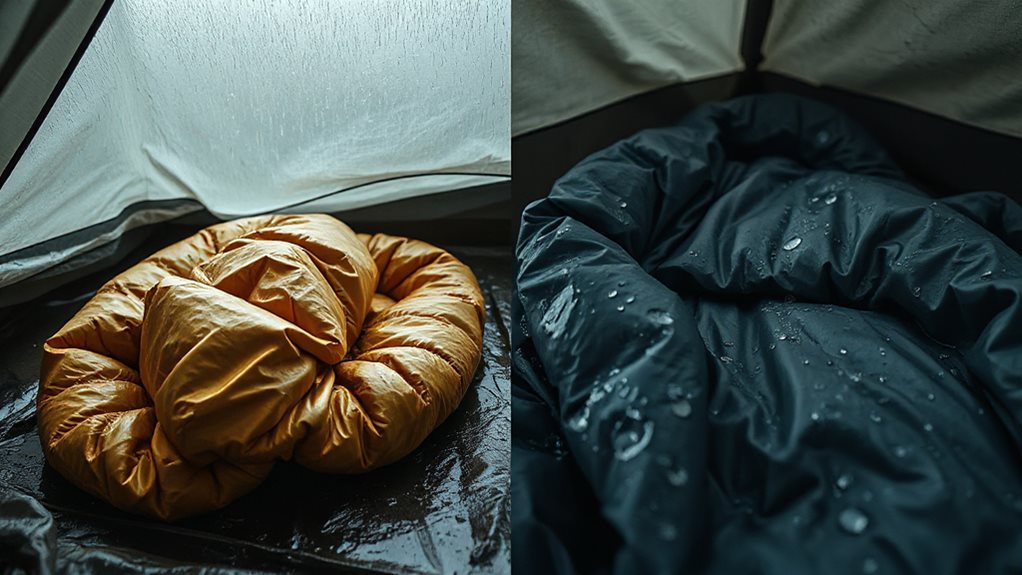
Ever wondered how a sleeping bag behaves when the sky opens up? In rain, synthetic keeps its loft, dries quickly, and stays warm even when soaked, making it a reliable choice for heavy,.
Down loses most insulation when drenched, but hydrophobic treatments repel water, dry loft, and let you stay cozy if you keep the shell dry.
Choose synthetic for frequent wet exposure; use treated down with a dry bag for occasional dampness.
Also remember to store food and scented items in bear-resistant canisters to avoid attracting wildlife while camping.
Durability & Cost: Lifespan of Down vs Synthetic Insulation
Rain isn’t the only factor that decides which bag you should buy; how long it will keep you warm and how much it will cost over time matter just as much.
Down bags, when cared for, can last a lifetime, losing only about 10 °F over a decade, and they resist compression far better than synthetics.
Synthetic bags typically fade after 3‑5 years, especially with heavy use, so their lower upfront price ends up costing more per year.
Choose down for long‑term freedom and lower annual expense.
High‑performance materials like corrosion-resistant materials can drive up initial costs in outdoor gear, just as they do in marine engineering.
Comfort & Maintenance of Down vs Synthetic Sleeping Bags

What really sets a sleeping bag apart is how it feels when you’re inside it and how easy it’s to care for afterward. Down feels lighter, softer, and loftier, compressing into a tiny pack, but it loses warmth when wet and dries slowly, demanding gentle washing. Synthetic feels bulkier, yet it stays warm damp, dries fast, and handles rough treatment without fuss, giving you reliable comfort and low‑maintenance freedom. Proper care and environmental control, including managing humidity levels, help maintain performance and longevity.
Final Note
In the end, your choice hinges on climate and use. If you prioritize lightweight warmth and can keep the bag dry, down delivers the best weight‑to‑heat ratio and packs tiny, making it ideal for fair‑weather treks. Synthetic, however, stays warm when wet, resists moisture, and generally costs less, so it suits rainy or budget‑conscious journeys. Weigh durability, pack size, and price against your typical conditions, and pick the insulation that matches your camping style.


