
First, weigh yourself before and after activity; a loss of 2 % body mass signals dehydration. Quickly replace fluids by sipping a sodium‑rich, low‑calorie drink or oral rehydration pack—aim for about 75 % of the deficit in the first hour, using 200‑300 mL doses every 15‑20 minutes. Monitor pulse, capillary refill, and mental status, and adjust volume if you feel light‑headed. Keep a portable electrolyte mix handy, and use shade or a cooling tarp while you rehydrate. Continue for more detailed steps.
TLDR
- Detect dehydration early by tracking body‑mass loss ≥ 2 % using a portable scale or wearable after posture changes.
- Replace fluids immediately with a sodium‑rich sports drink or oral rehydration solution; add a pinch of sea salt to water if needed.
- Aim for 75–80 % of lost weight in the first hour, using 4 mL/kg/hr (Holliday‑Segar) adjusted for activity and sweat rate.
- Sip 200–300 mL (8–12 oz) every 15–20 minutes, or 20–24 oz per pound lost, then continue 2–3 cups hourly for several hours.
- Monitor pulse, capillary refill, and mental status every 15–30 minutes; add potassium and magnesium (20 mEq/100 mL K⁺, 2 g/100 mL Mg²⁺) as needed.
Identify Outdoor Dehydration Levels & Body‑Mass Loss
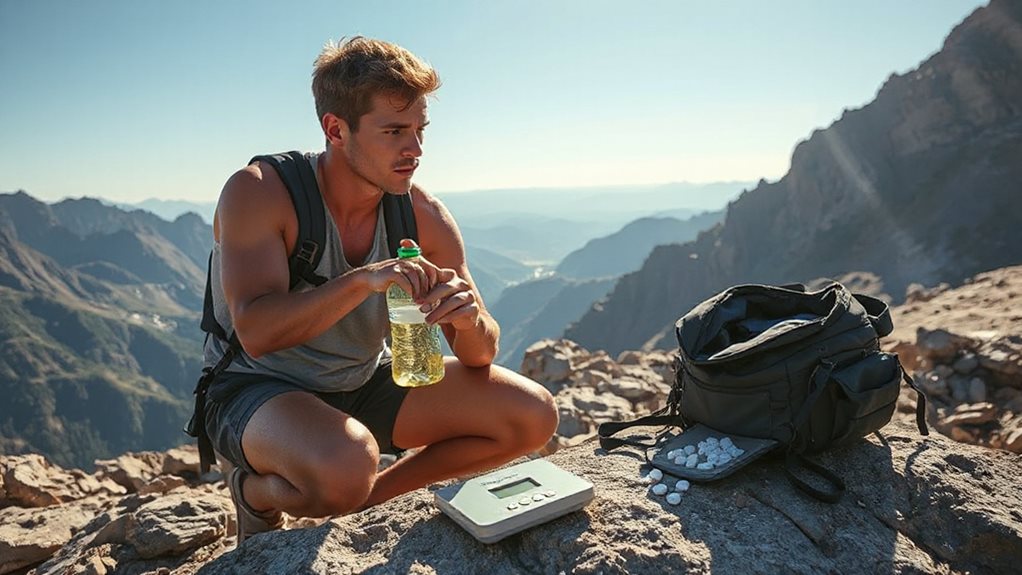
How can you tell if you’re losing too much water while out on a hike? You’ll notice a drop of at least 2 % body‑mass, which wearables flag within seconds after a posture change, or you can compare morning and post‑exercise weigh‑ins using a floor scale. This method aligns with research showing that hydration assessments can be limited in accuracy and accessibility. The Colorado River is an example of a long waterway where paddlers must monitor hydration carefully when on extended trips long river trips.
Choose Fluids & Electrolyte Mixes for the Outdoors
You’ll want to keep a water‑electrolyte balance by pairing plain water with a sodium‑rich sports drink, especially when you’re sweating heavily in the heat.
Portable rehydration packs, like oral rehydration solutions, give you a quick, convenient source of electrolytes and carbs that enhance absorption without the bulk of a full bottle.
Water‑Electrolyte Balance
Ever wondered which fluid will keep you hydrated and balanced during a long hike or a hot day out? Choose ORS for quick electrolyte replacement, or mix water with a pinch of sea salt for sodium. Coconut water supplies potassium without excess sugar, while citrus‑spiked drinks add carbs for absorption. Pair these liquids with high‑water foods—cucumbers, broth—to maintain steady water‑electrolyte balance.
Sodium‑Rich Sports Drinks
When you’re out in the heat and sweating heavily, a sodium‑rich sports drink can be the difference between staying energized and hitting a slump. Choose options like Electrolit Instant Hydration (430 mg/21 oz) or Gatorade Zero (230 mg/16 oz) for rapid fluid retention.
Low‑calorie choices—Gatorlytes #2, Propel, Gatorade Fit—provide 160‑230 mg sodium per serving, helping replace the primary electrolyte lost in sweat, supporting faster recovery without excess calories.
Portable Rehydration Packs
After sipping a sodium‑rich sports drink, the next step is to keep that hydration going with a portable rehydration pack that lets you carry both fluid and electrolytes in one convenient system.
Choose a 2‑L TETON Oasis bladder for easy cleaning, add a Wilderness Athlete packet for muscle‑supporting electrolytes, and secure it in a USWE Rush or CamelBak Light pack. Breathable straps, insulated pockets, and leak‑proof designs keep you moving freely.
Calculate Rehydration Volumes Based on Weight & Severity
You’ll start by calculating the fluid you need based on your weight, then adjust the total according to how severe the dehydration is, adding the appropriate electrolyte mix to each increment.
For mild cases you replace half the deficit in the first eight hours, while moderate and severe cases require a slower, more cautious rate spread over 16‑24 hours.
Choose corrosion-resistant gear to store and administer fluids when operating in wet or salty conditions, since durable materials prolong usability and safety corrosion-resistant materials.
Weight‑Based Fluid Needs
How much fluid you’ll need to replace depends on your body weight and how severe the dehydration is, so calculating precise volumes is essential for safe outdoor rehydration. Use the Holliday‑Segar method: first 10 kg = 4 mL/kg/hr, next 10 kg = 2 mL/kg/hr, beyond 20 kg = 1 mL/kg/hr. Convert daily totals to hourly rates, then adjust for deficit percentages, ensuring you replace 75‑80 % within the first day.
Severity‑Adjusted Volume Increments
Your weight and the severity of dehydration dictate exactly how much fluid you need to give, and breaking that total into manageable, time‑based increments keeps the process safe and effective. For severe cases, give 20 mL/kg over 10‑15 minutes, repeat up to 60 mL/kg per hour; for moderate, aim for 60‑90 mL/kg across four hours, starting 1‑2 mL/kg every five minutes. Adjust each interval based on pulse, capillary refill, and mental status, checking vitals every 15‑30 minutes. This paced approach matches your body’s needs while preserving freedom to move.
Electrolyte Replacement Guidelines
When you’re out in the wilderness and dehydration strikes, the next critical step after fluid replacement is restoring electrolytes, because without the right balance of sodium, potassium, calcium, and magnesium the body can’t absorb water efficiently or maintain normal nerve and muscle function.
Calculate oral rehydration as 100 mL/kg over four hours for moderate cases, adjust to 20 mL/kg isotonic bolus for severe shock, and add potassium (20 mEq per 100 mL) and magnesium (2 g per 100 mL) as needed.
Set Drinking Frequency & Fast‑Acting Rehydration Techniques
Ever wondered how often you should sip while trekking, cycling, or running under the sun? Aim for 8‑12 oz every 15‑20 minutes, or roughly 200‑300 ml per 10‑20 minutes, matching sweat loss. Pair each drink with salty snacks or electrolyte‑rich beverages for quick sodium replacement. After a hard push, gulp 20‑24 oz per pound lost, then keep sipping 2‑3 cups hourly for the next few hours. Late spring is also a great time to find discounted outdoor hydration gear and replacements, like water bottles and electrolyte mixes, during end-of-season sales.
Apply Hydration‑Focused Gear & Shade Strategies
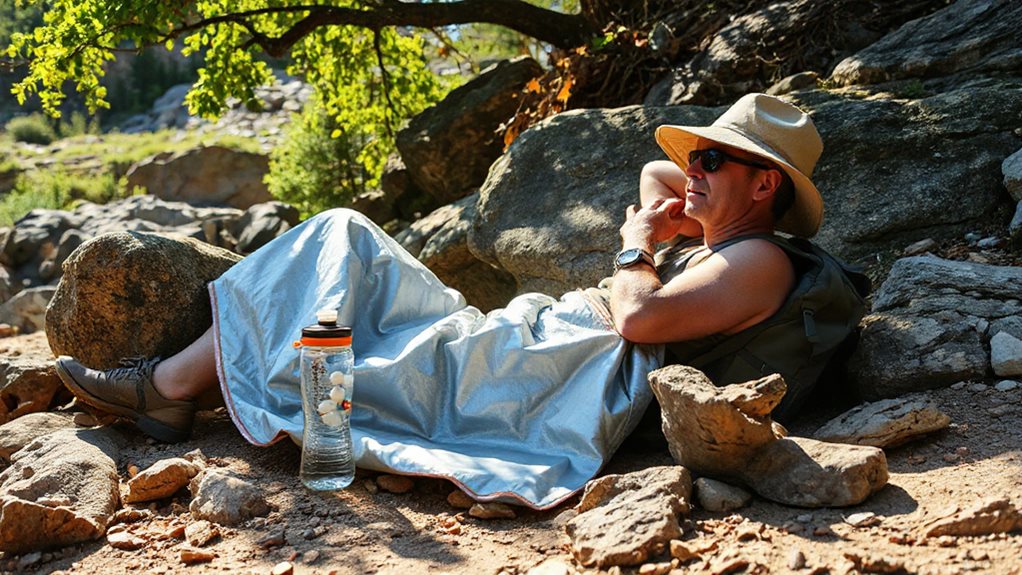
Where does your gear fit into staying hydrated under the sun? You strap a hydration pack, sip hands‑free while trekking, and let the hose stay accessible during climbs.
The balanced weight centers near your hips, easing shoulder strain and letting you move freely.
Insulated bladders keep water cool, while breathable clothing and a hat stored in the pack provide shade, cutting sweat‑induced dehydration. Regularly inspect and maintain your hydration gear to prevent leaks and contamination, following cleaning and drying best practices.
Monitor Recovery & Prevent Future Dehydration Episodes
How can you be sure you’ve truly recovered after a hot‑day trek and won’t face the same dehydration setback tomorrow? Check wearable data—BIA, sweat sodium, HRR—while logging urine color and frequency, compare thirst cues, and set smart reminders for fluid intake.
Adjust electrolyte drinks based on sweat analysis, track bathroom trips, and review recovery questionnaires to keep future hikes safe and unrestricted. Consider tailoring rehydration and monitoring plans for nearby trails like Rattlesnake Ledge where elevation and exertion can affect fluid needs.
Final Note
By spotting dehydration early, picking the right fluid‑electrolyte mix, and calculating how much to drink based on your weight and severity, you can restore balance quickly and safely. Keep a regular sipping schedule, use fast‑acting rehydration methods, and protect yourself with shade and gear that limit fluid loss. Monitor your recovery, adjust your intake as needed, and apply these habits on future outings to stay hydrated and healthy.


