Your carry-on is the bag you keep with you in the cabin, sized to fit overhead bins or under the seat—usually no more than 22 x 14 x 9 inches on most U.S. airlines. You’ll avoid fees, skip baggage claim, and reduce the risk of lost luggage. Pack light, roll your clothes, and use packing cubes to save space. Bring a personal item too, like a backpack, for easy access. Airlines rarely weigh carry-ons domestically, but international flights often have stricter limits. There’s more to smart packing than you might think.
TLDR
- Carry-on luggage is a bag kept in the cabin, sized to fit overhead bins or under seats.
- Most airlines allow 22 x 14 x 9 inches, including wheels and handles.
- A personal item like a backpack can be brought in addition to your carry-on.
- Packing light avoids fees, saves time, and reduces risk of lost luggage.
- Use packing cubes, roll clothes, and wear bulky items to maximize space.
Carry-On Luggage: What It Is and Why Size Matters
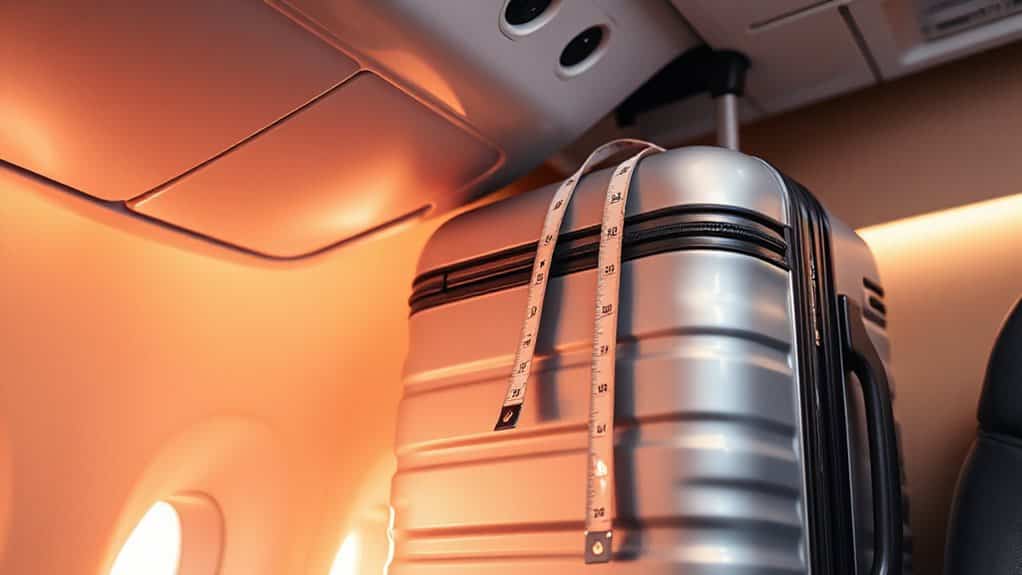
While you’re packing for your trip, it’s important to understand what carry-on luggage is and why its size really matters.
You’ll keep it with you in the cabin, so it must fit overhead or under the seat. Airlines limit dimensions—usually around 22 x 14 x 9 inches—to guarantee safety, balance, and easy boarding.
Choosing the right size means freedom, convenience, and avoiding fees or last-minute check-ins. Also plan finances for travel including potential campground fees to keep your overall trip budget on track.
Typical maximum dimensions are enforced by most airlines to ensure all bags fit standard storage spaces.
Standard Carry-On Size Limits for U.S. Airlines
You’ve got a handle on what carry-on luggage is and why sticking to the right size keeps your travel smooth—now let’s get specific about the numbers that actually matter at the gate.
Most U.S. airlines, like American, Delta, and United, allow 22 x 14 x 9 inches, including wheels and handles. Southwest’s limit is slightly larger: 24 x 16 x 10 inches. Always measure your bag’s total exterior dimensions to avoid fees or last-minute hassles. Dealers are often motivated to make sales at the end of season, which can be a great time to find discounts on travel trailers.
How to Measure Your Carry-On Bag (With Wheels and Handles)
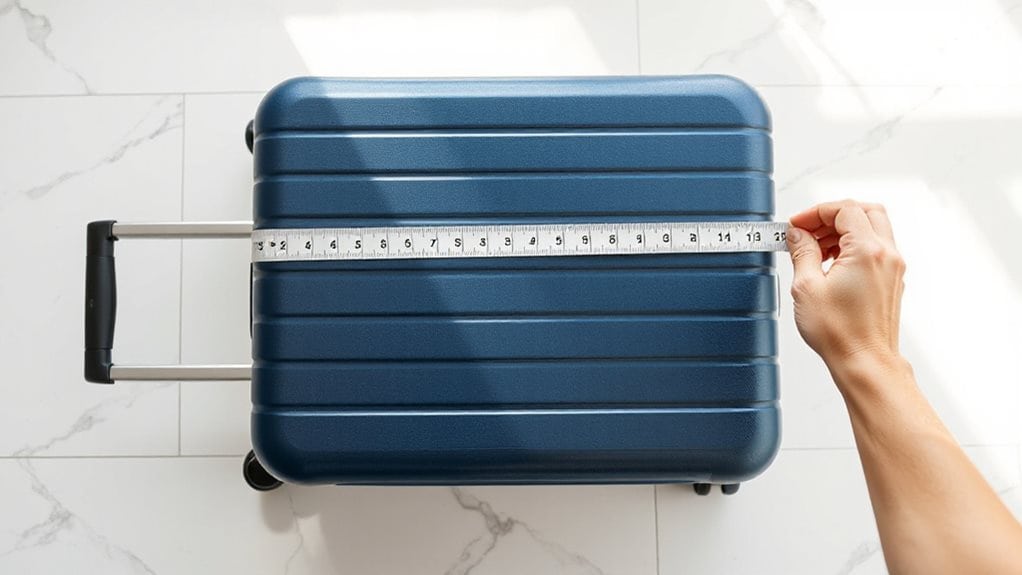
Grab your tape measure and stand your bag upright on its wheels, making sure the handle is fully extended.
Measure from the ground to the top of the handle for height, including every inch—wheels and handles count.
Then, record the widest points side to side for width, and front to back for depth, since every protrusion affects whether your bag fits airline sizers.
Also, if you plan to store gear long-term, avoid placing weight on one side to prevent deformation of the material and shape.
Measuring With Wheels Attached
Getting your carry-on sized right starts with measuring the full exterior—including wheels and handles—since that’s exactly how airlines do it.
Measure length from wheel to wheel, width at the deepest side, and height from floor to handle top with it tucked down.
Include all protrusions, like pockets or latches.
Use a tape measure at widest points to avoid surprises.
Include Handles In Height
Now that you’ve accounted for the wheels, it’s time to focus on another key component that affects your bag’s overall size—its handles.
Measure from the floor to the top of the retracted handle, including any thickness it adds. Airlines like Delta, United, and American include handles in height, so keep it under 22 inches to travel freely and avoid gate checks.
Personal Item vs. Carry-On: What You Can Bring
What’s the difference between a personal item and a carry-on, and why does it matter?
You can bring both on most flights—one personal item, like a backpack or purse, fits under the seat, while your carry-on goes overhead.
Size limits vary, so check your airline.
Personal items are usually smaller, often free, and essential for easy access.
Know the rules, pack smart, and travel freely.
Indoor storage is preferred for better protection and to prevent damage to your gear, especially if storing long-term like a kayak indoor storage.
Do Airlines Weigh Carry-Ons? Weight Limits by Airline
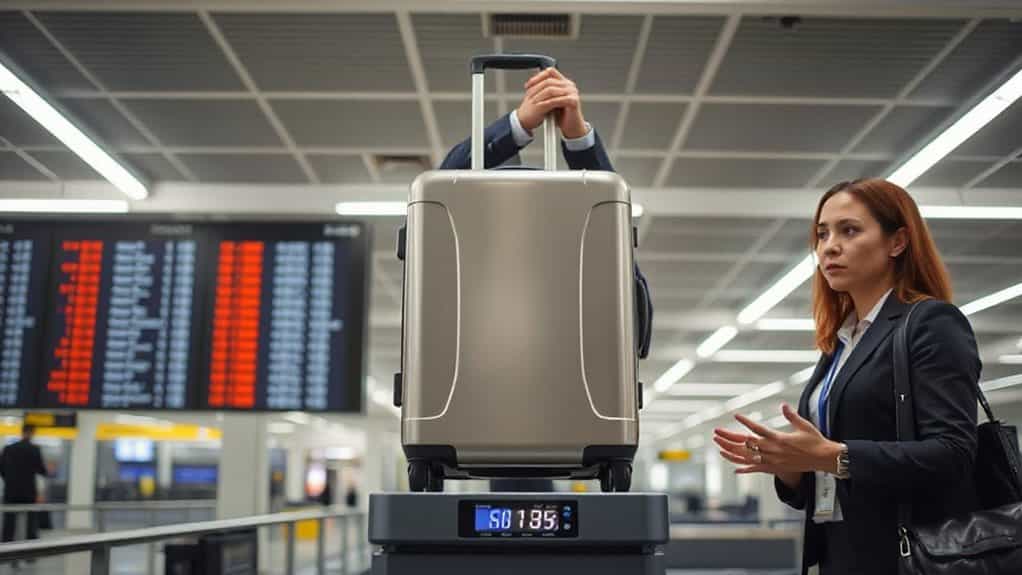
You’ll rarely see domestic U.S. airlines measuring your carry-on at the gate, but don’t assume weight limits don’t exist—some carriers enforce them quietly, and international flights are far less forgiving.
Delta requires bags under 35 pounds; most others, like Southwest and JetBlue, only ask that you lift it yourself.
Internationally, expect strict 15–22 lb limits, especially in Europe and Asia.
Buying a license supports conservation efforts and helps fund habitat restoration projects through programs like Sport Fish Restoration.
International Carry-On Rules: Size and Weight by Airline
While U.S. carriers often focus more on whether you can lift your bag overhead than on exact weight, international airlines take both size and weight seriously—especially outside North America.
Pack to 22 x 14 x 9 inches and under 22 pounds (10 kg), since European and Asian carriers enforce limits strictly.
Always check your airline’s rules—especially for transatlantic or mixed itineraries—to avoid fees or last-minute repacking stress.
Carry-On Advantages: Skip Checked Bag Fees and Delays
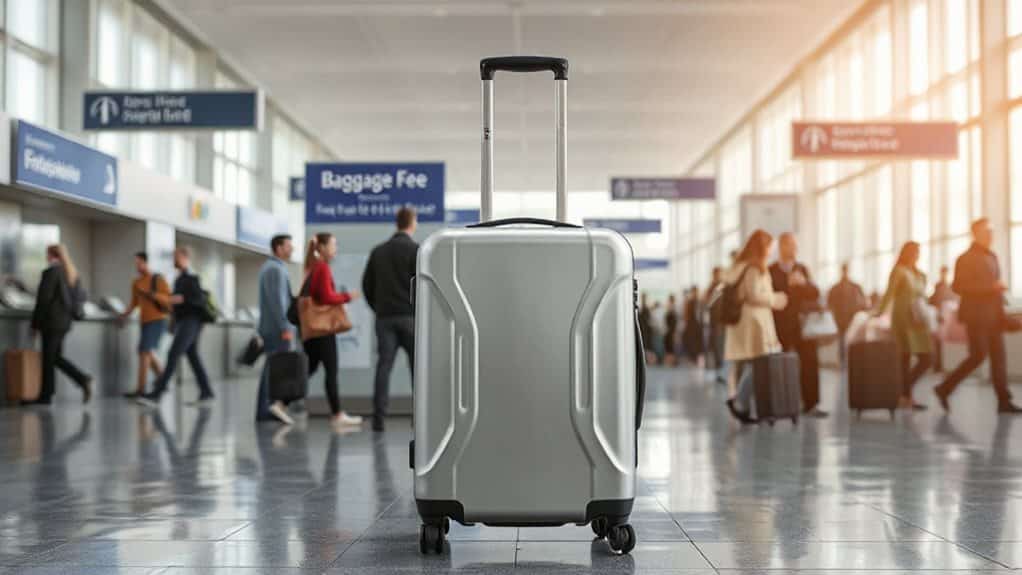
You can save money by skipping checked bag fees—many airlines charge $35 or more per bag, while carry-ons are usually free.
Keeping your belongings with you also means no risk of lost, delayed, or damaged luggage, giving you peace of mind.
Plus, you’ll move faster through the airport, avoiding baggage claim lines and speeding up your trip from security to the gate.
Skip Checked Bag Fees
Ditching the checked bag could save you more than just time at the carousel—it might also keep dozens, even hundreds, of dollars in your pocket. Airlines like Spirit and Frontier charge $35–$40 for carry-ons, but skipping checked bags avoids $35–$70 fees per bag.
Southwest’s new $35 fee still makes carry-on-only travel cheaper, especially round-trip.
Avoid Lost Luggage Risks
Even with airlines improving baggage handling, checking a bag still comes with the risk of it not making the same flight—or vanishing altogether.
You can skip that worry by carrying on. With 41% of mishandled bags tied to transfers and 8% lost or stolen, keeping your bag with you means more control, less stress, and true travel freedom.
Save Time At Airports
Carrying on your luggage doesn’t just keep your belongings within reach—it also shaves precious minutes off every stage of your trip.
You skip check-in queues, breeze through security, and board faster without bag drops.
No waiting at baggage claim means you’re out the door quicker, especially helpful on tight connections or regional flights.
Save time, move freely, and enjoy a smoother voyage from curb to gate and beyond.
Packing Hacks That Fit Your Carry-On
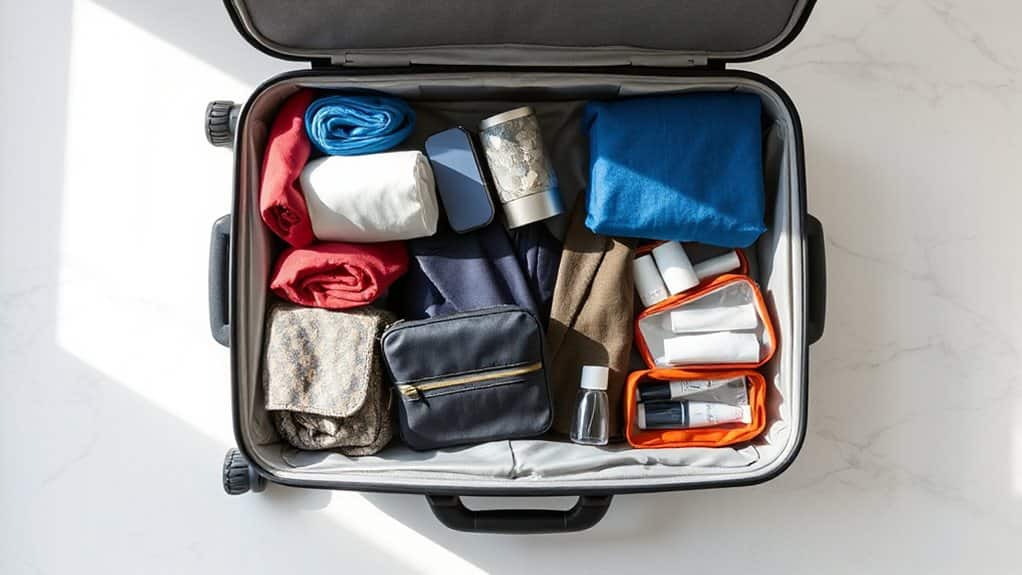
Maximize your carry-on space with smart packing strategies that make the most of every inch. Use packing cubes to organize by clothing type and compress contents tightly.
Roll shirts and pants for vertical stacking, saving space and reducing wrinkles. Wear bulky items onboard, and stash shoes externally.
Pack accessories efficiently—tuck cables in pouches, use contact lens cases for liquids, and carry a foldable bag for extras.
Final Note
You’ve got this! Now that you know what carry-on luggage is and how size, weight, and airline rules matter, packing smart gets easier. Stick to limits, use clever hacks, and you’ll breeze through the airport—no fees, no delays. Whether it’s a personal item or main bag, staying informed keeps travel smooth. Travel light, stay prepared, and enjoy the freedom of having your essentials on hand. Happy flying!