
Clean your gear right after each trip, washing shells by hand and rinsing backpacks in lukewarm water. Dry everything fully—never store damp. Check for tears, especially at stress points, and fix small issues before they grow. Wax zippers, seal seams, and lubricate moving parts to prevent rust. Reapply DWR treatments when water stops beading. Store gear in a cool, dry, ventilated space. Test electronics regularly and recharge batteries properly. A spring and fall deep cleaning keeps everything in top shape for years—there’s more where that came from.
TLDR
- Clean all gear promptly after use to remove dirt and moisture, preventing long-term damage and material breakdown.
- Inspect gear biannually for tears, seam wear, and stress points, repairing small issues before they worsen.
- Maintain zippers and moving parts by cleaning, lubricating, and replacing damaged components to ensure smooth function.
- Reapply DWR treatments when water stops beading, then activate with heat to restore waterproof performance.
- Store gear in dry, ventilated areas using breathable containers, and charge batteries to 20–80% for longevity.
Clean Gear Immediately After Every Trip
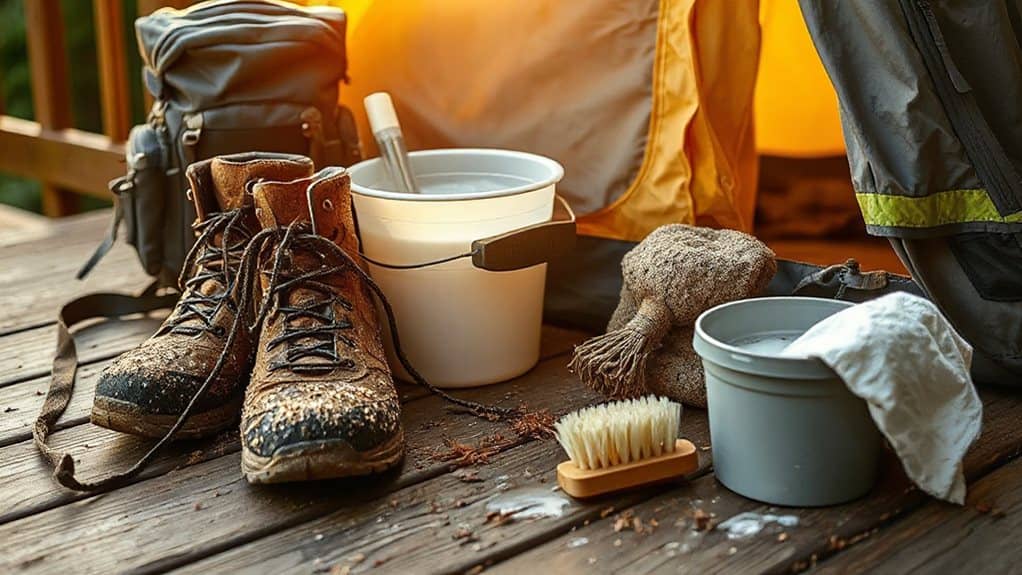
Always clean your gear right after returning from a trip—this simple habit prevents dirt, moisture, and debris from causing long-term damage.
Hand wash shells with pure soap, rinse twice, and air dry fully. Front-loading washing machines can damage delicate fabrics and finishes, so avoid them when possible and opt for traditional cleaning methods instead.
Knock off boot gunk, scrub spots, and stuff with newspaper.
Clean backpacks in lukewarm water, spot-treat grime, and rinse with vinegar.
Wipe tents gently and dry in the sun.
Doing so ensures your gear remains functional and extends its lifespan.
Dry All Items Completely Before Storage
Once your gear’s clean, the next step is making sure every item is fully dry before you pack it away—skipping this can lead to mold, mildew, and material breakdown over time.
Air dry tents, sleeping bags, and clothing completely, avoid direct heat and sunlight, then store in breathable containers in a cool, dry place.
Check occasionally for moisture, and use silica gel to stay safe.
For down-filled items, ensure thorough drying to preserve loft and insulation by using low heat in a dryer and dryer balls to break up clumps.
Inspect for Tears, Holes, and Wear Early
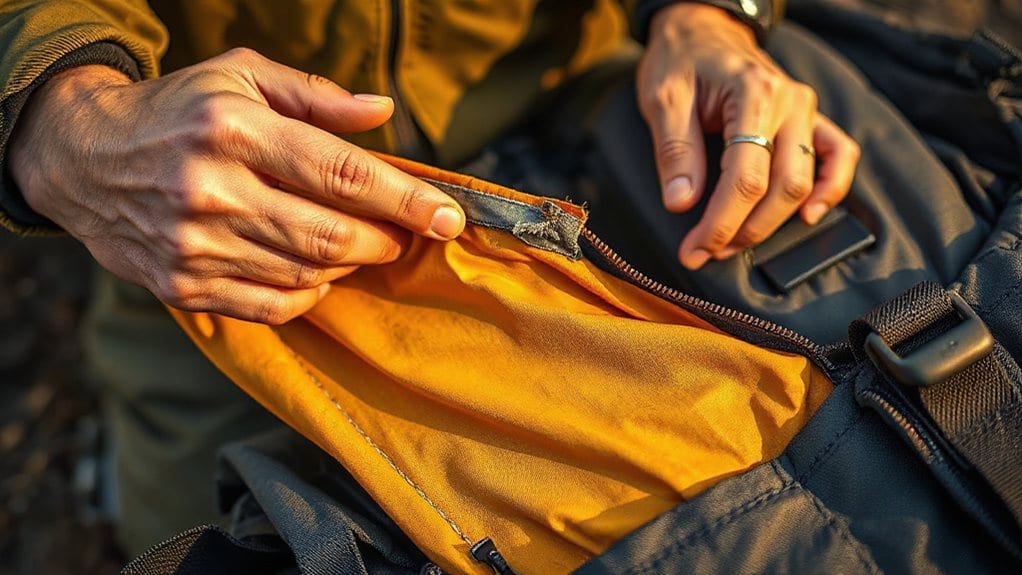
Check your gear now for small tears or holes, especially in high-stress spots like knees, elbows, and seams—these often turn into big problems fast.
Look closely at stitching and attachment points, because loose threads or separated seams can fail under pressure.
Catching wear early means you can patch, repair, or replace items before they let you down on the trail.
After cleaning gear regularly, pay special attention to areas prone to salt or dirt buildup and treat them with appropriate corrosion protection to extend their life.
Small Tears, Big Problems
Spot a tiny nick in your tent fabric or backpack strap, and don’t brush it off—what looks like a minor flaw can quickly turn into a major failure.
Small tears act as stress points, spreading fast under load.
Early detection through regular, careful inspection helps you stay ahead of damage, keeping your gear strong and reliable when you need it most.
Check Seams And Stitching
Run your fingers along the seams of your backpack or tent, and you might just catch a problem before it catches you.
Check for fraying, loose stitches, or tiny holes, especially in high-stress areas.
Look for uneven patterns or worn threads, and inspect seam tape for peeling or gaps.
Use bright light, compare symmetrical sections, and gently test tension to spot weakness early.
Fix Zippers, Seams, and Soles Before They Worsen
While small issues with zippers, seams, and soles might seem minor at first, ignoring them can lead to bigger, costlier problems down the trail.
Clean zippers regularly, wax stiff sliders, and realign separated teeth to keep them running smoothly. Trim, melt, and inspect seams to stop fraying early. Replace worn sliders or stops before failure. A little maintenance now saves gear later. Apply appropriate cleaners and protectants to fabric components, especially if they’re exposed to moisture and may develop mold and mildew.
Restore Water Resistance on Jackets, Boots, and Tents
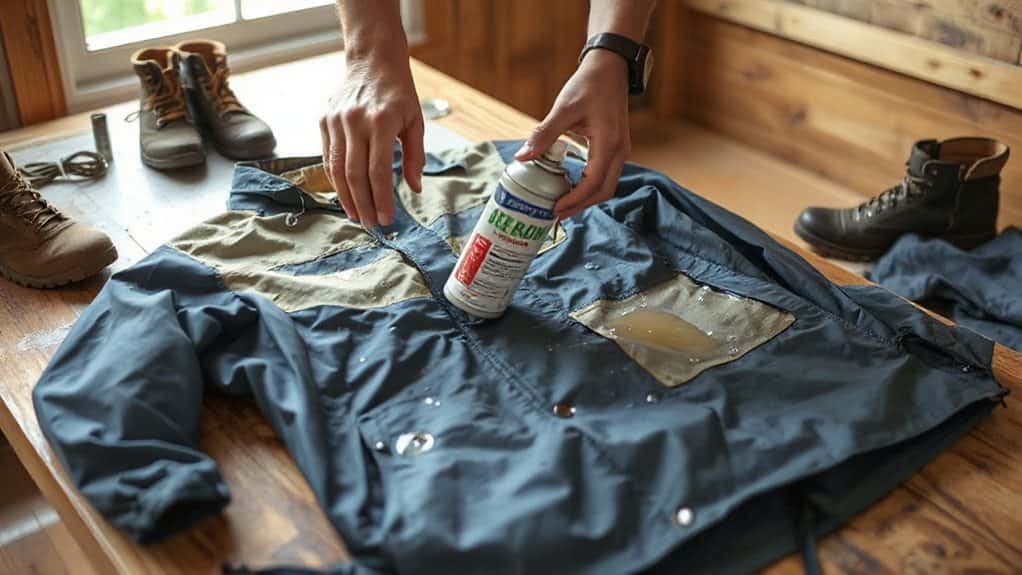
When your jacket stops shedding rain or your tent fabric starts absorbing moisture, it’s a clear sign the Durable Water Repellent (DWR) coating has worn off and needs rejuvenation.
Test with water beads, clean thoroughly, then apply a spray-on DWR like Nikwax or Revivex.
Activate with heat—tumble dry or sun-dry—and retest.
Repeat if needed to restore full performance.
Also, before treating, always check the care label to follow any specific washing or drying instructions.
Lubricate Moving Parts to Prevent Rust
Keep your gear running smoothly by lubricating zippers regularly with a silicone-based lubricant or wax to prevent sticking and corrosion.
Don’t forget hinges and joints on tools or camping equipment—these moving parts need a light coating of lithium grease or penetrating oil to resist rust and maintain smooth operation.
Wipe off any excess after applying to avoid attracting dirt and guarantee long-lasting protection.
Lubricate Zippers Regularly
You’ll often find that a little zipper maintenance goes a long way in keeping your outdoor gear functioning smoothly.
Clean zippers first—remove dirt and salt with a brush and mild soap.
Then apply a dedicated, non-petroleum lubricant evenly along the teeth.
Work it in by sliding back and forth, wipe off excess, and protect against corrosion, especially after marine use.
Maintain Hinges And Joints
Regularly maintaining the hinges and joints on your outdoor gear keeps them moving smoothly and extends their lifespan.
Use silicone or PTFE spray, or light oil, on pivot points to resist moisture and reduce friction.
Clean off dirt and old lubricant first, then apply a small amount, work it in, and wipe off excess.
Inspect for wear, tighten fasteners, and replace damaged parts to keep everything functioning reliably, trip after trip.
Keep Electronics Ready: Test and Recharge Often
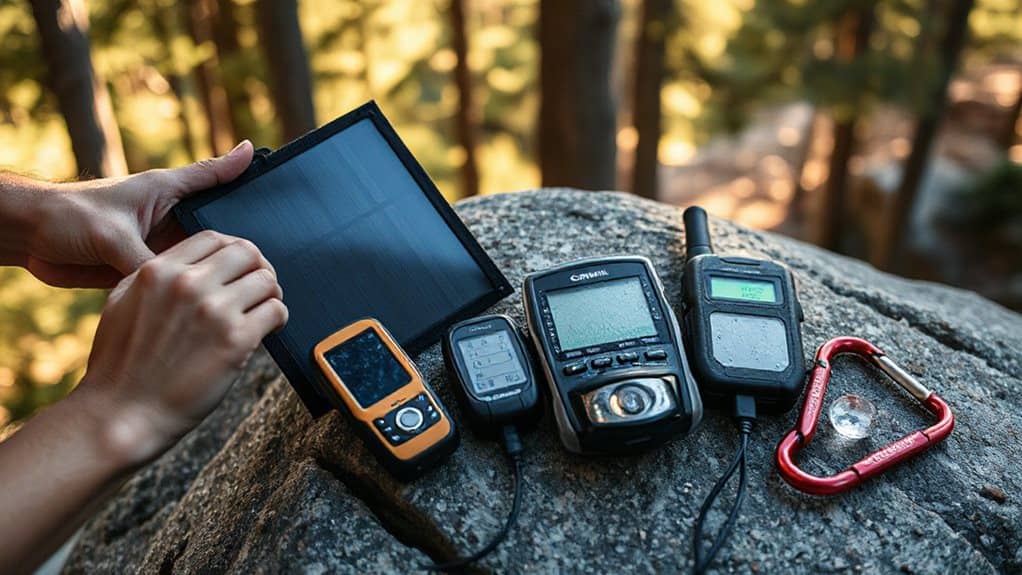
Every few months, you’ll want to check your outdoor electronics to make sure they’re fully functional when you need them most. Test headlamps, GPS units, radios, and signal transmitters every 1–3 months, using self-test modes before trips.
Recharge lithium gear promptly after use, store at 20–80% charge, and cycle fully every few months. Keep batteries rotated, cables intact, and devices dry, clean, and protected from extreme temps to stay ready for excursion.
Store Gear in a Dry, Ventilated Space
After making sure your electronics are charged and ready to go, turn your attention to where and how you’re storing your outdoor gear—because even the best equipment can deteriorate quickly if left in damp, poorly ventilated spaces.
Keep gear in dry, climate-stable areas with good airflow. Skip airtight bins; use breathable bags or ventilated containers instead. Hang packs and rain gear, avoid attics or basements, and let items breathe to prevent mold, mildew, and material breakdown over time.
Plan Biannual Deep Cleanings in Spring and Fall
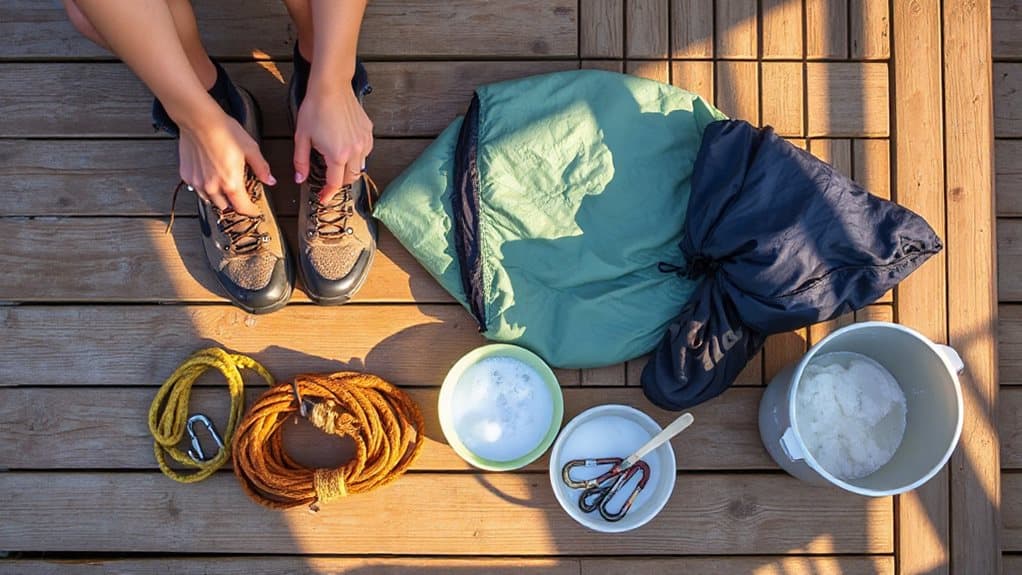
While your gear takes a beating no matter how carefully you use it, giving it a little extra attention twice a year can make all the difference in how long it lasts and how well it performs.
Schedule deep cleanings in early spring and mid–late fall to remove contaminants like salt, mud, pollen, and soot.
Clean, inspect, and re-treat gear by category—apparel, footwear, textiles, hard goods—for peak performance and long-term durability.
Final Note
You’ve got this—keeping your gear in top shape isn’t hard when you stay consistent. Clean and dry everything right after trips, fix small issues early, and restore water resistance regularly. Don’t forget to lubricate moving parts and test electronics often. Store gear in a cool, dry place with good airflow, and schedule deep cleanings twice a year. A little effort goes a long way in extending gear life, saving you money and hassle down the trail.


