
Spending a few hours each week in parks, forests, or near water cuts anxiety by up to 20% and lowers depression risk, while increasing dopamine and serotonin for a better mood. Regular green‑space visits lower cortisol, reduce blood pressure, and improve focus; a 90‑minute walk can quiet rumination and calm the prefrontal cortex. Morning sunlight before 10 a.m. aligns your circadian rhythm, shortening sleep latency and enhancing deep sleep, and UVB exposure produces vitamin D that strengthens bones and immunity. These combined effects also shrink chronic‑disease mortality and may extend lifespan, and further details await if you keep exploring.
TLDR
- Living near parks, trees, or water cuts anxiety and depression risk up to 20% and lowers psychiatric disorder chances by 55%.
- Two weekly hours in green spaces improve mood, reduce stress hormones, and sharpen focus.
- Morning sunlight before 10 a.m. aligns circadian rhythm, shortening sleep latency by 20‑30 minutes and enhancing deep‑sleep quality.
- Vitamin D from brief daily sun exposure boosts calcium absorption, bone health, and immune regulation.
- Regular nature exposure lowers blood pressure, reduces inflammation, and can extend lifespan by decreasing chronic‑disease mortality.
Why Green Spaces Matter for Overall Health

Why do green spaces matter for your overall health? You cut anxiety and depression risk by up to 20% and lower psychiatric disorder chances by 55% when you live near parks, trees, or water.
Your cortisol drops, heart rate steadies, blood pressure improves, and BMI trends down. Daily visits enhance community ties, reduce isolation, and keep you physically and mentally resilient. You can also improve your sense of direction and outdoor confidence by learning simple navigation skills like using shadow-stick methods to find north and south.
How Spending Time in Nature Boosts Your Mood
When you step into a park, your brain releases dopamine and serotonin, creating a natural high that lifts your spirits.
Even a brief walk in green space can quiet the mental chatter that fuels negative rumination, helping you feel calmer and more focused.
Over time, these mood‑boosting chemistry shifts add up, turning everyday stress into a manageable backdrop rather than a dominant force.
Joyful Brain Chemistry
Ever wondered how a simple stroll through the woods can lift your spirits? Fresh air pumps oxygen into your brain, spiking serotonin while soil microbes add to that uplift; natural sights calm overstimulation, keeping neurochemical balance.
You’ll notice lower blood pressure, reduced amygdala activity, and steadier heart rate, all of which ease stress and sharpen attention, leaving you feeling genuinely lighter.
Reduced Negative Rumination
How does stepping outside quiet your mind? A 90‑minute walk in nature slashes self‑reported rumination, calming the subgenual prefrontal cortex linked to mental illness, while an urban stroll leaves it unchanged.
Regular green‑space visits boost positive affect, cut negative affect, and lower cortisol, blood pressure, and stress. This mental break restores mindfulness, reduces anxiety, and frees you from endless negative loops.
How Green Spaces Reduce Anxiety and Rumination
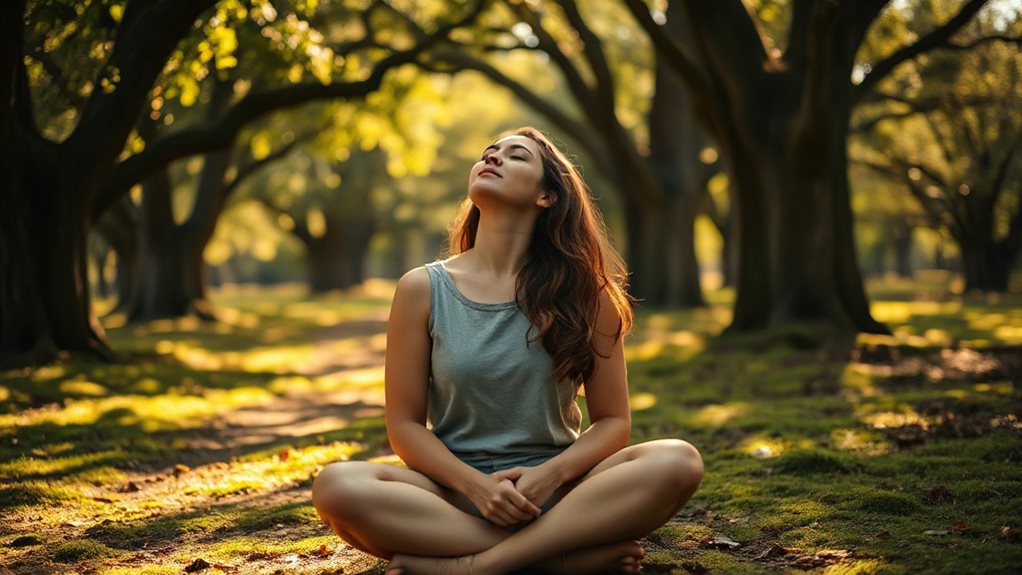
Why do you feel calmer after a walk through a park? You notice anxiety dropping because green surroundings cut risk by 7% per 10% increase, and every extra 360 m to nature adds 5% anxiety.
Personal gardens, visible foliage, and nearby trees lower generalized anxiety symptoms, while simple nature exposure eases rumination, offering a restorative retreat that sharpens reflection and reduces repetitive negative thoughts.
How a Minimum of 2 Hours in Green Space Improves Mental Health
Do you know that just two hours a week in a park or garden can convert your mental health? You’ll notice steadier mood, reduced stress, and sharper focus because studies show 120‑minute exposure lowers depression‑linked brain activity, enhances positive affect, and improves blood pressure and heart rate. It works for all ages, backgrounds, and even those with chronic illnesses, giving you a simple, free‑standing mental health enhancement. Planning ahead and following Leave No Trace principles helps protect the green spaces where you get these benefits.
Why Sunlight Helps You Sleep Better

Spending time in a park or garden can enhance your mental health, and stepping outside for sunlight takes that benefit a step further by directly influencing how well you sleep. Morning light before 10 a.m. nudges your circadian clock, cutting sleep latency and advancing sleep onset by 20‑30 minutes. One hour outdoors aligns melatonin release, steadies cortisol, and improves deep‑sleep quality, especially in winter. A simple walk or breakfast outside gives you that natural reset. For solo outdoor time, adopt a proactive camping mindset by staying aware of your surroundings and making prepared, fact-based decisions, including sharing an itinerary with a trusted contact and packing essential safety gear like a first-aid kit and water purification supplies.
How Green Space Lowers Stress Hormones and Boosts Immunity
When you spend just 20‑30 minutes in a park or garden, your cortisol levels drop noticeably, often by more than 20 % per hour, and the effect is strongest with regular, short visits.
This reduction in stress hormones not only eases perceived tension but also lowers allostatic load, which helps your immune system stay balanced and more responsive to threats.
As a result, you’ll find fewer inflammation spikes and a stronger overall defense against illness.
Using the right charging profile for batteries ensures devices that monitor these benefits remain reliable and long‑lasting.
Cortisol Reduction Mechanisms
Because the parasympathetic nervous system kicks in when you’re surrounded by greenery, your body shifts into a “rest‑and‑digest” mode that naturally curbs cortisol production.
You’ll notice heart rate dropping, blood pressure easing, and stress hormones falling after just 20‑30 minutes of forest or park immersion.
Even brief 10‑minute walks lower salivary cortisol, while richer, wild settings amplify the effect, making stress feel lighter and freedom more tangible.
Immune System Activation
How does stepping into a park or forest turn your immune system into a more vigilant defender? You breathe in phytoncides, which raise natural‑killer cell counts and activity, keeping viruses and tumors at bay for weeks.
Green spaces cut inflammatory cytokines by half, invite beneficial microbes that train tolerance, and activate parasympathetic pathways, all of which enhance immunity and sustain health long after you leave.
Natural Stress Buffering
Your immune system gets a lift when you step into a park, but the real power lies in how green spaces calm your stress response. A 20‑30‑minute walk in nature cuts cortisol by about 21 % per hour, lowers blood pressure, and steadies heart rate, while even ten minutes eases tension. Regular short trips—three days a week, ten minutes or more—sustain these benefits, letting you feel freer and more resilient.
How Regular Park Visits Lower Blood Pressure and Heart Risk
Ever wonder why a simple stroll through a park can calm your heart and lower your blood pressure? Regular visits—just thirty minutes a week—cut systolic and diastolic readings, even if you’re already hypertensive. Both passive enjoyment and light exercise work, and three‑to‑four weekly trips slash medication odds by 36%. Feeling safe in a nearby green space amplifies these benefits, making hypertension prevention realistic for anyone. Kayak fishing is one accessible way to combine light exercise and nature exposure with outdoor recreation.
Why Vitamin D From Sunlight Supports Bones and Immunity

When you soak up a few minutes of sunlight each week, your skin makes vitamin D, which dramatically increases how much calcium your gut absorbs, turning a modest 10‑15% uptake into 30‑40% and conveying that mineral straight to your bones.
That same vitamin D also fine-tunes your immune cells, helping them stay vigilant and keep inflammation in check.
In short, regular sun exposure supports stronger, denser bones while giving your immune system the extra edge it needs.
Vitamin D Facilitates Calcium Absorption
Sunlight’s ultraviolet‑B rays kick‑start a chemical cascade in your skin that ultimately enhances calcium absorption, a process essential for strong bones and a resilient immune system. You convert 7‑dehydrocholesterol to vitamin D3, which the liver and kidneys convert into calcitriol. Calcitriol then opens TRPV6 channels in your gut, pulling dietary calcium into cells and across the basolateral membrane, ensuring you efficiently use the calcium you eat.
Immune Cells Require Vitamin D
Vitamin D doesn’t just strengthen bone; it also equips your immune cells to work efficiently. Sunlight‑derived vitamin D enhances regulatory T cells, balances inflammation, and fuels innate defenses, while blue light speeds T‑cell movement toward infection sites. A daily 5‑30‑minute exposure of face, arms, hands, and legs, without sunscreen, supplies enough vitamin D for sturdy immunity and helps keep autoimmune risks at bay.
Sunlight Boosts Bone Density
Sun‑kissed skin kick‑starts a cascade that fuels bone health, as UVB photons convert 7‑dehydrocholesterol into vitamin D₃, which then drives calcium absorption and balances bone remodeling.
You’ll enhance bone mineral density with just 5‑10 minutes of morning sun on exposed skin, a few times weekly.
This simple habit strengthens bones, lowers fracture risk, and fits a free, active lifestyle.
How Green Spaces Reduce Chronic‑Disease Mortality

When you live near a park or tree‑lined street, your risk of dying from chronic diseases drops noticeably. Greenspaces lower all‑cause mortality, especially cardiovascular and obesity‑related conditions, by improving air quality, cooling heat, and encouraging activity.
Higher density and quality benefit especially protect low‑income neighborhoods, reducing disease scores and stress.
Meeting WHO green‑space guidelines could prevent tens of thousands of deaths annually.
What Big Studies Show About Lifespan and Well‑Being
Ever wonder why some people seem to age more gracefully while feeling lively and energized? Big studies reveal that just two hours a week in green spaces can extend lifespan and boost well‑being, cutting stress hormones, lowering blood pressure, and sharpening cognition.
Childhood nature exposure lowers adult anxiety and depression risk, while regular visits improve sleep, immune function, and resilience, giving you lasting health freedom.
Final Note
Spending just a couple of hours a week in green spaces can sharpen your mood, lower anxiety, and keep your heart healthy, while sunlight enhances sleep and vitamin D for stronger bones and immunity. Regular park visits cut blood pressure and chronic‑disease risk, and large studies link this habit to longer, more energetic lives. By making nature a routine part of your schedule, you’ll protect both mental and physical well‑being with simple, evidence‑based steps.


