
When the heat index climbs above about 90 °F, the combination of temperature, humidity, and exertion overwhelms your body’s cooling system, making dehydration and heat‑related illness likely. Below 77 °F the risk is low, while 80‑95 °F is moderate and calls for early starts, extra water, and frequent rests. Between 95‑110 °F you should avoid midday exposure, and above 110 °F the danger spikes dramatically. Humidity, altitude, and open terrain can push the perceived heat higher, so monitoring the index and watching for excessive sweating, dry mouth, dark urine, dizziness, or cramps will help you stay safe, and the next part will show you how to manage those risks.
TLDR
- Temperatures above 95 °F (35 °C) with high humidity significantly increase heat‑stress risk for hikers.
- When the heat index exceeds 85 °F (29 °C), dehydration accelerates and performance declines.
- Elevated altitude amplifies heart rate and fluid loss, making lower temperatures feel hotter.
- Exertion on sunny, exposed ridgelines raises core temperature faster than shaded valleys.
- Early signs of heat illness (excessive sweating, dry mouth, dark urine) demand immediate rest and hydration.
What the Heat Index Actually Means for You
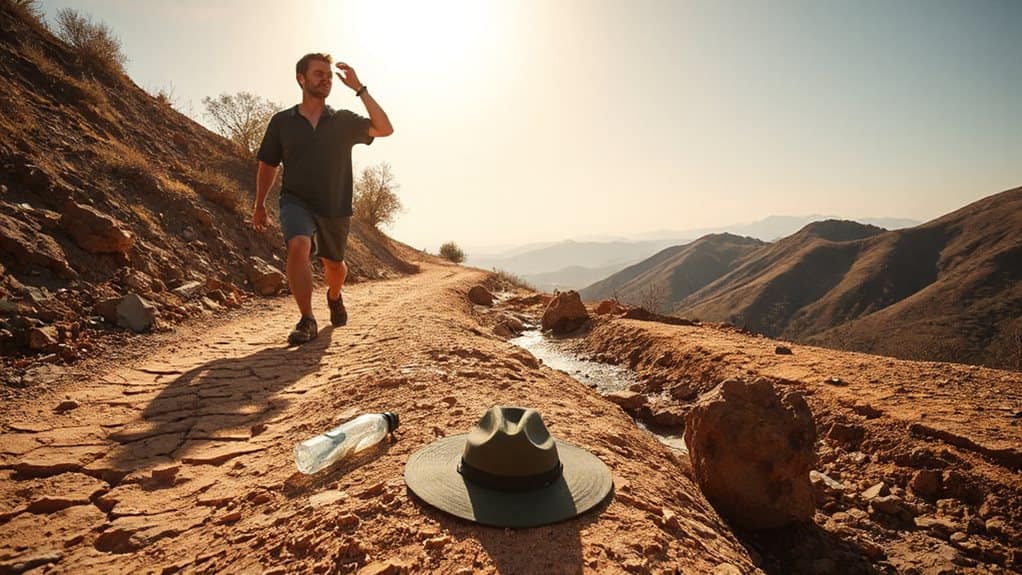
Typically, the heat index is the “feels‑like” temperature you experience, a blend of the air temperature and the relative humidity. It tells you how hot your body will feel when sweat can’t evaporate quickly, so high humidity turns a warm day into a taxing one. When high humidity reduces evaporation, the body’s cooling efficiency drops, making the apparent temperature rise. Use the index to gauge pacing, hydration, and clothing, remembering sun and exertion can push perceived heat beyond the chart. Consider planning rest and cooling strategies and monitoring your device carefully when hiking to preserve battery life and access offline maps.
Heat‑Risk Temperature Ranges for Hikers
A hiker’s safety hinges on the temperature range they’re tackling, and the risk categories—low, moderate, high, and very high—help you gauge how to plan each trek.
Low risk sits around 77‑88°F, allowing longer, shaded hikes.
Moderate risk appears 80‑95°F, where early starts, extra water, and frequent rests become essential.
High risk, 95‑110°F, demands midday avoidance, and very high risk above 110°F strongly discourages any exertion.
Heat at or above 91°F can sharply increase danger due to reduced sweat evaporation and faster dehydration, so take immediate cooling and hydration steps like resting in shade and sipping fluids to avoid heat exhaustion.
How Humidity, Elevation & Terrain Change the Heat Index

When you combine air temperature with humidity, elevation, and terrain, the heat index you feel on the trail can shift dramatically, and understanding those shifts is key to staying safe.
High humidity slows sweat evaporation, raising core temperature; altitude thins air, increasing heart rate and dehydration risk; open ridgelines and reflective rock enhance radiant heat, while shaded valleys and wind can lower perceived temperature, so adjust pace and gear accordingly. Increased humidity and dew point can significantly reduce performance and increase strain, especially during prolonged efforts, so monitor dew point and adjust plans.
Warning Signs of Heat‑Related Illness While Hiking
If you start feeling excessive sweating, a dry mouth, or notice your urine turning dark yellow and strongly odorous, those are early warning signs that your body is already struggling with heat stress and dehydration.
You may also experience sudden fatigue, muscle cramps, dizziness, rapid pulse, or a throbbing headache.
These symptoms signal escalating heat illness; pause, hydrate, and reassess before continuing.
Monitor rapid weather changes, especially sudden wind shifts, which can signal an approaching front and affect how heat or cooling impacts your body.
Proven Strategies to Manage the Heat Index While Hiking
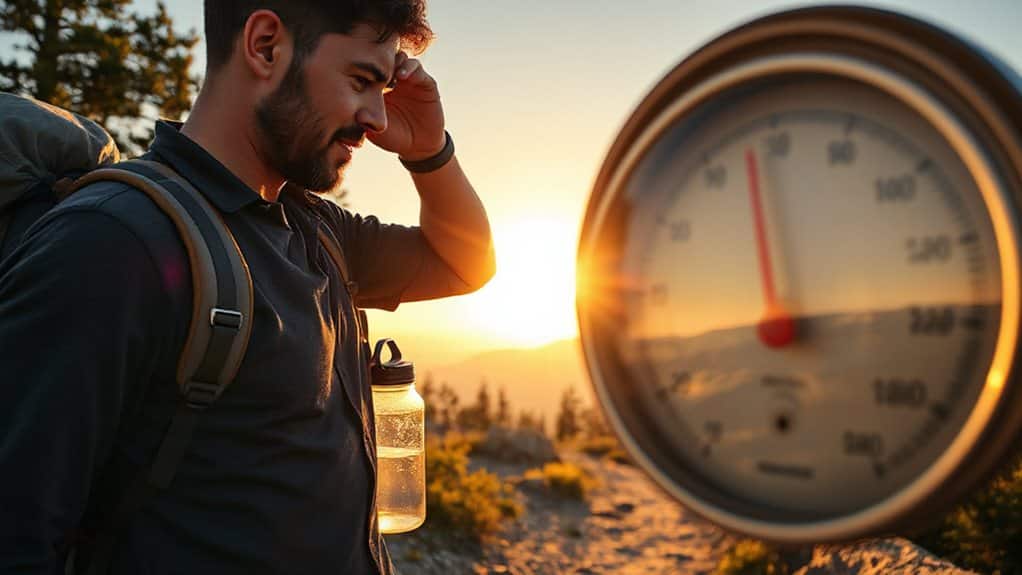
Heat index, not just temperature, tells you how the environment will actually feel on the trail, so tracking it’s the first step toward staying safe. Start early or hike late, choose shaded routes, wear light, breathable gear, and a wide‑brim hat.
Hydrate before you feel thirsty, carry extra water and electrolytes, and avoid midday exposure when the index exceeds 85°F, especially above 100°F.
Consider packing lightweight, breathable rain pants with 4-way stretch for sudden storms or cooling ventilation.
And Finally
Stay aware of the heat index, not just temperature, because humidity and elevation can make a 75 °F hike feel far hotter. Recognize early warning signs—dizziness, nausea, excessive sweating—and act quickly with shade, water, and rest. Adjust your pace, wear breathable gear, and plan for cooler times of day to keep your body safe. By respecting these limits and preparing accordingly, you’ll enjoy the trail without risking heat‑related illness.


