You flip a kayak when the hull’s stability is overwhelmed by an off‑center force—sharp wave angles, strong beam winds, or uneven weight that shifts the center of gravity beyond the boat’s support zone. Flat bottoms give primary steadiness, but a V‑hull or rounded shape is needed for secondary recovery; a low, centered load and balanced hips keep the CG low. Over‑reaching paddle strokes, sudden power turns, or packing heavy gear high can destabilize you, especially in chop or gusts. Adjusting your body position, keeping the bow angled into waves, and maintaining modest speed help, but if you keep reading you’ll learn more ways to stay upright.
TLDR
- Uneven weight distribution or a high center of gravity reduces primary stability, making the kayak prone to tipping.
- Strong side‑on waves or chop, especially when the hull’s narrowest axis faces the wave, can overwhelm secondary stability.
- Beam winds push the stern while the bow stays locked, shifting the pivot point forward and increasing roll risk.
- Over‑reaching paddle strokes or sudden power‑stroke turns shift the center of gravity and induce rapid yaw, destabilizing the kayak.
- Inadequate skeg depth or improper body lean during wave or wind loading reduces control, allowing the kayak to roll.
How Hull Shape and Weight Distribution Keep Your Kayak Upright
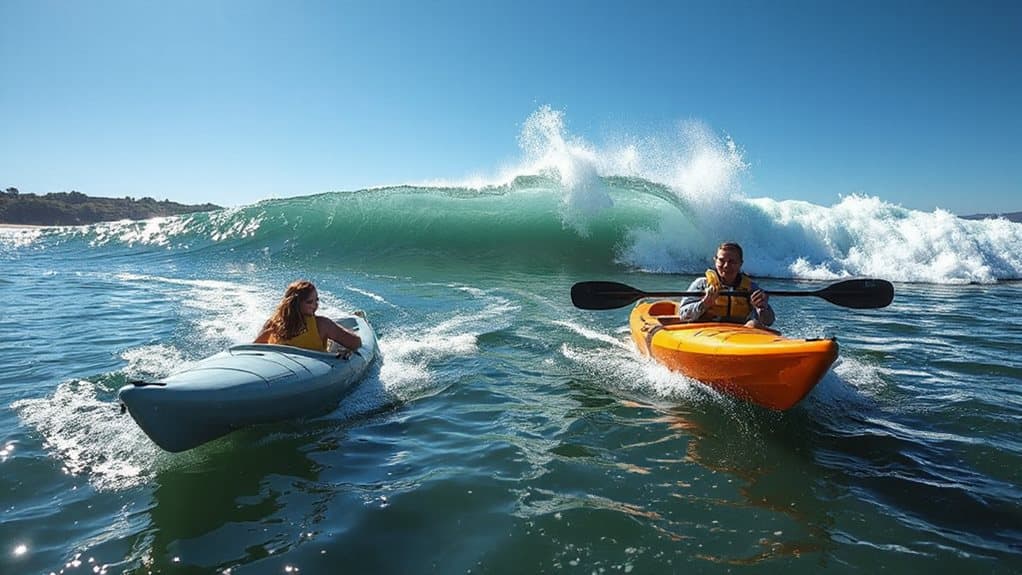
If you choose a hull shape that matches the water you’ll be paddling, you’ll notice how primary and secondary stability work together to keep the kayak upright.
Flat bottoms give rock‑solid steadiness at rest, while rounded or V‑hulls recover quickly when you lean. Longer hulls generally track better and maintain speed in open water.
Keep your center of gravity low, distribute gear evenly, and maintain a balanced trim; a wider beam increases initial stability, but low, centered weight ensures confidence in every glide. Secondary stability is especially important when navigating choppy water.
How Wave Angle and Size Can Flip a Kayak – and What to Do
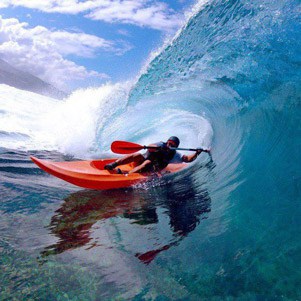
When a wave hits the kayak at a sharp angle, the sideways force can overwhelm the hull’s narrowest stability axis, turning a seemingly steady ride into a rapid roll.
Side‑on, steep chop or breaking wave delivers the biggest push, especially if you’re broadside.
Turn the bow 30‑45°, approach at 45°, keep speed modest, and adjust body lean early.
This reduces side loading, lets the wave weaken, and keeps you upright.
Preparing with the right basic strokes and practicing recovery techniques can greatly reduce the risk of capsizing.
How Wind and Weather Add Side Force That Triggers Capsizing
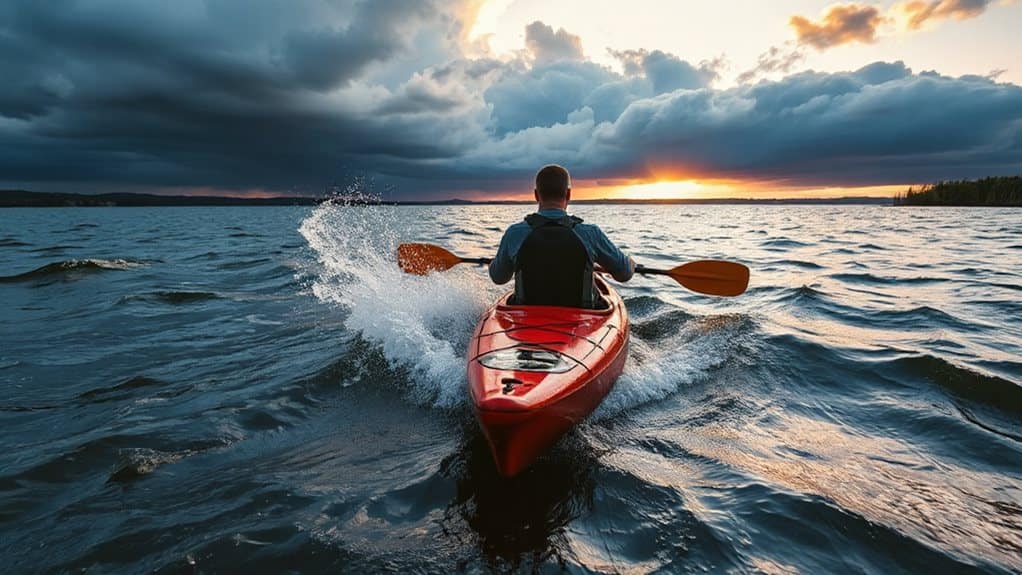
A wave hitting the kayak side‑on can flip it, but a steady beam or tailwind can do the same by creating uneven pressure along the hull.
Beam winds push the stern while the bow locks in place, shifting the pivot forward; faster paddling amplifies this effect.
Tailwinds generate weak stern resistance, letting wind‑driven waves swing the rear.
Adjust your skeg depth to balance pressure, and use rear‑focused strokes to keep control.
Use a fish finder like the Dragonfly 4 Pro to maintain situational awareness on trips.
Why Proper Body Position and Center of Gravity Prevent Flips
When your hips stay balanced, your torso stays centered, and your head aligns with the hull, you keep the combined center of gravity low and directly over the kayak’s support zone, which maximizes initial stability.
This alignment lets you use subtle shifts in weight to correct edging without creating excessive force that could tip the boat.
Longer, narrower kayaks and deeper, V-shaped hulls improve tracking and secondary stability in open water, making it easier to maintain balance with small weight adjustments and reducing the chance of a capsize when carrying gear or paddling at speed with a rounded hull.
Balanced Hips, Centered Torso
Keeping your hips loose and your torso centered is the single most effective way to keep the kayak’s center of gravity aligned with its buoyancy, and that alignment dramatically reduces the chance of a flip. You let the hull move under you, absorbing wave energy with flexible hips, while an upright torso keeps mass over the hull, minimizing side‑to‑side torque.
Balanced weight distribution, low‑center gear, and independent hip motion together preserve stability, letting you glide freely without overcorrection.
Head Aligned With Hull
If you keep your head stacked directly over the hull, you eliminate the lever effect that amplifies roll when the upper body shifts sideways.
Your high‑mass head stays centered, reducing torque and keeping the center of gravity inside the support base.
Waves, wakes, or sudden reaches won’t tip you as easily, and recovery stays smoother because the boat stays flatter while you brace.
Avoid These Paddle‑Stroke Mistakes That Cause Capsizing
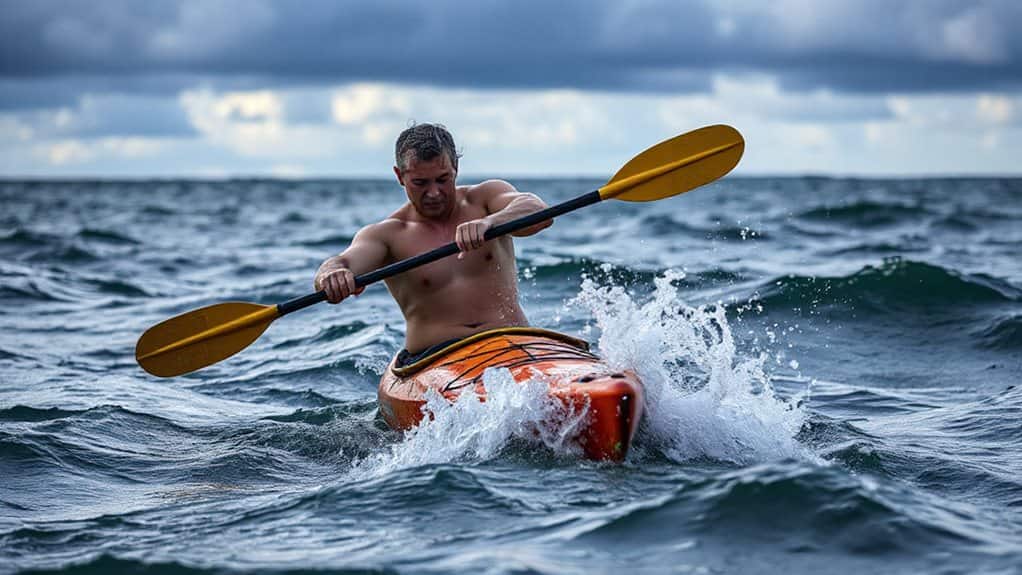
You might think a long reach gives you more power, but it actually throws your center of gravity forward and makes the kayak unstable.
When you snap a sudden power‑stroke turn without a proper brace, the boat pivots faster than you can correct, and the momentum can flip you.
Even a small, unbalanced shift in body weight—like leaning too far to one side while paddling—creates a tilt that compounds with each stroke, so keep your posture centered and your strokes balanced.
Wider kayaks generally offer more stability and can help reduce the chance of capsizing in these situations.
Over‑Reach Paddle Strokes
When the paddle blade lands too far forward before the catch, you over‑reach, forcing the top arm to stretch excessively and shortening the power phase.
This pulls your torso into a forward‑collapse, shifts your center of gravity, and weakens the blade angle, making the catch unstable.
Keep the blade close, rotate from your hips, and maintain an upright core to preserve balance and avoid capsizing.
Sudden Power‑Stroke Turns
A sudden power‑stroke turn can turn a smooth paddle into a rapid yaw that swings the kayak sideways, especially if the force is applied asymmetrically on one side; this abrupt torque often overwhelms the paddler’s ability to brace, making the hull rotate before a corrective response can be made.
Keep strokes centered, avoid over‑reaching, match torso rotation with edge control, and brace low and early; a balanced, smooth pull preserves freedom on the water.
Unbalanced Body Weight Shift
If your center of gravity drifts off the kayak’s midline—whether from a sudden torso twist, a sideways reach, or an uneven load—the hull loses its primary stability and can tip before you even realize it.
Keep your torso upright, shoulders centered, hips relaxed, and gear evenly distributed; avoid overreaching, stiff paddling, and sudden side leans.
Small, deliberate movements stay low and close to the centerline, letting the kayak move under you instead of forcing a capsize.
How to Pack Gear to Preserve Stability and Reduce Capsize Risk

Start by placing the heaviest items low and centered in the kayak, because a low, centered mass lowers the center of gravity and makes the boat more stable.
Pack heavy food and water near the hull, keep light bulky gear toward the bow and stern, and distribute weight evenly fore‑and‑aft.
Use compact dry bags, squeeze out air, label them, and keep the deck clear of clutter for best trim and reduced capsize risk.
How to Navigate Obstacles Without Losing Balance
When you approach a rock garden or a rapid, keep your body low and centered so the kayak’s rolling moment stays minimal, and maintain an upright torso with a slight forward lean to stay balanced.
Focus on a distant point, use a light paddle brace, keep knees pressed, and lean upstream, letting momentum carry you through obstacles while staying relaxed and responsive.
What to Do When a Skilled Paddler Still Capsizes – Self‑Rescue Tips
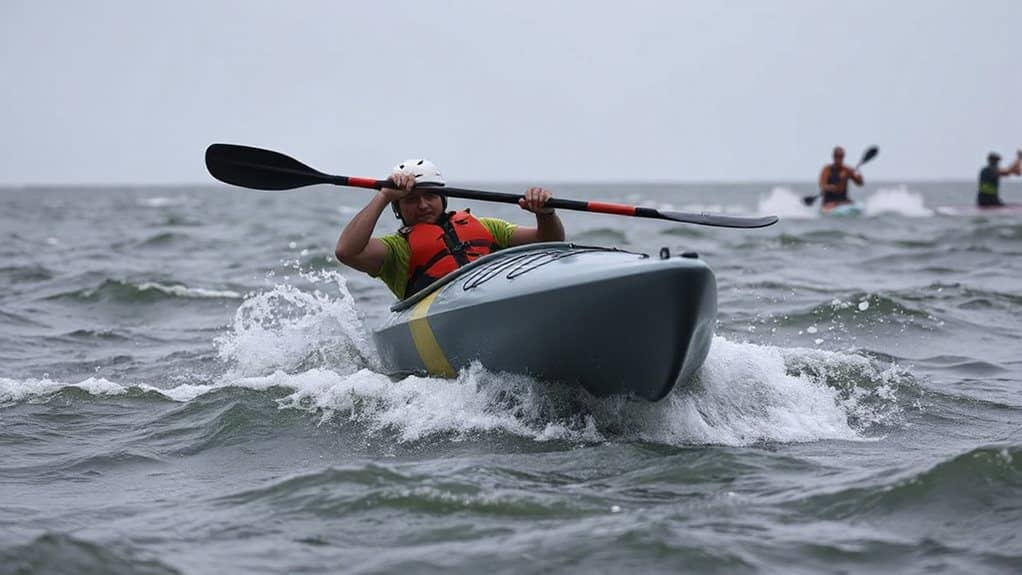
Assess the situation quickly, staying calm while you orient yourself to the kayak, the paddle, and any nearby hazards.
Keep hold of the paddle, check for entrapment, then decide: roll if you can, or inflate a paddle float, secure it, and kick strong, climbing onto the rear deck first.
Stay low, empty water, and move toward shore if wind, waves, or cold make recovery riskier.
And Finally
By mastering hull shape, weight distribution, and proper body positioning, you’ll keep your kayak steady even when waves, wind, or obstacles threaten stability. Adjust your paddle strokes, pack gear wisely, and stay aware of weather to minimize capsizing risk. If a flip still occurs, your self‑rescue skills will get you back on water quickly. Keep these principles in mind, and you’ll paddle confidently, reducing accidents while enjoying the ride.