
Grab a sturdy cord, make a loop around the standing line, then pull the working end around the loop twice, sliding the knot along the line to tighten or loosen as needed; the hitch will grip when you pull away from the stake and release when you push toward it, letting you adjust guylines without retying. Position the stake at a 45‑degree angle, drive it 6–8 inches deep, and keep the knot dressed for smooth operation. This method works for tents, tarps, and even bear bags, and if you keep going you’ll discover extra tips for wind adjustments and slip‑prevention.
TLDR
- Form a loop around the standing line, then wrap the working end around the standing line three times moving away from the anchor.
- Pull the working end through the loop and tighten; the knot slides along the line to adjust tension without re‑tying.
- Position the stake at a 45‑degree angle, 6–8 inches deep, with the head facing away from the tent for optimal pull direction.
- To tighten, slide the hitch away from the stake; to loosen, slide it toward the stake while keeping the knot dressed.
- Test the knot by gently pulling the line; ensure wraps stay snug and avoid over‑tightening, which prevents sliding.
Why the Taut‑Line Hitch Is the Best Choice for Campers

Why is the taut‑line hitch the go‑to knot for campers? You love freedom, so you need a knot that slides when the line’s loose, then locks tight under wind or rain. It adjusts without retying, holds firm once tensioned, and works on tents, tarps, gear, even spacecraft repairs. Simple steps, no expertise required, and it stays reliable, keeping your shelter stable and your adventures unburdened. The knot’s adjustable tension makes it ideal for quickly adapting to changing weather conditions. Many campers also carry a drinking-water hose that is lead and BPA-free for safe hydration while outdoors.
Tie the Taut‑Line Hitch Around a Tent Stake
When you position a stake, make sure it’s driven into firm ground at a 45‑degree angle, with the top facing away from the tent so the line runs straight and doesn’t snag.
After looping the cord around the stake, you can slide the hitch along the standing line to tighten or loosen the tension, pulling the knot away from the stake to increase pull and pushing it toward the stake to create slack.
This simple adjustment lets you fine‑tune the guy line without retying, keeping the shelter stable under changing wind or load conditions.
Stake Placement Best Practices
Ever wondered how a stake can anchor your tent’s guy lines without slipping? Drive each stake at a 45‑degree angle away from the tent, 6‑8 inches deep, twisting as you go for grip. Use metal for rock, plastic for soft soil, and orient stakes perpendicular to wind.
Space them 2‑3 feet from the base, keep the head outward, and avoid low spots that pool water.
Tension Adjustment Techniques
After you’ve set the stake at the right angle and depth, the next step is to adjust the line’s tension with a taut‑line hitch.
Pull the knot away from the stake to tighten; each slide lengthens the doubled line, increasing friction and locking tension.
To loosen, slide it toward the anchor, creating slack without untying.
Test gently, ensure wraps stay snug, and keep the knot dressed for smooth adjustments.
Adjust Tension Quickly When Wind Shifts
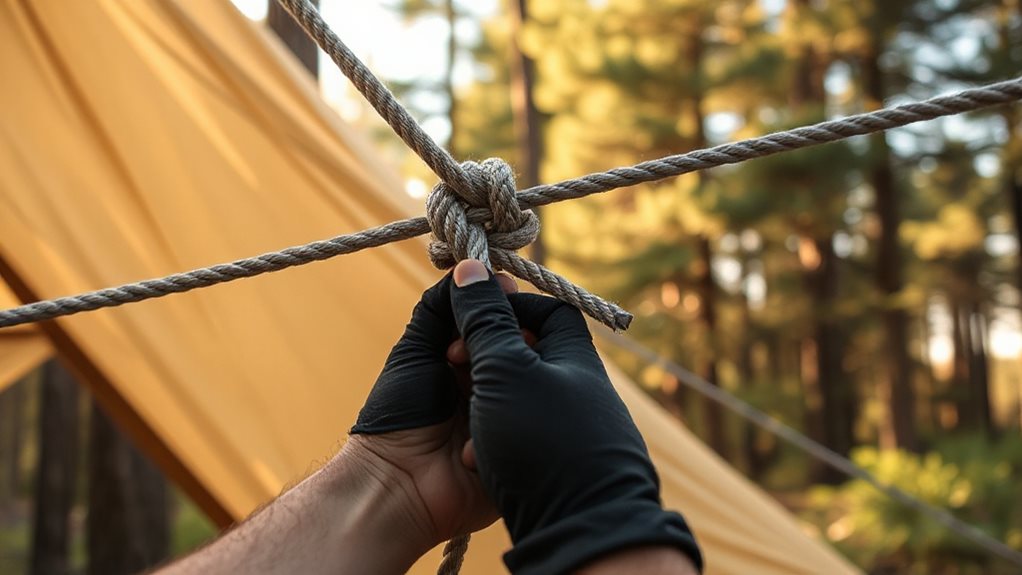
How can you keep your tarp or tent taut the moment a gust hits? Slide the hitch away from the anchor to tighten, enlarging the loop, then push the knot with your fingers to release friction and let it glide back when wind eases. This quick adjustment maintains ridgeline tension without retying, locks under load, and prevents slack buildup, giving you freedom to keep camp stable. Use this technique alongside choosing the right knot and gear for your conditions, like selecting a reliable rigging setup that matches wind and shelter needs.
Fix Common Slip‑Causing Mistakes
Why do slip‑causing mistakes happen so often with the taut‑line hitch? You over‑tighten, preventing the knot from sliding when tension changes, and you coil incorrectly, directing loops away from the anchor, which weakens grip. Test the knot by pulling the standing line; if it slips, re‑dress it.
Keep the free end parallel, avoid twists, and choose the right variation to maintain consistent loop direction. For better control when splicing or handling cord, apply steady tension while dressing and testing the knot.
When to Prefer the Taut‑Line Over a Truck‑er’s Hitch
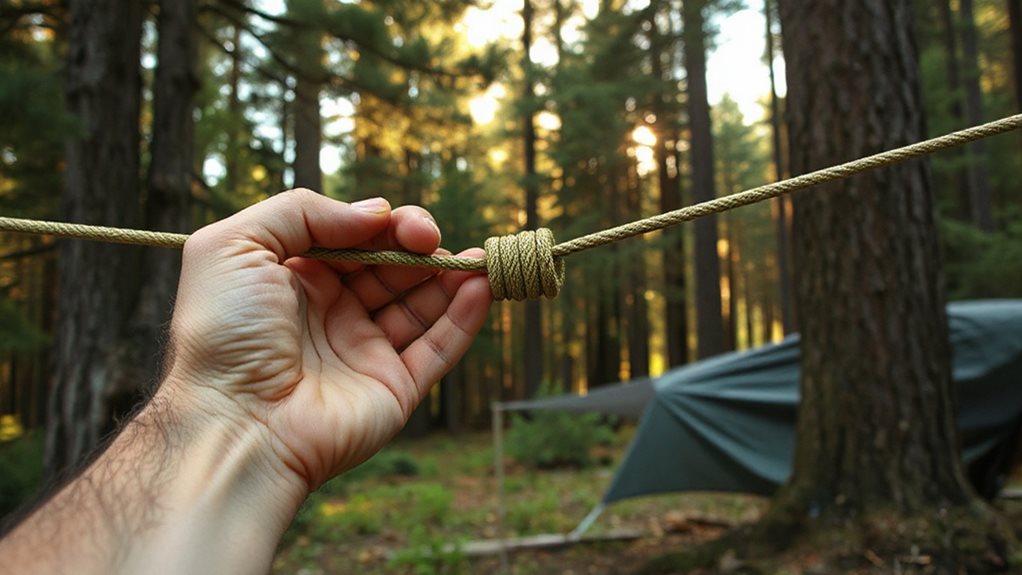
Ever wonder when the taut‑line hitch beats the trucker’s hitch for your campsite setup? You’ll prefer it when you need quick, frequent tension tweaks as wind shifts or stakes move, because it slides smoothly and lets you micro‑adjust without retying. It works well on thicker cords, is easy to learn and inspect in low light, and speeds tarp reshaping, while the trucker’s hitch stays locked and is better for heavy, static loads.
Secure Bear Bags and Loads With the Same Knot
You can use the same taut‑line hitch to lock a bear bag in place and to tension a load, so you only need one knot to master. By looping the rope around the anchor and sliding the hitch, you distribute weight evenly across the line, preventing the bag or gear from sagging or shifting.
The quick‑adjust feature lets you tighten or loosen the tension in seconds, keeping everything secure even if a bear tugs or the wind picks up.
Always pair this knot with bear-resistant storage practices like proper food packing and site selection to reduce wildlife encounters.
Adjustable Bear Bag Securing
How can you keep a bear bag secure while still being able to adjust its height on the fly? You wrap the rope around a tree, run the working end parallel, then coil it twice toward the anchor, add a third coil on the far side, and dress the knot.
Slide the hitch to raise or lower the bag, and the friction wraps hold firm under load, letting you fine‑tune tension without retying.
Load Distribution Using Hitch
Why bother using separate knots for each campsite load when a single taut‑line hitch can handle bear bags, pack attachments, tarp corners, and even gear hanging?
You loop the hitch around a branch or anchor, then slide it along the standing line; friction tightens as the bag pulls down, keeping weight even.
The same knot secures pack frames, tarp corners, rainfly guylines, and hanging pots, distributing force uniformly and preventing slippage.
Quick Tension Adjustments
The taut‑line hitch’s sliding nature makes it perfect for quick tension tweaks, letting you raise or lower a bear bag, tarp corner, or gear loop with a single pull. You slide the knot up the standing line to loosen, then push it down to tighten; friction holds under load, yet a finger release lets it glide.
This single knot secures bear bags, cargo, or guylines, letting you adjust height or tension on the fly without re‑tying, keeping everything stable while you stay free.
Run a Quick‑Check Before Hitting the Trail
Before you hit the trail, give your gear a quick‑check to catch any issues that could turn a smooth hike into a scramble. Inspect the tent, stakes, rainfly, and tarp; verify the mallet.
Look over sleeping bags, pads, and pillows for tears or leaks.
Test the stove, fuel, cookware, and fire starters.
Check headlamps, batteries, first‑aid kit, maps, compass, and water filter.
Ensure layers, boots, multi‑tool, and power bank are packed and secure.
Also, make sure electronics and batteries are tested and stored properly, keeping them at partial charge and protected from extreme temperatures.
Watch This 60‑Second Video for Visual Learners
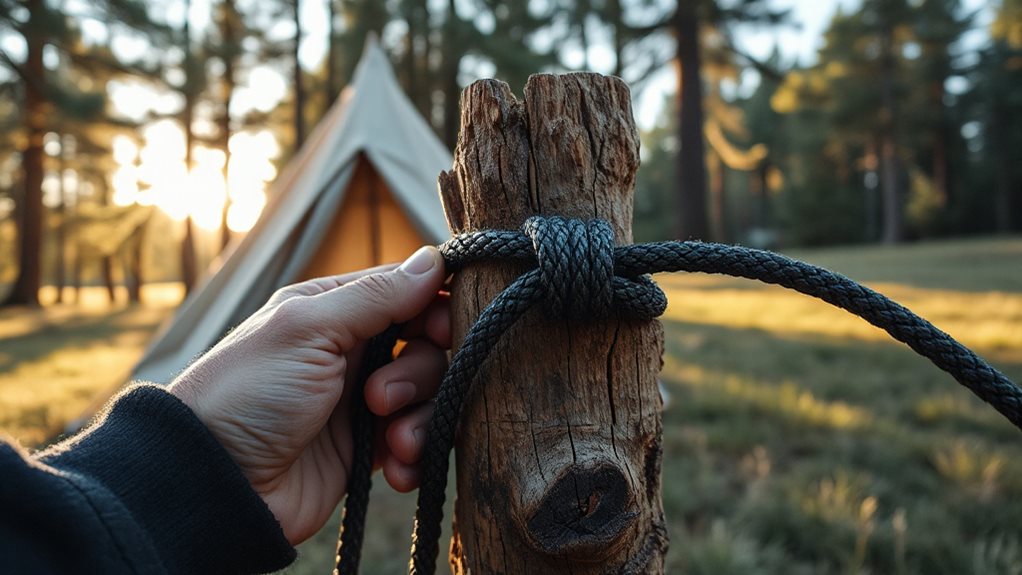
Ever wondered how a 60‑second clip can turn a knot‑novice into a confident camper?
The video shows a two‑toned rope, wraps anchor, cross end, adds two inside wraps, then one outside, pinch, pull tag end opposite, and slide knot for adjustment. You’ll see friction lock, tension fine‑tuning, and quick‑release options—perfect for tarp corners, guylines, or gear lines, all in a concise, visual guide.
FAQ: Real‑World Taut‑Line Hitch Troubleshooting
Why do your taut‑line hitch adjustments feel stuck or slip unexpectedly? You’re likely over‑tensioning, which hardens the knot, or mis‑placing the third coil, causing the lines to run parallel instead of opposite. Check that the third wrap goes opposite the first two, dress the knot free of twists, test by pulling the standing line, and keep tension balanced for smooth, reliable adjustment.
Final Note
Master the taut‑line hitch and you’ll have a reliable, adjustable knot for tents, bear bags, and loads, even when wind shifts. By wrapping the rope correctly around a stake, tightening the loops, and checking for slip‑prone errors, you’ll keep gear secure without fuss. Remember to test tension before you head out, and use the quick‑check routine to spot problems early. With this simple, versatile knot, you’ll stay prepared and confident on every campsite.


