
Gather a soft‑wood fireboard with a central notch, a straight spindle like elderberry or cedar, and dry tinder such as pine needles or birch bark. Kneel, press the spindle into the board, and spin it with steady pressure, gradually increasing speed until a hot ember forms, then transfer the char dust into your tinder bundle and blow gently to ignite. If friction proves tough, use a ferrocerium rod or fire piston for sparks, and a quick‑run bow‑drill can increase heat; more tips await if you keep going.
TLDR
- Collect dry tinder (e.g., pine needles, birch bark, powdered oak gall) and a suitable fireboard and spindle made of softwood or cedar.
- Use the hand‑drill method: press the spindle into the board’s notch, spin quickly while applying pressure, and harvest the hot ember dust into the tinder.
- Build a bow‑drill kit: a flexible bow, a sturdy spindle, a bearing block, and a hearth board; tension the bow and rotate the spindle until smoke appears.
- If friction methods fail, employ a ferrocerium rod or fire piston, striking or compressing to produce sparks onto a dry tinder bundle.
- Ensure all materials are completely dry, practice proper technique, and have a trusted contact aware of your location before solo fire‑starting.
Gather Essential Materials for Fire Starting (Fireboard, Spindle, Tinder)
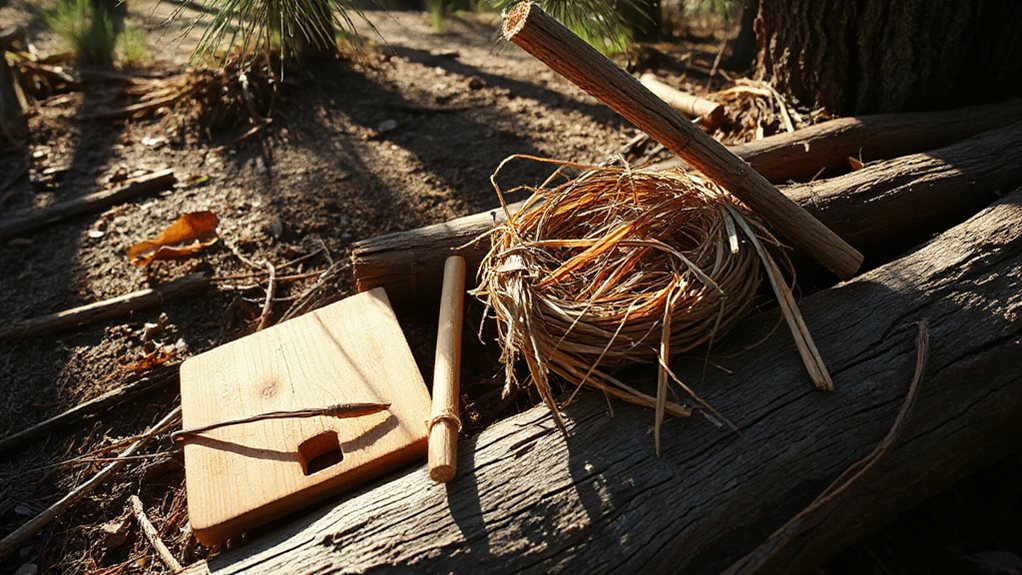
Where do you begin when you want a reliable fire without matches? Choose softwood for both fireboard and spindle—flat slab with a central notch, and a straight, cylindrical spindle about two feet long, preferably elderberry shoots. Gather dry tinder: pine needles, birch bark strips, or powdered oak gall, and bundle them with a thick bark base, ensuring everything is completely dry and sourced from the same tree for optimal friction. Use cedar as an alternative spindle wood for better ignition. Kayaking can be a therapeutic outdoor activity that pairs well with firecraft when planning a day on calm water and reduces stress.
Master Hand‑Drill Technique for Quick Ember Creation
Now that you’ve collected the right softwood fireboard, spindle, and dry tinder, it’s time to focus on how you actually spin the spindle to produce an ember.
Kneel, right knee down, left foot planted, thigh perpendicular; secure the board, engage shoulders, and float your hands diagonally to warm the spindle. Gradually increase pressure and speed, shift hands downward, carve a V‑notch, collect char dust, and transfer it into your tinder bundle for ignition. Share your planned route and check‑in plan with a trusted contact before heading out to ensure someone knows where you’ll be practicing solo camping and can raise the alarm if needed.
Assemble a Simple Bow‑Drill Kit and Tune It for Best Results
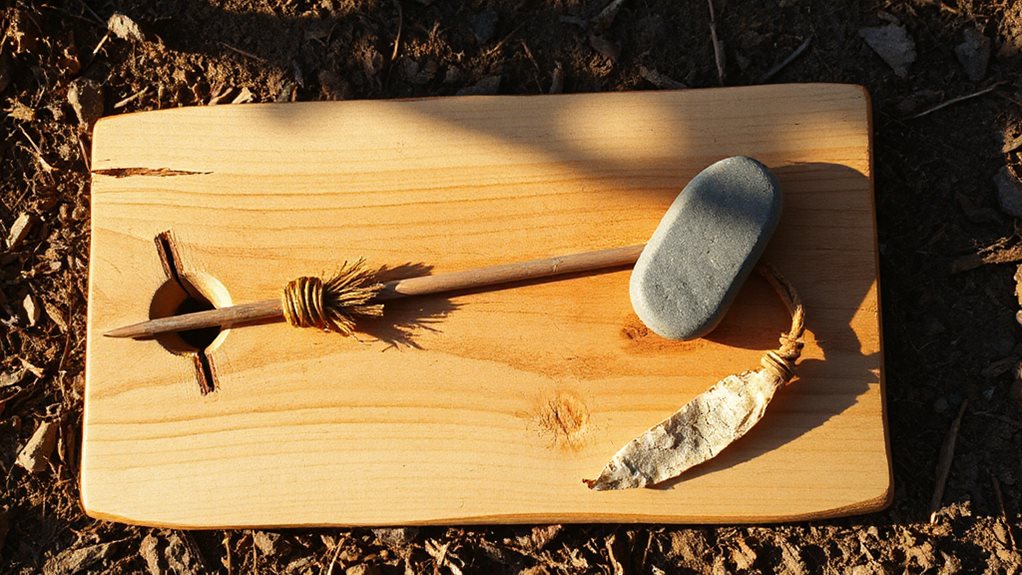
How do you put together a bow‑drill kit that works reliably every time you need a spark? Choose a 5 cm‑wide hearth board of sycamore or cedar, carve a shallow bowl, and select a dry spindle of hazel or sycamore. Make a half‑arm‑span bow with paracord, attach a hard bearing block, then tune tension and angle until smoke appears after ten to fifteen strokes. Measure materials and test fit carefully, aiming for a snug spindle‑to‑board contact to maximize friction.
Troubleshoot Common Bow‑Drill Problems Before Switching Methods
After you’ve fine‑tuned your bow‑drill kit, the next step is to troubleshoot the common hiccups that can keep you from getting a steady ember. Tighten the cord, twist the spindle correctly, and use the bow’s full length; plait three cords or switch to paracord for grip. Ensure the hearth notch is deep, the spindle straight, and pressure steady to stop squeaking, popping, or insufficient heat.
Adjust wood softness, smooth the spindle, and lubricate the bearing block if needed. Consider practicing in safe havens and trusting your gut if a location or situation feels unsafe.
Generate Sparks for Fire Starting With a Fire Piston or Ferrocerium Rod
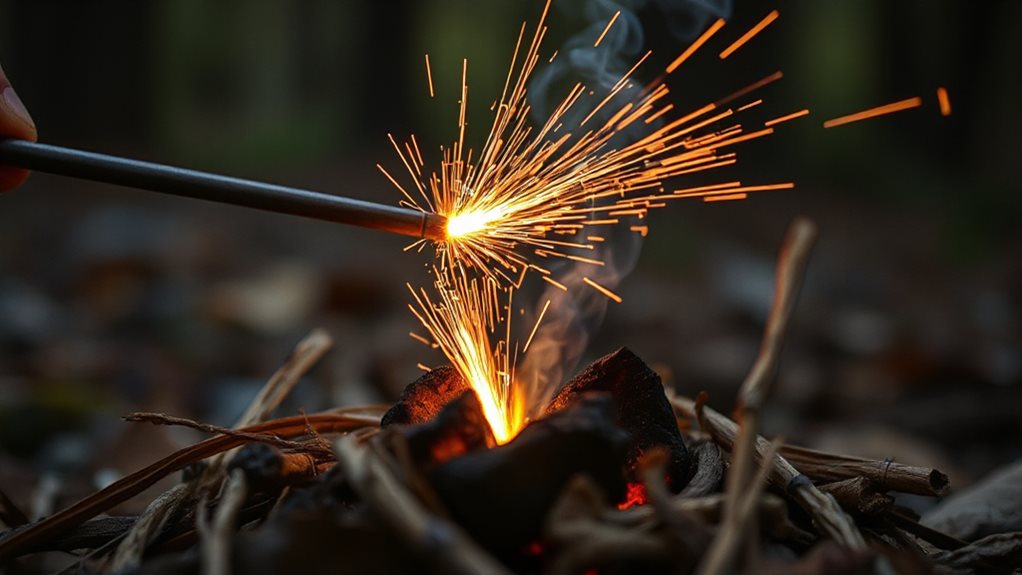
A ferrocerium rod or a fire piston can give you reliable sparks even when matches are nowhere in sight, and controlling their use is straightforward once you have the right tinder and technique. Hold the rod at a 45‑degree angle, scrape with a knife spine, and aim a shower of 3,000°F sparks onto a loose cotton‑ball bundle. Adjust pressure, practice push‑pull motion, and gently blow on the ember until it catches. Use magnesium shavings for extra heat, and keep tinder dry and ready.
Final Note
Now you’ve got the basics: gather the right materials, master the hand‑drill, set up a bow‑drill, troubleshoot any hiccups, and use a fire piston or ferrocerium rod for sparks. Each method has its strengths, so practice them in safe conditions and keep your tinder ready. With patience and proper technique, you’ll create reliable fire without matches, turning survival skills into confidence and self‑reliance.


