
Start by loading heavy items like food or gear snug against your back, centered between your shoulder blades for balance. Pack big, bulky items low and close to your spine to stay stable on the trail. Roll clothes tightly and use compression sacks to save space, while stuffing socks or small items into shoes to maintain shape. Organize with packing cubes, keep toiletries leak-proof, and secure everything with straps—there’s a smart way to fine-tune every detail for smoother excursions.
TLDR
- Pack heavy items close to your back and centered along the spine to improve balance and reduce strain.
- Use compression sacks and roll clothes tightly to minimize volume and maximize available space.
- Organize gear by priority: start with essentials (“rocks”), then add smaller items (“pebbles” and “sand”).
- Utilize packing cubes to separate and compress clothing, keeping items accessible and wrinkle-free.
- Wear bulky items like shoes and jackets during travel to free up internal backpack space.
Start With the Big Stuff When Packing a Backpack
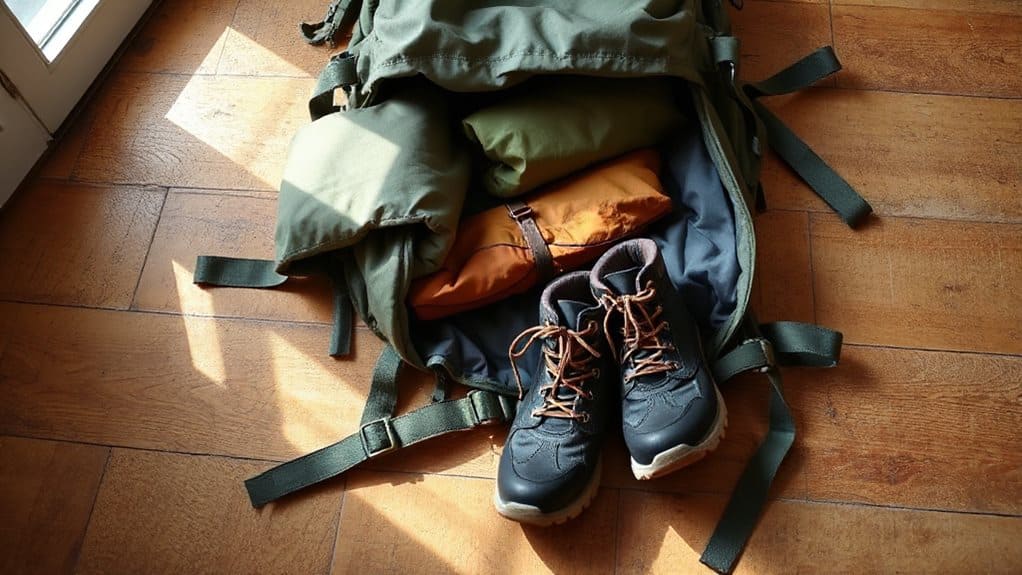
Start by loading the big, bulky items first—this sets the foundation for a well-balanced pack.
Place heavy gear like your cookware, bear canister, or vacuum-sealed food in the middle, close to your back, for stability.
Secure large, lightweight items—sleeping bags or clothes—at the bottom.
This keeps your center of gravity low, so you move freely, without strain, on any trail.
For optimal balance and comfort, position heavier items at the bottom and close to your back, as proper weight distribution enhances stability and reduces strain.
Also be sure to pack a suitable sleeping bag rated for your trip’s temperatures to stay warm and comfortable at night.
Apply the Rocks, Pebbles, Sand Rule
Think of your backpack as a jar and your gear as rocks, pebbles, and sand—what you pack and where it goes makes all the difference.
Pack rocks first: essentials like documents, clothing, and safety gear. Then add pebbles—comfort items, toiletries, extras. Finally, fill gaps with sand, like small accessories, but never let it crowd out what matters.
Prioritize wisely, and travel freely. Consider using collapsible and multi-functional items like collapsible bins to save space and keep things organized.
Keep Heavy Items Close to Your Back
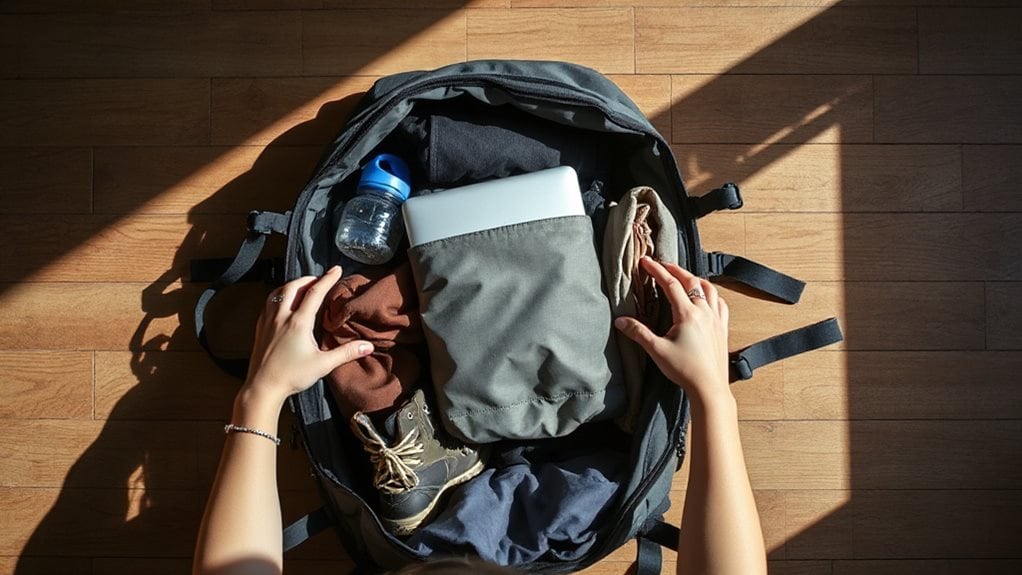
Keep heavy items close to your back to stay balanced and stable on the trail. Placing them near your center of gravity—mid-back level, against the panel—helps you conserve energy and reduces strain, especially uphill.
This simple adjustment keeps your pack from pulling you backward or swaying side to side, so you move more efficiently and safely. Using a pack with a ventilated back panel and proper straps further improves comfort and load stability.
Center Of Gravity
When you’re hiking with a loaded backpack, how you distribute the weight makes all the difference in comfort and control—so place your heaviest items, like food bags and fuel bottles, snug against the back panel, right between your shoulder blades.
This centers the load over your spine, keeps your balance steady, and transfers most of the weight to your hips, so you move freely, stay upright, and feel lighter on your feet.
Balance And Stability
You’ve already positioned your heaviest gear close to your back to align the center of gravity with your spine, and now it’s time to build on that foundation by focusing on overall balance and stability.
Keep heavy items centered, distribute weight evenly side-to-side, and use your hip belt to carry the load. Balanced packing means less strain, better control, and more freedom on the trail.
Roll Clothes to Save Space in Your Backpack
Often overlooked but highly effective, rolling your clothes is a smart way to maximize space in your backpack.
Roll tightly from top to bottom, smoothing seams to prevent wrinkles.
Use Ranger or compact rolling for tough spaces, and pair with compression bags to remove excess air.
This method saves room, reduces creases, and keeps your gear organized—perfect for travelers who value efficiency and freedom on the move.
Also consider choosing multi-use items when packing to reduce the total number of items and save additional space.
Limit Outfits to What You’ll Actually Wear
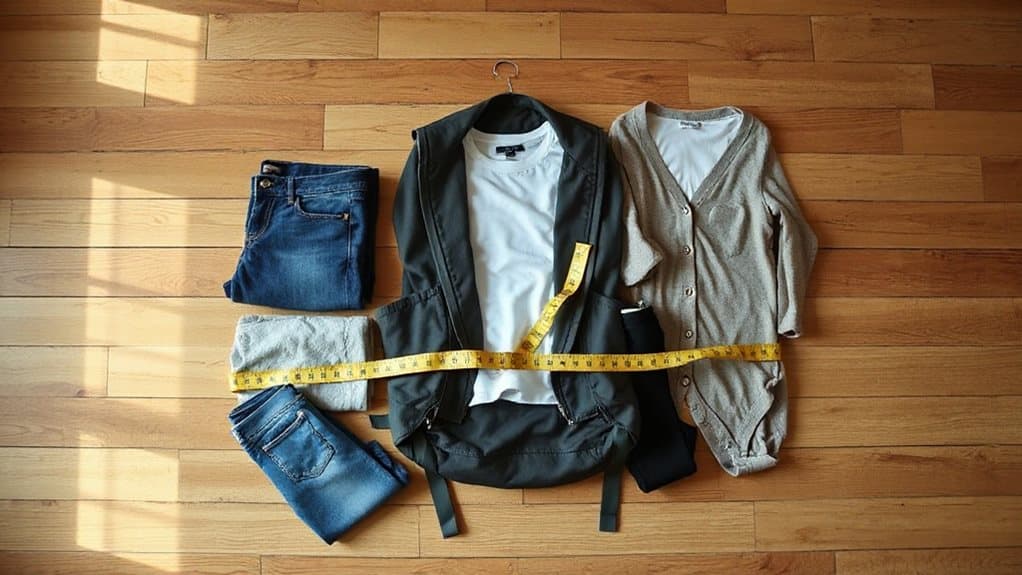
You don’t need a new outfit for every day—pack only what you’ll actually wear.
Choose versatile pieces that mix and match easily, like a neutral jacket or a pair of jeans that work for both day and night.
This keeps your backpack light and gives you more room for essentials.
Dress for potential water exposure and changing conditions by choosing quick-dry, layered pieces.
Capsule Wardrobe Essentials
While packing light might seem challenging at first, building a capsule wardrobe around what you’ll actually wear makes travel simpler and more efficient.
Choose timeless basics like button-downs, neutral pants, and a versatile dress. Add a sweater, jacket, and quality shoes you can mix and match. Stick to durable fabrics, limit extras, and you’ll move freely, pack lightly, and stay ready for anything.
Wear Versatile Clothing Pieces
Building a capsule wardrobe sets the foundation for smarter travel, and now it’s time to focus on choosing pieces that truly earn their spot in your bag.
Pick versatile clothing with layering, stretch, and packability—like wrinkle-resistant blends and convertible styles. These adapt to meetings, hikes, or dinners, so you move freely across climates and plans, needing less while doing more.
Use Packing Cubes to Organize Your Backpack
Tame the chaos of travel gear by embracing packing cubes as your organizational backbone.
You’ll separate clothes by type—tops, bottoms, underwear, swimsuits—and find items fast, no rummaging.
Cubes maximize space, compress bulk, and keep your backpack neat.
They protect gear, reduce wrinkles, and work for any trip, giving you freedom, efficiency, and peace of mind on the move.
Squish Down Bulky Layers and Gear
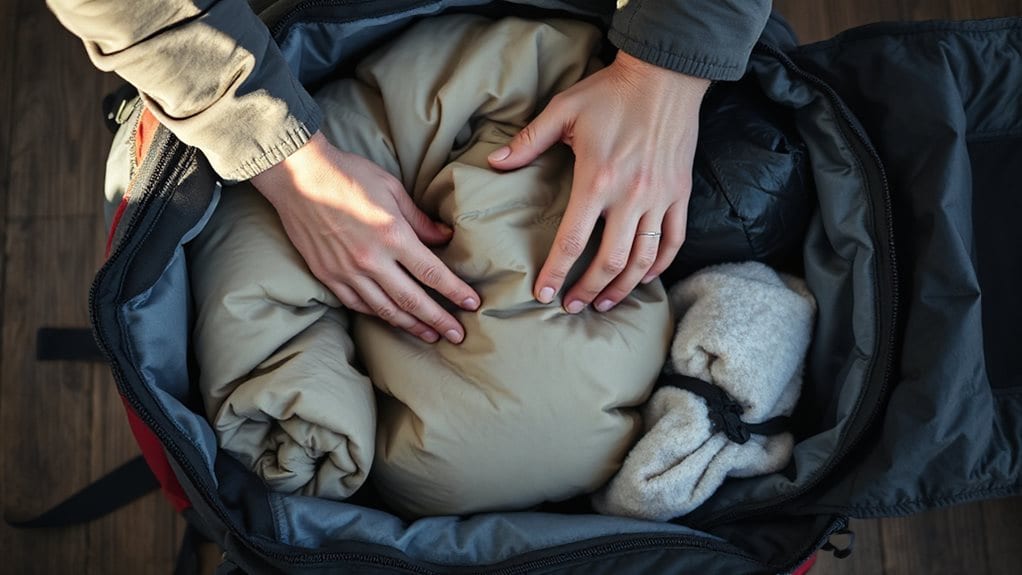
Squish down bulky layers by using vacuum bags for items like jackets or sweaters—you’ll save serious space.
Roll soft gear like clothes tightly, almost like a burrito, to cut down on air pockets and wrinkles.
Let heavier items settle toward the center of your pack, where they’ll help compress softer stuff and keep your load balanced.
Compress Layers With Vacuum Bags
Maximize your packing space by compressing bulky layers with vacuum bags—ideal for bulky sweaters, puffy jackets, and travel blankets that eat up room.
Roll-up bags save space without pumps, while USB-powered options like the VacBird Turbo X7 offer deeper compression.
You’ll cut volume by up to 80%, protect gear from moisture, and keep your pack organized, all with durable, resealable nylon that’s ready for any expedition.
Roll Soft Gear Tightly
Start by laying your soft gear flat on a clean surface—this simple step sets the foundation for tight, efficient rolls that save space and reduce wrinkles.
Roll shirts, pants, and jackets tightly from bottom to top, securing them with bands or packing cubes.
Stuff socks and underwear inside shirts before rolling, and use soft rolls to fill gaps around bulky items like tents or bear canisters.
Utilize Weight For Packing
Think of your backpack as a puzzle where every piece needs to fit just right—especially when bulky layers and gear threaten to eat up precious space.
Pack heavy items first, close to your back, for better balance. Let lighter, squishy gear fill gaps around them. Use compression bags to shrink bulky clothes, and don’t over-tighten straps until everything’s in.
Keep Toiletries Leak-Proof and Cables Tangle-Free
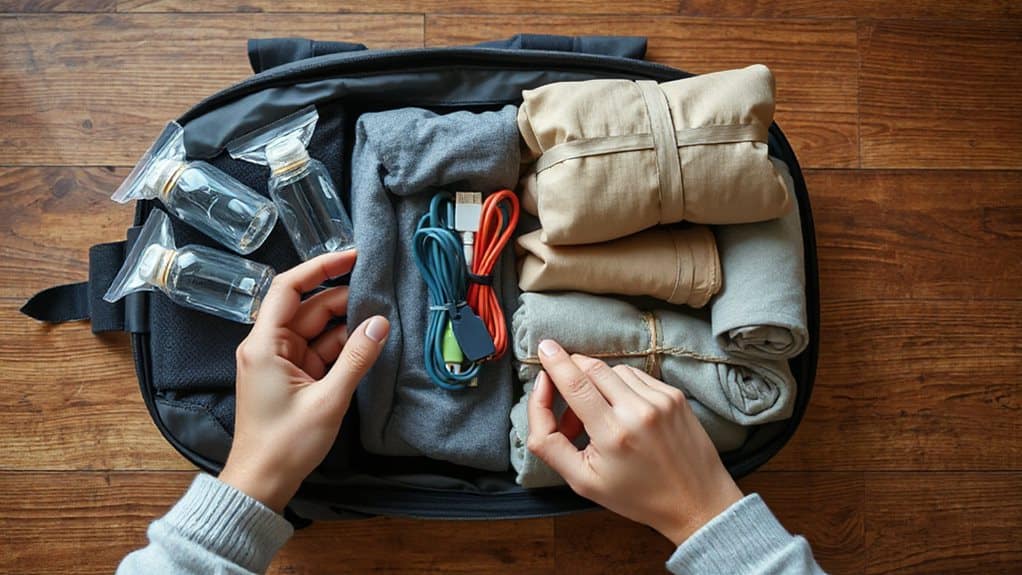
Keep your essentials secure and tangle-free by tackling leaks and cable chaos before they happen.
Use travel-size bottles or refillable pouches to prevent spills, and pack bars instead of liquids when possible.
Store all liquids in a clear Ziploc, and organize cables in mesh bags to avoid tangles.
Keep items separated, secure, and easy to access—so you move freely, without hassle or delays.
Pack Shoes and Accessories the Right Way
Now that your toiletries are sealed tight and your cables are neatly sorted, it’s time to give your shoes the attention they deserve.
Protect them with shoe bags or double-wrap in plastic to prevent scuffs and dirt transfer.
Place heavier pairs at the bottom, soles out, for balance.
Stuff with socks or small items to save space and hold shape.
Keep damp shoes unpacked, and consider wearing bulky ones to save room.
Check and Adjust Weight Distribution
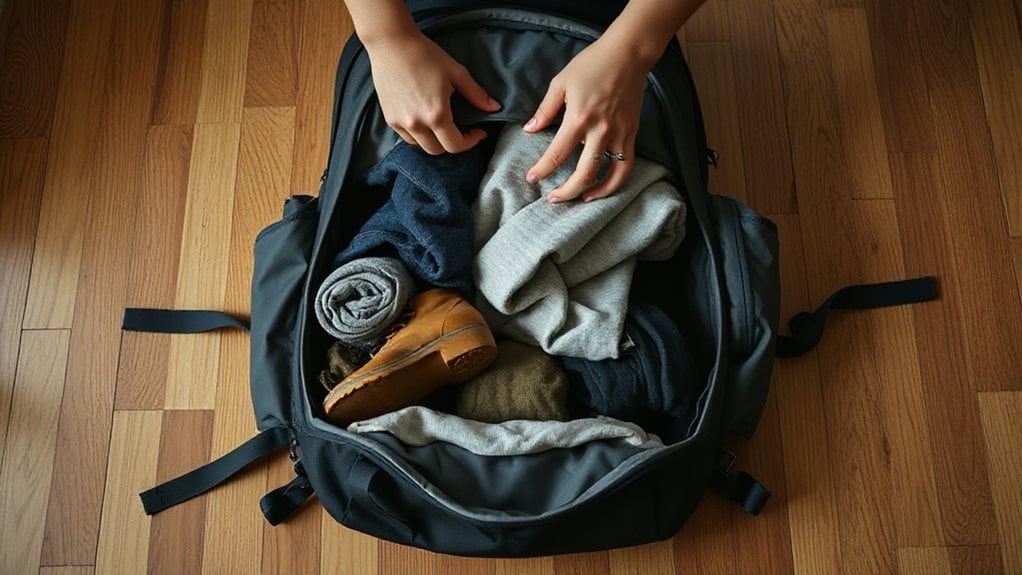
Once you’ve packed your gear, take a moment to assess how the weight sits in your backpack—because even the best organization won’t help if the load throws off your balance.
Center heavy items along your spine, keep the bulk low and close to your back, then tighten your hip belt to carry most of the weight.
Adjust shoulder and load-lifter straps so the pack hugs your body, stays stable, and moves with you—freedom on the trail starts with smart, balanced packing.
Final Note
You’ve packed smart—now you’re ready to go. Remember, balance and organization make all the difference. Keep heavy items centered, roll your clothes, and secure loose ends. Double-check weight distribution so your backpack feels light on your shoulders. With these tips, you’ll save space, stay comfortable, and move freely. Travel smarter, not harder—every trip gets easier once you know how.


