Your Labrador sheds year-round due to its double coat, with heavier shedding in spring and fall as it adjusts to temperature changes. You’ll need to brush your dog regularly, especially during peak shedding seasons, to manage loose fur. A diet rich in quality protein and essential fatty acids supports coat health and reduces shedding. Use tools like a de-shedding rake or slicker brush for best results. Watch for bald spots or skin irritation—these could signal underlying issues. With the right care, you can keep your Lab’s coat in good condition and your home fur-free. There’s more to optimizing your routine for your dog’s specific needs.
TLDR
- Labrador Retrievers shed heavily year-round due to their double coat, with increased shedding in spring and fall.
- Regular brushing, especially with de-shedding tools, significantly reduces loose fur during peak shedding seasons.
- A diet rich in high-quality protein and omega fatty acids supports coat health and minimizes excessive shedding.
- Sudden or prolonged shedding, bald spots, or skin irritation should prompt a veterinary check for underlying issues.
- Weekly grooming, frequent vacuuming, and proper hydration help manage shedding and maintain a clean home.
Why Do Labradors Shed So Much?
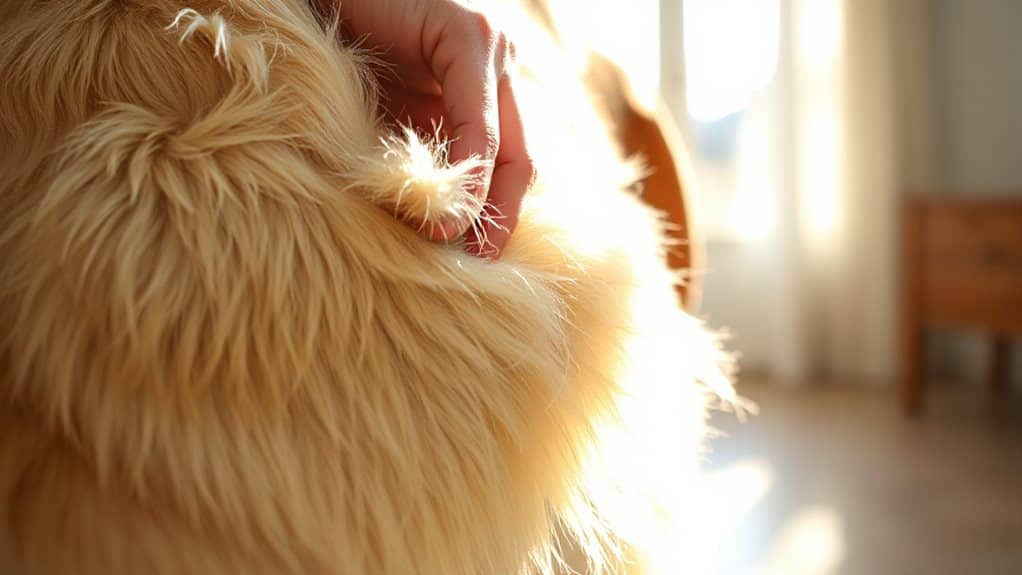
While you might be surprised by the amount of fur your Labrador leaves behind on furniture and clothes, their heavy shedding comes down to a built-in double coat designed for resilience in harsh conditions.
You see, that thick undercoat constantly renews itself, shedding year-round to regulate temperature, while genetics, diet, and health further influence how much fur you’ll manage—giving you a dog built for freedom in any environment, not a low-shedding lapdog. Labrador Retrievers are heavy shedders due to their double coat and natural shedding cycle. Additionally, seasonal temperature changes often cause increased shedding as dogs adjust their coats.
When Does Lab Shedding Peak Each Year?
You’ll typically notice your Labrador shedding the most during two key times of the year—spring and fall—when their double coat undergoes a natural shift to adapt to changing temperatures.
In spring, expect heavy shedding as your Lab loses its winter coat, often in handfuls.
Come fall, moderate shedding prepares them for colder weather.
These peaks are normal, predictable, and manageable with consistent grooming.
Regular grooming and keeping your Lab’s coat clean can reduce loose hair and minimize shedding, especially when you use rubber insoles and appropriate shedding tools.
Does Diet Affect a Labrador’s Shedding?
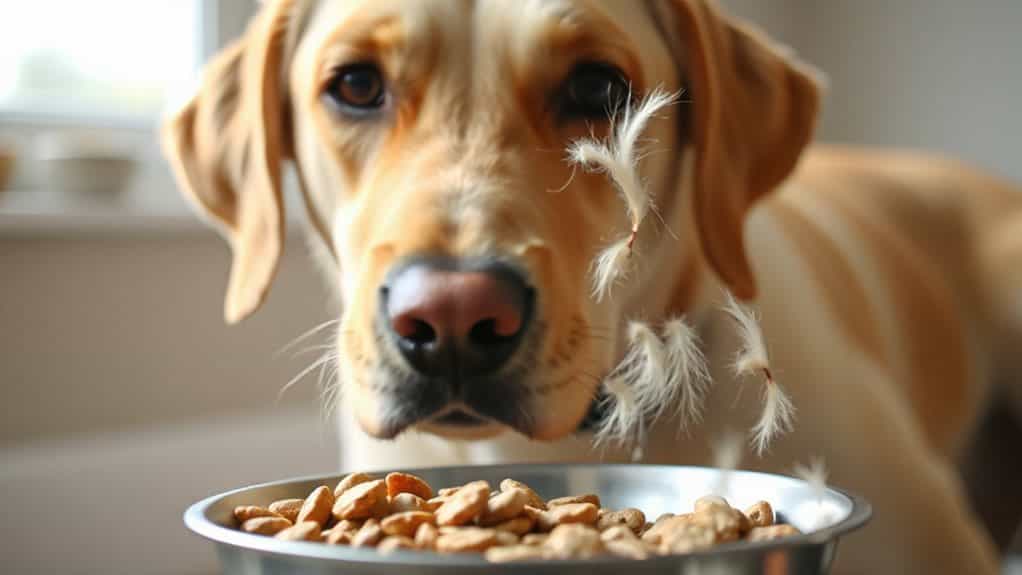
A well-balanced diet plays a crucial role in managing your Labrador’s shedding, since what your dog eats directly impacts the health of their skin and coat.
Feed high-quality protein, essential fatty acids, and key vitamins like B-complex and zinc to reduce shedding.
Choose foods with fish oil, flaxseed, or animal-based proteins, and keep your dog hydrated with fresh water and moisture-rich options like sardines or pumpkin.
Environmental factors like water quality and pollutants can also affect overall health and coat condition, so consider your dog’s exposure to environmental contaminants when addressing excessive shedding.
How Often to Brush a Lab During Shedding Season
During shedding season, brushing your Labrador every day is your best defense against a house full of loose fur. You’ll cut down on stray hairs, support a healthy coat, and strengthen your bond.
Aim for daily sessions when moulting peaks in spring and fall—this keeps shedding under control without restricting your freedom. Use a de-shedding tool, and spend just minutes each day to stay ahead.
Best Brushes and Tools for Deshedding a Lab
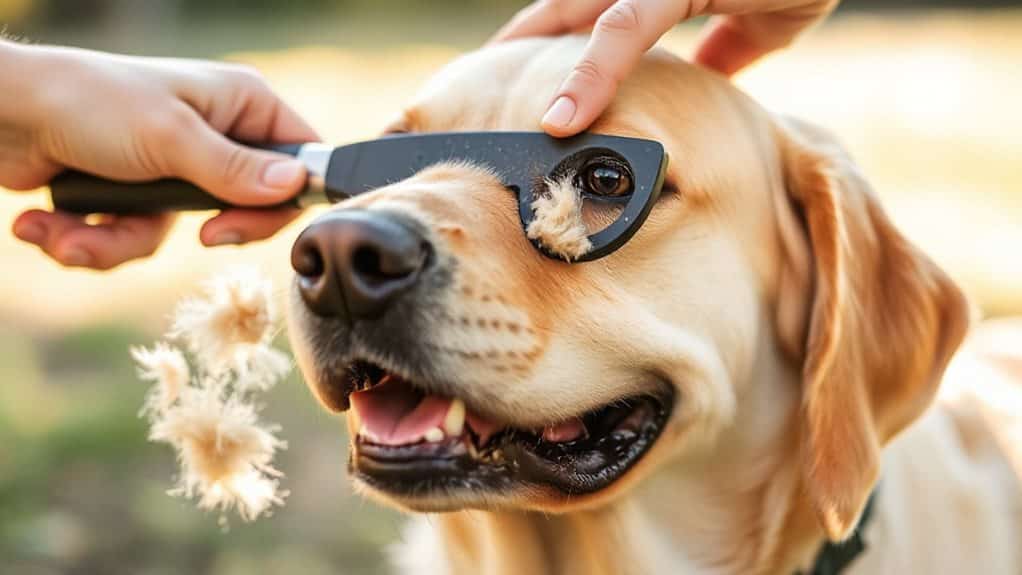
Keeping up with daily brushing during shedding season means you’re already ahead of the game, but having the right tools makes all the difference in managing your Labrador’s thick double coat.
Use a Furminator for deep undercoat deshedding, slicker brushes for tangles, undercoat rakes seasonally, pin brushes for shine, and rubber tools like the Kong ZoomGroom for easy daily maintenance—each plays a key role in keeping your Lab’s coat healthy and your home fur-free. For best results, remember to inspect tools regularly and clean them with mild soap and water to prevent buildup and maintain tool performance.
When to Worry About Excessive Shedding in Labs?
You should keep an eye on your Lab’s shedding patterns, especially if you notice hair coming out in clumps or bald spots developing.
If their coat looks dull, they’re scratching more than usual, or you see a sudden spike in shedding, it’s time to call your vet. These signs can point to allergies, parasites, or underlying health issues that need professional care. Regularly check and maintain a well-stocked first aid kit for pets, including sterile gauze and appropriate medications, to manage minor skin injuries and prevent infection.
Signs Of Health Issues
While shedding is a normal part of your Labrador’s life, especially during seasonal changes, you’ll want to keep an eye out for signs that it might signal an underlying health problem.
Look for bald patches, dry skin, or a dull coat, which can point to nutritional gaps, allergies, or hormonal imbalances like hypothyroidism.
If your dog itches constantly, loses hair in clumps, or shows red, irritated skin, it’s time to consult your vet.
When To See A Vet
If your Labrador’s shedding suddenly goes beyond the usual seasonal blowout—say, lasting longer than four weeks or leaving bald spots despite regular grooming—it’s time to take a closer look.
Watch for weight changes, skin issues, or parasites, and don’t wait if shedding persists.
A vet can run blood work to rule out thyroid problems, allergies, or other underlying conditions—giving you peace of mind and your dog relief.
How to Keep Labrador Hair Under Control at Home
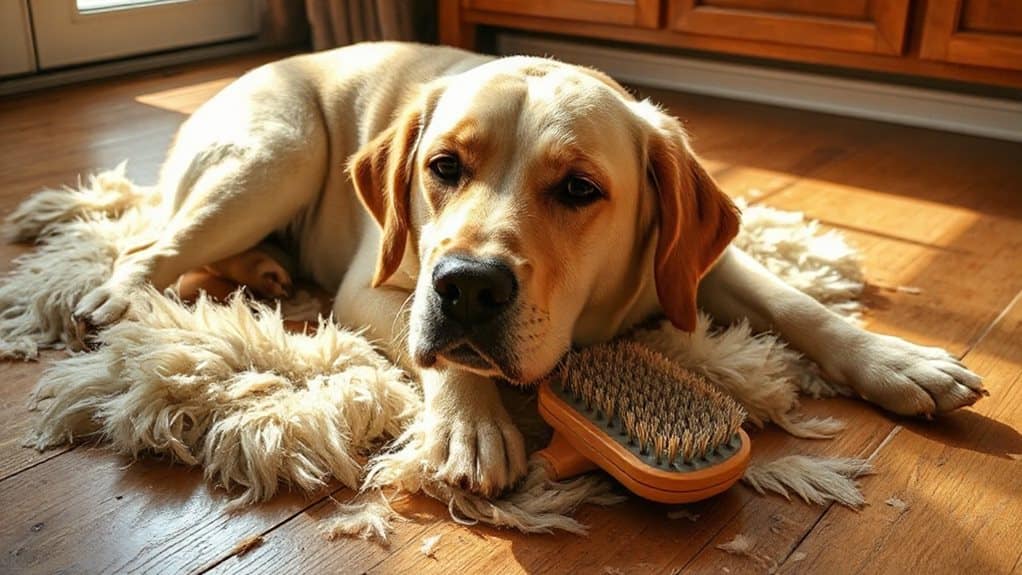
You can keep your Labrador’s shedding under control by brushing them daily during peak seasons to pull out loose hair before it lands on your floors.
Feed them a quality, meat-rich diet to support healthy skin and coat, since nutrition directly impacts how much they shed.
And don’t skip regular vacuuming—especially in spring and fall—so fur doesn’t pile up around the house.
Daily Brushing Routine
Regular brushing is essential for keeping your Labrador’s double coat in top condition and minimizing loose hair around your home.
During shedding seasons, brush daily with a slicker brush and undercoat rake to remove dead hair.
Use gentle pressure to avoid irritation, and always comb before baths.
Short, positive sessions prevent mats, support skin health, and strengthen your bond—keeping both coat and pup in great shape.
Quality Diet Matters
Nutrition plays a powerful role in managing your Labrador’s shedding and keeping their coat in peak condition. Choose high-quality, animal-based proteins like grass-fed beef, fish, or poultry to support strong hair growth. Skip low-quality fillers found in discount kibble.
Add omega-rich salmon oil and whole-food sources of B vitamins, zinc, and vitamin E. Stay hydrated, prioritize raw or moisture-rich meals, and supplement wisely for a healthier, shinier coat.
Vacuum Frequently During Peaks
Especially during seasonal shifts, keeping up with vacuuming makes a noticeable difference in managing the constant flow of Labrador hair throughout your home.
Vacuum at least three times a week, daily if possible, using effective tools like robotic vacuums or deshedding devices.
Combine this with weekly brushing and occasional bathing to reduce loose fur, minimize buildup, and maintain a cleaner, freer living space year-round.
Final Note
You can’t stop your Lab from shedding, but you can manage it effectively. Regular brushing, especially during peak shedding seasons, reduces loose fur and keeps their coat healthy. A balanced diet supports strong hair, while the right tools—like deshedding combs—make grooming easier. Stay consistent, clean your home routinely, and monitor for unusual hair loss. With these steps, you’ll keep shedding under control and your pet comfortable all year.