
After the flames die, the coals stay hot for several hours—often up to twelve—especially if you used dense hardwoods or large briquettes, which retain heat longer than softwoods. Limited airflow and dry weather keep the embers smoldering, while wind or rain speeds cooling. You should treat the ember bed as active until it’s truly cold to the touch, and a six‑hour check is a safe checkpoint for hidden heat. If you keep going, you’ll uncover more tips on managing airflow, weather effects, and quick‑cooling tricks.
TLDR
- Coals can remain hot for up to 12 hours, especially large briquettes or dense hardwood pieces.
- After flames die, a six‑hour “safe‑touch” test is recommended to detect hidden embers under ash or debris.
- Hardwoods (oak, maple, hickory) retain heat longer than softwoods, producing steadier embers for several hours.
- Limited airflow (closed vents) slows cooling, while wind or opened vents can keep coals smoldering and reignite them.
- Proper extinguishing requires water soaking, stirring until hissing stops, and confirming the ash is cool to the touch.
Campfire Coals Safety Timeline: When Flames End
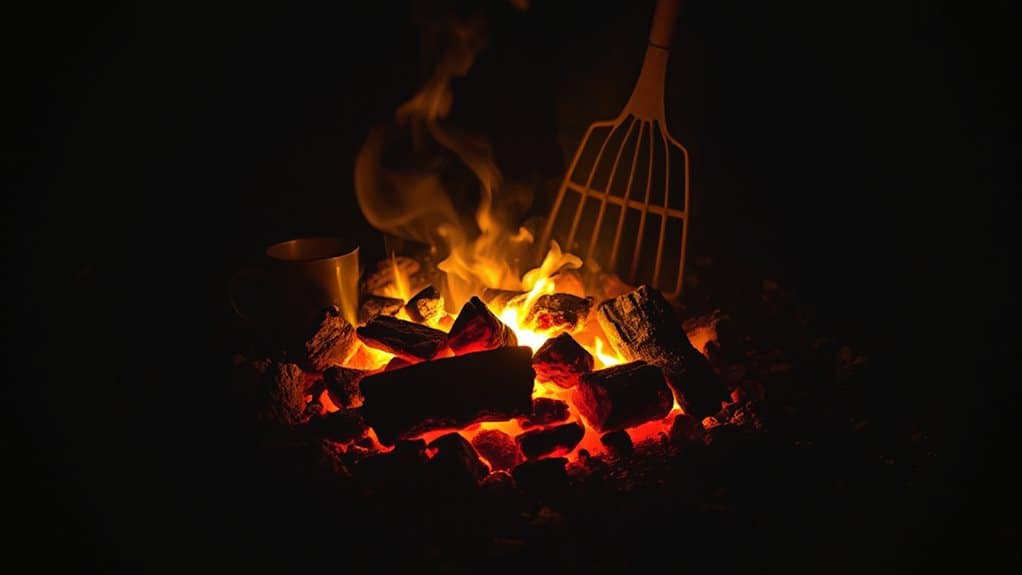
When the flames die down, the coals don’t instantly cool off; they stay hot and can smolder for hours, so you need to treat the ember bed as an active hazard. You’ll find coals can retain heat up to twelve hours, especially briquettes or large chunks, and oxygen or wind can reignite them. Keep water, a shovel, and a thermometer handy, stir the ash, soak until cool, and never assume safety until you touch a truly cold surface. Coconut briquettes can last around two hours. Create and maintain a three-foot safety zone around the fire to reduce the risk of stray embers igniting nearby debris.
Safe‑Touch Test: Why 6 Hours Matters?
Even after the last visible flame has flickered out, the coals beneath can stay dangerously hot for many hours, so a reliable safe‑touch test is essential before you pack up.
Six hours gives you a conservative checkpoint; heat can linger under ash, stones, or wood, and hidden embers may still ignite dry debris.
Hover your hand, stir the ashes, and confirm everything feels cool to the touch before leaving.
Higher wood moisture can mean more lingering heat due to steam‑driven pops releasing burst energy that leaves embers hotter for longer.
Campfire Coals Safety: How Wood Type Affects Heat
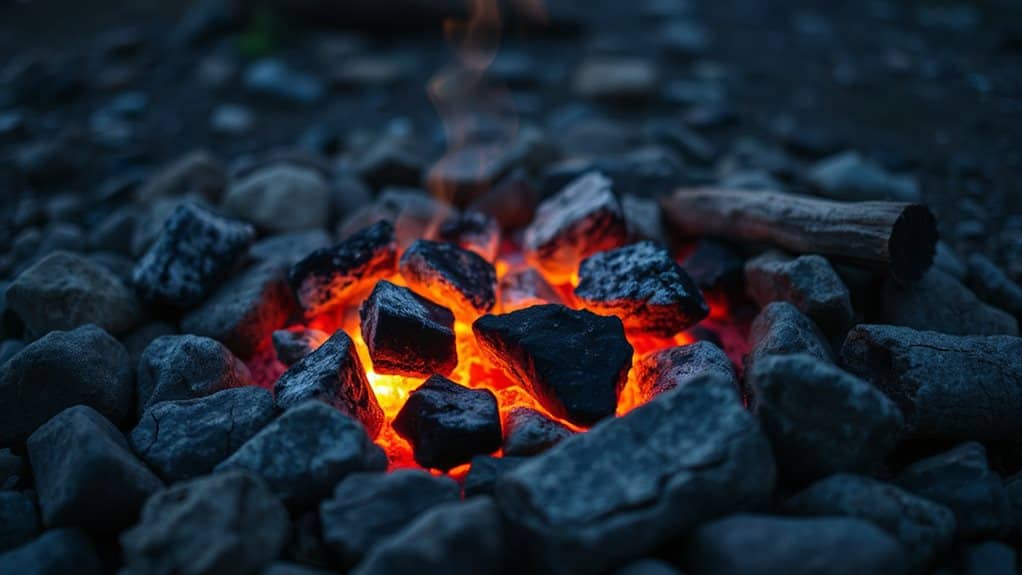
If you choose dense hardwoods like oak, maple, or hickory for your campfire, you’ll notice the coals stay hot longer than with softwoods such as pine or fir.
Hardwoods, especially when dry and seasoned below 20 % moisture, burn slower, produce steadier embers, and retain heat for hours, giving you reliable cooking heat and reducing frequent tending.
Softwoods ignite fast, spark bright flames, but their coals fade quickly, offering less post‑flame warmth.
Campfire Coals Safety: Managing Airflow on a Grill
Although the fire’s heat depends on oxygen, you control that airflow easily by adjusting the grill’s vents and lid.
Open the top vent wide and lift the lid for a quick, hot blast, then taper the bottom vent to keep coals smoldering longer.
Keep both vents slightly open to avoid suffocation, and use a two‑zone setup—coals on one side, empty space on the other—for flexible temperature control.
When using grills or enclosed spaces, always ensure proper ventilation and safe practices when portable heaters are nearby to avoid carbon monoxide buildup and other hazards, and consider using a tent-rated heater with safety features.
Campfire Coals Safety: Weather Effects on Cooling
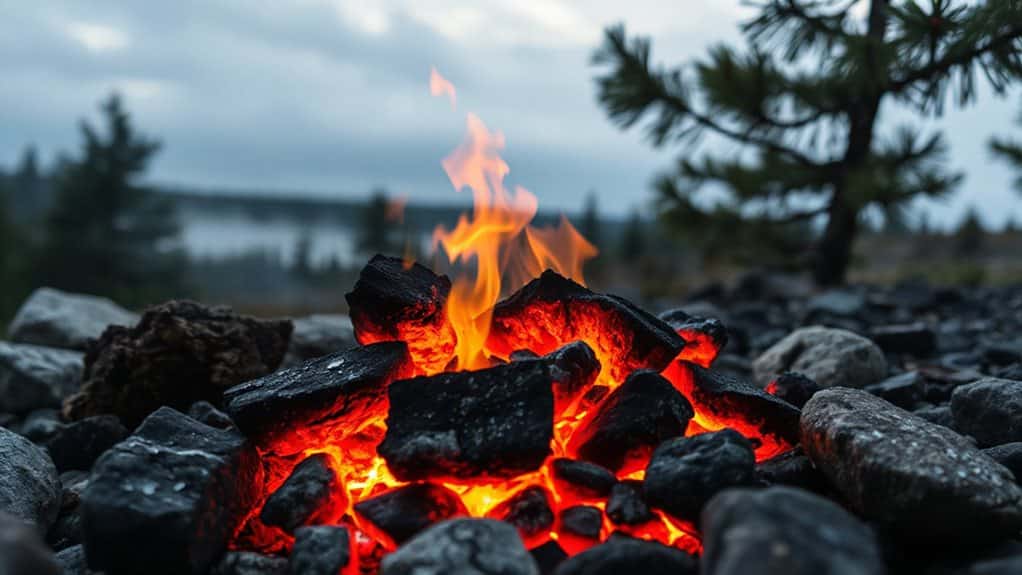
When the temperature drops after sunset, the air around your campfire cools faster, and that drop in ambient heat helps the coals lose their stored energy more quickly; however, if the day stays warm or a breeze picks up, the cooling process can be delayed.
Wind feeds oxygen, keeping hot spots alive, while rain or damp air accelerates heat loss.
Check forecasts, avoid dry windy nights, and treat all coals as potentially hot until you’ve soaked and stirred them cool.
Always carry a basic first aid kit and know how to treat burns or cuts if an accident occurs.
Campfire Coals Safety: Reignition Risks in Low‑Oxygen Situations
In low‑oxygen conditions, coals may appear dead while still holding enough heat to reignite if you disturb them.
You’ll notice smoldering pockets that look gray, yet they retain stored energy.
Fresh air or stirring injects oxygen, turning hidden embers into sudden flames.
Treat every ember as hot, soak or separate it, and verify no glow or smoke before you leave, ensuring safe, carefree freedom.
Stay put, stay calm, and perform a careful injury and gear check before attempting to manage hot coals.
Campfire Coals Safety: Quick Cooling Tricks
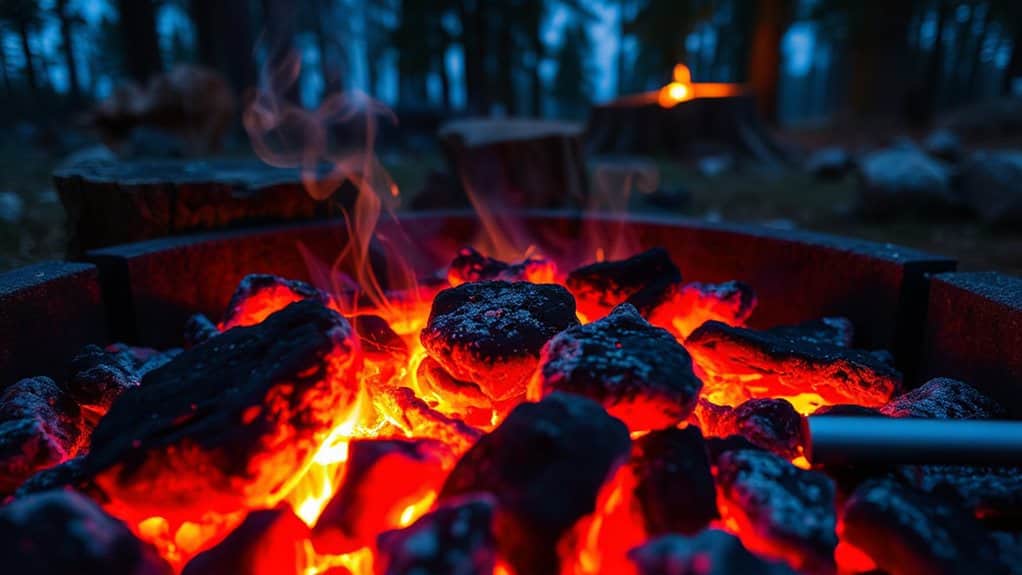
Douse the coals with a steady stream of water, then stir the ash until the hissing stops and the hottest spots are exposed; repeat the process until the entire fire bed feels cool to the touch.
Use enough water to saturate, not just dampen, and stir thoroughly after each pour.
Close any grill lid to cut oxygen, but always finish with water and a cool‑to‑the‑touch check before you leave.
Campfire Coals Safety: How Coals Compare to Store‑Bought Briquettes
Campfire coals and store‑bought briquettes both keep a fire going after the flames die out, but they differ in how long they stay hot and how predictable that heat is.
Lump coals ignite quickly, burn hotter, but fade fast, often within fifteen minutes.
Briquettes heat slower, stay steadier, and can hold usable heat for two‑plus hours, giving you more control and safety margin.
Campfire Coals Safety: Final Extinguish Checklist
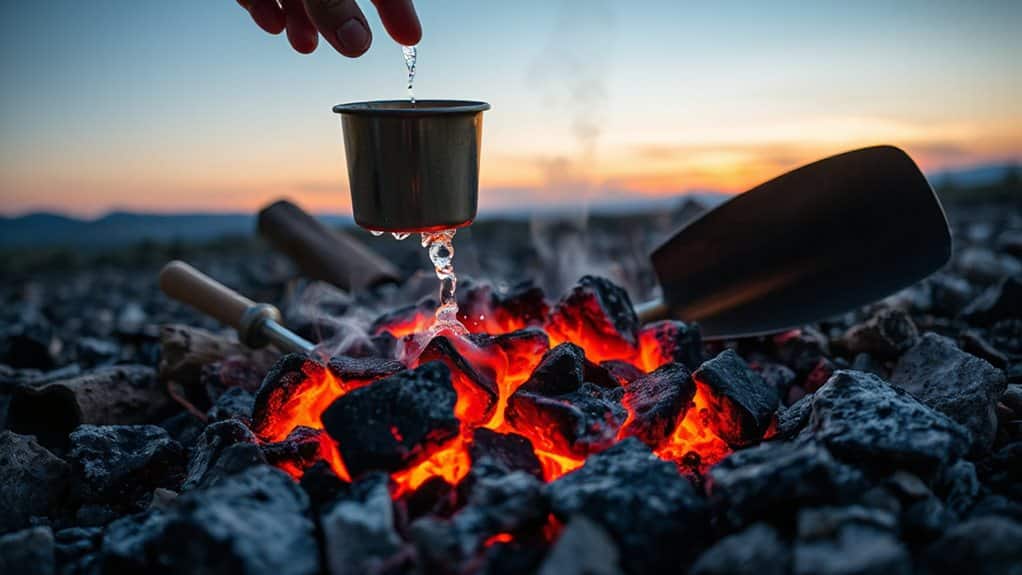
Because the fire will have already burned down to ash and small coals, you can start the final extinguishing process with confidence, but only after you’ve stopped adding fuel at least an hour before you plan to put it out.
Pour at least 20 liters of water, stir the embers with a shovel, repeat until hissing stops, then hover your hand to confirm cool‑to‑touch.
Verify no steam rises, and leave only cold ashes.
And Finally
By now you know that campfire coals stay hot for several hours after the flames die, that wood type, airflow, and weather all influence cooling, and that low‑oxygen pockets can reignite unexpectedly. Use the 6‑hour safe‑touch test, apply quick‑cool tricks like water or sand, and always follow the final extinguish checklist to eliminate lingering heat. Treat store‑bought briquettes as a reference, but remember natural coals behave uniquely—so check, cool, and verify before you leave the site.


