
Propane doesn’t freeze in winter—you’ll never see it turn solid at outdoor temperatures, but cold air does lower its vapor pressure, so a partially filled tank can produce weaker flames or take longer to ignite. Keep the tank at least 30 % full, because more liquid means higher pressure and steadier flow. Frost on the regulator or a flickering pilot light signals low pressure, and you may notice reduced burner performance below –15 °F. If you stay with these tips, you’ll uncover more ways to keep your propane reliable all season.
TLDR
- Propane remains usable in cold weather because it stays liquid under pressure and vaporizes down to –44°F.
- As temperature drops, vapor pressure falls, reducing gas flow; appliances may experience weaker flames or delayed ignition.
- Low tank levels amplify pressure loss; keeping the tank at least 30 % full helps maintain stable performance.
- Frost on valves or regulators signals low pressure, but the fuel itself is not frozen or defective.
- Proper winter preparation—full tanks, auto‑fill scheduling, and clear access—prevents pressure‑limited failures.
Does Propane Freeze in Winter? The Real Answer
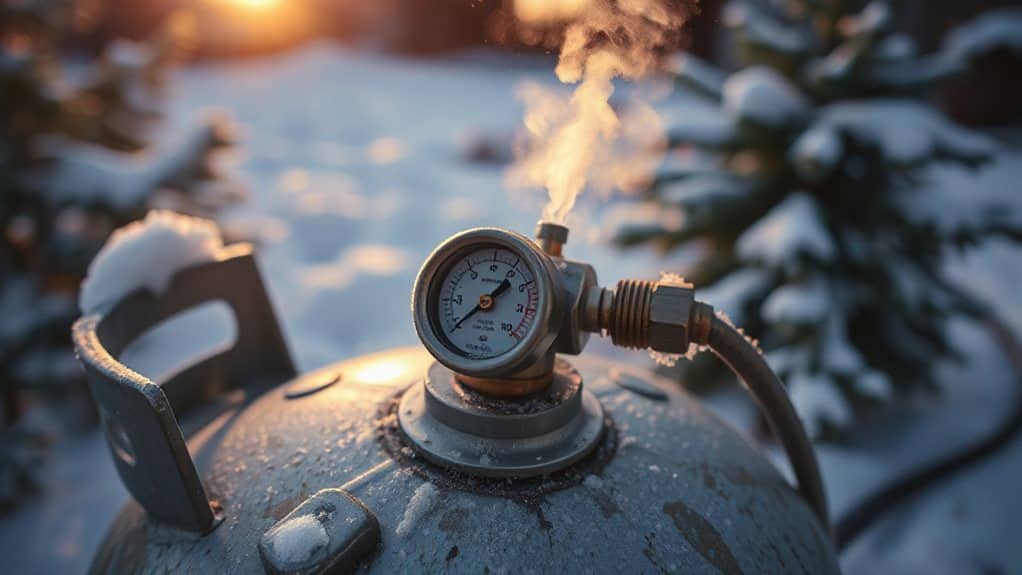
When winter temperatures dip, you might wonder whether propane actually freezes, but the short answer is no—propane’s true solid‑freeze point sits around –306 °F, far colder than any natural weather on Earth.
In reality, propane stays liquid under pressure, vaporizing even at –44°F, so you’ll never see a solid tank outdoors.
Frost on valves or reduced pressure may feel like “freezing,” yet the fuel remains usable, ensuring your freedom to heat and cook safely. Keeping the tank full prevents pressure loss when temperatures drop. Ensure proper ventilation when using propane appliances indoors to avoid buildup of hazardous gases.
How Cold Weather Lowers Propane Tank Pressure
When the temperature drops, the liquid propane inside your tank contracts, which lowers the vapor pressure and makes the gas flow slower to your appliances.
If your tank isn’t full, the empty space amplifies this effect, so even a small chill can cause a noticeable pressure drop.
Keeping the tank adequately filled and protected from snow or ice helps maintain stable pressure throughout the winter.
Recertified tanks can be valid for 5, 7, or 12 years, so check your tank’s certification before cold seasons.
Temperature Reduces Vapor Pressure
If the temperature drops, the vapor pressure inside your propane tank falls, because the liquid inside needs heat from the surroundings to turn into gas.
Cold air limits heat transfer, slowing the boil‑off process, so less gas forms per minute.
Pressure can dip 50 % at 0°F versus 60°F, weakening flow to appliances even though fuel remains, making winter performance pressure‑limited, not fuel‑defective.
Low Tank Levels Exacerbate Loss
Fill your tank higher before winter hits, because low fuel levels make the pressure drop from cold weather far more noticeable. When the tank is only half‑full, there’s less liquid surface for propane to vaporize, so cold temperatures slash pressure quickly, leaving appliances weak or inconsistent.
Keep a generous reserve, refilling before frost, to maintain steady vapor flow, avoid gauge misreadings, and enjoy reliable heating and cooking throughout the season.
When Cold Slows Propane Vaporization – What You Need to Know
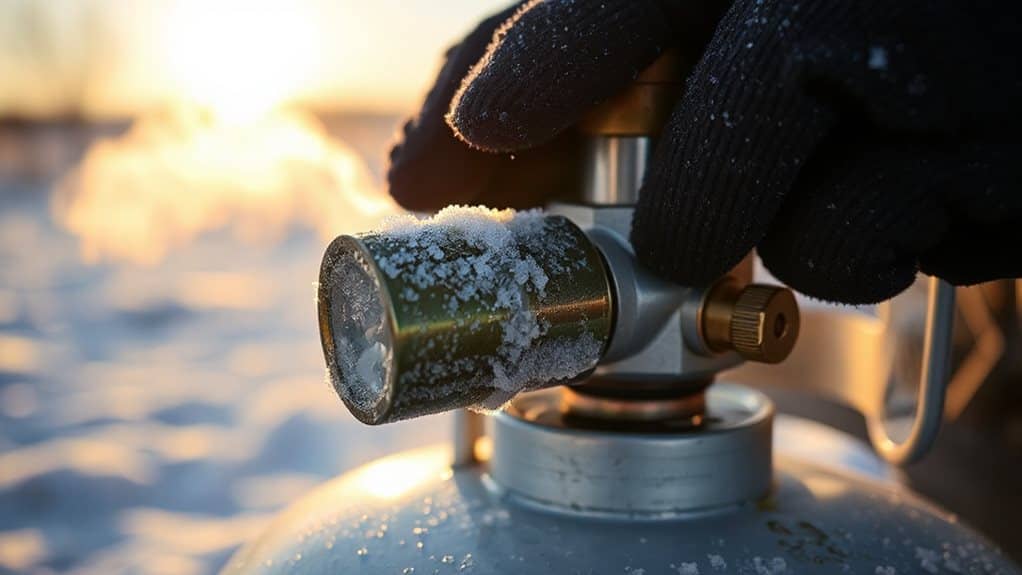
You’ll notice that as the temperature drops, the vapor pressure inside the tank falls, slowing the liquid‑to‑gas conversion that powers your appliances.
Larger tanks hold more liquid, but they also have a greater surface area that must absorb heat, so they can feel the slowdown even more in severe cold.
Understanding how these factors interact helps you keep your heating system running smoothly despite the chill.
Propane fares better in low temperatures because it has a higher vapor pressure than butane, remaining gaseous at much colder temperatures down to -44°F.
Cold‑Induced Vapor Pressure Drop
When temperatures plunge, the vapor pressure inside your propane tank drops noticeably, because colder air slows the movement of propane molecules and reduces the energy they’ve to escape from liquid to gas.
At 0°F the pressure can fall over 50% versus 60°F, limiting gas availability.
Below 20°F the drop intensifies, and at –15°F many appliances lose enough pressure to stay lit, so you’ll notice weaker flames, delayed ignition, and possible shutdowns.
Tank Size Influences Vaporization Speed
A 500‑gallon tank, for example, offers roughly twice the wetted surface area of a 250‑gallon cylinder, and that extra wall‑to‑liquid contact dramatically speeds up propane’s transition from liquid to vapor.
Larger tanks keep more liquid in contact with the walls, so even as temperature drops you retain vaporization power.
Keep tanks fuller, consider parallel tanks, and size for your coldest expected temperature to avoid flame starvation.
Spot Low‑Pressure Appliance Symptoms Early
If you notice a weak or flickering flame on your stove, grill, furnace, or water heater, it’s often the first sign that propane pressure is dropping.
Pay attention to yellow or unstable flames, longer preheat times, and sputtering noises.
Pilot lights that frequently go out, frost on the regulator, or sudden shutdowns also warn you early, letting you act before full appliance failure.
Using propane can increase burner temperatures and stress components not designed for it, potentially causing overheating and damage; check pressure regulation if you suspect a fuel mismatch.
How to Keep Your Propane Tank Full for Winter
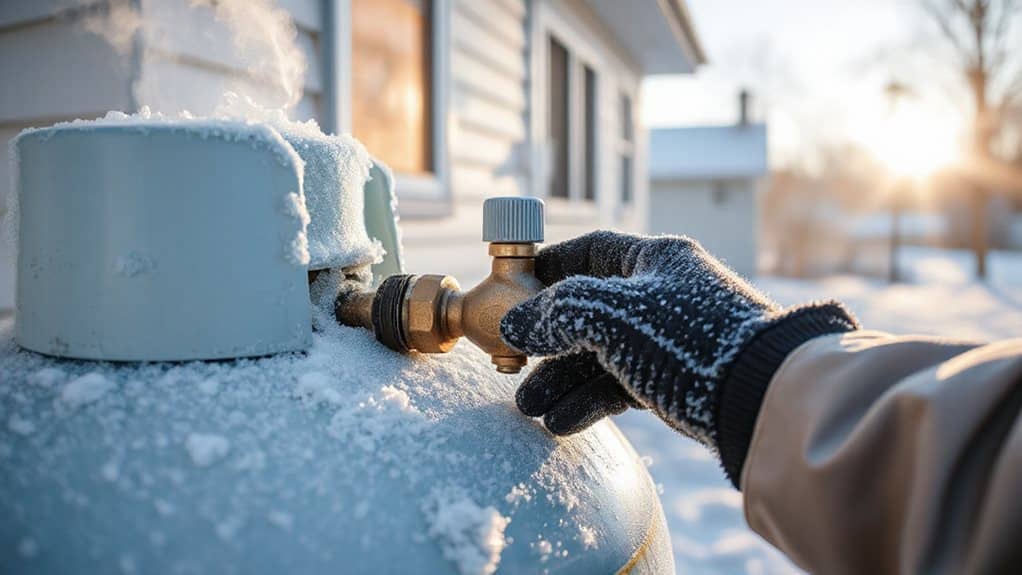
Because winter temperatures plunge, your propane tank can lose pressure faster than you expect, so it’s essential to stay ahead of consumption and keep the tank topped off before the cold sets in.
Check levels early, enroll in auto‑fill, keep at least 30 % capacity, clear snow paths, add visible markers, and schedule top‑offs before storms to maintain reliable heat and freedom.
Using a propane tank gauge can help you monitor fuel levels more accurately so you know when to refill.
Propane‑Specific Quick Fixes & Long‑Term Winter Solutions
When temperatures dip below –44°F, propane’s vapor pressure drops sharply, so you’ll notice slower burner response and lower gauge readings even though the liquid fuel is still there.
Wrap tanks, use insulated covers, and add heat‑wraps to keep pressure up.
Rotate tanks, keep a spare, and protect regulators from moisture.
Monitor levels, shut off non‑essential use, and plan refills early for uninterrupted freedom.
And Finally
You’ve learned that propane doesn’t truly freeze in winter, but low temperatures do drop tank pressure, slowing vaporization and affecting appliance performance. By monitoring pressure, keeping the tank full, and using proper regulators or heaters, you can prevent low‑pressure symptoms and maintain reliable operation. Simple quick fixes—like insulating the tank or adding a small heater—combined with long‑term strategies such as proper storage and regular maintenance, make sure your propane system runs smoothly throughout the cold season.


