
Pick an 8×42 binocular with fully multi‑coated optics, BaK‑4 prisms, and 17–18 mm eye relief for brightness, sharpness, and shake resistance, and choose a waterproof model with an IPX7 rating to survive rain. Fit a comfortable Y‑shaped harness, slip the pouch onto the strap, and secure the quick‑release clip for easy access. Carry a regional field guide or the Merlin Bird ID app for instant IDs, log each sighting in BirdTrack, and record calls with a smartphone set to mono, 48 kHz. Pack everything in a lightweight 15–25 L day‑pack, and you’ll be ready to spot, identify, and document birds; the next sections will show you how to refine your technique.
TLDR
- Choose 8×42 binoculars with multi‑coated BaK‑4 prisms for bright, sharp images and comfortable 17‑18 mm eye relief.
- Pack a lightweight, weather‑proof backpack (15‑25 L) with dedicated pockets for binoculars, notebook, water, and repellent.
- Use a regional field guide or the Merlin Bird ID app for quick visual identification and offline species packs.
- Dress in breathable, moisture‑wicking layers and wear an adjustable neck strap to keep gear stable while scanning habitats.
- Record each sighting in BirdTrack, noting location, date, and species, to contribute to science and build a personal log.
Choose the Right 8×42 Binoculars for Beginners
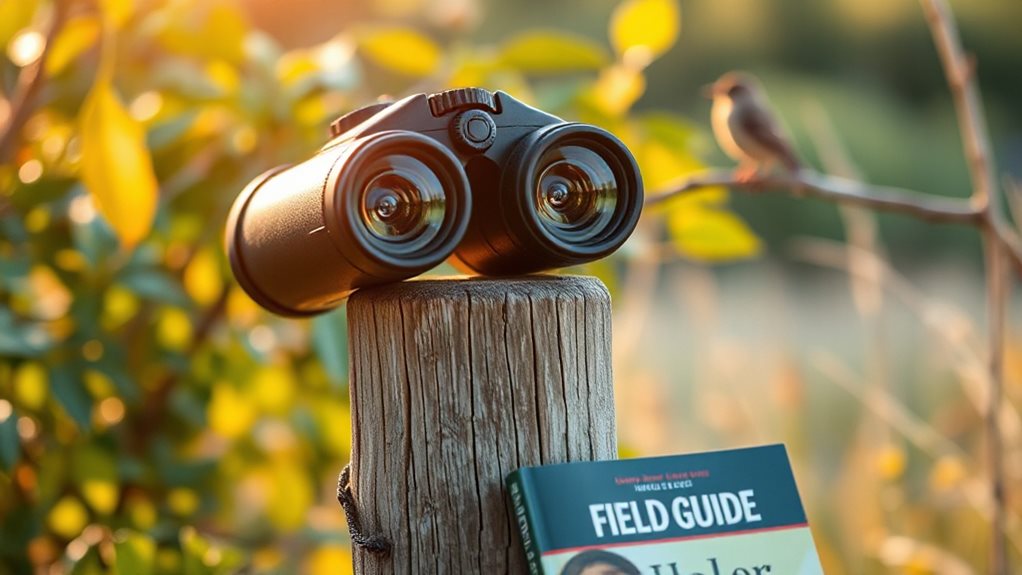
Choosing the right 8×42 binoculars means balancing magnification, light‑gathering ability, and comfort, and for beginners the 8× power paired with a 42 mm objective lens hits that sweet spot: it delivers bright, clear images without the shake that higher magnifications can cause, while the fully multi‑coated optics and BaK‑4 prisms with phase coating enhance contrast and sharpness.
You’ll appreciate the wide field of view—up to 426 feet at 1,000 yards—making bird location effortless, and the short close‑focus distances, around 5‑7 feet, let you study feeders and butterflies up close.
Eye relief of 17‑18 mm and lightweight, rubber‑armored housings keep you comfortable for hours, while budget‑friendly models like the Celestron Nature DX deliver sharp performance without breaking the bank. The binoculars are fully coated optics that provide sharp, high‑contrast images. Choosing a durable waterproof feature ensures your optics stay protected during wet field conditions.
Pick a Waterproof Binocular That Handles Rain
Ever wonder how to keep your view crystal‑clear when the sky opens up? Choose a waterproof binocular with an IPX7 rating, O‑rings, and nitrogen‑purged chambers, like the Hawke Frontier ED X 8×42 or Vortex Viper HD 8×42. These models boast BaK‑4 prisms, rubber armor, and anti‑fog coatings, delivering sharp, bright images, even in rain, while remaining lightweight and durable. Trophy pickerel are most common in productive waters with abundant food and proper cover, which helps them reach larger sizes and makes them a notable species to study for habitat-influenced growth, especially in productive waters.
Set Up a Binocular Harness for Comfortable Carry
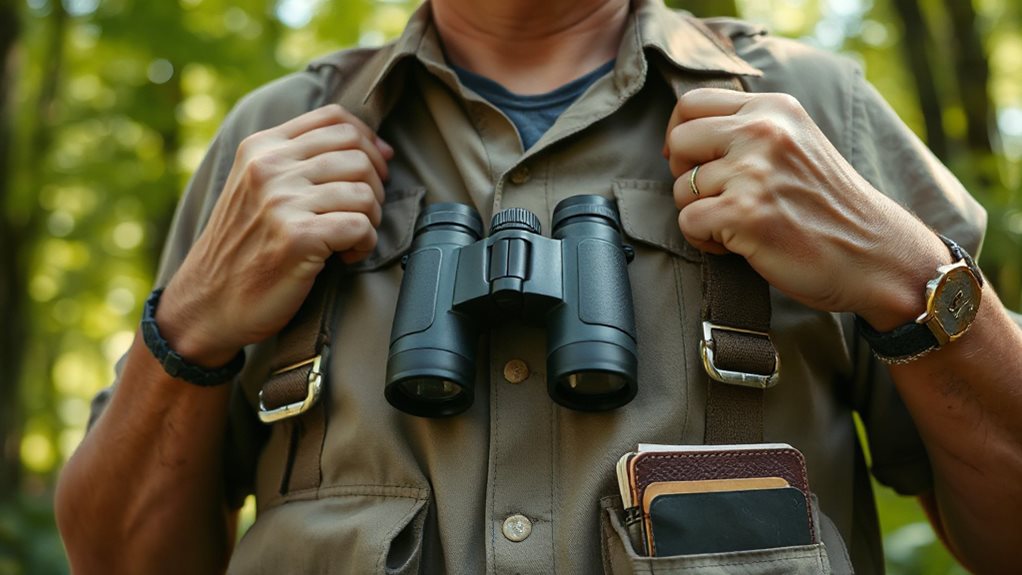
A well‑designed binocular harness turns a bulky pair of optics into a lightweight, ready‑to‑go companion, and the key to that metamorphosis lies in selecting the right harness and fitting it correctly.
Slip the mesh‑backed pouch onto the Y‑shape strap, thread 3/8″ connectors through the lanyard loops, and zip the quick‑release clip.
Adjust foam shims, align the metal band, tighten straps high between shoulder blades, and secure the Velcro flap with silent magnets for fast, comfortable access.
Plan a family outing with simple activities like stargazing to test the harness during low‑light conditions.
Select a Field Guide That Covers Local Species
After securing a comfortable binocular strap, your next step is to pick a field guide that matches the birds you’ll actually see where you are. Choose a regional guide—like the Sibley Eastern or Western edition, Peterson’s Eastern/Central, or an All About Birds pocket guide—to narrow choices and speed identification. Illustrated books such as Sibley or Peterson highlight key marks consistently, while laminated pocket guides stay lightweight and durable for field use. Many regional parks, like Charmlee Wilderness Park, offer ocean views and trails that can help you spot coastal and inland species during hikes.
Install the Merlin Bird ID App for Instant IDs
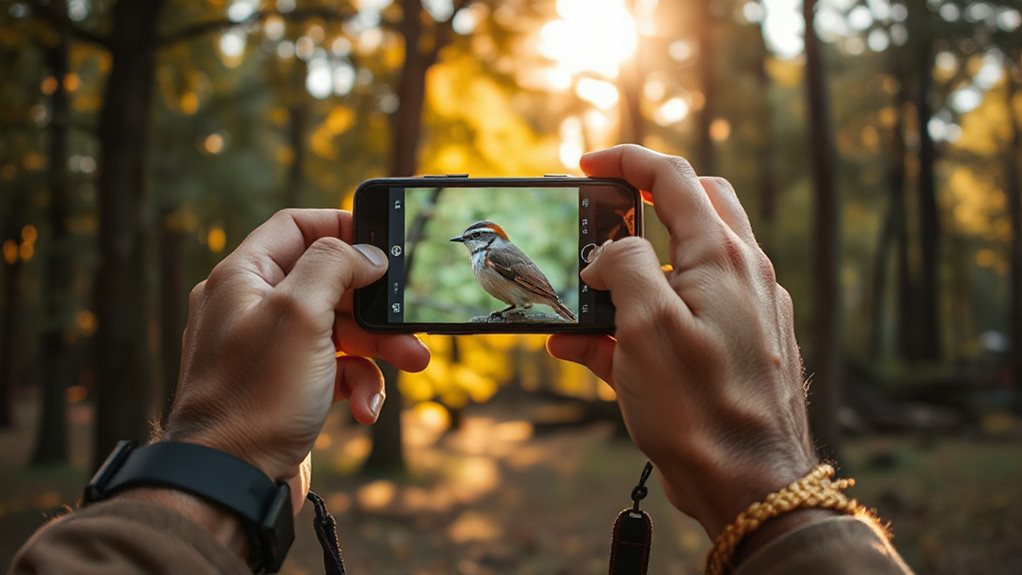
Download the Merlin Bird ID app from the App Store or Google Play, then follow the quick setup to add your regional Bird Pack and sign in with a free Cornell Lab account.
Once it’s running, you can snap a photo or record a song, and the built‑in machine‑learning engine will instantly suggest species, letting you confirm “This Is My Bird!” with a tap.
Finally, log each sighting, add notes or location, and share it to eBird or your personal list with just a few clicks.
Ditch habitats are often rich in wildlife and can be productive spots for observing birds, especially near aquatic vegetation and water edges.
Download and Install
Some users find it easiest to start by opening the App Store on iOS or Google Play on Android, searching for “Merlin Bird ID,” and tapping Install. After it downloads, connect to Wi‑Fi and let the app fetch the regional Bird Pack, which gives you offline photos, sounds, and maps for thousands of species. Create a free Cornell Lab account in Settings to sync sightings, build life lists, and enjoy instant, on‑the‑go identification.
Capture and Identify Sounds
How can you turn a simple chirp into an instant identification? Open Merlin, tap the sound button, and let your phone’s mic capture the song. The app converts it to a scrolling spectrogram, matches patterns against 2,066 species, and flashes pictures with names, highlighting familiar calls in yellow. It works offline with location enabled, updates twice yearly, and saves recordings for later replay and comparison.
Log and Share Sightings
After you’ve identified a bird’s song, the next step is to log the sighting so you can track your progress and share it with the bird‑watching community.
Install the free Merlin Bird ID app, snap a photo or answer a few questions, then tap “This is my bird!” to add it to your Life List.
The app records date, location, and species, syncs with eBird, and lets you keep observations private or share them globally, helping you stay organized and contribute to conservation.
Dress for Comfort: Neck Straps, Weather‑Ready Clothing
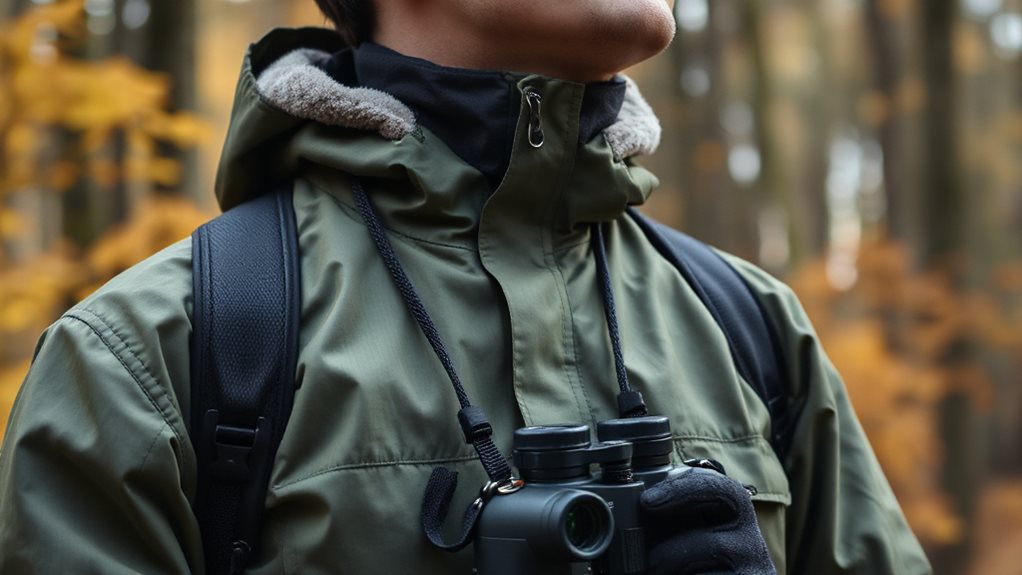
You’ll want an adjustable neck strap that spreads the weight evenly, so you can swap between a narrow, tight fit and a wider, cushioned option as the day warms up or cools down.
Pair that with weather‑proof layering—lightweight, breathable fabrics that trap heat when it’s chilly but let moisture escape when you’re on the move.
Together, these choices keep you comfortable for hours of birding without sacrificing mobility or protection.
Adjustable Neck Straps
Ever wonder why a simple neck strap can turn a comfortable bird‑watching outing into a painful marathon?
Switch to an adjustable harness: wide neoprene straps spread weight, reducing neck pressure, while sliders let you shorten or lengthen for clothing layers or wheelchair use. Plastic links keep binoculars secure, preventing swings, and the U‑shaped pad balances load across shoulders, preserving back health.
Weather‑Proof Layering
How can you stay comfortable while the weather shifts from crisp mornings to sudden rain, and the answer lies in a smart layering system that balances moisture management, insulation, and protection without restricting movement. Start with a merino or synthetic base that wicks sweat, add a breathable fleece mid‑layer for warmth, then slip on a softshell or hardshell shell that resists water yet moves with you. Avoid cotton, choose quiet fabrics, and keep headgear moisture‑wicking. Adjust layers on the fly, staying free and focused on the birds.
Lightweight, Breathable Fabrics
What makes a birding outfit truly comfortable on a hot, humid morning is a fabric that breathes, dries fast, and stays light enough not to weigh you down. Choose synthetic, like Sunbird Solar with UPF 50+, or Toray Dot.Air for 360‑degree breathability and stretch. PURE‑TECH® wicks sweat, MSHIELD® blocks odor, and quick‑dry laminates keep you cool, silent, and ready for any trek.
Use Your Binoculars for Quick Habitat Scouting
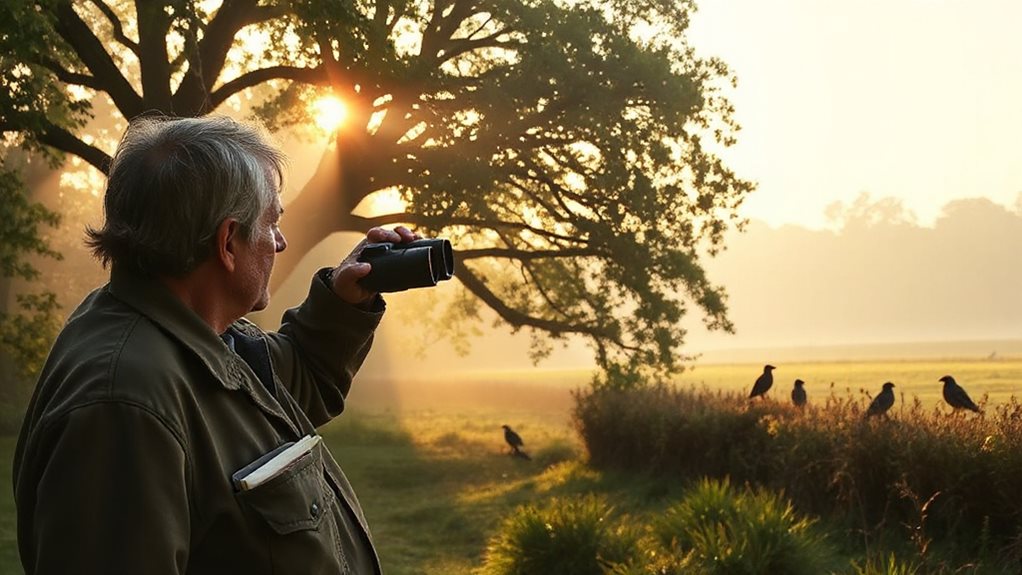
Where you first spot a bird with the naked eye makes the whole scouting process smoother, because you already know where to aim your binoculars and can lock onto the target before you even raise them to eye level.
Choose 8x or 10x binoculars with a 42 mm objective, roll eyecups down, set interpupillary distance, and use the central focus wheel to track quickly.
Scan open habitats at dawn or dusk, noting trees and water edges as reference points, keeping your strap snug for freedom of movement.
Capture Bird Calls With Your Smartphone Microphone
Capturing bird calls with your smartphone microphone starts with choosing the right app and settings, because the quality of the recording depends on the tools you use before you even lift the device.
Download a dedicated recorder like Voice Record Pro, set mono, 48 kHz, disable AGC, aim for peaks at –6 to –12 dB, hold the phone steady, approach slowly, and later trim and normalize the WAV for sharing.
Take Clear Bird Photos Through Binoculars
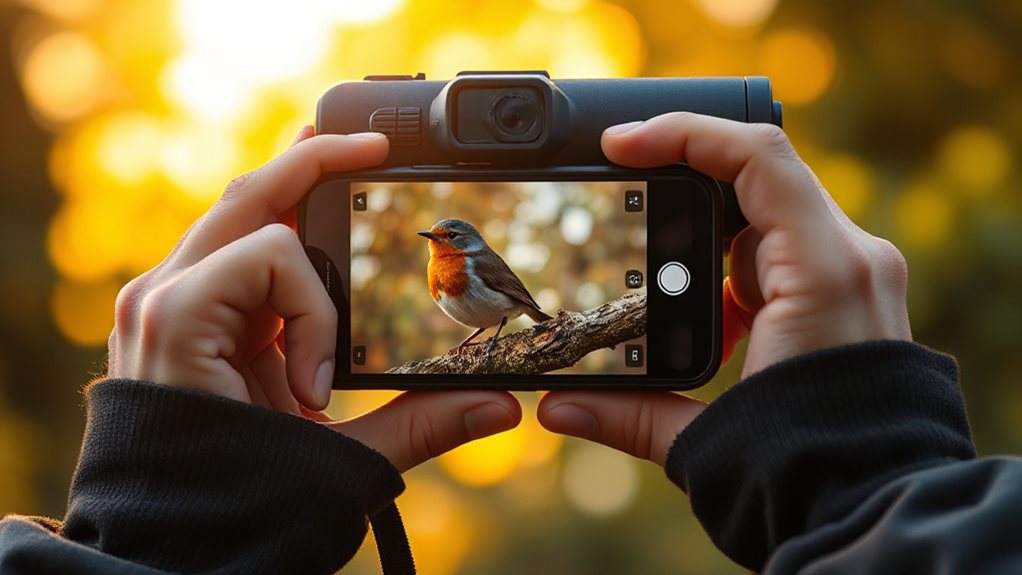
A good pair of 7× or 8× binoculars lets you frame a bird and capture a sharp photo without sacrificing field of view, and choosing the right optics is the first step toward clear images.
Pick an 8×42, lightweight, weather‑proof model with 30‑50 mm lenses, use the central focus wheel, adjust the diopter for each eye, keep eye relief comfortable, and practice swift lifts to lock birds quickly.
Log Sightings in BirdTrack for Science Contributions
Create an easy account on BirdTrack, then you can log each sighting with just a few taps, adding location, date, and species details. Your data instantly joins a global network, helping researchers track trends, monitor rarities, and even spot disease outbreaks. By sharing your observations, you contribute to science while building a personal record you can investigate anytime.
Create Easy Account
Ever wondered how quickly you can start contributing to bird‑science data? Create a free MyBTO account at bto.org/my-bto, log in, then find BirdTrack under Sign Up for Projects and click Register. Accept the terms, use your MyBTO credentials to access the portal, and download the BirdTrack app. Log in on your phone, tap Add Records, and you’re ready to log sightings.
Share Data Globally
Where can you log a sighting instantly, whether you’re on a remote trail or sitting at home? Use BirdTrack’s mobile app, iOS or Android, to add a New List or Quick Add, GPS‑tagged and offline‑ready, then sync worldwide.
Designate complete or casual lists, record breeding evidence, counts, dates, and precise locations, and your data fuels global migration studies, distribution maps, and conservation research.
Keep a Minimalist Backpack Organized for Day Trips
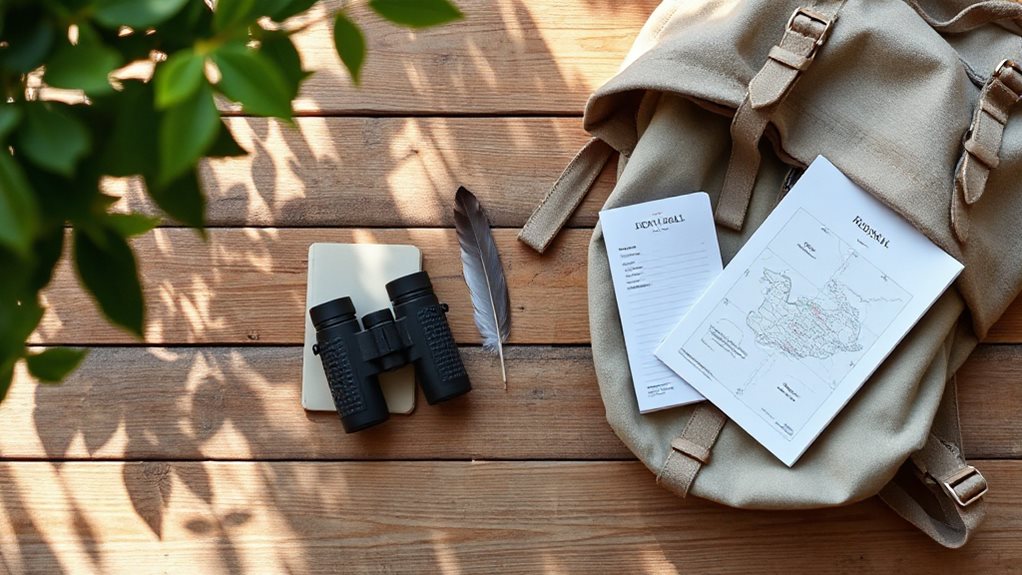
A well‑planned minimalist backpack keeps your day‑trip essentials within reach without weighing you down, so you can focus on spotting birds instead of rummaging through gear. Choose a 15‑25 L pack with padded straps, a rain cover, and side pockets for a 1 L water bottle. Use exterior zip pockets for binoculars, mesh pockets for notebooks, and dedicated camera compartments with flexible dividers. Pack insect repellent, sunscreen, a lightweight poncho, and a small first‑aid kit in sub‑pockets, keeping everything accessible yet organized.
Final Note
By choosing sturdy 8×42 binoculars, a waterproof pair, and a comfortable harness, you’ll stay ready for any weather. Pair them with a local field guide and the Merlin Bird ID app for quick identification, then record calls on your phone and snap photos through the lenses. Log each sighting in BirdTrack to help science, and keep a minimalist backpack organized for hassle‑free day trips. With these tools and habits, you’ll confidently investigate and document the avian world.


