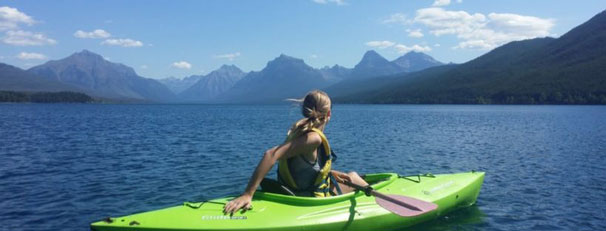
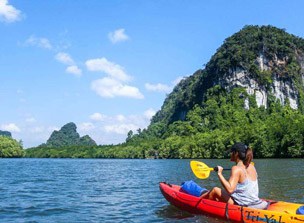
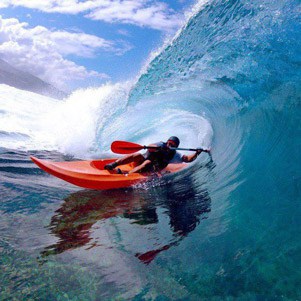
You’ll find the nation’s top kayaking experiences in Grand Teton’s mountain lakes, where 15‑mile Jackson Lake offers islands, short portages and spectacular Tetons; Acadia’s calm coastal waters provide beginner‑friendly sea kayaking with easy tides and protected bays; the Colorado River in the Grand Canyon challenges experienced paddlers with class 7‑10 rapids like Lava Falls and breathtaking canyon walls; Rio Grande in Big Bend blends canyon and desert for multi‑day trips with Class II sections and remote scenery; and the Everglades’ mangrove labyrinths, wildlife, and night bioluminescence create a unique, immersive paddle. Continue for deeper details.
TLDR
- Grand Teton National Park offers over 100 pristine mountain lakes, including the 15‑mile Jackson Lake with islands and short portages, ideal for scenic, wildlife‑rich paddling.
- Acadia National Park provides calm, sheltered coastal waters and gentle tides, making it perfect for beginner sea kayaking from Bar Harbor or Hadley Point.
- The Colorado River through the Grand Canyon delivers world‑class rapids (Class 7‑10) and dramatic canyon vistas, suited for experienced paddlers seeking high‑adrenaline challenges.
- Rio Grande in Big Bend supports multi‑day desert‑to‑canyon trips with consistent flow (300‑600 CFS) and Class II rapids, requiring self‑reliance and proper signaling tools.
- Everglades National Park features mangrove labyrinths, abundant wildlife, and nightly bioluminescence, offering unique, immersive kayaking experiences in a subtropical wetland.
Why Grand Teton’s Peaks Are a Top Kayak Destination for Mountain Lakes
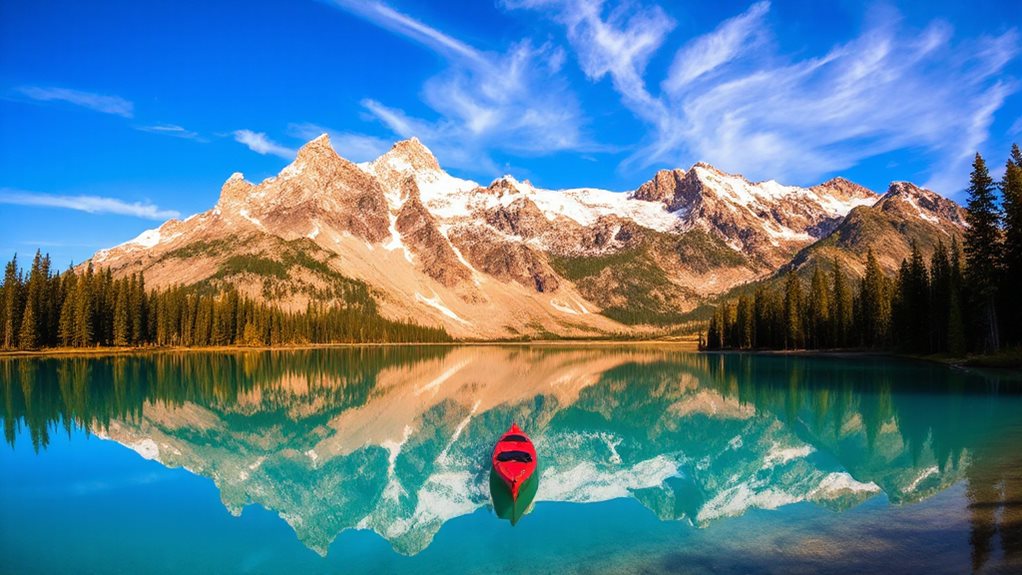
Why are Grand Teton’s towering peaks such a magnet for kayakers? You glide across Jackson, Jenny, Leigh, and Bearpaw lakes, and the Tetons dominate 180 degrees of horizon, offering unobstructed, awe‑inspiring scenery. Permit‑required paddling lets you explore 15‑mile Jackson Lake with islands, short portages, and abundant wildlife, while elevation‑adjusted sun and water conditions keep your adventure safe and freeing. The park features over 100 lakes that provide diverse paddling experiences. Many paddlers also bring or rent lightweight kayaks because they are easy to transport and handle well on mountain lakes.
How Acadia’s Calm Coastal Waters Offer Beginner‑Friendly Sea Kayaking?
Acadia’s calm coastal waters make sea kayaking feel almost effortless for beginners, and the region’s rugged, pine‑tree‑lined shoreline creates a natural shelter that keeps waves gentle and currents mild.
You launch from Bar Harbor or Hadley Point, glide past kelp beds, and spot seals and eagles while a stable 18‑foot tandem kayak steadies you.
Easy tides, mild winds, and protected bays let you venture freedom safely, with PFDs and quick‑dry gear essential.
A high‑quality diet and proper hydration support overall stamina for paddling and recovery, which can help reduce fatigue on longer outings and improve comfort for beginners adequate hydration.
What Makes the Colorado River in Grand Canyon a Thrilling Kayak Destination for Experienced Paddlers?
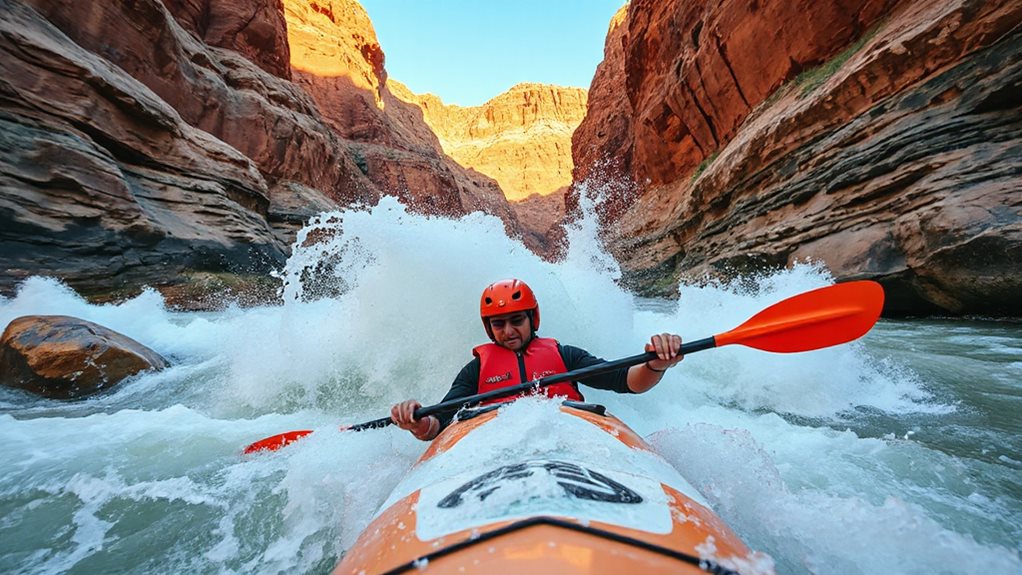
You’ll encounter epic rapids and sudden drops that test every skill you’ve honed, while the towering cliffs and layered rock formations reward you with stunning vistas at each bend.
The remote wilderness stretches for miles, demanding careful planning, self‑reliance, and precise wayfinding through ever‑changing currents.
All of these elements combine to make the Colorado River a truly thrilling playground for experienced paddlers.
Begin in smaller waters and consider lessons to build skills for tackling such epic rapids.
Epic Rapids and Drops
Ever wondered what makes the Colorado River in the Grand Canyon a magnet for seasoned kayakers? You’ll encounter House Rock’s 10‑foot drop, H Rapid’s 30‑foot plunge, Horn Creek’s 10‑foot tumble, Hermit’s 15‑foot surge, and Lava Falls’ 13‑38‑foot descent, each sculpted by canyon debris and rockfalls.
These class‑7‑10 rapids demand precise scouting, swift as‑centering, and respect for flow‑dependent hazards, delivering pure, unbridled adventure.
Stunning Canyon Vistas
Why do the Colorado River’s canyon vistas feel like a moving gallery for seasoned paddlers? You glide past mile‑high sandstone walls, 1‑mile cliffs framing turquoise water, while seasonal light paints vermilion cliffs. Flatwater offers 360° views, side canyons reveal hidden grottos, and rapid holes frame expansive downstream scenes. High flows push you through this ever‑changing masterpiece, delivering freedom and visual immersion.
Remote Wilderness Challenge
When you set out on the Colorado River through the Grand Canyon, the remote wilderness itself becomes a test of skill and endurance, blending intense rapids, isolation, and technical demands into a single, unforgettable quest.
You’ll face Granite and Hermit rapids (both 8‑rated) with brutal hydraulics, sparse permits, 225 miles of solitude, and daily 4‑6‑hour paddles in a 14‑foot kayak, demanding precise navigation, stamina, and adaptability.
Why Rio Grande’s Canyon‑to‑Open‑Land Mix in Big Bend Suits Multi‑Day Kayak Adventures
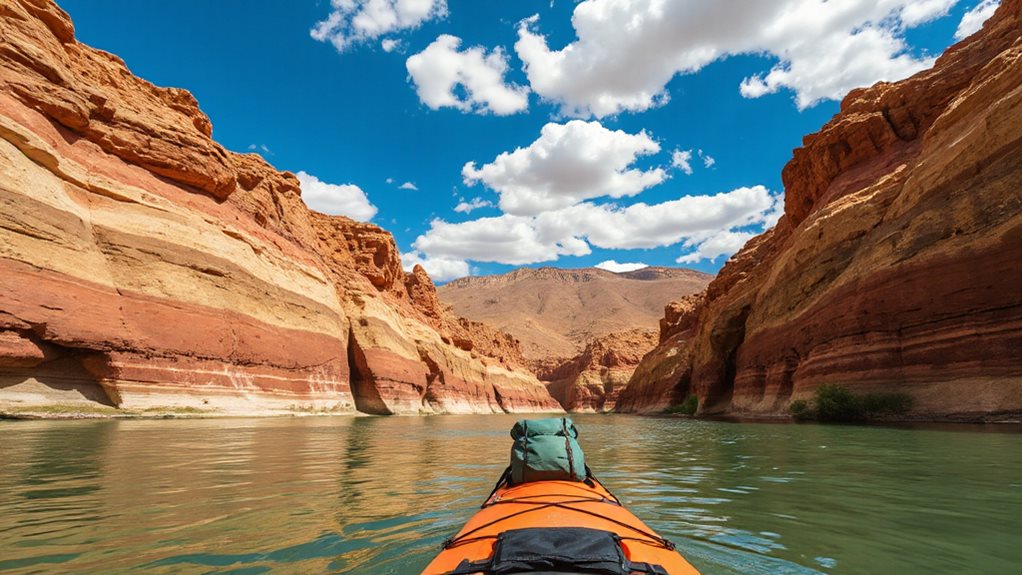
How does the Rio Grande’s seamless shift from canyon walls to open desert make it perfect for a multi‑day kayak trek?
You’ll paddle the first 13 miles through riparian shade, then drift into expansive desert, enjoying 10‑15 miles daily at 300‑600 CFS.
Boquillas Canyon offers quiet stretches and Class II rapids, while lower canyons provide remote, rugged scenery, requiring permits and self‑reliance for a freeing adventure.
For safety on remote stretches, carry signaling tools like a whistle or reflector and know how to use them to attract help from afar (e.g., whistle signals and reflective flashes).
How Everglades’ Mangroves and Marshes Create a Unique Kayak Destination for Wildlife Lovers?
You’ll glide through the Everglades’ mangrove labyrinths, where tight tunnels and shaded creeks turn each paddle stroke into a mini‑exploration, while seasonal bird migrations fill the air with vibrant flocks of herons, spoonbills and the rare snail kite.
At dusk, the water can glow with bioluminescence, adding a surreal, quiet sparkle to the already serene marshes.
These natural features combine to give wildlife lovers a uniquely immersive kayak experience that’s both easy to navigate and richly rewarding.
Carrying a compact, portable shower can help you stay fresh after a long day on the water and maintain hygiene in outdoor activities.
Mangrove Labyrinths for Exploration
Everglades’ mangroves and marshes weave a labyrinth of tight tunnels and open water that turns a simple kayak trip into an immersive wildlife excursion.
You’ll duck, pull, and maneuver hand‑over‑hand through mile‑long mangrove passages, then glide into open sawgrass marshes for expansive views.
Freshwater cypress, saltwater mangroves, and shallow islands host otters, alligators, manatees, and rare snail kites, while water levels dictate tunnel access and vessel size.
Guided tours run sunrise to sunset, offering 3‑hour adventures that balance challenge and freedom.
Seasonal Bird Migration Hotspots
Gliding through the Everglades’ tangled mangrove tunnels and open marshes, you’ll quickly notice that the same waterways that challenge a kayak also funnel huge numbers of migrating birds, turning each paddle stroke into a front‑row seat for avian spectacles.
From November to May, watch winter residents like northern parulas and yellowthroats, spring transients such as Arctic terns, and massive ibis colonies nesting along the mangrove‑marsh ecotone, all drawn by shifting water levels and abundant food.
Nighttime Bioluminescent Waterways
Ever you ever wondered why the Everglades’ mangrove‑lined waterways glow like a star‑filled sky after dark? At night, dinoflagellates flash as paddles stir, especially on new‑moon evenings from June through October, peaking in August.
Guided tours launch from Marjory Stoneman Douglas, offering calm, dark canopies, dolphins, manatees, and comb jellies.
Prices start $69.95 for adults, $44.95 for kids.
Why Dinosaur National Park Is a Premier Kayak Destination for Advanced White‑Water Rapids?
Why is Dinosaur National Park a go‑to spot for seasoned paddlers seeking high‑octane white‑water? You’ll find Class III‑IV rapids on the Yampa and Green Rivers, like Warm Springs’ Maytag flip and Hells Half Mile, amplified by early‑season snowmelt. Tight, cliff‑bound channels demand technical skill, while remote canyons gift solitude, fossil‑rich scenery, and multi‑day adventures that reward freedom‑loving kayakers.
Final Note
You’ve got a range of options, from tranquil mountain lakes in Grand Teton to the challenging rapids of Dinosaur National Park, each offering distinct scenery and difficulty levels. Pick the park that matches your skill and voyage goals, plan ahead for permits and safety gear, and respect local regulations. With thoughtful preparation, you’ll experience unforgettable paddling moments across America’s most beautiful waterways.