
Stay out of open fields, hilltops, and near tall trees or poles, especially on June‑August weekends when thunderstorms peak, and avoid water activities and sports that raise your profile. Subscribe to real‑time lightning alerts like TALOS or WLAS, set proximity thresholds, and act instantly when a red flash warning appears. Seek a solid building with wiring and plumbing or a hard‑topped vehicle before the storm hits, then crouch low, keep your head close to your knees, and spread out if you’re with others. Follow these steps and you’ll know exactly what to do next.
TLDR
- Seek sturdy indoor shelter with wiring and plumbing before storm arrives; avoid trees, poles, and open fields.
- Subscribe to real‑time lightning alerts (e.g., TALOS, WLAS) and act immediately when warnings are issued at 25‑16‑6 mile thresholds.
- If shelter is unavailable, stay inside a hard‑topped vehicle with windows closed, then assess for damage before resuming use.
- Inside shelter, crouch low with head near knees, stay away from windows/doors, and keep a minimal profile.
- Assign a daily weather watcher, post signage for nearest shelter, and resume activities only after 30 minutes of no lightning.
Identify Core Lightning Risks, Timing, and High‑Risk Spots

Where do the biggest dangers lie when you’re outdoors during a storm? You’re most at risk on open fields, hilltops, or near tall trees and poles, especially in July, June, or August weekends when thunderstorms peak. Water activities—fishing, boating, swimming—amplify danger, and sports like soccer, golf, or running expose you as the tallest object, increasing strike odds. Every lightning flash is a potential killer. Use proper equipment and awareness, such as selecting safe locations and avoiding exposed spots when targeting depth or other outdoor activities.
Use Real‑Time Lightning‑Safety Alerts
Ever wondered how you can stay one step ahead of a storm while you’re out on the field, trail, or water? Subscribe to a real‑time alert service like TALOS or WLAS, set your proximity thresholds, and let SMS, audible beeps, or voice messages warn you at 25, 16, and 6 miles.
Adjust zones on the map, integrate with your device, and act instantly when the system flashes red, keeping your freedom safe. Also, be prepared to seek immediate shelter and avoid high-risk activities when you receive a real-time alert.
Find the Best Shelter Before the Storm Arrives
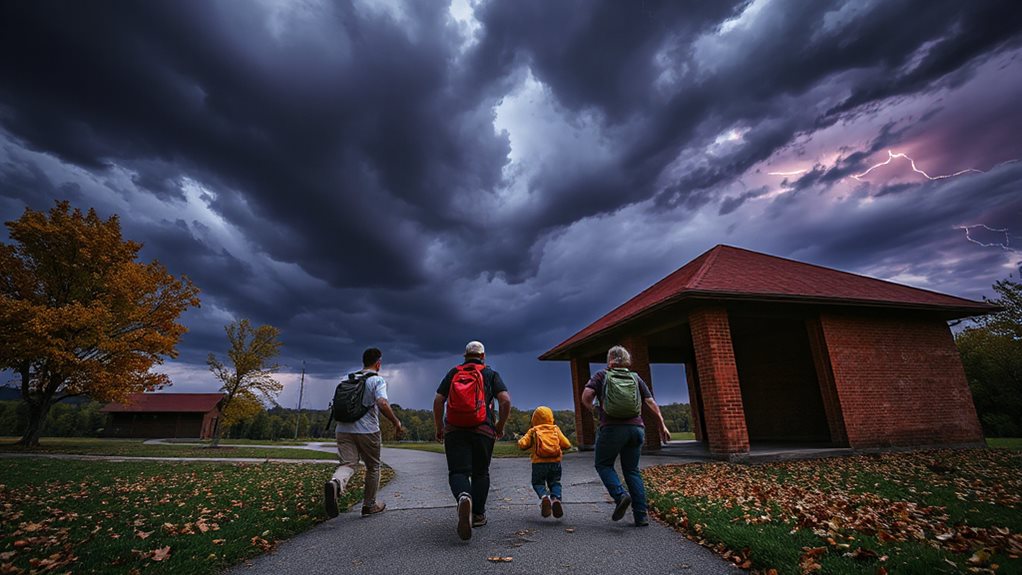
When a storm looms, you’ll want to locate the safest shelter before the first crack of lightning hits. Head for a substantial building with wiring and plumbing—office, school, or home—avoid windows, doors, and exposed cords.
If you’re in a vehicle, pull into a hard‑topped car, truck, or van, close the windows, and stay inside until thunder stops for at least thirty minutes.
After any lightning strike nearby, have your electronic devices and vehicle inspected for internal damage before using them again.
Lightning‑Safety Habits to Avoid Being the Tallest Object
Finding shelter is only half the battle; once you’re inside a safe building or vehicle, you still need to make sure you don’t become the tallest object in the open. Crouch low, keep your head close to your knees, and avoid standing near poles, trees, or ridges that exceed your height. Stay away from the influence radius—roughly equal to an object’s height—to reduce electric field exposure and prevent upward discharges. Choose lower terrain, spread out if in a group, and keep your profile minimal until the storm passes. Consider moving toward lower-elevation areas like valley floors when safe, since terrain such as ridges and peaks can increase strike risk.
Train Teams & Create a Lightning‑Safety Emergency Plan
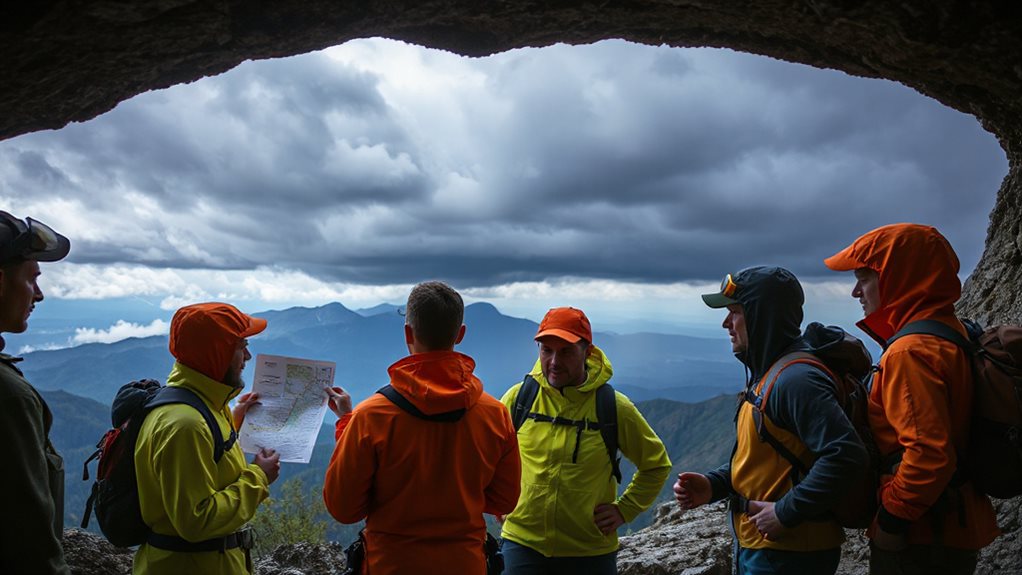
How can you ensure your team stays safe when a storm rolls in? Assign a daily weather watcher, use radar and flash‑to‑bang monitoring, and post signage for the nearest sturdy shelter—preferably a building with wiring and plumbing, or a hard‑topped vehicle if none.
Follow the “When Thunder Roars, Go Indoors” rule, evacuate within a 10‑mile radius, and resume only after 30 minutes of silence.
Train staff annually, rehearse evacuation, and keep clear communication throughout.
Final Note
By staying aware of storm timing, spotting high‑risk locations, and using real‑time alerts, you’ll give yourself the best chance to avoid lightning. Seek sturdy shelter before the storm hits, keep low and away from tall objects, and follow proven safety habits. Train your team and have a clear emergency plan ready, so everyone knows what to do when lightning approaches. This proactive approach protects you and those around you, turning a dangerous situation into a manageable one.


