
Treat your clothing with permethrin before you pack, spraying shirts, pants, socks, boots, packs, and tent floors, then re‑apply after six weeks or six washes; choose a DEET concentration that matches your hike length—10‑20% for short trips, 24% for five‑hour outings, 30% for full‑day excursions—and apply it to exposed skin, reapplying as needed. Stay in the trail’s center, wear long‑sleeved light‑colored gear, tuck pants into socks, and use a head/face net for kids. Perform daily full‑body checks after breaks, shower within two hours, tumble clothes on high heat, and remove any ticks with a tick key, disinfecting the bite and disposing of the tick properly. Continue for more details on timing and landscape tips.
TLDR
- Wear permethrin‑treated long sleeves, pants, socks, and gaiters; reapply after six weeks or six washes.
- Apply DEET repellent (10‑30% depending on trip length) to exposed skin and reapply as needed.
- Stay in the trail’s center, avoiding edges and tall vegetation where ticks are more abundant.
- Perform a full‑body tick check with a mirror after each break, then shower and tumble‑dry clothes on high heat.
- Remove any attached ticks promptly, disinfect the bite site, and dispose of the tick in a sealed bag, alcohol, or flush it.
Why Tick Prevention Matters for Hikers

Why does tick prevention matter for hikers?
You encounter ticks more often on trails than off‑trail, where they cluster near vegetation and quest from wildlife hosts, increasing bite risk.
Early detection prevents disease transmission, especially during peak months and elevations where deer ticks thrive.
Simple daily checks, especially after sitting on logs or taking breaks, protect your health and preserve the freedom to explore. Applying permethrin to clothing and gear can reduce tick bites by over threefold. Always assess the scene for hazards and ensure personal safety before stopping to perform tick checks.
Treat Your Clothing With Permethrin Before You Pack
Since tick bites can turn a scenic hike into a medical concern, treating your clothing with permethrin before you pack is a smart, proactive step.
Spray or soak shirts, pants, sleeves, cuffs, socks, gaiters, and hats in a windless, ventilated space, using a 0.5% solution and gloves.
Focus on entry points, let it dry, then re‑treat after six weeks or washes for lasting protection.
Drop shot rigs often work best with a small diameter braid paired with a fluorocarbon leader to reduce visibility and improve presentation.
Spray Permethrin on Boots, Packs and Tent Floors
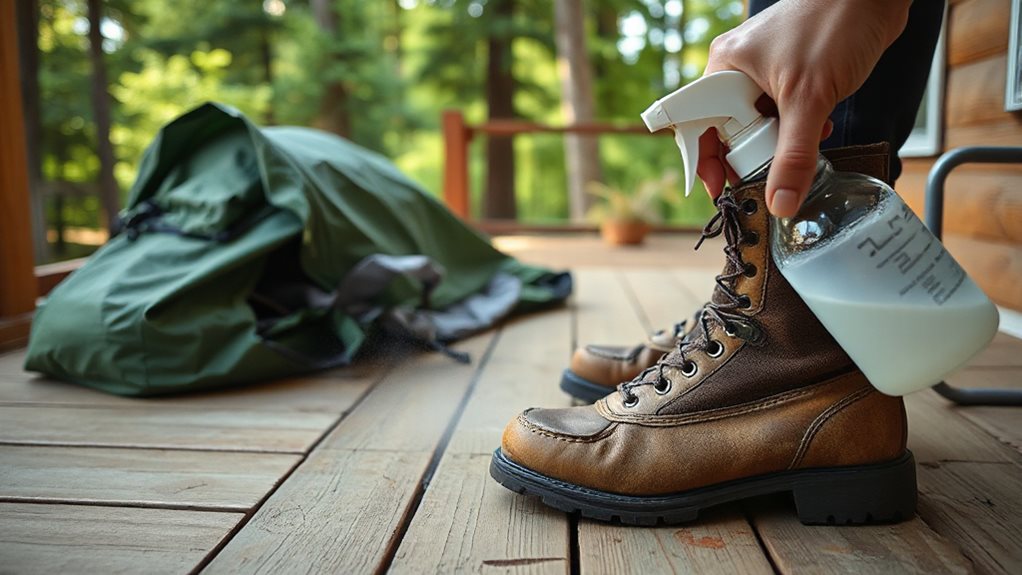
Treating your boots, backpack, and tent floor with permethrin adds a essential layer of protection that stops ticks from hitching a ride the you move through grass and brush.
Spray from six to eight inches away, using a slow sweeping motion to coat both sides of boots, ankle socks, pack mesh, and tent floor.
Wear gloves, work outdoors, let it dry for a few hours, and reapply every six weeks or after six washes to keep your excursion tick‑free.
Choose the Right DEET Concentration for Skin Application
When you’re gearing up for a hike, picking the right DEET concentration for skin application can make all the difference between a comfortable trek and a tick‑laden ordeal.
Choose 10‑20% for short outings, 24% for five‑hour trips, and 30% for full‑day freedom; it lasts up to 12 hours, is EPA‑approved for children over two months, and minimizes reapplication while keeping ticks at bay.
Do Daily Full‑Body Tick Checks Correctly
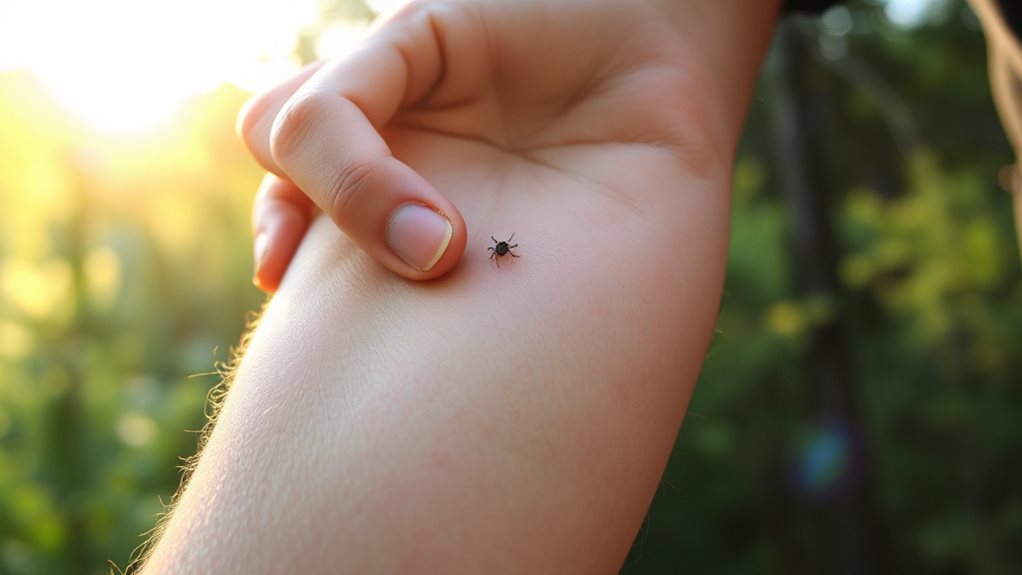
A quick, thorough full‑body tick check right after you step inside can dramatically cut the risk of disease transmission, so make it a habit to inspect every spot before you relax.
Use a mirror, run your hands from scalp to toe, focus on warm, moist areas like under arms, behind knees, and groin.
Shower within two hours, repeat before bed, and tumble clothes on high heat to kill any hidden ticks.
Ticks are often painless and can resemble specks of dirt, so check carefully.
Tick‑Prevention: Stay in Trail Center, Avoid High‑Grass Edges
When you stick to the trail’s center, you stay away from the tall grass and brush where ticks wait for hosts, so your exposure drops dramatically.
The middle of a marked path usually offers a cleared, drier surface, while the edges are packed with leaf litter and dense vegetation that create perfect tick habitats.
Inspect your gear and clothing after hikes to check for frayed strings that could indicate hidden damage and increase risks.
Stay Centered on Path
Ever wonder why the CDC and vector‑borne epidemiologists keep urging hikers to stay in the middle of the trail? You reduce lower tick encounters by walking the trail’s center, where surveys show just 2.8 ticks per 1,000 m², versus edge grass teeming with hosts. Stick to the path, avoid tall‑grass margins, and keep elevation modest; this simple habit preserves freedom while minimizing bite risk.
Avoid Edge Brush Encroachment
Why do you keep stepping into the brush along the trail’s edge? Ticks thrive in tall grass and shady brush that line the path, waiting for hosts on elevated surfaces.
Stay centered, keep a comfortable distance from overgrown margins, and avoid uncut foliage that encroaches on the trail.
Wear Long‑Sleeved, Light‑Colored Gear and Tuck Pants Into Socks
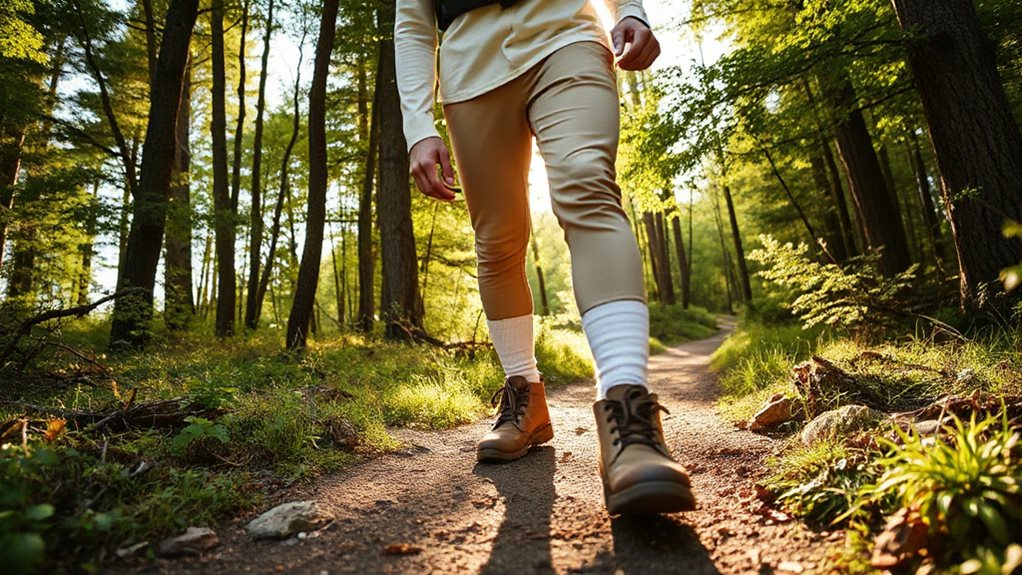
How can you keep ticks from hitching a ride on your skin while hiking? Slip on a thin, breathable long‑sleeve shirt and tuck it into your pants, then choose light‑colored, dense‑weave leggings or pants. Pull the leg openings into high socks or boots, securing with tape if needed. This layered barrier blocks ticks, lets you spot any that cling, and preserves your freedom to move comfortably. Unstructured outdoor play also helps children build resilience and confidence by facing small risks and solving problems in nature, which supports emotional regulation and self‑reliance.
Use a Head/Face Net as an Extra Barrier for Kids
After securing your legs with long sleeves and high socks, adding a head‑face net gives kids an extra line of defense where ticks love to linger.
Choose a black, porous net that fits over a hat, keeping the mesh away from the face and neck.
Treat the net with permethrin for lasting repellent power, and wash it in hot water after each trek to remove any hitchhiking insects.
Tick‑Prevention Timing: Hike When Ticks Are Least Active
When should you hit the trail to keep tick encounters to a minimum? Aim for late summer or early fall, after mid‑July, when nymphs wane and adult activity drops below 45°F.
In the Northeast and Upper Midwest, schedule hikes before May or after October.
Choose elevations above 500 m where possible, and stay beyond the first two meters from the trail edge to reduce exposure.
Pair Gear With Landscape Tips for Best Protection
Ever wondered how the terrain you choose can dictate the effectiveness of your gear? In short grass, wear permethrin‑treated pants, tuck trousers into ankle socks, and pair long‑sleeve shirts with light colors for easy spotting;
in taller brush, extend treatment to hats, backpacks, and shoes, and apply EPA‑approved skin repellents to exposed areas, ensuring every layer matches the landscape’s tick‑height profile.
Remove Ticks Safely With a Tick Key
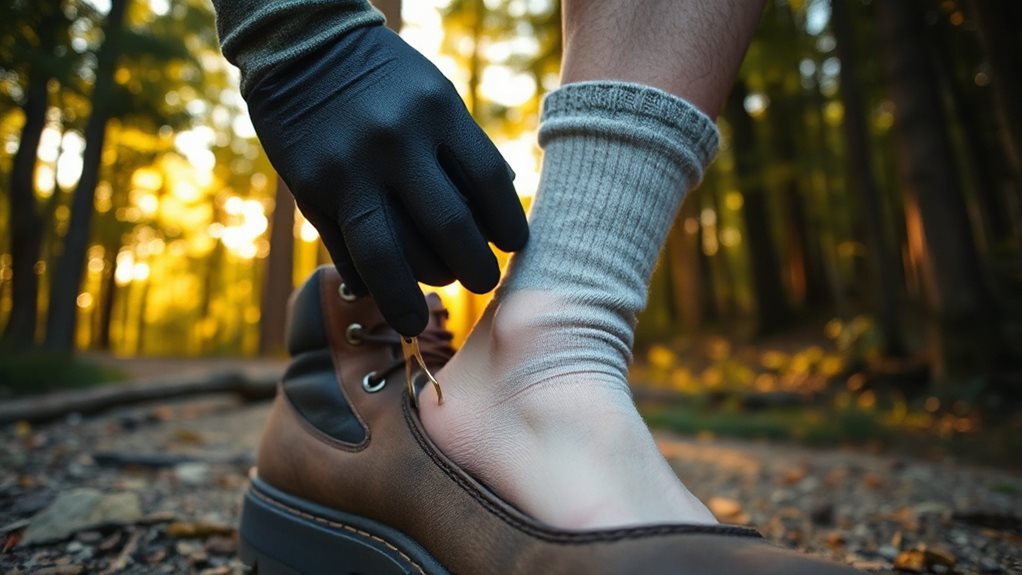
Grab your Tick Key, hold it firmly with the stamped side up, and line the tapered slot over the tick’s body. Pull straight out in one smooth motion, keeping the key flush with your skin so the head stays intact and you avoid squeezing the bug. After the tick’s gone, disinfect the device and clean the bite area to minimize any infection risk.
Prepare Tick Key
How can you safely remove a tick without risking infection or leaving parts behind? First, clean the key with alcohol, then dry it; the anodized aluminum stays sharp and ready.
Keep it in your pocket, on a keychain, or in a first‑aid kit, so you always have leverage at hand.
Check the finish, ensure the stamped side faces up, and you’ll be prepared for any bite.
Grip Properly, Pull Straight
When you spot a tick attached to your skin, the key to a safe removal is to grip it properly and pull straight—no twisting, squeezing, or jerking. Slide the TickKey flush, press the stamped side down, align the tapered slot over the tick, and press flat. Then pull quickly forward, keeping the key in line with the slide, ensuring the head stays intact and mouthparts don’t break.
This method works on all tick sizes, keeping you disease‑free on the trail.
Disinfect After Removal
Do you know what to do right after you’ve removed a tick with a TickKey? First, wash your hands and the bite site with soap and water, then swab the area with rubbing alcohol or an antiseptic wipe. If you prefer, use hand sanitizer. After it dries, you can apply a thin layer of antibiotic ointment. Dispose of the tick in a sealed bag, submerge it in alcohol, or flush it, avoiding crushing it with your fingers.
Final Note
By treating your gear with permethrin, choosing the right DEET concentration for skin, and doing thorough daily body checks, you dramatically cut the risk of tick bites. Adding a head or face net for kids, hiking during cooler parts of the day, and pairing your equipment with landscape‑aware strategies further enhance protection. If a tick does attach, remove it promptly with a tick key. Consistently applying these steps keeps you safe and lets you enjoy the trail without worry.


