
You’re bitten more often when your skin releases higher levels of short‑chain carboxylic acids, which lock onto mosquito ionotropic receptors, and when your breath pumps out more CO₂ because of a faster metabolism, creating a long‑range signal that triggers the AaegGr3 receptor. Warm body temperature, dark clothing, and larger size amplify heat and infrared cues, while genetic variants shape your scent profile, increasing lactic‑acid and fatty‑acid emissions. All these factors combine to make you a magnet for mosquitoes, and the next sections will show how you can reduce those cues.
TLDR
- Skin carboxylic acids (short‑chain fatty acids) act as strong scent cues; higher concentrations increase mosquito attraction.
- Exhaled CO₂ signals metabolic rate; higher CO₂ output makes a person detectable from several meters away.
- Lactic acid and other sweat‑derived compounds activate Ir8a receptors, creating an odor cocktail that guides mosquitoes to exposed skin.
- Genetic factors (e.g., HLA, ABCC11, blood‑type variants) influence scent profiles, making some individuals inherently more attractive.
- Warm body temperature, dark clothing, and larger body size boost infrared and chemical emissions, while staying cool and wearing light colors can reduce bites.
Why Skin Carboxylic Acids Attract Mosquitoes

Why do skin carboxylic acids draw mosquitoes like a magnet? You’re likely to notice that the acids in your sweat and sebum—especially short‑chain fatty acids—act as a scent signal for mosquito antennae. Their ionotropic receptors lock onto these compounds, and higher concentrations make you up to a hundred times more attractive. This stable trait, found across years, fuels their tireless pursuit. Higher skin levels of carboxylic acids are linked to increased mosquito attractiveness.
Why Breath‑Generated CO₂ and Metabolism Boost Mosquito Attraction
Skin‑derived carboxylic acids cue mosquitoes to your scent, but the breath you exhale adds a powerful, long‑range signal that pulls them in from several meters away.
Your exhaled CO₂, detected by the AaegGr3 receptor, acts as a universal “living” beacon; higher metabolism means more CO₂, so you become a brighter target.
CO₂ also unlocks heat and lactic‑acid cues, amplifying attraction and guiding mosquitoes directly to you.
Keeping the skin clean and protected can reduce additional cues from skin acids that contribute to attraction.
How Body Odor and Sweat Drive Mosquito Attraction
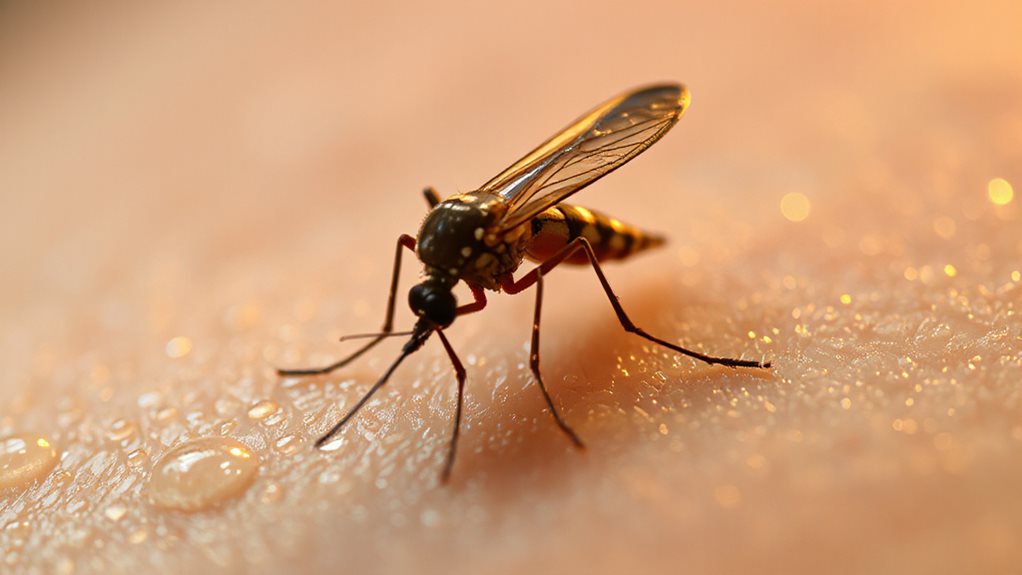
Ever wonder why a single whiff of your sweat can turn you into a mosquito magnet? Your lactic acid and other carboxylic acids trigger Ir8a receptors in mosquito antennae, while CO₂‑sensitive cpA neurons in the maxillary palp pick up foot‑scent compounds. This chemical cocktail—lactic acid, 2‑ketoglutaric acid, amines, sulfides—guides them to exposed skin, making odor‑rich individuals far more attractive. Portable underwater cameras like the Eyoyo provide anglers with clear views in low light, aiding in spot selection and monitoring fish behavior with long cables and infrared lights for night vision.
Genetic Drivers of Strong Mosquito Attraction
Do you know that a sizable slice of mosquito‑magnetism is written into your DNA? Twin studies show heritability around 0.62‑0.67, meaning genetics drive much of your scent profile. Variants in HLA, ABCC11, and blood‑type genes enhance lactic‑acid, fatty‑acid, and ammonia emissions, making you a magnet. Roughly 20% of people carry these attractive alleles, so your bites are partly inherited.
Why Warm Body Temperature, Dark Clothing, and Larger Size Increase Bites – and What You Can Do About It?
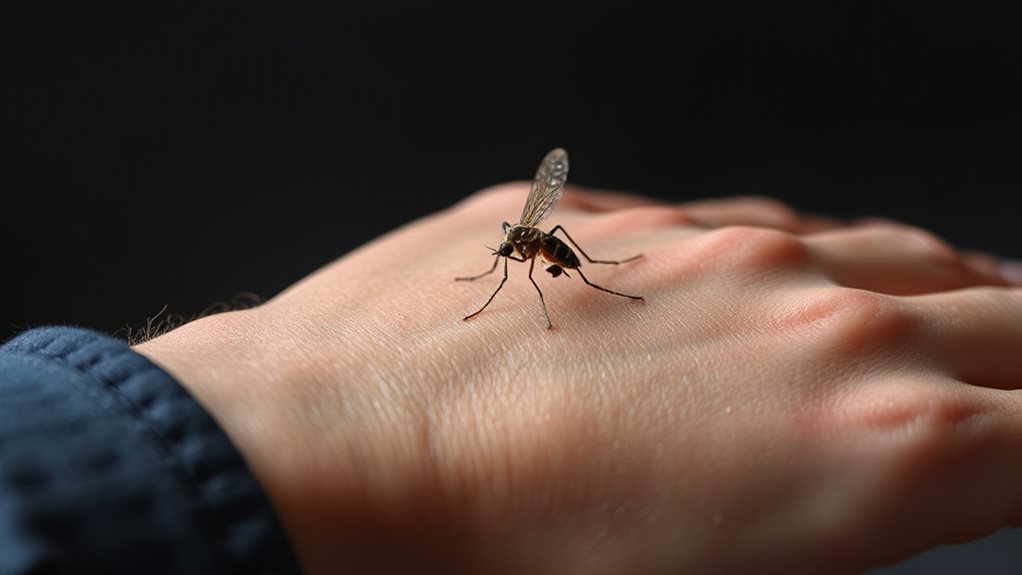
Why do you notice more bites when you’re warm, wearing dark clothes, or are larger?
Your heat raises skin temperature, activating mosquitoes’ IR21a receptors, while dark fabrics absorb infrared radiation, making you a brighter target.
Bigger bodies emit more CO₂ and scent, drawing bugs from farther away.
To protect yourself, stay cool, wear light colors, and avoid heavy fragrances—simple steps that reduce the cues mosquitoes crave.
Final Note
You’re more likely to get bitten if your skin emits higher levels of carboxylic acids, your breath releases extra CO₂, and your sweat carries distinctive odor compounds; genetics can amplify these signals, while warmth, dark clothing, and larger body size further heighten attraction. To reduce bites, wear light colors, keep cool, use effective repellents, and consider modifying diet or hygiene habits that lower the specific chemicals mosquitoes seek. These steps target the key factors that make you a magnet for mosquitoes.


