
Choose a site with a natural slope near a water source, and check local permits, especially in states like California or Montana. Shape the pond with 3:1 banks, varied depths from shallow margins to 8–15 feet deep zones, and use clay or a liner to prevent leaks. Install underlay and HDPE liner carefully, add a standpipe for drainage, and blend edges with stone and plants. Include safety ladders and shallow shelves, then stock fish thoughtfully—there’s more to get right for long-term success.
TLDR
- Choose a site with natural slopes and reliable water sources like rainfall or streams to support pond filling and ecosystem health.
- Design depth zones including shallow margins for wildlife and a deep area of at least 8–15 feet for fish refuge and oxygen stability.
- Install a robust liner with proper underlayment, using HDPE or RPE, and secure edges to prevent leaks and damage.
- Incorporate fish habitat features such as submerged plants, boulders, and forage populations to support healthy, balanced fishing.
- Include water level control with a standpipe and drainage system, and add safety features like ladders and erosion-resistant slopes.
Check Water Sources and Permits First
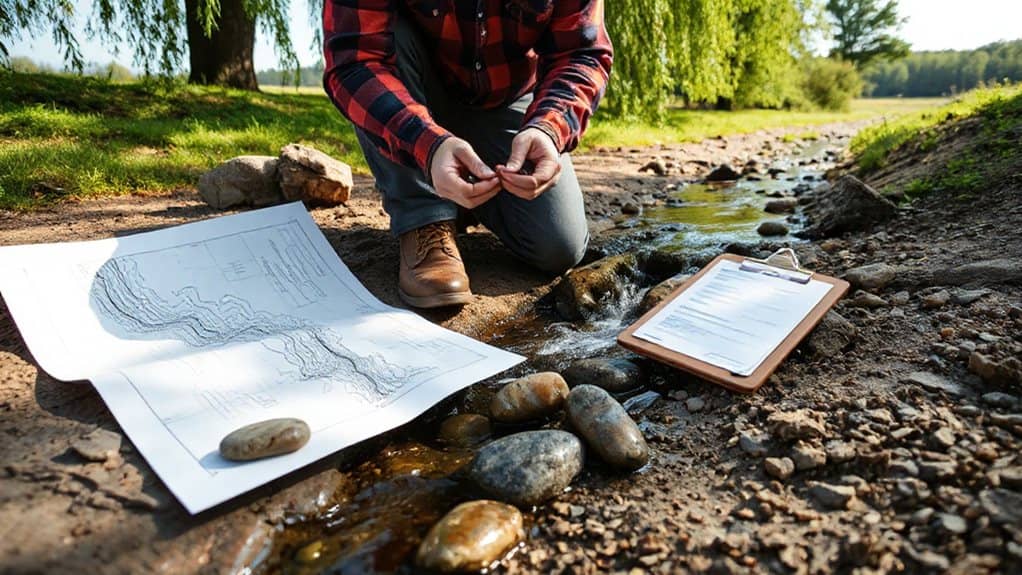
Before you break ground on your fishing pond, take time to evaluate your water sources and legal requirements—getting this step right guarantees your pond stays full, healthy, and within regulations.
Check if rainwater, wells, or streams can supply your pond, and test water quality early.
Secure permits for surface water or large withdrawals—Montana and California, for example, have strict rules.
Contact your local environmental agency to clarify permit needs, as regulations often depend on pond size and impacts to natural waterways. Additional considerations include assessing local wildlife interactions and habitat impact when siting your pond.
Find the Best Spot for Your Fishing Pond
Look over your land carefully to find a spot where the natural slope helps collect water, ideally in a low area fed by rainfall or small streams.
Make sure the soil has enough clay—about 20% or more—to hold water, and avoid places with rocky or sandy ground that could leak.
A good site saves you time and money, so check the lay of the land and water sources before you start digging.
For healthy fishing and balanced populations, plan habitat and forage so your pond supports ample baitfish for bass and other predators.
Natural Landscape Evaluation
When scouting your property for the ideal fishing pond location, start by tuning into the land’s natural features—because the right spot isn’t just about water, it’s about how the terrain works as a whole.
Look for clay or silty clay soils, at least 2 feet thick, to prevent leaks. Avoid sandy or gravelly areas. Choose sites with gentle slopes, permanent vegetation, and minimal pollution risk.
Shape your pond with curving edges, blend the embankment into the setting, and consider islands for wildlife.
Water Source Verification
Water is the lifeblood of your fishing pond, and getting it right starts with choosing a reliable source you can count on year-round.
Springs offer clean, steady flow, while wells give control—just watch pumping costs.
Avoid streams unless you’ve got permits, and always test water quality.
Pick a spot close to your source, keep it tree-free, and make certain it replenishes losses naturally.
Design Depth Zones for Fish and Wildlife
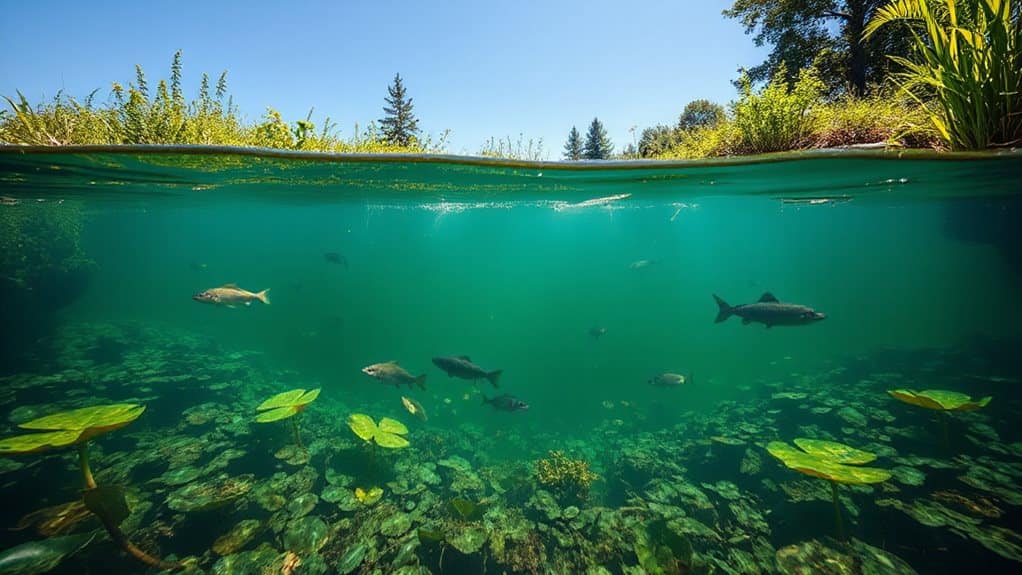
You’ll want to shape your pond with shallow edges, mid-depth shelves, and deeper zones to support both fish and wildlife.
Keep the margins 15–25 cm deep for frogs, ducklings, and plants, while building mid-zones around 45–60 cm to anchor water lilies and give fish room to cruise.
Drop off to at least 10 feet deep in one area—especially if you’re stocking bass or koi—to maintain oxygen and stable temperatures year-round.
Maintain a deeper drop and include deeper zones to provide thermal refuge and habitat complexity for fish.
Shallow Zones For Wildlife
Creating a thriving ecosystem around your pond starts with designing shallow zones that welcome both wildlife and fish. Build gentle slopes and 1–1.5 foot depths so birds and small mammals can drink, bathe, and move freely.
Include submerged plants, boulders, and emergent reeds to support frogs, insects, and snakes. Add drawdown zones and fish-free shallows to enhance biodiversity, ensuring year-round habitat and natural balance without overcrowding or excess predation.
Mid Depths For Plants
While your pond’s shallow edges support wildlife and emergent vegetation, the mid-depth zones—ranging from 15 to 40 cm (6 to 16 inches)—are where deeper marginal plants truly thrive.
You’ll want to place tall varieties here, submerging their roots and crowns fully.
These plants handle water fluctuations well, offer shelter for aquatic life, and keep foliage above water, ensuring both beauty and function in your pond’s ecosystem.
Deep Areas For Fish
When properly designed, deep areas in your fishing pond do more than just hold water—they create the foundation for a healthy, balanced ecosystem where fish thrive year-round.
Aim for at least 8 feet deep in south-central Oklahoma, with 12–15 feet in drier zones.
Use drop-offs and varied contours to support fish movement, spawning, and oxygen flow, ensuring predator and prey both find what they need to flourish.
Build Stable Banks With 3:1 Slopes
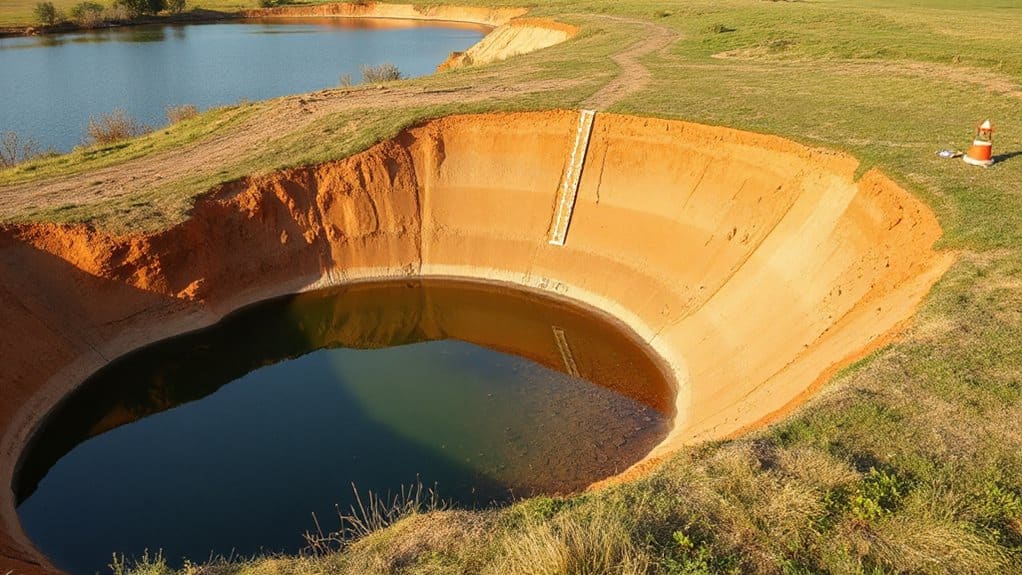
You’ll want your pond banks to stay strong over time, and shaping them with a 3:1 slope is one of the best ways to make that happen.
For every foot of depth, spread 3 feet outward—this reduces erosion, supports liner stability, and works with most soils.
Compact in 8-inch layers, use filter fabric and rip rap, and plant native vegetation to lock things in place, giving you a durable, low-maintenance edge that lasts.
Consider adding native vegetation to enhance root reinforcement and reduce long-term erosion risks.
Use Clay or Liners to Prevent Leaks
You’ll want to check your soil’s clay content first—ideally, it should have at least 20% clay to hold water well, or 30% if you’re building the dam core.
If your soil falls short, don’t worry: you can enhance its sealing power with bentonite or go straight to a synthetic liner like HDPE, especially on sandy or rocky ground.
Either way, proper compaction and prep, like stripping topsoil and testing permeability, will go a long way in keeping your pond leak-free.
Consider also planning storage and accessibility for your gear by choosing an appropriate tackle box to keep tools and supplies organized while you work on the pond.
Clay Soil Requirements
Getting the soil right is essential for building a durable, leak-free fishing pond, and clay plays a starring role in that success.
Aim for at least 20% clay content—30% or more is better. Use brick earth or Lias clay, puddle it well, and compact in 6- to 8-inch layers.
Strip topsoil first, avoid organic matter, and always cover the clay to prevent cracking.
Liner Installation Tips
While clay soil can provide a solid foundation for preventing leaks, many pond builders opt for synthetic liners to guarantee long-term waterproofing—especially in soils with lower clay content.
You’ll want to clear the subgrade, unroll the liner carefully with help or equipment, smooth it out, secure edges, and inspect thoroughly.
These measures make certain a tight, durable fit that keeps your pond watertight and ready for fishing fun.
Leak Prevention Strategies
A well-sealed fishing pond starts with choosing the right leak prevention method—whether you’re working with natural clay or installing a synthetic liner. Use powdered bentonite in dry ponds for tight seals, or opt for reinforced, flexible liners in coarse soils.
Always prepare the site well, compact thoroughly, and protect with underlayment and soil cover to guarantee long-term, reliable performance.
Mark Your Pond’s Shape With Stakes
Start by clearly marking your pond’s shape using stakes to guide the excavation process. Use paint, ropes, or spray to outline the area, including the dike’s outer edge.
Find the center with triangulation from fixed points. Set stakes every 25 feet along baselines, aligned north-south.
Add elevation collars and string lines 6 inches above grade for precision.
Excavate Depth Zones and Save Topsoil
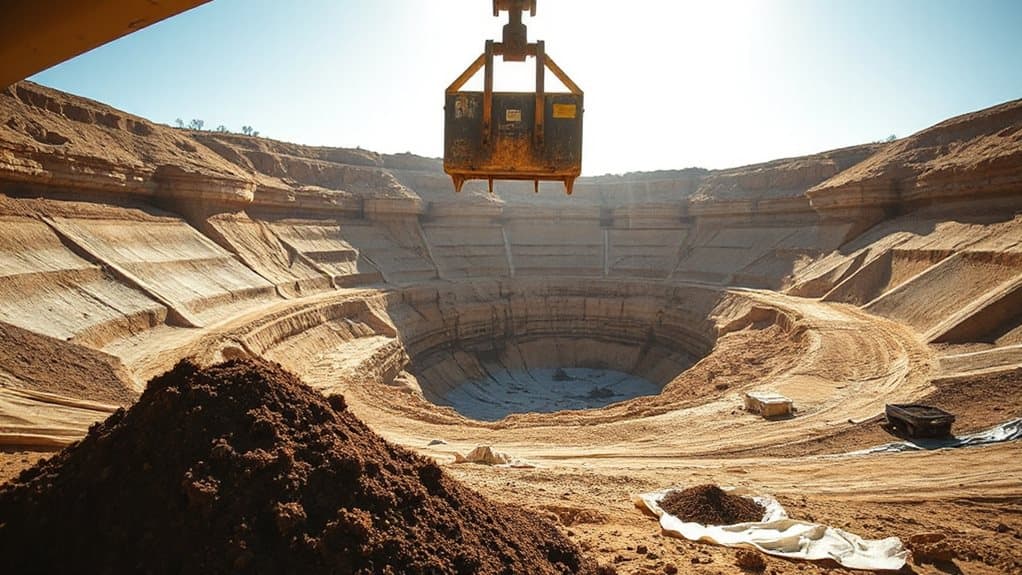
Digging your pond with purpose means shaping depth zones that support fish, plants, and wildlife from the start.
Begin in the center, working outward to avoid soggy rework.
Carve deep zones 24–48 inches down for fish refuge, with 40% at 36–48 inches for koi stability.
Save topsoil separately—strip 6–12 inches for later use, storing it away from the basin to prevent contamination.
Line the Pond With Underlay and Liner
Now that your pond basin is shaped and the topsoil set aside, it’s time to lay the foundation for a leak-free, long-lasting ecosystem by installing the underlayment and liner.
Start with geotextile fabric or 12” of soft sand to cushion and protect.
Choose RPE or HDPE for large ponds, place carefully, and secure edges.
Let ground gases escape, avoid punctures, and minimize seams with custom-fitted liners for best results.
Size Your Fishing Pond for Good Fish Yield
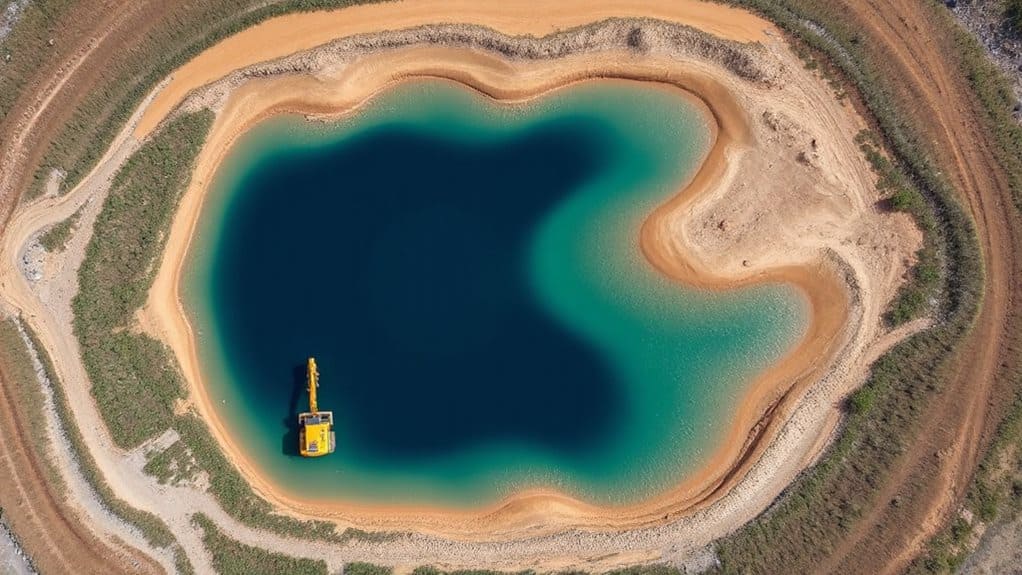
A well-sized pond sets the stage for a thriving fishery, and getting it right starts with matching your goals to the acreage.
For under 1 acre, expect 3–5 pound bass and high catch rates with low costs, but limited trophy potential. Ponds 1–5 acres support larger forage, stable water, and 5–7 pound bass—ideal if you’re aiming for quality yields and don’t mind a bit more upkeep.
Plan Drainage for Stable Water Levels
Once you’ve settled on the right size for your fishing pond, keeping water levels steady becomes your next priority—especially when rain or drought could throw things off.
Use a standpipe with a bottom valve to control height, add a trash rack to block debris, and anchor the riser with concrete.
Pick pipe size based on pond acreage—6, 8, or 12 inches—and extend it beyond the levee toe.
Add Safety Shelves and Natural-Looking Edges
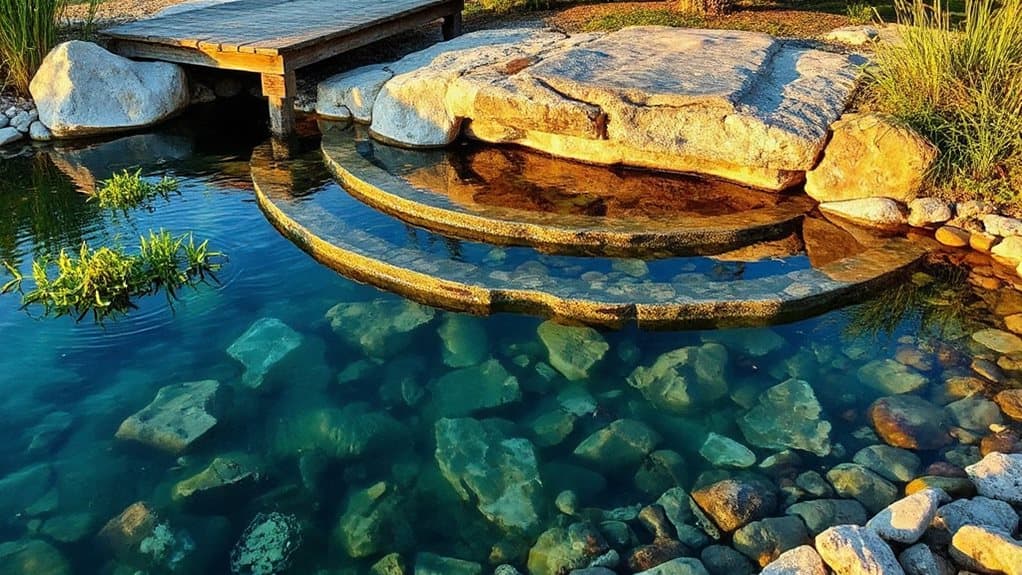
Think of your pond’s edges as more than just a boundary—they’re where safety and nature meet.
Grade slopes to a 3:1 ratio, add safety shelves, and anchor aluminum ladders for secure exits.
Use natural stone, soil berms, and plants to blend edges seamlessly.
Remove hazards, control weeds, and maintain shallow zones.
Regularly inspect for erosion, trim debris, and reinforce safety rules with signs—keeping your pond both beautiful and safe.
Final Note
You’ve picked the right spot, secured permits, and built a pond with stable slopes, proper depth zones, and a solid liner—great work. Now, maintain balanced water levels with smart drainage, add safety shelves, and finish edges naturally. A well-sized, thoughtfully designed pond supports healthy fish and years of enjoyment. Keep it simple, stay proactive, and you’ll create a lasting spot for fishing and relaxation, all while supporting local wildlife. You’re all set.


