
Bass in your pond primarily feed on baitfish like fathead minnows, golden shiners, and threadfin shad, which form the foundation of their diet. They’ll also consume crayfish (comprising roughly 33% of stomach contents), frogs, tadpoles, salamanders, and aquatic insects depending on size and season. Larger bass opportunistically eat anything that fits in their mouths, including smaller bass, mice, and even birds. Structural cover like brush piles and vegetation creates vital ambush points where bass concentrate to hunt prey, and understanding these feeding patterns will help you optimize your pond management strategy.
TLDR
- Baitfish like fathead minnows, golden shiners, and threadfin shad form the primary diet for pond bass across all seasons.
- Crayfish comprise roughly 33% of largemouth bass stomach contents, especially when soft-shelled during molting periods near rocky cover.
- Frogs, tadpoles, and salamanders become essential prey during warmer months when bass ambush them in shallow, vegetated areas.
- Young bass consume zooplankton and aquatic insect larvae, while adults opportunistically eat grasshoppers, crickets, and other surface insects.
- Bass are opportunistic feeders, consuming anything that fits their mouth including smaller bass, mice, and small reptiles.
Baitfish: The Primary Food Source for Pond Bass
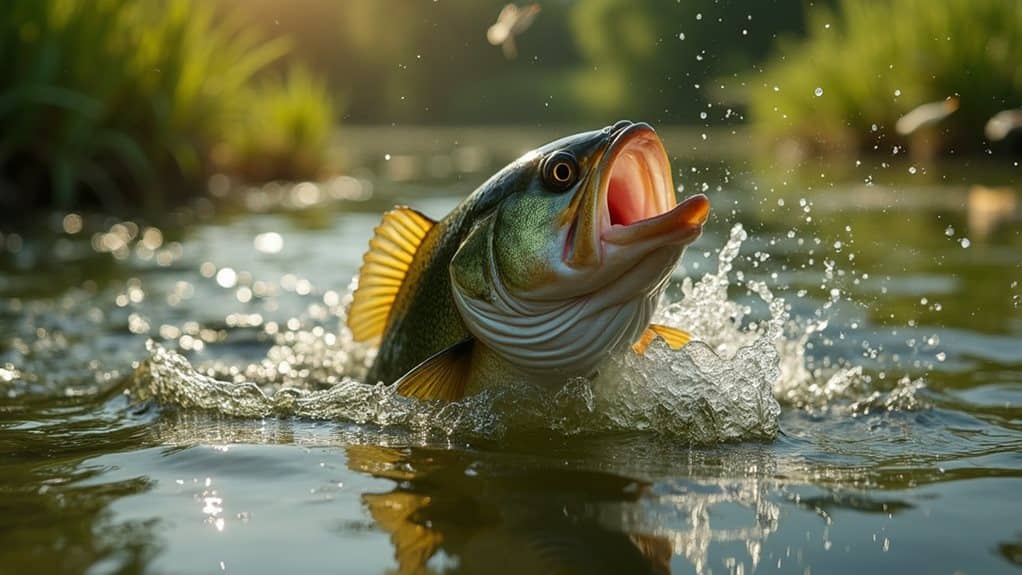
Baitfish form the foundation of a healthy bass population in any pond, serving as the primary fuel for growth, reproduction, and overall liveliness.
Without sufficient baitfish like fathead minnows, golden shiners, or threadfin shad, your bass will become stunted and slow-growing.
You’ll want to stock these forage species before introducing bass, then maintain proper baitfish-to-bass ratios through strategic harvest to guarantee your pond’s ecosystem remains balanced. Managing your pond as a baitpond for at least the first year after stocking forage allows minnow populations to establish and multiply before bass predation begins. You can also learn about successful bass fishing hotspots to understand how habitat and forage availability influence bass populations.
Crustaceans and Bottom-Dwelling Prey
While baitfish steal the spotlight in most bass diet discussions, crustaceans quietly make up a substantial portion of what keeps your pond’s bass healthy and growing.
Crayfish account for roughly 33% of largemouth bass stomach contents, providing protein-dense meals that support rapid growth. You’ll find bass targeting crayfish near rocky areas and submerged cover, especially soft-shelled individuals during molting periods when they’re most vulnerable and easiest to consume.
Beyond crayfish, bass also consume other slow, easy prey like minnows and various crustaceans, particularly during winter months when their metabolism and activity levels decrease. Bass also frequently feed on bottom-dwelling prey in and around cover where they can ambush meals.
Amphibians, Reptiles, and Seasonal Targets
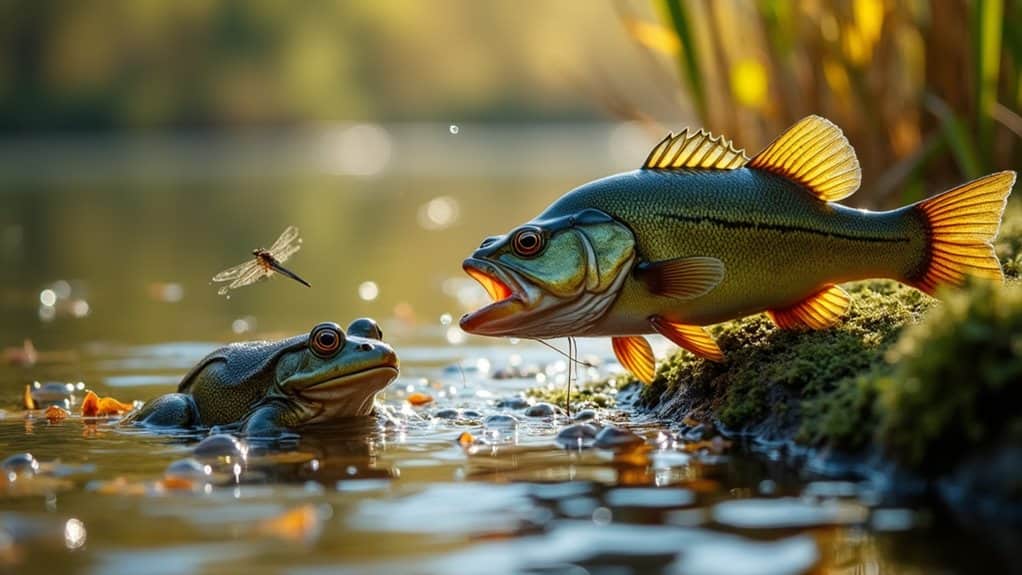
As temperatures climb and your pond’s shallow waters warm, bass shift their attention to the amphibians and reptiles that become increasingly active along vegetated edges and shorelines.
You’ll notice larger bass ambushing frogs, tadpoles, and salamanders near dense aquatic vegetation, while opportunistically taking small snakes and even turtle hatchlings.
These prey items peak during spring and summer, making them prized seasonal targets that larger, adult bass consume most frequently.
Many of the same vegetation types that attract these prey—such as hydrilla and bulrush—also support abundant bass populations in larger waters like Lake Kissimmee and Lake Istokpoga, where they provide excellent feeding and ambush cover hydrilla beds.
Insects and Small Invertebrates in the Bass Diet
Though often overlooked by pond managers focused on forage fish, insects and small invertebrates form the nutritional foundation that sustains bass populations from their earliest life stages.
Bass fry depend on zooplankton and tiny crustaceans, while juveniles consume aquatic insect larvae like mosquitoes and midges.
Larger bass opportunistically feed on grasshoppers, crickets, mayflies, caddisflies, and crayfish, which provide essential protein throughout seasonal changes.
Portable fish finders like the Garmin Striker series can help anglers locate structure and schools where bass are feeding, making it easier to target productive feeding areas on small ponds.
Opportunistic Feeding Behavior and Unusual Prey Items
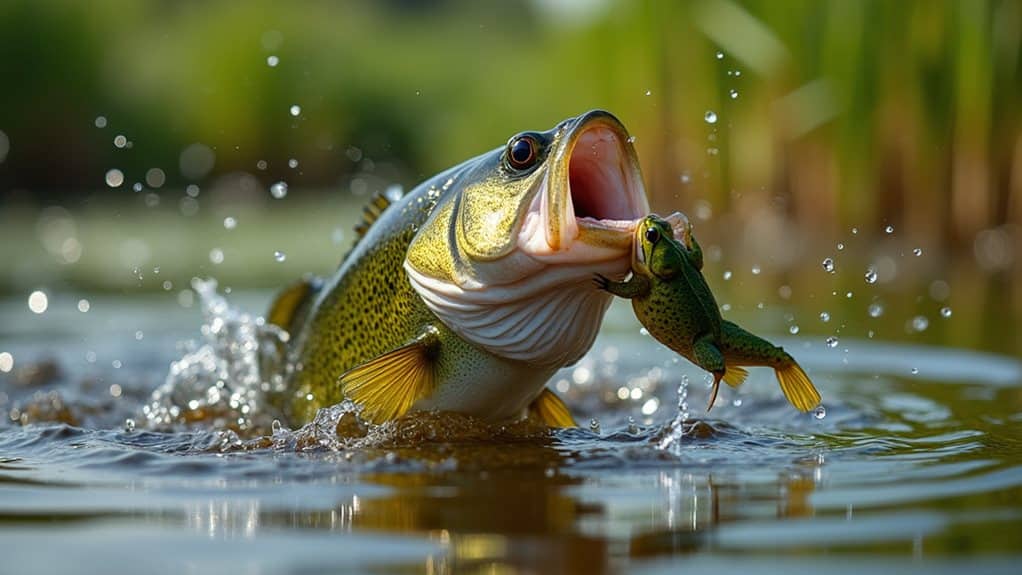
Beyond their reliance on insects and invertebrates, bass demonstrate extraordinary flexibility in their feeding habits, consuming virtually anything that fits into their mouths and provides sufficient energy return.
You’ll find bass eating crayfish, frogs, snakes, small turtles, mice, and occasionally bats or birds that fall into the water.
They’ll even cannibalize smaller bass when opportunity presents, prioritizing energy gain over prey preference in their fundamentally opportunistic approach.
How Habitat Structure Influences Bass Feeding Patterns
The structure of your pond’s habitat directly determines where bass hunt and what they can catch.
When you add cover like brush piles, rock formations, or thick vegetation, you’re creating ambush points where bass can hide and strike at unsuspecting prey passing by. These structural elements also support healthy populations of baitfish, crayfish, and insects, which means more food is available in the areas where bass naturally position themselves to feed.
Cover Creates Ambush Opportunities
Bass zero in on structural cover as their primary hunting grounds, converting submerged logs, brush piles, rock ledges, and aquatic vegetation into strategic ambush points.
They’ll wait motionless near these structures until prey swims within striking distance, minimizing detection while maximizing success. This stealth-based approach reduces energy expenditure compared to active pursuit, making cover-rich areas essential feeding zones where bass capitalize on concentrated baitfish and sunfish populations.
Vegetation Supports Prey Populations
Lush aquatic plants don’t just beautify your pond—they set up an entire feeding system that keeps bass well-fed year-round. Vegetation creates prime nursery habitat for young baitfish and invertebrates, concentrating prey in shallow zones.
Dense grasses host microorganisms that fuel the food web, while moderate plant coverage (10–20% of surface area) optimizes bass foraging efficiency without letting prey hide too effectively.
Artificial Structures Boost Productivity
Strategic habitat additions convert your pond into a feeding powerhouse by creating the ambush points and prey concentrations that bass need to thrive.
Artificial structures like brush piles and fish attractors increase feeding efficiency by sheltering bluegill and shad, which congregate in these areas.
Dense vertical cover up to 10 feet tall optimizes predator-prey interactions, while proper spacing—clusters 6–8 feet apart—ensures balanced coverage without hindering hunting success.
Final Note
Understanding what bass eat in your pond gives you a significant advantage, whether you’re managing the fishery or planning your next outing. You’ll find bass targeting everything from baitfish and crayfish to frogs and insects, adapting their diet based on what’s available and the season. By recognizing these feeding patterns and how habitat influences their choices, you can make informed decisions that’ll improve both bass health and your angling success.


