
Start shallow, working shorelines with topwater lures where bass ambush prey. Read water clarity and structure, adjusting tactics when conditions shift. Match your gear and lures to the forage, using rods and lines that enhance presentation. When fish won’t bite, switch to finesse tactics with light gear and subtle moves. Stay observant, adapt quickly, and build patterns through practice—confidence comes from knowing where bass are and how they’ll react. There’s more to mastering the game than just casting; smart adjustments open the door to consistent success.
TLDR
- Master water reading by identifying structure, clarity changes, and current breaks to locate bass efficiently.
- Adapt tactics to conditions using appropriate gear, lures, and presentations for clarity, temperature, and weather.
- Build confidence through pattern recognition, using sonar and mobility to refine daily fishing strategies.
- Employ finesse techniques with light line and small baits when fish are pressured or not aggressively feeding.
- Maintain a pro mindset by staying observant, flexible, and calm while quickly adjusting to changing on-water scenarios.
Start Shallow: Find Early Success Near Shore
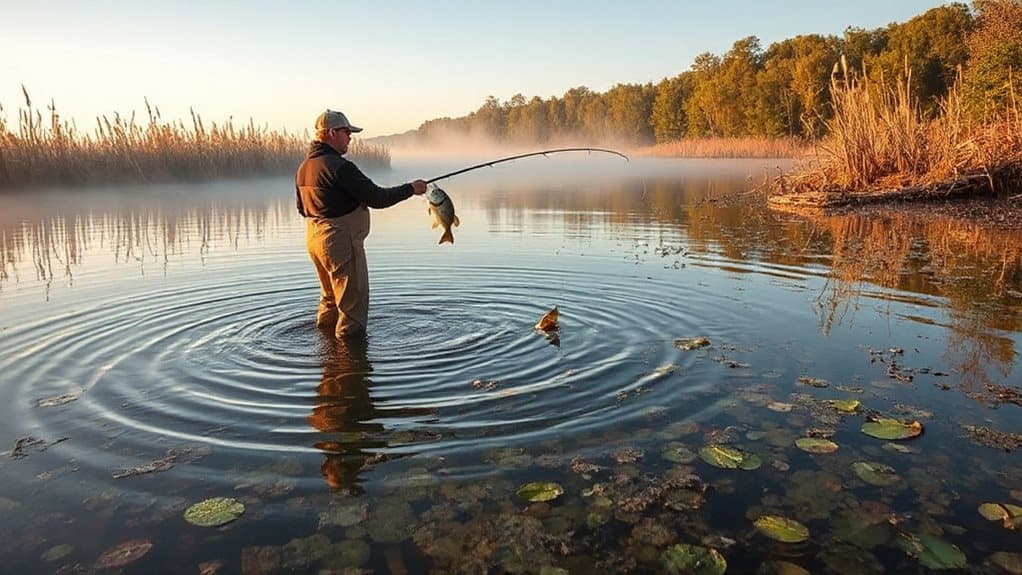
Right from the start, focusing on shallow waters near shore gives you the best shot at early success—especially when you understand how largemouth bass rely on vibration and sight to find their meals.
Use wiggling or surface-disturbing lures, fish during low light, and target structure like points, pads, or stumps.
Vary casts, let areas rest, and match lure depth to where bass are holding—you’ve got this.
Bass are especially drawn to transition zones where different bottom types meet, such as where sand shifts to gravel, because these areas concentrate forage and create natural ambush points.
Also be sure to scout shoreline structure like submerged logs and vegetation to find the prime ambush spots where bigger bass often hide.
Read Water: Clarity, Color, and Structure
You can tell a lot about where bass are holding just by checking the water’s clarity—clear water lets you spot fish near rocky banks, while murky water means you’ll need to fish deeper, slower.
Look for changes in water color, like dark seams or bubble lines, since they often mark current breaks where bass ambush bait.
Focus on obvious structure like boulders, logs, or docks, especially where clarity, color, and flow come together to create prime ambush zones.
Also concentrate on current breaks and eddies near structure, since bass use slack water behind these features to conserve energy and set up ambushes.
Clear Vs. Murky Conditions
When the water’s clarity shifts, so should your strategy—because whether you’re facing glassy, transparent conditions or fighting through muddy, stirred-up zones, bass rely on different senses to find food, and that changes everything from lure choice to presentation speed.
In clear water, go subtle and natural; in murky water, use loud, vibrating lures. Match your tactics to visibility, not habit.
Identify Key Structure Zones
Beneath the surface, where underwater terrain shapes the movement and mood of bass, lies the key to consistent success—understanding structure.
You’ll find bass on points, humps, channels, and flats, especially where they intersect. Use topo maps to spot V-shaped contours, closed lines, or depth shifts. Target downcurrent ends, cast strategically, and follow seasonal patterns to stay ahead. Structure guides bass—let it guide you.
Match Gear to Bass and Conditions
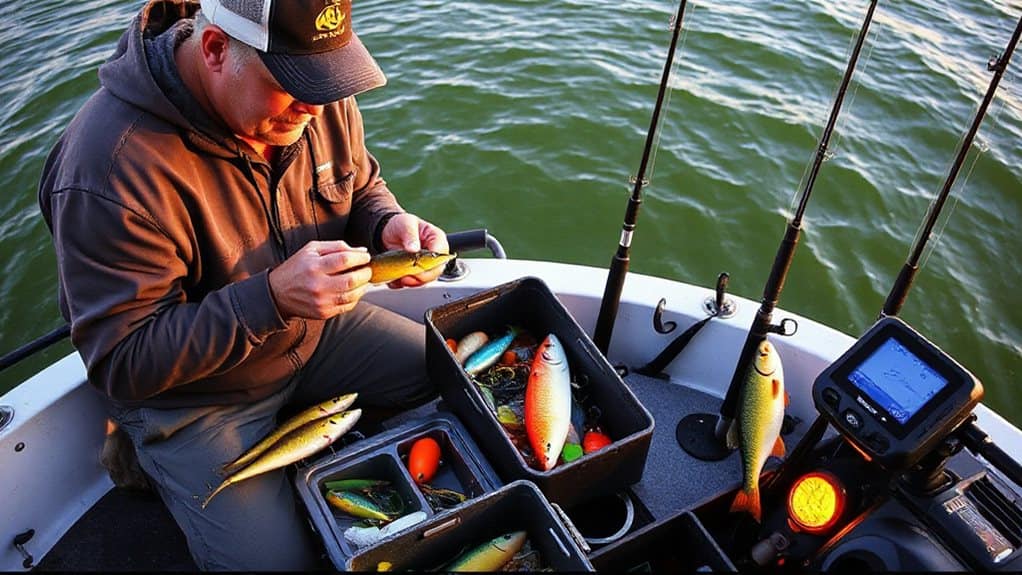
You’ll catch more bass when you match your rod and reel to the lure and cover you’re fishing—go with a medium-heavy, fast-action rod for power and sensitivity around structure.
Pair it with a reel that suits your style: spinning for finesse, baitcasting for control, and always keep the gear ratio between 5:1 and 6:1 for smooth crankbait work.
Don’t overlook line and hook size—they need to align with your rod’s rating and the lure’s action to make every cast count.
PLUSINNO combos are a great value for anglers looking for portability and reliable performance, especially when fishing both saltwater and freshwater.
Rod And Reel Selection
Choose the right rod and reel combo, and you’ll feel every subtle tap, set hooks with confidence, and cast with precision—no guesswork needed.
Match a 7’ medium rod with a high-speed reel for topwaters or Texas rigs, or go 6’6” medium-heavy for jigs and worms.
Use graphite for sensitivity, fiberglass for crankbait flex, and always pair gear to your bait, cover, and style—freedom on the water starts with smart choices.
Line And Leader Setup
Spool your reel with confidence by starting with a solid foundation: braided line as your main line. It’s strong, thin, and sensitive, letting you feel every detail.
Pair it with a fluorocarbon leader for stealth and abrasion resistance. Use a swivel for spinning lures to stop twist, or tie directly when hardware might spook fish.
Match leader length to water clarity and target species, keeping it practical for casting.
Hook Size Matters
Get it right from the start—hook size isn’t just a detail, it’s a game-changing factor. Match your hook to the bait and bass: smaller hooks like #2 or 1/0 work for finesse, while 4/0 to 5/0 handle big plastics and heavy cover.
Wider gaps improve hooksets, especially with tubes or creatures. Scale up with line strength and target size—your gear stays in balance, giving you freedom to adapt, stay confident, and land more fish.
Choose Lures That Imitate Bass Forage
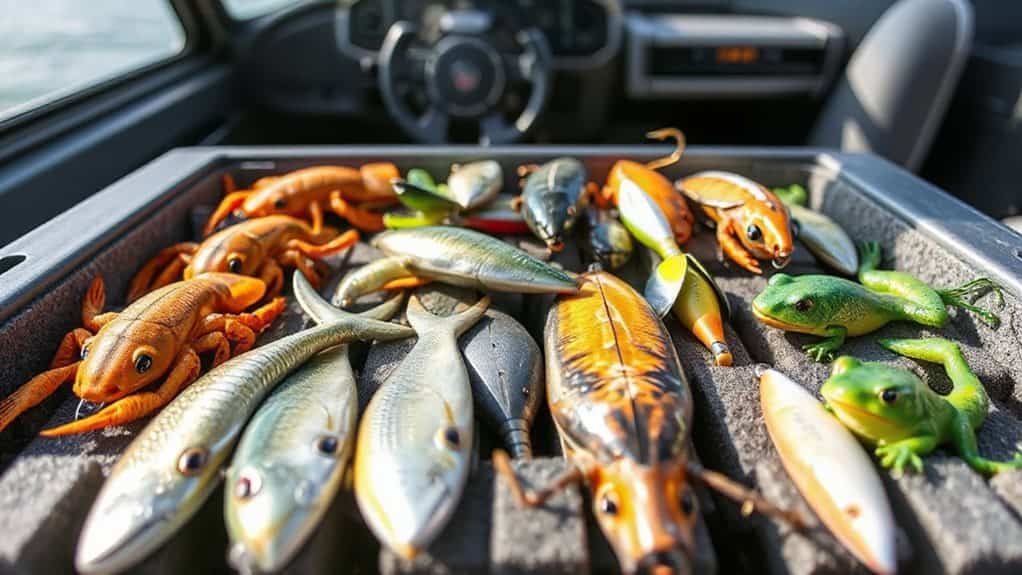
Tapping into what bass are already feeding on gives you a serious edge, and that starts with picking lures that closely mimic their natural forage. Match your bait to local prey—shad, minnows, crawfish, or blueback herring—using crankbaits, soft plastics, or topwater poppers.
Whether it’s a wacky-rigged worm or a vibrating jig, realistic action and profile make all the difference in triggering strikes. Also consider matching your rod, reel, and line choice to the presentation—like a 7-foot medium rod with fluorocarbon for clear-water finesse—to get the most realistic lure action and hookup performance.
Perfect Your Presentation With Pro Techniques
Now that you’ve chosen the right lure to match what bass are feeding on, it’s time to make every cast count by refining how you present it. Use ExpertStraightRetrieve with spinnerbaits near cover, or perfect #PerfectCastingPlacement around docks and pads.
Try #ExecutePitchingTechniques for accuracy, #ApplyPunchingMethod in thick weeds, and #EmployDraggingRetrieve to cover bottom efficiently—each method enhances your odds with precision and purpose. A reliable go-to for many pros is the versatile Senko worm, which produces consistent strikes across presentations and conditions.
Adapt to Weather and Water Changes
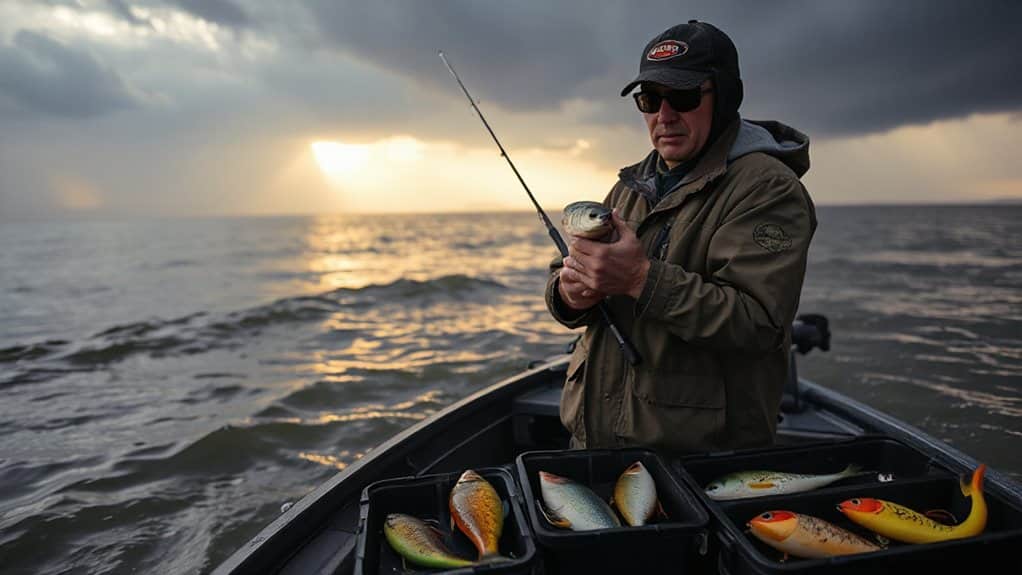
You’ll catch more bass when you adapt to the water’s clarity, whether you’re fishing in muddy conditions or clear water with precision tactics.
Weather plays a big role too, so keep an eye on shifts in wind, temperature, and pressure—they all change how bass move and feed. By adjusting your approach based on these factors, you stay one step ahead of the fish.
Fishing In Muddy Water
When the water turns murky after a heavy rain or strong winds churn up the sediment, bass don’t vanish—they adapt, and so should you.
Focus on shallow cover like stumps, docks, and gravel. Use vibrating lures—spinnerbaits, crankbaits, or jigs with rattles. Fish slowly near structure, dragging tungsten rigs along the bottom. Let your lure’s thump and flash trigger reaction strikes.
Clear Water Tactics
Often, the key to success in clear water comes down to how unseen you can stay. Keep your distance with long casts, use shallow anchors to silence your motor, and drift quietly with the wind.
Downsize your line and lures, choose natural colors, and stay back from fish. Present baits softly, let them sit, then twitch gently—precision and patience win.
Weather Impacts Bass Behavior
Clear water demands stealth, but even the most careful approach falls short if you’re not accounting for what’s happening above the surface.
Watch water temps—bass thrive between 60–75°F and feed best then. Falling pressure before storms? That’s your cue to cast more. After cold fronts, slow down; bass hide and sulk.
Use stable weather to your advantage, and let nature’s shifts guide your next move.
Catch Explosive Strikes With Topwater Baits
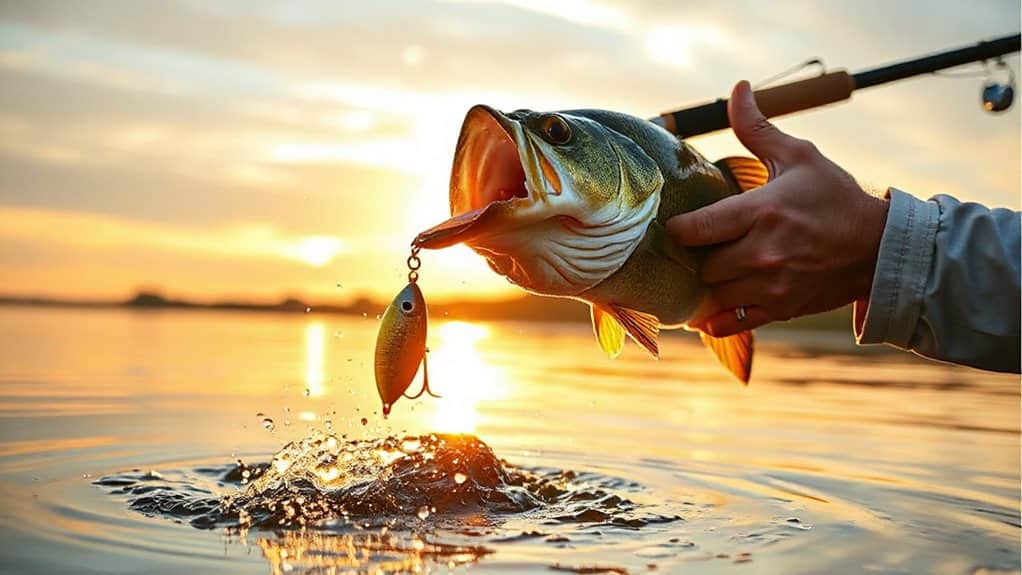
If you’re after heart-stopping surface strikes, topwater baits are your go-to once you understand how to match the lure to the conditions and location.
Use buzzbaits in dirty water, poppers in the low 70s, and walking baits over 55°F.
Focus on shallow cover, cast long, work the retrieve with varied pops and pauses, and wait to set the hook—then hold on.
Switch to Finesse When Bass Won’t Bite
When the bite slows and aggressive lures come up empty, it’s time to dial things back and switch to finesse. Use light line, small baits, and subtle presentations.
Try shaky heads, Ned rigs, or drop shots in clear water or high-pressure spots. Match the hatch with natural colors, and stay mobile.
Your finesse approach turns tough conditions into opportunities—freedom to adapt means more bites when others quit.
Think Like a Pro: Confidence, Observation, Adaptability
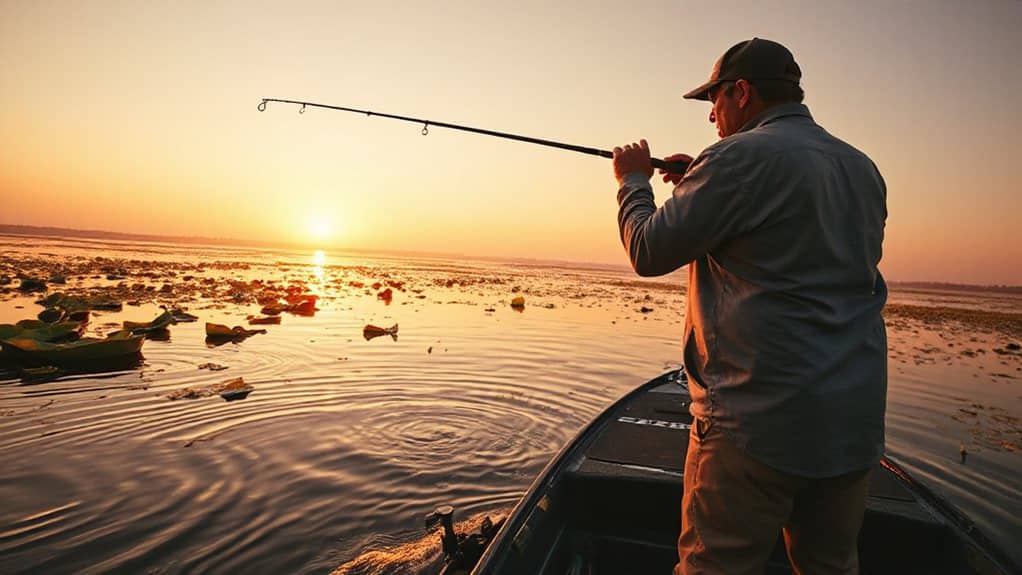
You’ve just adjusted your approach with finesse tactics when the bite turned tough, and now it’s time to sharpen the edge that separates good anglers from great ones—your mindset.
Trust your skills, read the water closely, and adapt without hesitation. Stay confident, observe actively, and tweak rather than overhaul. Your freedom on the water grows when you think like a pro—calm, clear, and in control.
Build Winning Patterns Through Targeted Practice
Though seasonal trends give you a starting point, turning those broad patterns into consistent catches demands focused, intentional practice.
You’ve got to refine by water temp, structure, and bait movement—use forward-facing sonar, adjust daily, and target ledges or brush piles.
Stay mobile, trust your gear, and fine-tune retrieves.
Confidence grows when you know, not guess, where bass will be.
Dominate Tournaments With Focus and Flexibility
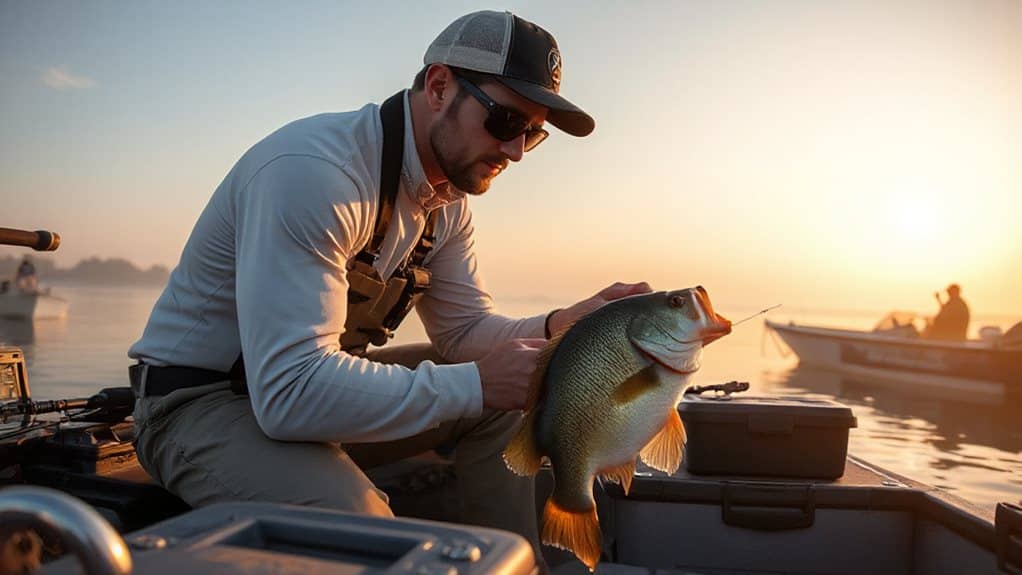
If you want to rise to the top in bass tournament fishing, you’ll need more than just solid casting skills—you’ve got to combine sharp focus with the ability to pivot quickly when conditions change.
Stick to your A-plan, but stay ready to shift to B or C spots. Keep multiple rods rigged, adapt fast, and trust your practice. Let your partner handle culling and netting so you can stay locked in, casting with purpose, adjusting lures, depth, and speed until the pattern clicks.
Final Note
You’ve got the tools, now trust your instincts and keep refining your approach. Stay observant, adapt quickly, and practice with purpose. Success isn’t just about gear or luck—it’s about learning water patterns, reading conditions, and staying flexible when fish aren’t biting. Every cast builds experience, so stay consistent, stay patient, and let confidence grow from preparation. You’re not just fishing—you’re solving the puzzle, one smart move at a time. Keep at it, and you’ll see results.


