
You activate a PLB by extending the antenna and pressing the button, sending a powerful 406 MHz distress signal with your GPS location to search-and-rescue teams worldwide—no subscription needed. It works anywhere, even off-grid, giving you reliable emergency contact when cell service fails. While it doesn’t replace caution, it’s a smart backup for remote hikers, kayakers, or solo travelers. Wondering how it compares to satellite messengers or when false alarms happen? The details might surprise you.
TLDR
- PLBs provide reliable, subscription-free emergency signaling via satellite, ideal for remote outdoor adventures.
- They offer global coverage with GPS accuracy within 100 meters, ensuring rescuers can locate you quickly.
- PLBs transmit a strong 5-watt distress signal, more robust than most satellite messengers.
- Best for solo hikers, kayakers, and backcountry travelers where cell service is unavailable.
- Registration and proper use are critical to prevent false alarms and ensure effective rescue response.
What Is a Personal Locator Beacon (PLB)?
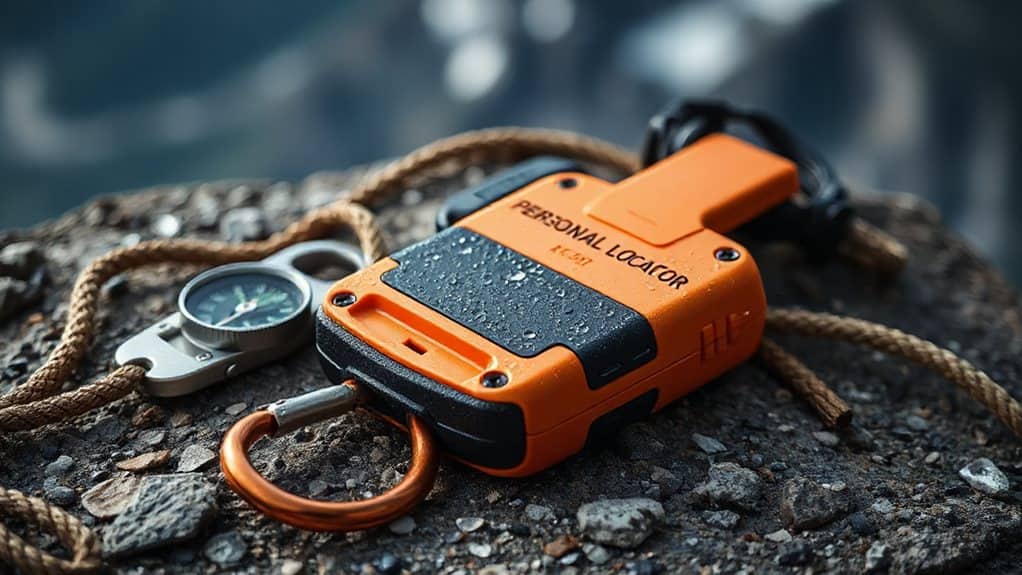
When you’re out in the wilderness—whether hiking a remote trail, climbing a rugged peak, or trekking across vast backcountry—a personal locator transmitter (PLB) can be your lifeline.
You manually activate it to send a 406 MHz distress signal via satellite, sharing your GPS location with rescue teams worldwide—no subscription needed, just freedom and peace of mind. Some models, like those used in military and aviation contexts, offer configurable activation for added versatility in emergency situations. Make sure you also carry a basic first aid kit and know how to use it in case help is delayed.
How Do PLBs Work in an Emergency?
You’ve got your personal locator transmitter (PLB) with you—now what happens if you need to use it?
Extend the antenna, press the button, and your PLB sends a powerful 406 MHz signal with your unique ID.
Satellites detect it globally, calculate your position via GPS or Doppler, then relay the alert to rescue teams—fast, precise, and ready to find you, wherever you are.
A compact multi-tool is also often recommended as an essential backup for handling minor emergencies while you wait for rescue.
PLB vs. Satellite Messenger: Which Saves Lives Faster?
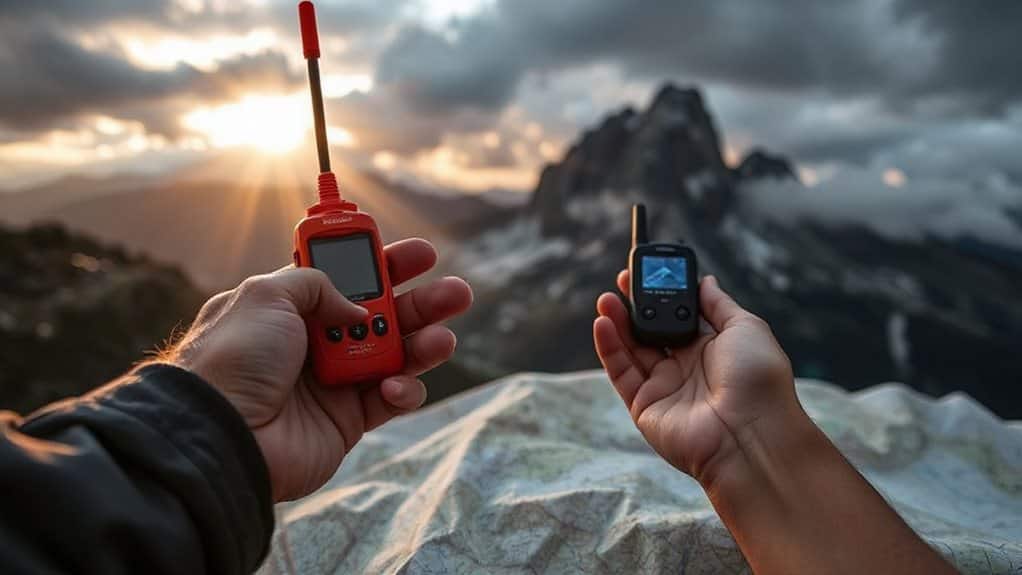
You might wonder which device gets help to you faster—PLBs or satellite messengers. PLBs broadcast a stronger 5-watt signal that cuts through bad weather and reaches rescue teams quickly, while messengers use a weaker 1.6-watt signal needing clearer skies.
With a PLB, you trigger a one-way SOS instantly, but messengers let you send details and cancel false alarms, adding flexibility during activation.
Grounding a generator is important for safety and can prevent electrocution when using portable power in campsites.
Signal Speed Comparison
With lives on the line, every second counts—so knowing how quickly your distress signal reaches rescue teams can make all the difference.
PLBs transmit every 50 seconds with 5 watts of power, punching signals through foliage better than satellite messengers. Their 406 MHz frequency and stronger antennas enhance satellite pickup, while SPOT devices lack guaranteed transmission rates, slowing response when you need it most.
Activation Method Differences
Speed matters when help is needed, but how you trigger your distress signal plays just as big a role in rescue timing as how fast it travels.
You must manually deploy a PLB’s antenna and press its hidden button, ensuring no accidental alerts.
Satellite messengers skip antenna setup, often letting you trigger SOS through an app or with a long button press, giving you more flexibility—and faster response—when every second counts.
Who Really Needs a PLB? (Hikers, Kayakers & Backcountry Travelers)
You’re out hiking deep in remote terrain where cell service won’t reach, and if something goes wrong, a PLB could be your lifeline.
Kayakers facing open water know conditions can change fast, and having a reliable way to call for help when miles from shore makes all the difference.
Backcountry travelers going off-grid, especially solo or in extreme environments, rely on PLBs to stay connected to emergency support, no matter how far they venture.
They should also carry essential survival gear like a first aid kit and know basic emergency procedures.
Hikers In Remote Terrain
Venture deep enough into the backcountry, and you’ll likely find yourself beyond the reach of cell signals and emergency services—this is where a Personal Locator Transmitter (PLB) becomes more than just gear, it’s a lifeline.
If you’re hiking in remote, trailless terrain—especially solo—a PLB guarantees help can find you quickly.
With GPS accuracy within 125m and global coverage, it’s a trusted tool for those who value both freedom and safety in the wild.
Kayakers Facing Open Water
While hikers in trailless backcountry face isolation far from cell signals, kayakers on open water confront a different kind of solitude—one where help can be hours away and conditions shift rapidly.
You need a PLB because it works anywhere, sending your location via satellite, even when phones fail. With one press, rescue teams pinpoint you within 300 feet, day or night, making survival far more likely when every minute counts.
Backcountry Travelers Off Grid
Out in the wilderness, far from cell towers and paved trails, your safety often comes down to preparation—and one critical tool stands out for those venturing off grid: the personal locator light (PLB).
You’re free to investigate deeper, but remember, a PLB won’t prevent falls or avalanches. Experts recommend it for longer trips, especially if you hike solo or off-trail—just don’t let it encourage risky choices.
Must-Have PLB Features for Safety and Reliability
When you’re in a remote location and every second counts, having a personal locator transmitter (PLB) with the right features can make all the difference.
Choose one with 406 MHz and MEOSAR support for fast, global detection, plus a 121.5 MHz homing signal. Look for 24+ hour battery life, waterproof durability, and buoyancy. Strobe lights, Return Link Service, and app-connected self-tests enhance confidence, ensuring help knows you’re there—so you stay free to discover safely. Position the device where it has direct sunlight exposure when possible to aid any solar-assisted charging.
How PLBs Use GPS to Locate You in the Wild
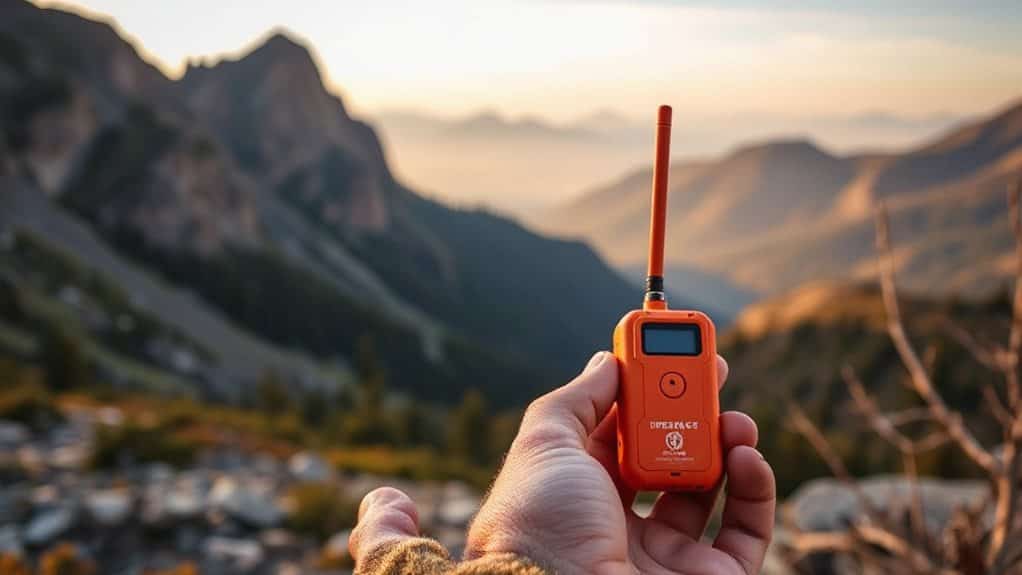
You’ve seen what features to look for in a reliable PLB—now let’s talk about how that device actually gets you found when it matters most.
Your PLB uses GPS, Galileo, and Glonass satellites to lock your location within 10–30 feet, then sends it via 406 MHz to rescue teams worldwide. With no coverage gaps and real-time updates, help can find you fast—no matter how far off the grid you go.
What Happens When You Activate a PLB?
With the flip of a latch and a steady hand, you’re already on the path to being found. You press and hold the button, then release—green LED flashes confirm activation.
Your PLB sends a 406 MHz signal with GPS coordinates skyward. Satellites detect it, alerting rescue teams. Strobe and LED flash every 2 seconds, broadcasting your position until help arrives.
PLB Battery Life and Maintenance Tips
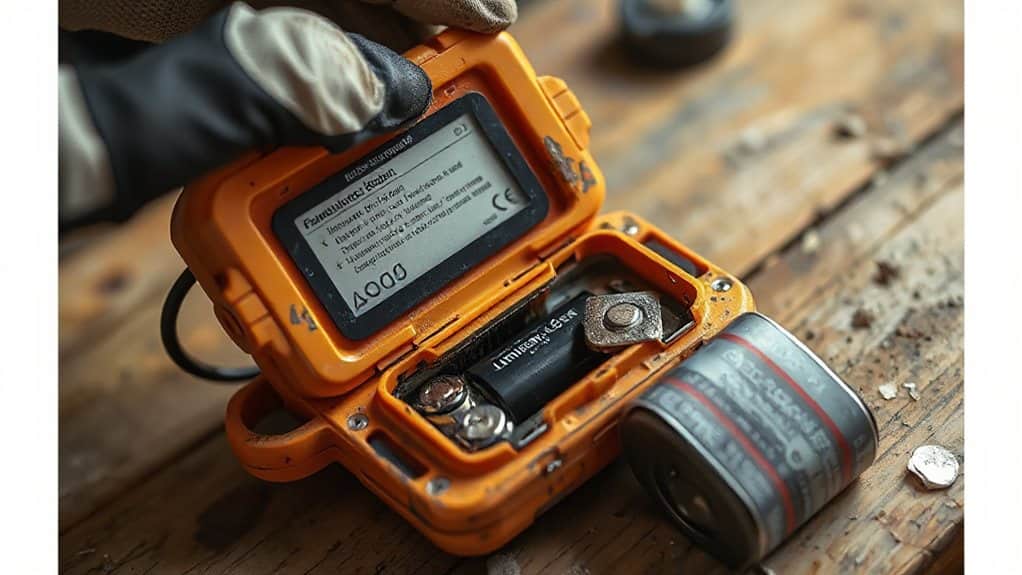
Most of the time, your PLB sits quietly in your gear bag, but it’s working even in silence—its lithium battery holding a charge for up to 7 years, depending on the model.
Check the expiration date yearly, avoid extreme temperatures, and run self-tests sparingly.
After any activation, replace the battery or unit through an authorized center to stay rescue-ready and keep your freedom to roam safely.
Why False Alarms Happen (and How to Prevent Them)
You might accidentally set off your PLB without realizing it, especially during maintenance or if it’s jostled in a pack.
Simple mistakes—like letting kids play with it or confusing it with other gear—cause many false alarms, but following the right activation steps can prevent this.
Always extend the antenna, hold the button for a few seconds, and call 1-800-851-3051 right away if you trigger it by accident.
Human Error Causes
While it’s easy to assume high-tech gear like personal locator signals won’t fail, most false alarms actually stem from simple human mistakes—many of which are preventable with the right knowledge.
You might accidentally trigger your locator by testing it incorrectly, tossing it in a pack, or not registering it.
Always follow manufacturer instructions, use self-test mode, register your device, and double-check before activating.
Proper Activation Steps
Deploy your personal locator signal correctly, and it becomes a lifeline when every second counts.
Extend the antenna fully, press and hold the button for 2–10 seconds, and keep the unit upright with a clear sky view.
Confirm activation through lights or flashes.
Avoid accidental triggers by only deploying in true distress, following the manual, and registering your transmitter’s UIN online.
Is a PLB Worth It for Your Adventure?
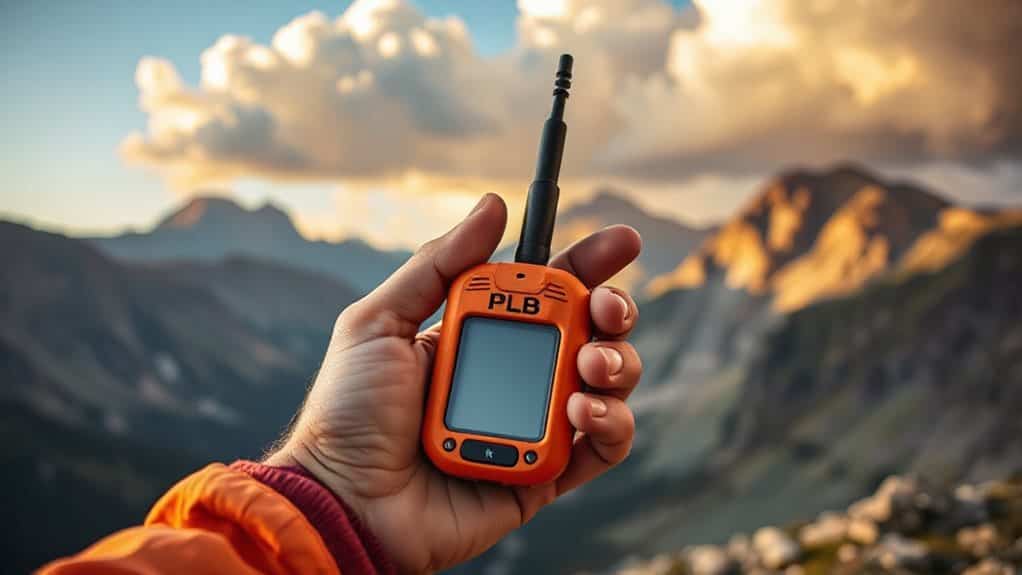
When venturing into remote backcountry or off-trail terrain, having a way to call for help can make all the difference—and that’s where a Personal Locator Transmitter (PLB) truly earns its place in your pack.
With global coverage, long battery life, and GPS accuracy within 100 meters, it’s a reliable lifeline. You gain peace of mind without subscriptions, letting you roam freely, safely, and responsibly—especially on longer, solo, or off-grid excursions.
Final Note
You now know how PLBs work, who needs one, and when to use it. If you’re heading deep into remote areas—where cell service won’t reach—you’ll want that lifeline. A PLB doesn’t replace smart decisions, but it does give rescuers your exact location, fast. Choose a reliable model, maintain it, and avoid accidental triggers. For serious explorers, it’s not just gear—it’s peace of mind, ready when seconds count.


