
To build a fishing pond that produces trophy catches, you’ll want to select a valley location with clay-rich soil, design it between 0.5–1 acre with varied depths (shallow shelves at 1–3 feet, deep zones at 8+ feet), and seal it properly using natural clay or bentonite. Stock strategically with 75–100 largemouth bass and 500–1,000 bluegill per acre, maintain dissolved oxygen above 4 ppm through aeration, and create habitat using native plants and submerged structures. The following sections break down each step in detail.
TLDR
- Target 0.5–1 acre with deep zones of 8+ feet to maintain stable water conditions and provide thermal refuge for fish growth.
- Stock 75–100 largemouth bass and 500–1,000 bluegill per acre to establish a balanced predator-prey ecosystem supporting trophy fish.
- Seal the basin with 20% clay content soil or bentonite to prevent water loss and maintain consistent habitat quality.
- Install aeration systems and vegetated buffers to keep dissolved oxygen above 4 ppm and control nutrient buildup year-round.
- Add submerged structures and native aquatic plants to create feeding stations, shelter, and spawning areas for larger fish.
Choosing the Right Location and Water Source
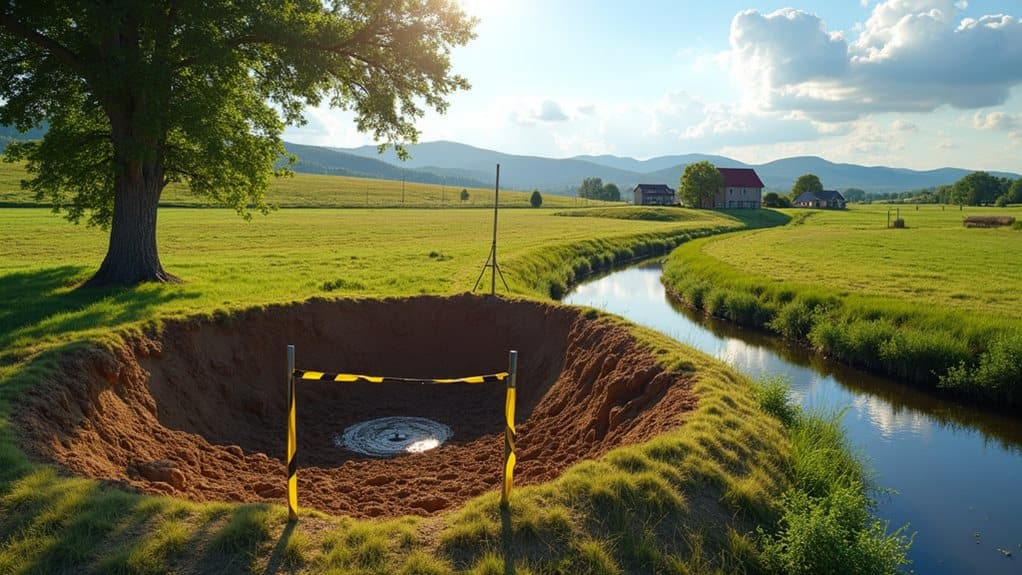
When it comes to building a successful fishing pond, selecting the right location and ensuring a reliable water source are the most critical decisions you’ll make—get these wrong, and you’ll face costly problems down the road.
Look for valleys with narrow outlets where minimal damming floods large areas. Your soil needs heavy clay content to prevent seepage, while the watershed should feature grassy areas that reduce erosion and sediment runoff into your pond. Avoid sites with constantly flowing creeks that flush the pond and make water chemistry management difficult. Consider locating your pond where natural deep pools or existing structures can provide shelter and improve fish holding habitat.
Designing Pond Size, Shape, and Depth Zones
Once you’ve secured the right location and water source, you’ll need to carefully plan your pond’s dimensions and contours to create a thriving fishery. Small amounts of sun exposure are beneficial for vitamin D production, which can influence overall pond ecosystem health and algae growth.
The size, shape, and depth zones you choose will directly impact fish health, growth rates, and your success as an angler, so it’s worth taking time to get these fundamentals right.
In this section, we’ll examine ideal pond size considerations, the importance of multiple depth zones, and how to design bank slopes that promote stability while supporting diverse aquatic habitats. Deep ponds provide superior fishing habitat and support larger fish sizes, making them ideal for anglers seeking trophy catches.
Optimal Pond Size Considerations
The foundation of a successful fishing pond lies in selecting the right dimensions, which directly influence water quality, fish health, and long-term management ease.
You’ll find ponds between 0.5 and 1 acre offer the best balance of productivity and manageability.
While quarter-acre ponds work adequately, anything smaller than 1,000 square feet struggles to maintain stable conditions for thriving fish populations.
Multiple Depth Zones
Creating distinct depth zones converts a simple pond into a thriving aquatic ecosystem that supports multiple fish species and maintains stable conditions year-round.
Design your pond with shallow shelves of 1-3 feet for spawning and vegetation, medium zones of 4-6 feet for general habitat, and deep areas of at least 8 feet to prevent winterkill and provide thermal refuge during extreme temperatures.
Bank Slope and Stability
After establishing your depth zones, you’ll need to address how those different levels connect through properly designed bank slopes.
A 3:1 ratio (three feet horizontal per foot vertical) works best for preventing erosion and ensuring safe access.
For easier mowing, use 4:1 slopes, while steeper 2:1 banks require rock or vegetation stabilization to remain secure and functional.
Excavating and Preparing the Pond Basin
Excavating your fishing pond requires careful planning and execution to create an environment where fish will thrive for years to come.
Mark your boundaries clearly, then remove soil in layers to maintain uniform depth.
Create zones deeper than eight feet for fish habitat while including shallow areas for plants.
Use mechanical equipment for larger projects, and always compact soil thoroughly when constructing dikes to prevent future erosion.
Choose a pond design that accounts for water displacement to ensure proper depth, stability, and fish habitat.
Sealing Your Pond to Retain Water
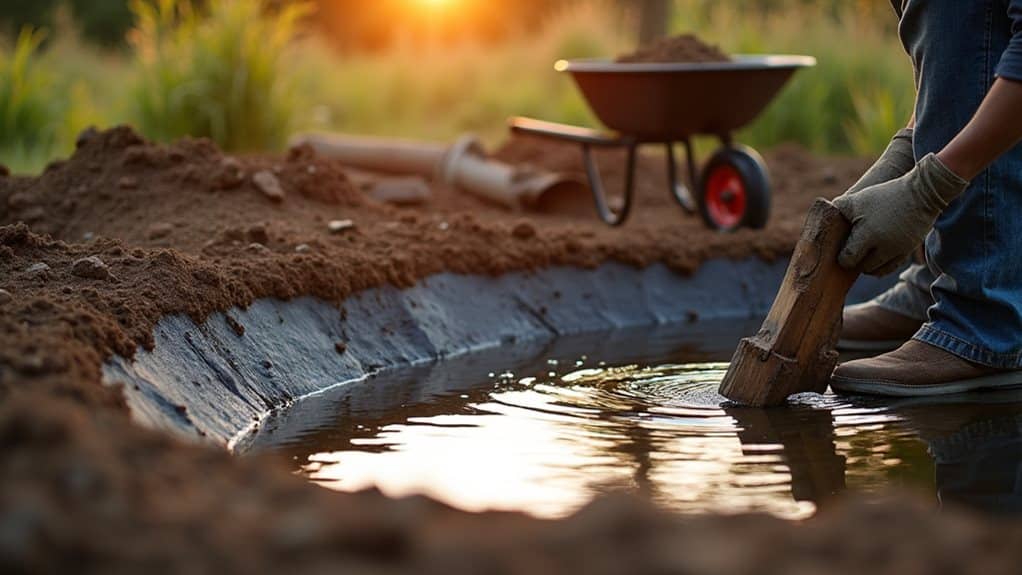
Once your pond basin is properly excavated, the most critical step you’ll face is ensuring it actually holds water.
Natural clay soil with at least 20% clay content provides the best foundation. You can enhance sealing by spreading bentonite clay, applying biological layers using animal manure and mulch, or installing synthetic liners like EPDM. Each method offers distinct advantages depending on your soil conditions and budget. Crossbows cannot be transported in a vehicle when cocked and ready to fire, so be sure to secure equipment during site visits to avoid legal issues with transport.
Establishing Proper Water Quality and Circulation
A well-sealed pond means nothing if the water inside can’t support healthy fish populations.
You’ll need to test pH, dissolved oxygen, and nutrient levels regularly, especially during warmer months. Install aeration devices or fountains to maintain oxygen above 4 ppm and prevent stratification.
Establish vegetated buffer zones around your pond’s perimeter to filter runoff, and consider periodic water replacements to control accumulated nutrients.
Selecting and Stocking Fish Species
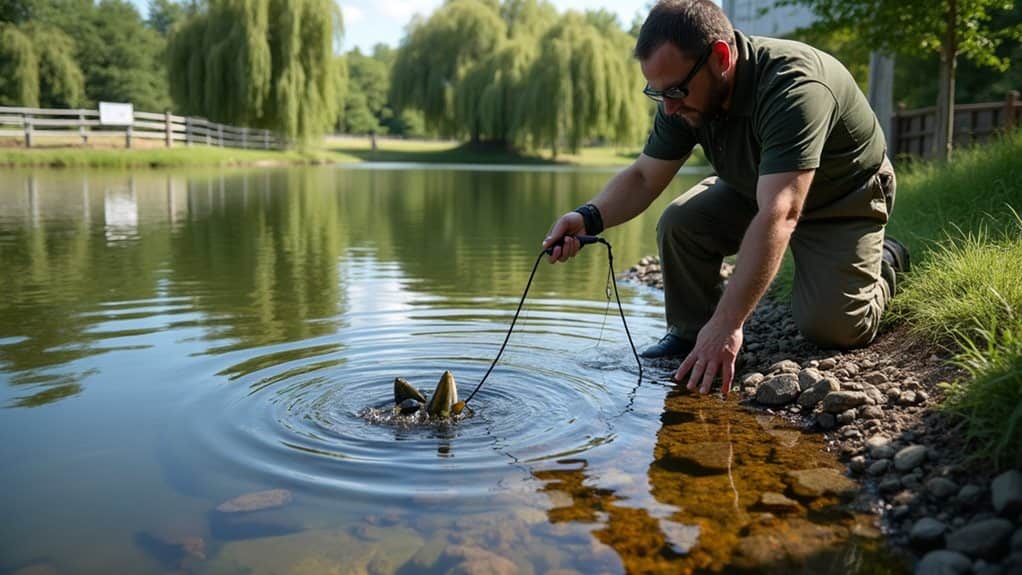
Choosing the right fish species for your pond determines whether you’ll enjoy years of successful fishing or struggle with an unbalanced ecosystem.
Stock largemouth bass at 75-100 per acre alongside bluegill at 500-1,000 per acre for a proven predator-prey balance.
Add channel catfish at 100 per acre for diversity, and establish a forage base with fathead minnows at 3-5 pounds per acre to support healthy fish growth.
Creating Habitat With Aquatic Plants and Structure
Once you’ve stocked your pond with the right fish species, you’ll need to give them places to hide, feed, and reproduce—and that’s where aquatic plants and submerged structures come in.
Choosing native plant species guarantees they’ll thrive in your climate without becoming invasive, while adding strategically placed cover structures creates the complex habitat that supports healthy fish populations.
Together, these elements convert a simple water body into a productive fishing pond that supports sturdy food webs and increases your catch rates.
Selecting Native Aquatic Plants
When building a thriving fishing pond, selecting the right native aquatic plants ranks among your most important decisions for creating productive fish habitat.
You’ll want to incorporate submersed species like pondweed and coontail for shelter, emergent plants such as cattails for nesting sites, and floating varieties including water lilies. This diversity stabilizes your ecosystem, improves water quality, and provides essential food sources for your game fish.
Adding Submerged Fish Structures
Native plants form just one component of a complete pond ecosystem—you’ll also need to install submerged fish structures to create the varied habitat your fish require for shelter, feeding, and reproduction.
These structures provide essential hiding spots for juvenile fish, support beneficial invertebrates like crayfish and insect larvae, and give predator fish strategic feeding locations that promote faster growth rates and larger catches.
Maintaining Your Pond for Optimal Fish Growth
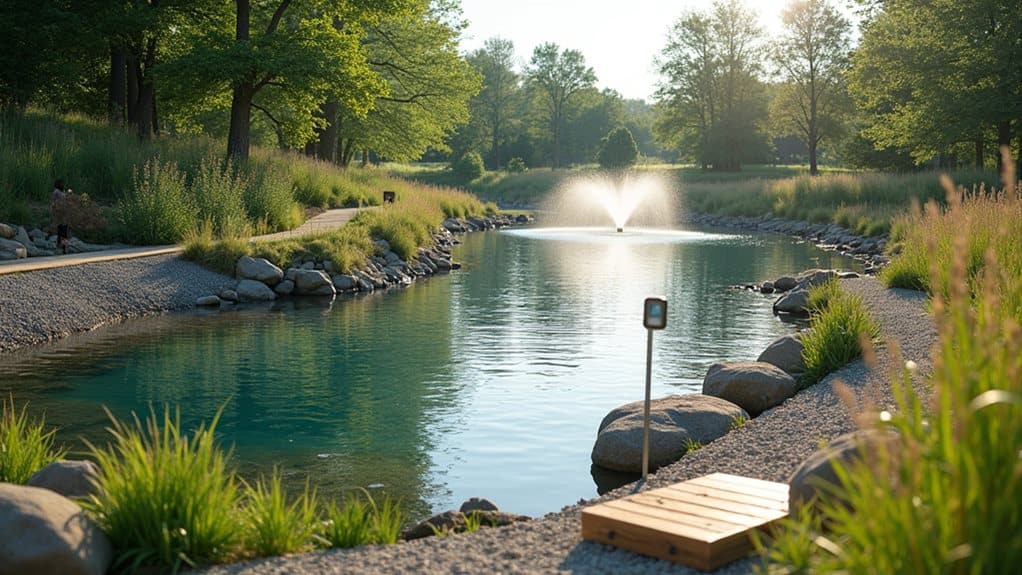
Maintaining a fishing pond requires consistent attention to water quality, fish populations, and habitat conditions—all working together to create an environment where fish can thrive and grow to their full potential.
Test pH, alkalinity, and dissolved oxygen regularly, keeping levels within ideal ranges. Monitor fish populations and harvest selectively to prevent overcrowding. Control vegetation growth while preserving beneficial plants for cover and food sources.
Final Note
Building a fishing pond requires careful planning, from selecting your location and designing adequate depth zones to establishing quality water conditions and proper circulation. You’ll need to excavate correctly, seal the basin effectively, and stock appropriate fish species for your climate. By adding structural elements, maintaining balanced aquatic plants, and following a consistent maintenance schedule, you’ll create an environment where fish thrive and grow to impressive sizes, ensuring memorable catches for years ahead.


