
First clean every item, then dry it completely—moisture left in fabrics, seams, or metal will cause mold, mildew, rust, and odors. Store tents, poles, and fabric gear in breathable mesh bags or pillowcases, keeping them off the floor in a cool, dark spot with 45‑70°F and under 50% humidity, and add desiccant packets. Hang sleeping bags and pads on a sturdy hook or wide rack, avoiding compression to preserve loft, and keep them in a cotton bag if you must stow them. Use stackable, ventilated bins labeled by type, place gear off the ground, and keep similar items together in a climate‑controlled closet. Follow these steps, and you’ll extend your gear’s life while staying organized—more tips await if you keep going.
TLDR
- Clean and thoroughly dry all gear before storage to prevent mold, mildew, rust, and odors.
- Store fabrics, tents, and poles in breathable containers or mesh bags, keeping them off the floor in a cool, dry, dark area (45‑70 °F, <50 % humidity).
- Hang sleeping bags and pads loosely, avoiding compression, and use cotton bags or silica‑gel packets to preserve insulation.
- Use stackable, ventilated bins labeled by category; add desiccants and keep bins off the ground and away from exterior walls.
- Organize a closet with adjustable shelves, rods, and pegboards, placing frequently used items at eye level and separating water‑related gear.
Why Clean and Dry Camping Gear Before Storage
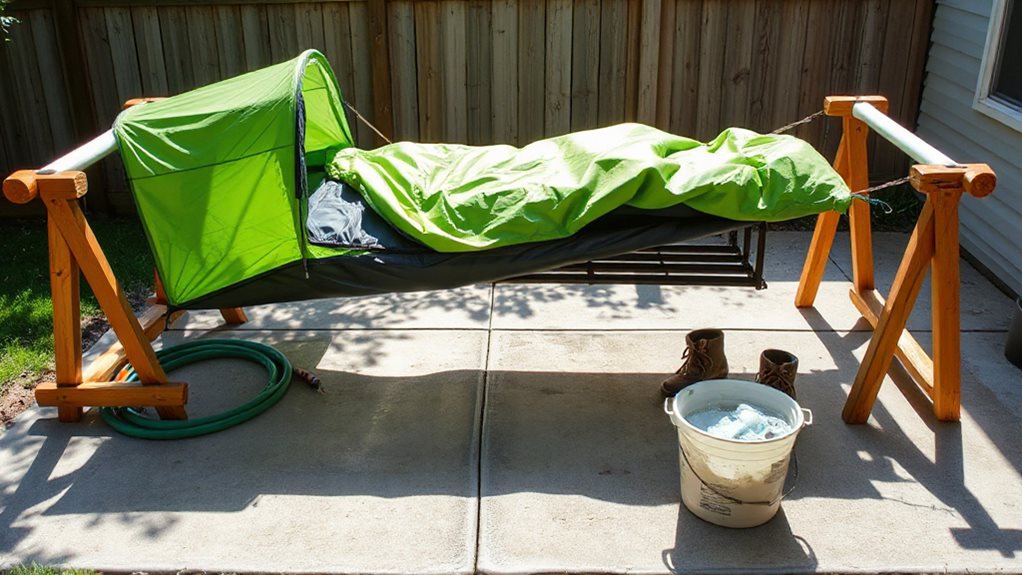
When you bring your camping gear home, you’ll notice that even after a sunny hike, moisture can linger in fabrics, seams, and metal parts; if you don’t clean and dry everything thoroughly, mold, mildew, and rust will set in, shortening the gear’s life and creating unpleasant odors.
Drying eliminates condensation, prevents odor, stops pests, and preserves functionality, so you stay ready for the next expedition without costly repairs or unpleasant smells. Gear must be completely dry before storage. Use cool, dark, and dry storage locations to prevent UV damage and heat-related degradation of materials.
Store Tents, Poles, and Fabric Items for Breathable Camping Gear Storage
After you’ve dried and cleaned everything, the next step is to give your tents, poles, and fabric items a breathable home. Slip tents into mesh bags or old pillowcases, avoid tight sacks, and store them in a cool, dark, dry spot with 45‑70°F and under 50% humidity. Bundle poles separately, wrap them in protective sleeves, and keep them off the floor to prevent rust. Use desiccant packets and occasional ventilation checks to keep moisture at bay.
Hang or Stow Sleeping Bags and Pads to Preserve Insulation
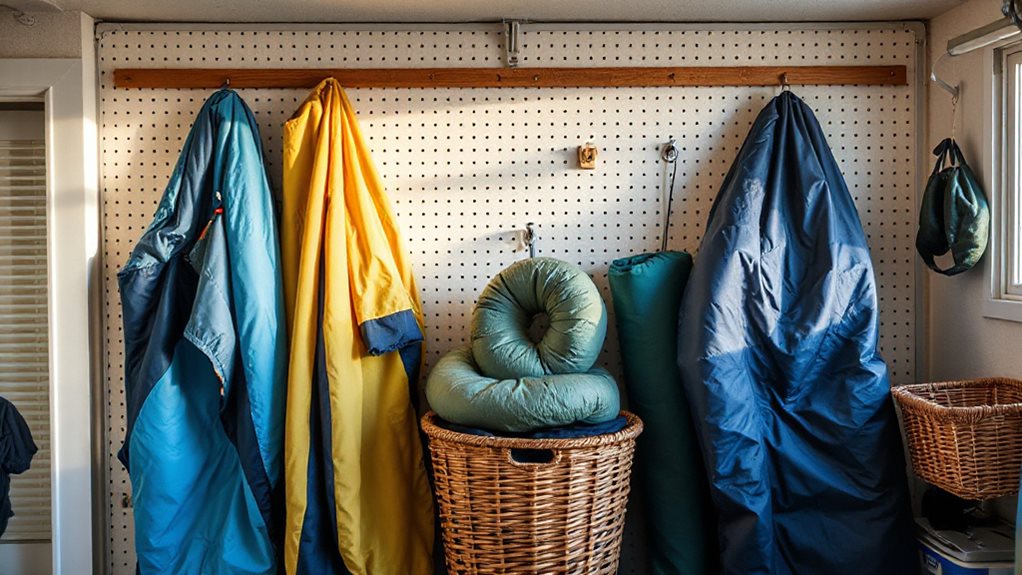
How can you keep your sleeping bag’s loft and warmth intact for years to come? Hang it from a sturdy hook or drape it over a wide coat rack, letting it stay loose and breathable.
Use a large cotton bag if you must stow it, ensuring no compression points.
Store the bag and pad together in a cool, dry closet, away from attics, and add silica gel packets to control moisture. This simple routine preserves insulation and extends lifespan. Wool retains warmth even when wet, so consider using wool layers in your sleeping system.
Pick Bins, Labels, and Desiccants for Organized Camping Gear Storage
Where does your gear belong, and how can you keep it tidy and protected year after year? Choose stackable, hard‑sided or ventilated bins that fit your space, label each with a maker or color‑coded tag, and add inventory checklists on the outside. Use desiccants or open dry bags for moisture‑sensitive items, store bins in climate‑controlled areas, and keep similar categories together for effortless, long‑lasting organization. Also, store gear off the ground and away from exterior walls to reduce moisture transfer and pest access, and consider keeping a few essential items in a ready-to-grab kit for your next trip (see designated sites).
Arrange Closet for Easy Access and Long‑Lasting Camping Gear Storage
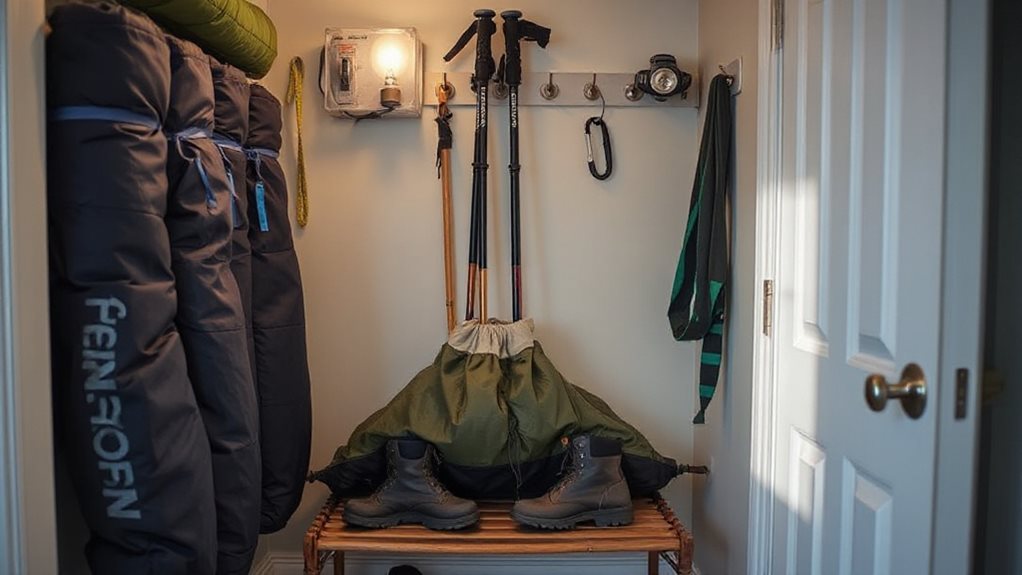
Ever wondered how a well‑organized closet can turn chaotic camping gear into a hassle‑free, long‑lasting inventory? First, pull everything out, sort into keep, recycle, donate, trash piles, then sub‑categorize core items—packs, tents, sleeping bags, pads, footwear, stoves, cookware, essentials.
Install adjustable wire shelves, rods, and pegboards; hang packs and bags at eye level, store boots low, keep bulky tents up top. Use ventilated bins, label sections, and keep high‑use gear within reach for quick, lasting access. Consider storing water-related gear and shower systems separately and clearly labeled to support water conservation and easy access when planning trips.
Final Note
By cleaning and drying everything before you tuck it away, you prevent mold and odors. Store tents and fabric items in breathable bags or containers, and hang or loosely roll sleeping bags to keep their loft intact. Use labeled bins and desiccants to stay organized and moisture‑free, and arrange your closet so you can grab what you need without rummaging. Follow these steps, and your gear will stay in top shape, ready for the next journey.


