
Breaking in hiking boots typically takes from a few days to several weeks, depending on the material, fit, and how often you wear them. Leather boots generally require 4 to 8 weeks of consistent wear, while synthetic or mesh ones soften faster, often in just a few days. Factors like terrain, sock choices, and activity level can speed or slow this process. Patience is crucial to guarantee a comfortable, supportive fit and to extend your boots’ lifespan—more details can help you optimize your break-in routine.
TLDR
- Leather hiking boots typically take 4 to 8 weeks to fully break in, while synthetic shoes often need only a few days.
- Proper handling and patience during break-in improve comfort, fit, and extend the lifespan of your boots.
- Recognizing when boots are fully broken in involves feeling comfortable, supportive, and free of hotspots or pain.
- Techniques like wetting boots, gradual hikes, and foot care can speed up the break-in process safely.
- Rushing the process increases the risk of blisters, discomfort, and damage, making patience essential for optimal fit.
How Long Does It Take to Fully Break In Hiking Boots?
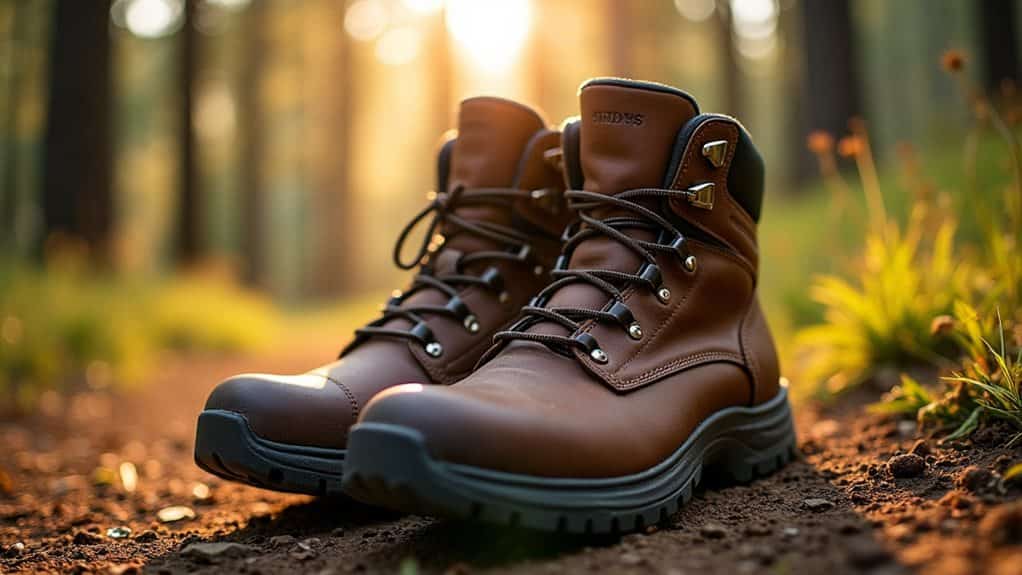
The time it takes to fully break in hiking boots varies depending on several factors, including the material of the footwear and how often you wear them. Leather boots can take anywhere from 4 to 8 weeks to break in properly, while mesh or synthetic shoes need only a few days or short hikes. Consistent wear helps prevent blisters and guarantees long-lasting comfort. Additionally, using appropriate break-in techniques can expedite the process and improve overall fit.
What Factors Affect How Quickly Your Boots Break In?
Several factors influence how quickly your hiking boots break in, starting with the material and construction. Leather tends to take longer to break in than synthetic options.
Your fit and size also matter; boots that are too tight or loose can slow down or speed up the process.
Additionally, the terrain and activity level, like hiking on rocky paths or hills, can help your boots conform more rapidly to your feet.
Boot Material and Construction
The materials and construction details of your hiking boots play a significant role in how quickly they break in. Leather boots, being stiffer, usually take longer.
Synthetic or mesh designs tend to mold faster. Construction features like supportive frames or padded components also influence how quickly your boots adjust, affecting comfort and the overall break-in process.
Fit and Size Variations
Fit and size variations play a significant role in determining how quickly your hiking boots break in. Proper fit and size, considering material flexibility and sock thickness, help reduce discomfort and speed up the process.
Boots that are slightly tight can mold to your foot, while too loose ones hinder comfort and prolong break-in, especially depending on whether material is leather or synthetic.
Activity and Terrain Types
Engaging in different types of terrain substantially influences the speed at which your hiking boots break in. Rocky, uneven, or steep trails accelerate the break-in process by shaping the boots to your feet faster.
Challenging trail conditions, including elevation changes and wet environments, increase flexibility and conformity, helping your boots adapt more quickly to your activity and terrain.
How Can You Tell When Your Boots Are Fully Broken In?
Knowing when your hiking boots are fully broken in comes down to how they feel during extended wear. When they’re comfortable and supportive without hot spots or pinching, and the upper molds to your foot, it’s a sign they’re ready.
No persistent pressure points or soreness after hours of walking indicates your boots have reached full break in.
How Do Leather and Synthetic Boots Differ in Break-In Time?
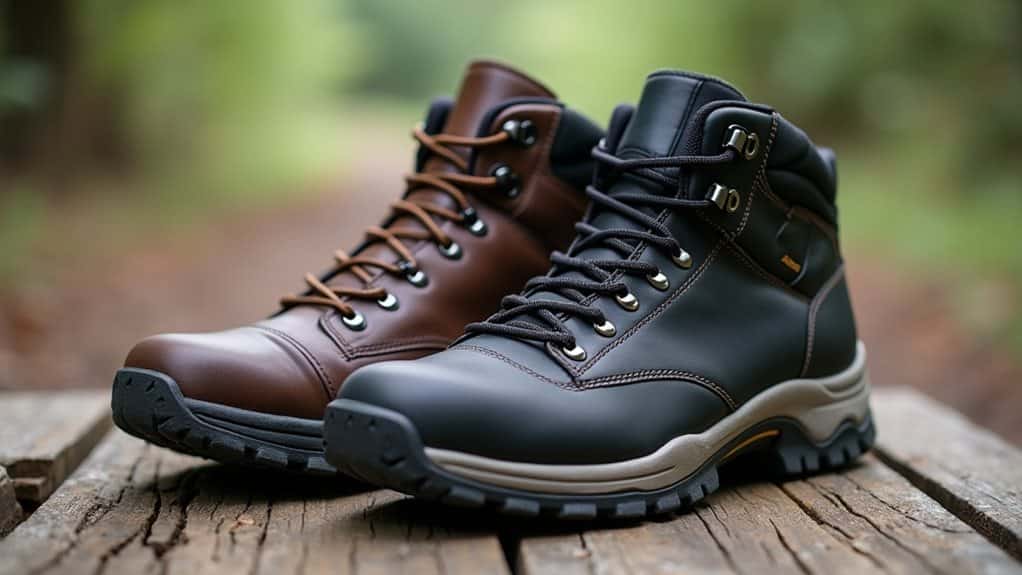
Leather boots are stiffer and less flexible initially, often requiring 4 to 8 weeks to fully conform to your feet. Synthetic boots are more supple and tend to break in in just 1 to 2 weeks or less. The material properties directly influence how quickly each type molds to your foot shape, with leather needing more patience and multiple wears. Additionally, the durability and quality of the materials can impact the overall break-in process, affecting how long it takes for the boots to feel comfortable. Understanding these differences can help you set realistic expectations and plan your break-in process accordingly.
Material Stiffness and Flexibility
The stiffness and flexibility of hiking boots largely depend on their material, which directly influences how long they take to break in.
Leather boots are naturally stiffer due to dense fibers, requiring weeks to soften.
Synthetic boots are more flexible from the start, often needing only days or short hikes to conform.
Material stiffness determines the overall break-in time and comfort.
Time Required for Conforming
When it comes to conforming to your feet, the break-in time for different types of hiking boots varies considerably.
Leather boots may take 4 to 8 weeks to fully conform, requiring extended use and specific techniques.
In contrast, synthetic boots often conform within days to a couple of weeks, feeling more comfortable straight out of the box due to their flexibility.
What Are the Best Techniques to Speed Up Boot Break-In?
To speed up the break-in process, you can employ a variety of effective techniques that help molds your hiking boots to your feet more quickly.
Methods like wetting the boots and walking short distances, or using alcohol or warm water to soften leather, accelerate fitting.
Gradually increasing walking distances on varied terrains with added weight also helps conform the boots faster.
How Do You Know If Your Boots Still Need More Break-In?
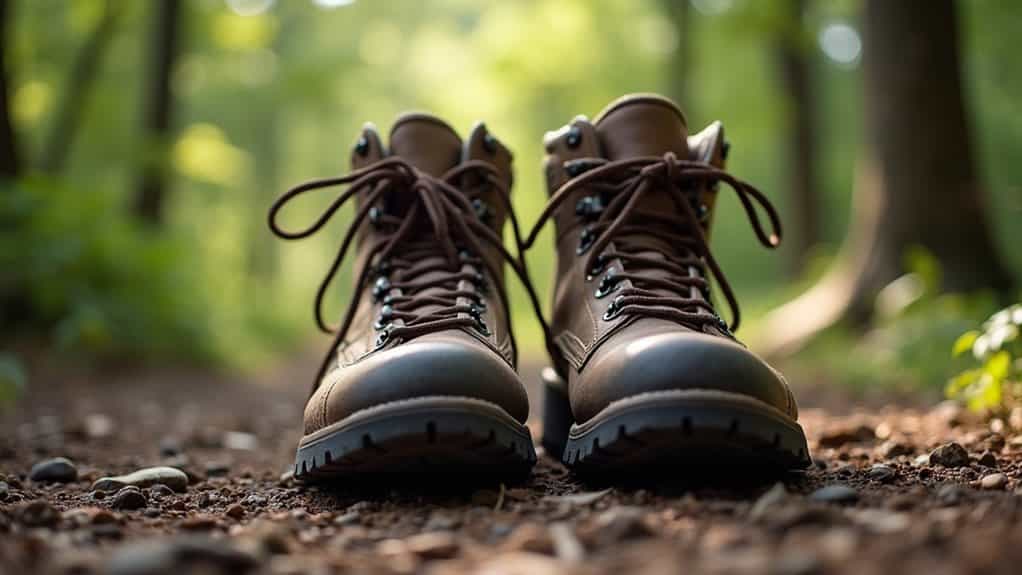
Recognizing whether your hiking boots still need more break-in involves paying close attention to how they feel during and after use. If you experience discomfort, persistent pressure points, hotspots, or blisters that don’t improve with adjustments, your boots aren’t fully broken in. A properly broken-in pair should feel snug and comfortable with no new irritation. Additionally, ensuring your boots provide the right amount of cushioning and support can help determine if they are adequately broken in.
How Do Terrain and Activity Level Impact Boot Break-In?
The type of terrain you hike on can considerably speed up the break-in process, especially when trails are rocky, uneven, or steep, as these conditions force your boots to conform more quickly to your foot’s movements.
Walking on inclines helps soften stiff materials like leather more efficiently than flat surfaces, reducing overall break-in time.
Additionally, engaging in more vigorous or varied activities accelerates how quickly your boots adapt to your foot shape and the demands of different terrains.
Terrain Variety Accelerates Break-In
Engaging in hikes across varied terrains considerably speeds up the boot break-in process because different surfaces and activities put unique stresses on your footwear.
The variety of terrain—rocky, muddy, or uneven—exposes pressure points and friction areas, prompting faster conforming to your foot shape. Incorporating different terrain types accelerates break-in, making your boots more comfortable and suited for diverse excursions.
Activity Intensity Affects Fit
Varying the intensity of your hikes considerably influences how quickly your boots mold to your feet. Higher activity intensity—like steep climbs or carrying heavy loads—encourages faster shaping during the break-in process, especially on challenging terrain.
However, pushing too hard too soon can cause discomfort or hot spots, so progress gradually for a comfortable, long-lasting fit.
What Sock Choices Help During the Break-In Process?
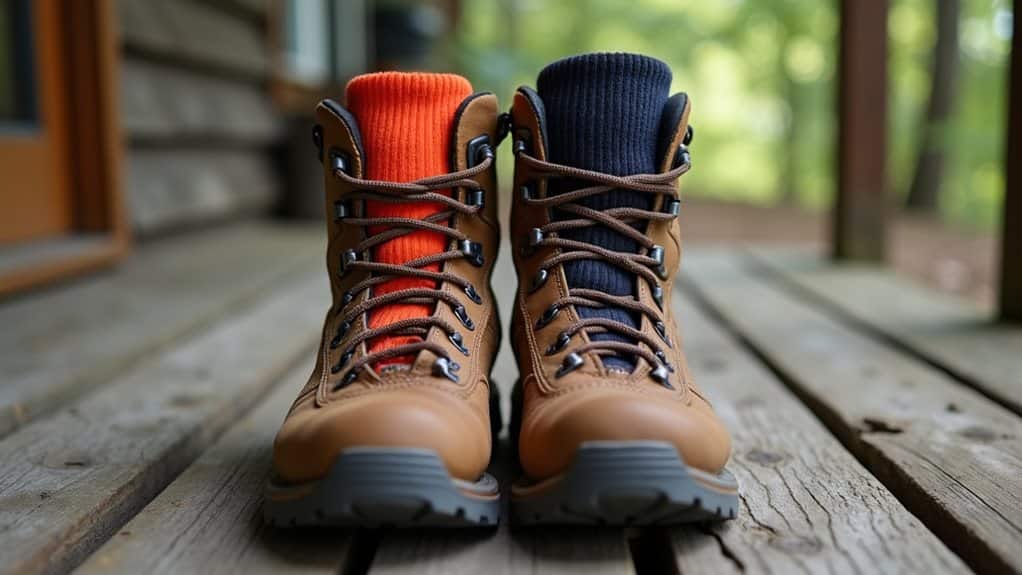
Choosing the right socks can make a significant difference during the break-in process, as they help prevent blisters and increase comfort.
Opt for moisture-wicking options like merino wool or synthetic blends, which reduce friction and hot spots.
Double-layer socks, such as WrightSock, add cushioning and minimize blister formation.
Avoid cotton, as it retains moisture and causes discomfort.
Additionally, selecting socks designed for space-efficient footwear can enhance overall comfort during extended hikes.
How Can You Prevent Blisters While Breaking in Your Boots?
To effectively prevent blisters while breaking in your boots, it’s essential to pay close attention to how your feet feel during each walk.
Use moisture-wicking socks, guarantee a snug fit without tight spots, and address hot spots immediately.
Proper foot care, like trimming toenails and keeping feet dry, minimizes skin irritation and helps avoid blister formation.
Why Patience Is Key for Comfortable and Durable Hiking Boots
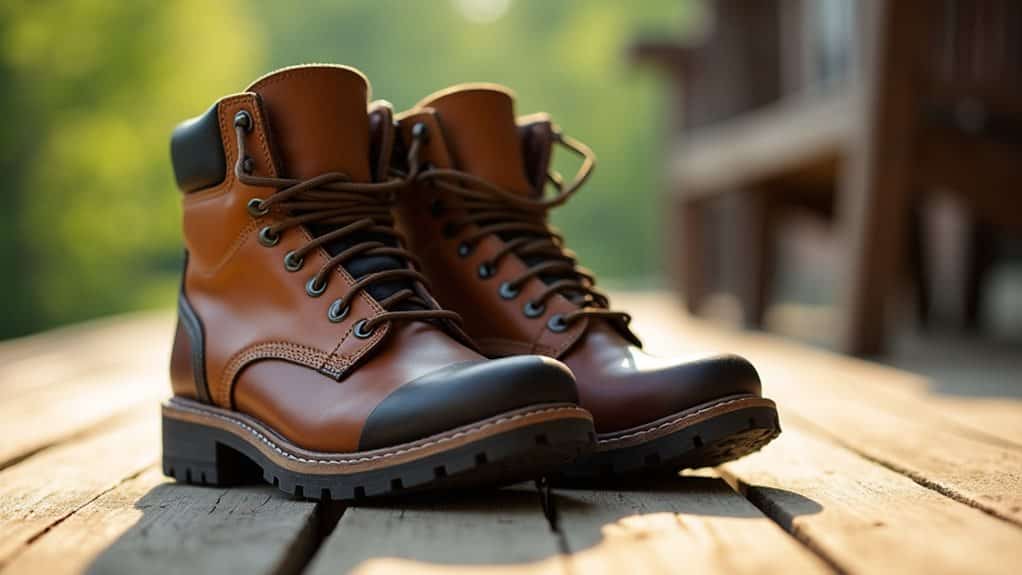
Patience is essential when breaking in hiking boots because rushing the process can cause blisters, foot pain, and damage that shortens their lifespan.
Taking your time allows the boots to conform gradually to your foot shape, especially leather ones that need careful handling.
With patience, you’ll enjoy a more comfortable hike and extend the durability of your hiking boots.
Final Note
Breaking in your hiking boots takes time, patience, and proper care. By understanding the factors that influence the process, choosing the right techniques, and selecting appropriate socks, you can guarantee a comfortable fit and prevent blisters. Remember, rushing this process can lead to discomfort and damage, so give your boots the attention they need. With consistent effort, your boots will mold perfectly to your feet, providing reliable support and durability on every excursion.


