
You’ll find bears steer clear of people because avoiding risk protects their survival; most encounters are defensive, not aggressive, as they guard cubs, food, or space. When they spot you unexpectedly, they give warning signs—pinned ears, huffing, bluff charges—then retreat if they can. Food conditioning, dense brush, and surprise triggers increase boldness, so keeping distance, using noise, and traveling in groups help you stay out of their sight. Continue and and you’ll uncover more practical tips.
TLDR
- Bears perceive humans as potential threats and instinctively keep distance to avoid conflict.
- Most bears rely on food sources other than humans, so they have little incentive to approach.
- Human activity often signals danger (loud noises, movement), prompting bears to retreat to safe areas.
- Learned avoidance from negative encounters or habituation to human presence reinforces their wariness.
- Seasonal food scarcity drives bears to focus on natural foraging, making human proximity less attractive.
Bear Safety: Why Most Bears Are Defensive, Not Aggressive
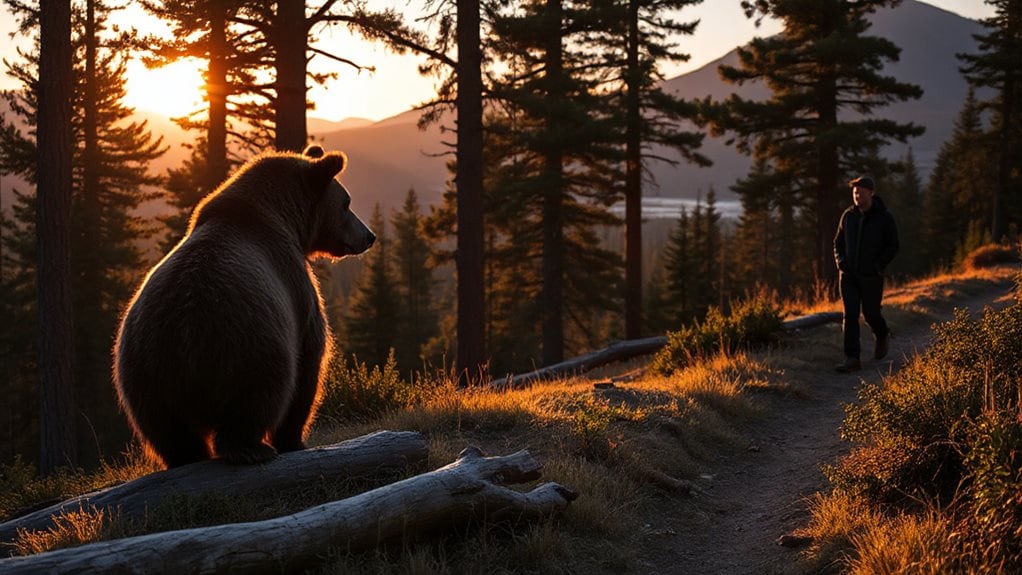
When you encounter a bear, most of the time its reaction is defensive, not aggressive; the animal is simply trying to protect something it values—its cubs, a food source, or its personal space—rather than seeking a fight.
You’ll notice warning signs like pinned ears, huffing, or a bluff charge, which mean the bear wants you gone.
Most bears, especially black bears, prefer retreat, climbing trees or fleeing, while grizzlies may stand ground to guard resources.
Understanding these cues lets you keep distance, respect their space, and stay safe without escalating the encounter. Staying alert helps you recognize these signs early.
Bear Safety: How Surprise Triggers Defensive Reactions
Most bear encounters turn defensive the moment a human appears unexpectedly, and the key to staying safe lies in recognizing how surprise fuels a bear’s instinctive protect‑mode.
You’ll hear low‑pinned ears, huffing, jaw clacking, and see a bluff charge when you’re within a few feet, especially near cubs or food.
Stay calm, speak low, keep your spray ready, and avoid sudden movements to de‑escalate.
Store all food, scented gear, and trash in bear-proof containers at least 100 feet from the tent to reduce attractants and prevent habituation to human sites food storage.
Bear Safety: Why Bears Avoid Unnecessary Human Risk
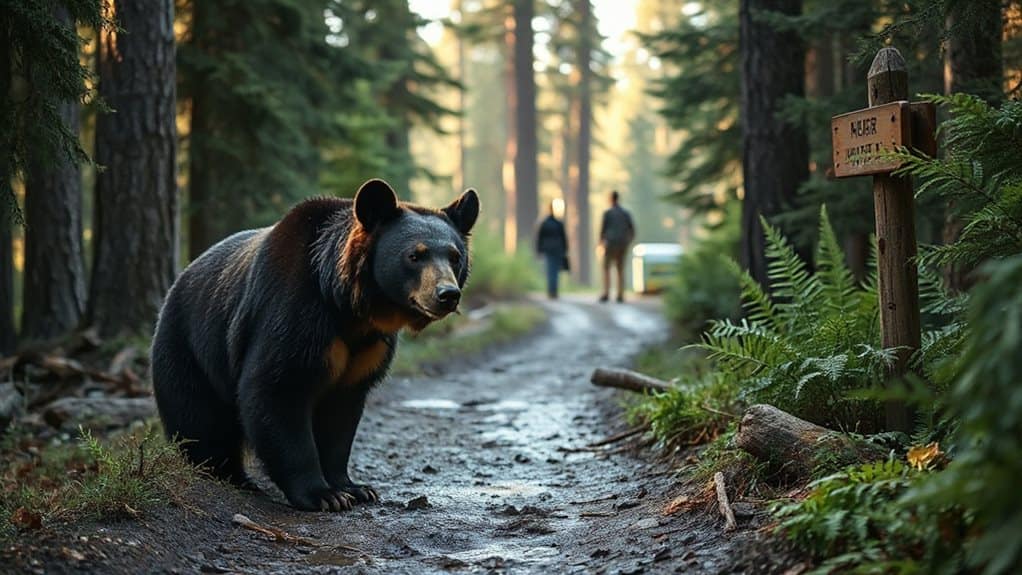
You’ll notice that spotting a bear early cuts down on surprise encounters, while feeding it or leaving food around raises the stakes and makes it more likely to approach.
When you travel in a group, the collective noise and size signal higher risk to the animal, encouraging it to keep its distance.
Always store food and scented items in bear canisters to prevent habituation and reduce chances of bears approaching.
Early Detection Reduces Surprises
Often a bear spots you long before you notice it, early detection keeps both sides calm and prevents surprise encounters.
By staying noisy, visible, and moving in groups, you give bears plenty of time to retreat, reducing stress and defensive reactions.
Keep at least 100‑200 meters of distance, talk, make trail noise, and back away slowly if a bear notices you.
This simple awareness protects your freedom and the bear’s peace.
Food Conditioning Increases Risk
When bears start getting a taste of human food, they quickly shift their foraging habits from natural berries and insects to easy, high‑calorie scraps, and that change weakens their innate fear of people.
You’ll notice them raiding trash cans, grills, and backpacks, becoming bolder, breaking into cars or homes, and causing property damage.
This loss of wariness raises encounter chances, leading to aggressive defenses, unsafe interactions, and costly wildlife management.
Preventing access to food keeps both bears and your freedom safe.
Group Travel Enhances Safety
If you hike with a few companions, the group’s combined noise, scent, and movement make you far more noticeable to bears than a lone hiker would be.
Larger groups trigger early detection, letting bears retreat before close encounters.
More eyes spot tracks, more ears hear rustle, and collective calm eases response.
Parks Canada and NPS both endorse traveling in four‑plus parties, reducing surprise and serious risk.
Bear Safety: Food Availability’s Impact on Bear Behavior
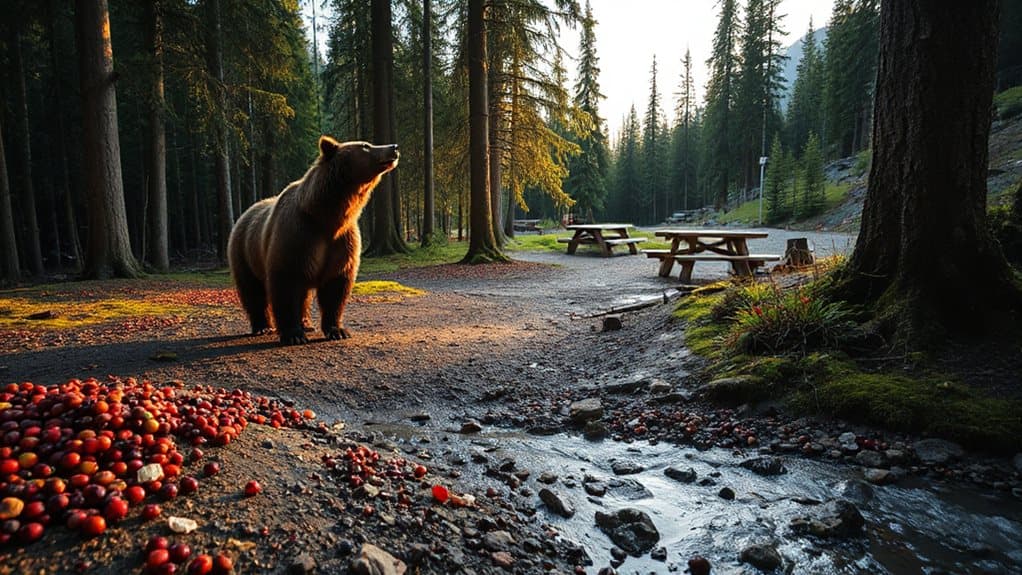
When wild foods run low, you’ll notice bears becoming bolder, especially around seasonal foraging hotspots like berry patches or fruit‑bearing trees, so you should treat those areas as high‑risk zones.
Managing human food sources—securing garbage, covering compost, and removing bird feeders—can cut down on the attractants that draw bears into neighborhoods.
Use designated sites with bear‑resistant storage to keep human foods and scented items inaccessible and reduce habituation.
Food‑Driven Bear Boldness
Urban food sources can push bears to venture closer to homes, and the data show that this boldness isn’t just a fleeting curiosity—it’s a calculated trade‑off between energy gain and risk.
You’ll see males 1.6 × more likely near houses, especially when apples or green‑up occur, while garbage plays a minor role.
Fruit trees draw bears more than trash, and securing these foods curbs repeated bold visits.
Seasonal Foraging Hotspots
Because bears follow the calendar of plant growth, the places where they feed shift dramatically throughout the year, and knowing those seasonal hotspots can help you stay safe.
In spring, south‑facing slopes, early‑green drainages and burned edges draw bears digging for fresh shoots.
Summer pushes them to moist meadows, stream corridors and alpine glades, while August‑September berry thickets and fall mast‑rich woods become high‑use zones for fat‑building.
Human Food Management Strategies
Managing the food you bring into bear country is the single most effective way to keep bears from losing their natural wariness of people, and it starts with storing every edible item—meals, snacks, toiletries, and even garbage—out of reach.
Use bear‑resistant canisters or suspend bags ten feet high, keep cooking zones far from sleeping sites, pack out all trash, and choose low‑odor, dry foods.
These habits preserve your freedom while protecting wildlife.
Bear Safety: Species Differences – Grizzly, Black, Polar
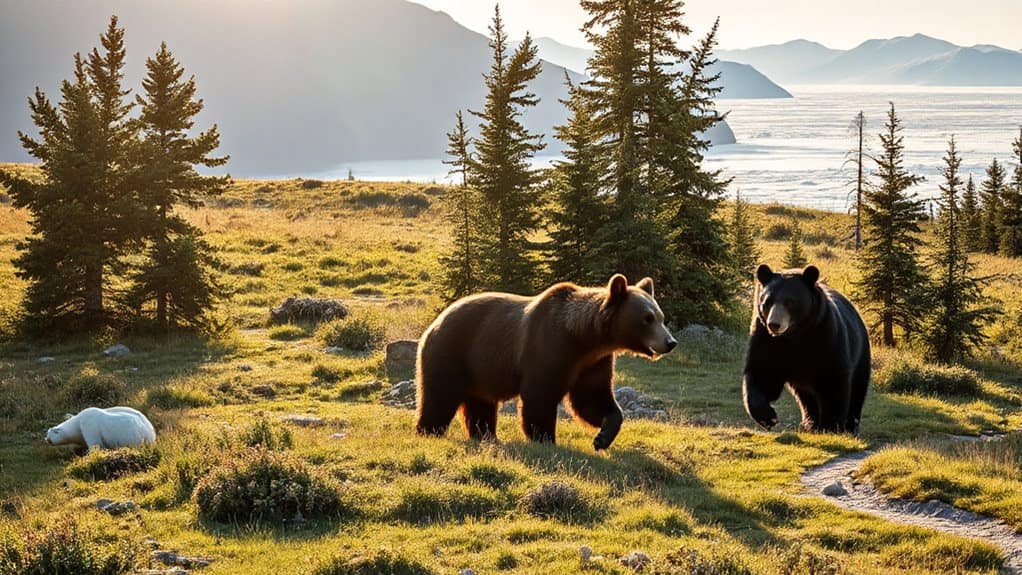
When you’re out in bear country, knowing how grizzlies, black bears, and polar bears differ can keep you safe and help you react appropriately.
Grizzlies have a shoulder hump, concave face, and massive claws; they’re aggressive when threatened.
Black bears lack the hump, have a dog‑like face and sharp ears, and usually flee.
Polar bears, white and Arctic‑adapted, roam vast ice fields, hunting seals with keen smell.
Recognizing these traits lets you choose distance, calm movement, and appropriate deterrence.
Early mornings and late evenings are often when bears are most active, so time your outings to reduce encounters with peak activity wildlife.
Bear Safety: Cubs, Seasonal Pressures, and Aggression Risks
If you’re hiking or camping in bear country, understanding how cubs, seasonal pressures, and aggression risks intersect can keep you safe.
Mother bears guard cubs fiercely, especially in spring when they emerge hungry and stressed; a sudden encounter near a den can trigger charging.
Late summer hyperphagia intensifies food defense, so keep distance from berry patches and carcasses.
Stay alert, give space, and avoid surprising any bear.
If you encounter a large predator on trail, stay calm and appear larger while backing away slowly and keeping eye contact.
Bear Safety: Using Noise and Group Travel to Prevent Surprises
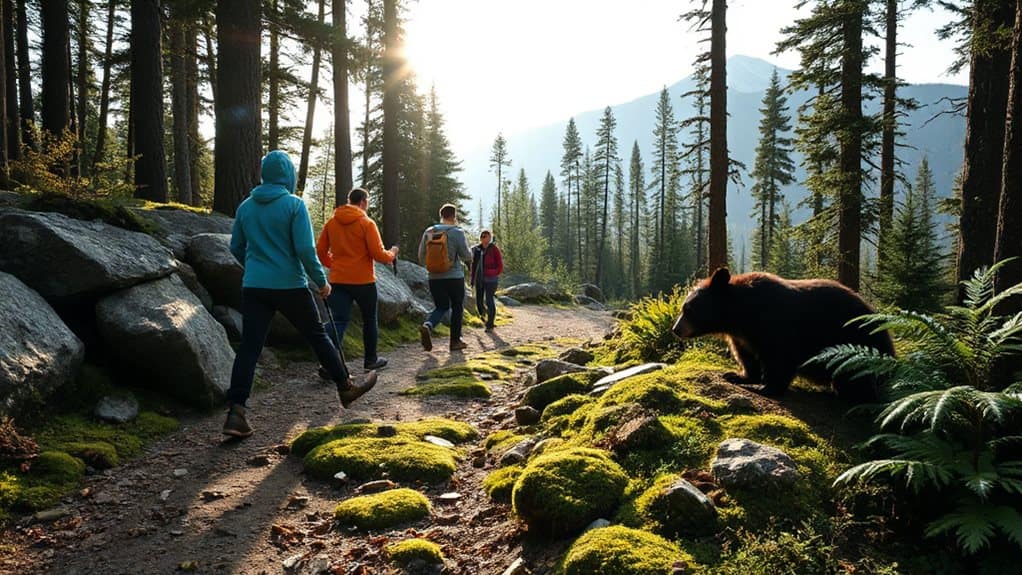
Because bears tend to retreat when they hear humans coming, making noise and traveling in groups are two of the simplest, most effective ways to avoid surprise encounters on the trail.
Speak loudly, sing, clap, or shout “hey, bear!” as you move through brush, bends, or near streams; your voice cuts through wind and water.
Stay close with companions, creating a louder, larger presence that alerts bears early, reducing surprise and encouraging them to keep their distance.
Bear Safety: Practical Steps to Stay Out of a Bear’s Sight
Noise and group travel help keep bears alert, but staying out of sight adds another layer of protection.
Keep a wide distance, use binoculars or a telephoto lens, and stick to marked trails.
Avoid dense brush, berry patches, and creek corridors where bears hide.
Scan for scat, tracks, or fresh diggings before you sit or turn.
Keep pets leashed, children grouped, and food stored securely to reduce attractants.
Bear Safety: Calm Responses – Do’s and Don’ts During an Encounter

When you spot a bear, staying calm and moving deliberately is the most effective way to keep the encounter peaceful.
Speak low, avoid sudden gestures, and back away slowly, never run.
Keep your posture steady, arms raised gently if needed, and never turn your back.
Don’t scream, imitate bear sounds, or crowd the animal; stay relaxed and controlled.
And Finally
Remember, bears are fundamentally defensive, not aggressive, so giving them space and avoiding surprise is the best protection. Keep noise, stay in groups, and respect food sources to minimize risk. Know the seasonal patterns and species‑specific habits, especially around cubs, and you’ll reduce encounters dramatically. If a bear does appear, stay calm, back away slowly, and follow expert guidelines—your awareness and prepared actions keep both you and the bear safe.


