You can’t safely run a Jetboil inside a closed tent because it can push carbon‑monoxide levels to about 100 ppm within minutes, far exceeding indoor safety limits; the manufacturer explicitly marks the stove for outdoor‑only use and recommends ample ventilation. If you must cook near a tent, keep doors, vestibule, or vents fully open to create cross‑breathing, and consider a vestibule‑only setup, which dramatically reduces buildup. A CO monitor can warn you of spikes, but it doesn’t replace proper airflow, and it won’t detect oxygen loss or fuel leaks. For indoor‑safe meals, stick to no‑cook options or cook completely outside.
TLDR
- Jetboil stoves are rated for outdoor‑only use; indoor or tent operation violates manufacturer safety guidelines.
- In a sealed three‑season tent, CO can rise to ~100 ppm within minutes, exceeding typical indoor safety limits.
- Even with a vestibule open, CO accumulation can occur quickly; proper cross‑ventilation is essential to keep levels low.
- Using a CO monitor adds warning but does not replace the need for adequate airflow and oxygen supply.
- Safer alternatives include cooking outside the tent or using non‑combustion meal options when ventilation cannot be guaranteed.
Jetboil Safety: Manufacturer Guidance on Outdoor‑Only Use
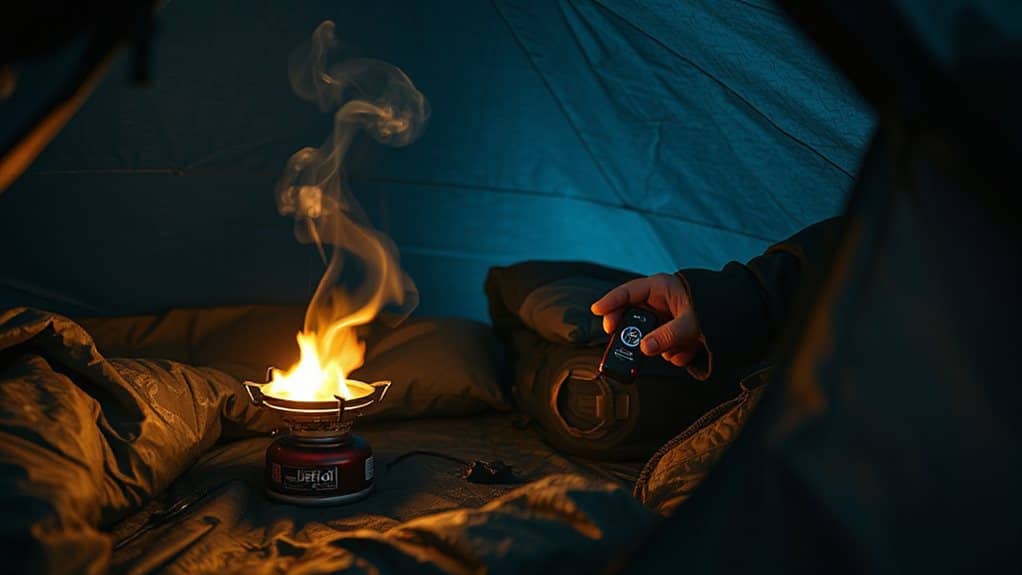
If you read Jetboil’s own materials, you’ll see the company draws a firm line: their stove systems are for outdoor use only. You’re told to set up in open air, where ventilation is ample, because fuel‑burning appliances release exhaust.
The guidance stresses trail and campsite cooking, not indoor or tent use, and treats “outdoor‑only” as a strict safety boundary. Testing before a trip can help you estimate fuel consumption and avoid surprises in the field.
Jetboil Safety: CO Levels Inside a Closed Tent
You’ll see that a Jetboil can push CO levels up to around 100 ppm in a sealed three‑season tent within just a few minutes, and those numbers climb quickly if you keep the door shut. Proper ventilation—opening the vestibule, doors, or vents—lets fresh air in and CO out, dramatically slowing the buildup and keeping concentrations well below hazardous thresholds. Compared with other canister stoves, the Jetboil’s output sits in the middle, higher than a compact MSR PocketRocket 2 but lower than a Primus Power Trail, so the risk is tied to both the stove you choose and how well you ventilate the shelter. CO binds to hemoglobin about 250 times more strongly than oxygen, dramatically reducing oxygen delivery to tissues.
Jetboil CO Levels
Although a Jetboil can cook a meal in minutes, testing in a closed three‑season tent shows it can also fill the space with carbon monoxide quickly.
You’ll see the MightyMo peak at about 105 ppm, higher than a PocketRocket 2 (67 ppm) but lower than a Primus Power Trail (207 ppm).
CO spikes within the first five to six minutes, then plateaus, meaning exposure persists as long as the stove runs.
This level exceeds typical indoor safety thresholds, so even short cooking sessions can become hazardous in a sealed shelter.
Ventilation Reduces Accumulation
The CO spikes you saw in the closed‑tent test drop off quickly once fresh air can get in, so keeping the tent ventilated is the most reliable way to limit buildup.
Open a door, unzip an upper vent, and let a cross‑breeze flow; high openings let exhaust escape while low in supply oxygen.
Even brief air exchanges keep concentrations low, letting you breathe freely and stay safe.
Risk Comparison by Stove
In a closed tent, the Jetboil MightyMo sits between the MSR PocketRocket 2 and the Primus Power Trail in terms of carbon‑monoxide output, peaking at about 105 ppm—just above the 100 ppm OSHA evacuation threshold for maritime workers but well under the 200 ppm transient exposure limit that can cause mild headaches and dizziness.
You’ll see the Jetboil outperforms the Rocket’s 67 ppm but stays far below the Trail’s 207 ppm, meaning it’s a middle‑ground choice; still, any closed‑tent use demands ventilation, because even 105 ppm can trigger evacuation guidelines.
Jetboil Safety: How Ventilation Changes CO Risk
Ventilation makes all the difference when you’re cooking with a Jetboil inside a tent, because the stove’s propane or isobutane flame can produce carbon monoxide if it doesn’t get enough oxygen. Open high vents near the burner and low fresh‑air inlets, crack multiple openings, and keep airflow steady, especially in wind‑less or insulated shelters, to keep CO below dangerous levels. Regularly inspect the stove and its valves before use and perform maintenance as needed to ensure safe operation and prevent leaks inspect propane stove.
Jetboil Safety: Vestibule Cooking as a Safer Option
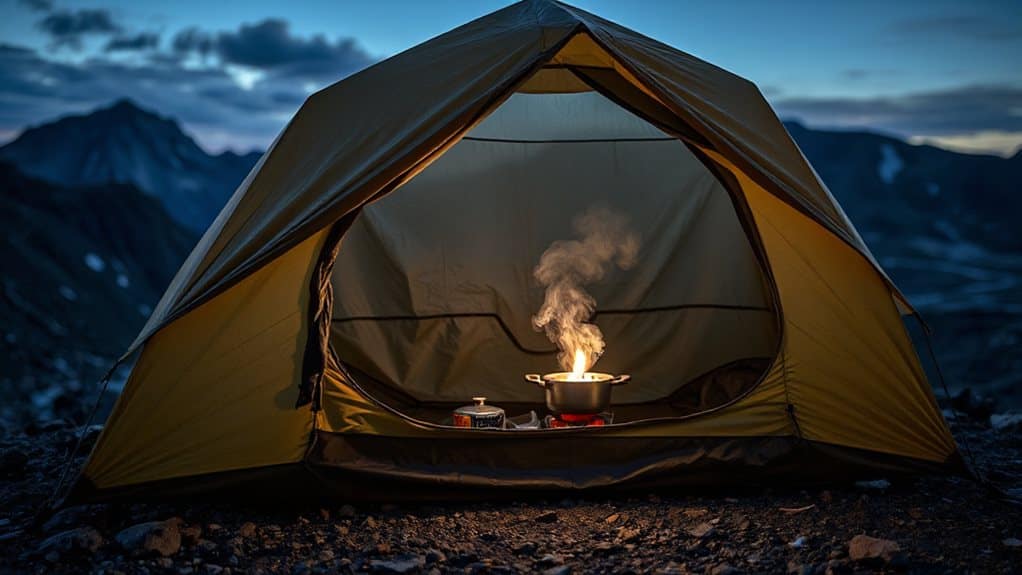
When you move your Jetboil into the vestibule, you gain a partial barrier that lets fresh air flow more freely than a sealed tent interior, which cuts down on carbon‑monoxide buildup and keeps heat away from sleeping gear.
Keep the vestibule door wide open, position the stove on a stable surface, and make certain cross‑ventilation.
Monitor for condensation, avoid flame contact with fabric, and choose a controllable canister stove for safety.
This setup offers more freedom while reducing CO and heat risks.
Regularly inspect and maintain your equipment, and consider placing the stove near a ventilated opening to further reduce buildup and prevent fabric damage.
Jetboil Safety: CO Output of Jetboil‑Specific Canister Stoves vs. Competitors
If you compare the CO output of Jetboil‑specific canister stoves with popular competitors, the numbers tell a clear story: the Jetboil MightyMo tops out at 105 ppm after a 15‑minute max‑power burn, while the MSR PocketRocket 2 stays lower at 67 ppm, and the Primus Power Trail spikes to 207 ppm under the same conditions.
You’ll notice that higher power output drives more CO, so the Trail’s 35‑% uplift over MightyMo and 65‑% uplift over PocketRocket 2 explains its surge.
Burner design, fuel mix, and air flow also matter, but the data shows Jetboil sits comfortably between the low‑emission PocketRocket 2 and the high‑emission Trail, giving you a balanced, controllable stove for free‑spirited backcountry cooking.
Manufacturers and users should also be mindful that leaving equipment under prolonged tension or stress can cause wear and tear that affects performance and safety.
Jetboil Safety Checklist for Inside‑Tent Cooking
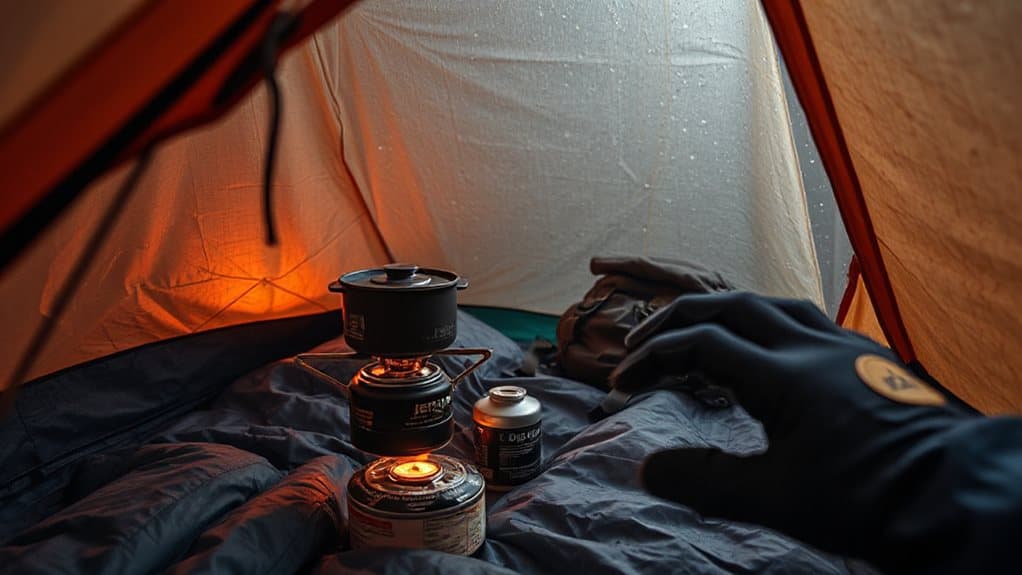
Because a stove can quickly fill a tent with carbon monoxide and spark a fire, you should treat inside‑tent cooking as a high‑risk activity that demands strict precautions.
Keep the vestibule wide open, never leave the flame unattended, and use a canister stove for easy flame control.
Light liquid‑fuel stoves outside first, then bring them in after a steady burn, and always keep exit routes clear.
Also carry a compact multi-tool to handle unexpected problems when cooking in the field.
Jetboil Safety: When a CO Monitor Helps-and Its Limits?
A CO monitor can add a useful layer of warning when you’re cooking with a Jetboil inside a tent, but it isn’t a magic safety switch.
It spots invisible CO before symptoms hit, especially in tight shelters, yet it won’t detect oxygen loss, fuel leaks, or fire.
Placement matters—avoid dead‑air zones, keep vents open, and remember the monitor can’t stop CO spikes or replace good ventilation.
Quick No‑Cook Meals and Outside‑Only Strategies When Indoor Cooking Isn’t Safe
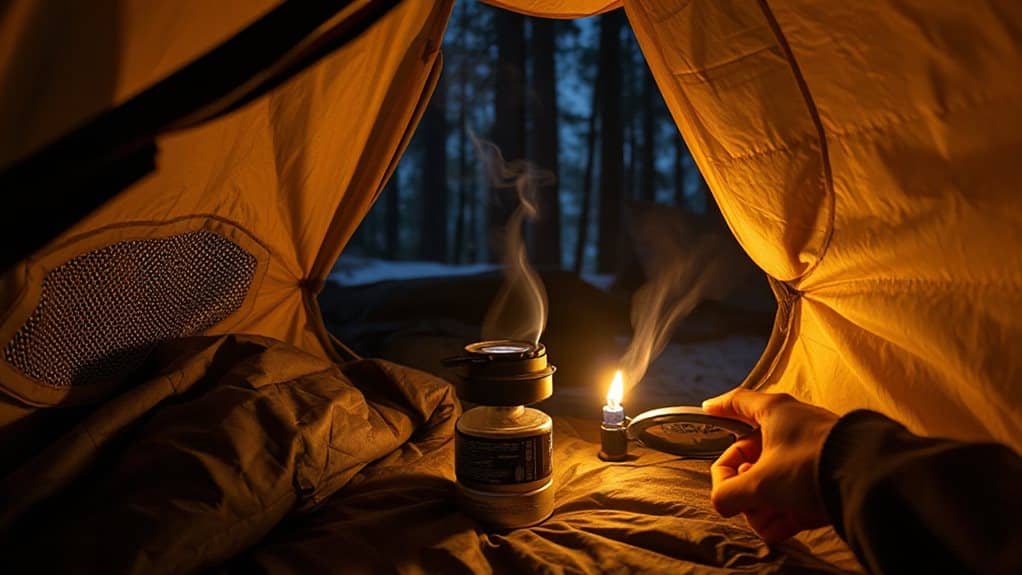
When you can’t safely use a stove inside a tent, the best backup is a well‑planned no‑cook menu that keeps you fueled without any fire or carbon‑monoxide risk. Pack tuna pouches, nut butter, crackers, trail mix, and cheese sticks for instant calories.
Add instant‑cold oatmeal or muesli with powdered milk for breakfast. Cook outside, keeping the stove on stable, non‑flammable ground, away from fabric, and use brief, ventilated sessions to avoid CO buildup.
And Finally
You should never run a Jetboil inside a tent; the risk of carbon monoxide buildup outweighs any convenience. Even with a vented vestibule, the stove can quickly raise CO levels to dangerous thresholds, and a monitor can’t catch every spike. Stick to outdoor cooking or use a well‑ventilated shelter, and keep a reliable CO detector handy when you’re near any fuel‑burning device. This approach protects your health and secures a safe camping experience.