
Campfires smoke when the wood is wet, the airflow is restricted, or the fire isn’t hot enough to fully burn off gases, so you need dry, seasoned hardwood, a well‑ventilated log arrangement, and a steady draft. Use kiln‑dried or properly seasoned logs (moisture under 20 %), stack them in a teepee or parallel layout with gaps, start with kindling then add larger pieces gradually, and keep the fire site open and level to let wind feed oxygen. If you keep these steps in mind, you’ll see the smoke drop dramatically and uncover even more tips ahead.
TLDR
- Smoke occurs when wood isn’t fully seasoned; moisture above 20 % causes incomplete combustion and visible plumes.
- Use kiln‑dried or well‑seasoned hardwood, split logs, and store them off the ground with airflow to keep moisture low.
- Build a teepee or parallel log structure with generous gaps to promote strong draft and oxygen flow.
- Start with dry kindling, let it blaze hot, then add larger logs gradually to maintain heat and avoid smoldering.
- Choose dense hardwoods or low‑smoke fuels (pellets, anthracite, propane) and keep the fire site clear of debris and wind‑blocked obstacles.
Stop Campfire Smoke Now: Step‑by‑Step Fixes
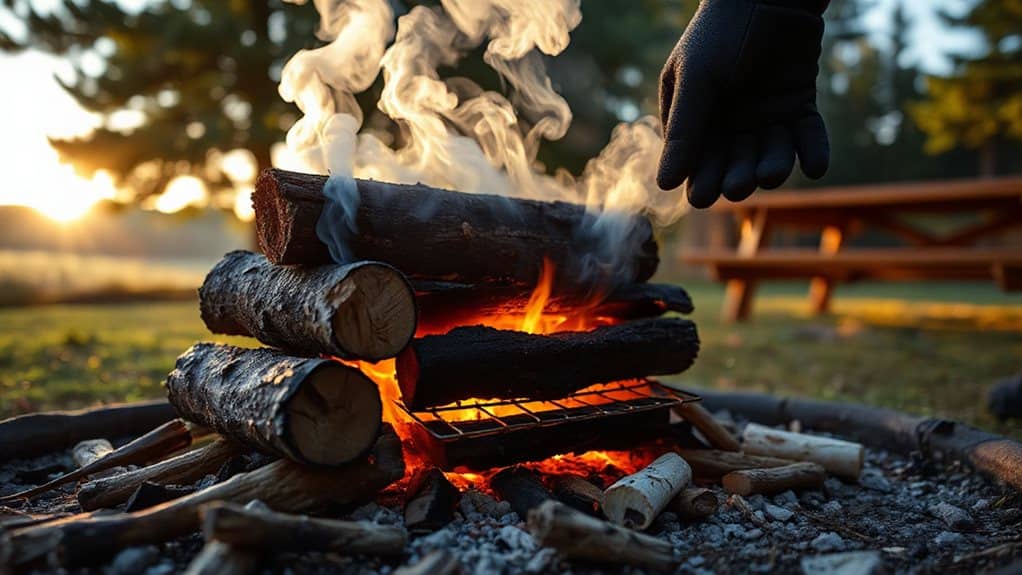
If you want to stop campfire smoke right away, start by choosing the right wood and arranging it for excellent airflow.
Use kiln‑dried hardwood, keep logs dry, and pre‑dry any damp pieces.
Stack them in a teepee or parallel method, leaving gaps for oxygen.
Begin with kindling, add larger logs gradually, and consider a vented pit or fan for extra airflow.
Dry, seasoned wood dramatically reduces smoke by providing cleaner, hotter combustion.
Why Do Campfire Smoke? The Simple Science
Choosing the right wood and arranging it for good airflow gets the fire burning clean, but the next step is understanding why smoke appears in the first place.
Smoke shows incomplete combustion: wood releases volatile gases that need enough heat and oxygen to burn fully.
When heat or airflow falls short, those gases stay as fine particles, soot, carbon monoxide, and water vapor, creating the visible plume you see.
Trapped moisture and volatile resins in the wood can vaporize and prevent full combustion, producing extra smoke and steam-driven pops.
Season & Store Wood to Minimize Campfire Smoke
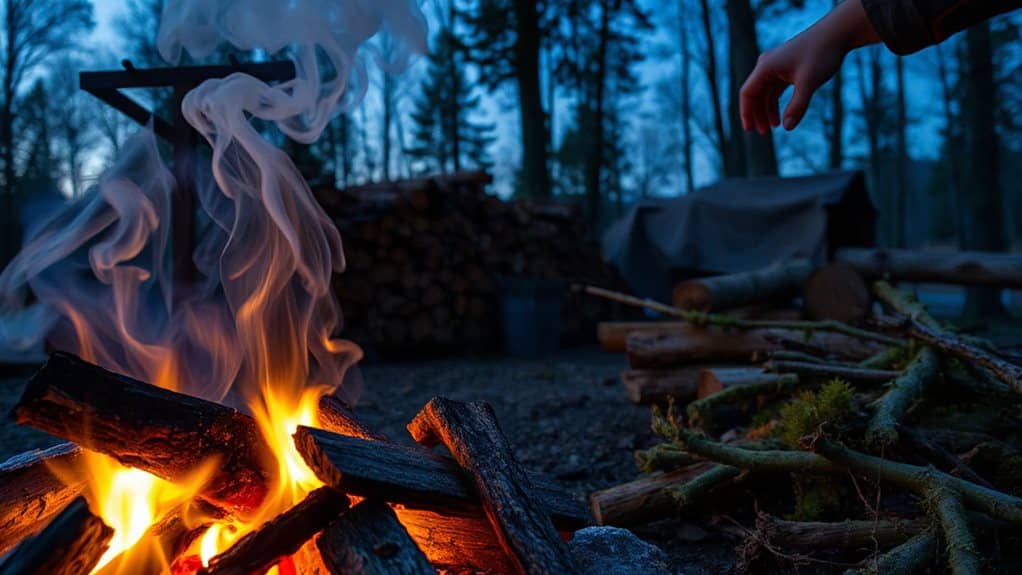
You’ll want to season your wood until it’s under 20 % moisture, store it off the ground on a raised platform, and keep the top covered while allowing the sides to breathe; choosing hardwoods like oak or maple gives you a cleaner burn, and avoiding fresh green wood prevents excess smoke.
Splitting logs and stacking them in loose, single‑row piles facing the wind speeds up drying, while a simple moisture meter lets you verify readiness before lighting.
Also make sure to have a sturdy bush pot on hand for safe campfire cooking and boiling water.
Season Properly, Store Safely
When you season firewood, start by cutting it into manageable pieces; splitting increases surface area, so the wood dries faster than whole rounds, and aiming for a moisture content of 20 % or less will keep smoke to a minimum.
Stack splits in a single‑row crib, leave gaps, raise the pile on pallets, and cover only the top.
Keep sides open, check moisture with a meter, and store away from structures.
This guarantees dry, efficient burns and minimal smoke.
Choose Hardwood, Avoid Green
After you’ve got your wood properly seasoned and stored, the next step is picking the right type of fuel. Choose dense hardwoods—oak, hickory, maple, ash, cherry, apple—because they burn hotter, longer, and produce fewer co.
Avoid green or fresh‑cut wood; its moisture forces smoldering, thick white smoke and weak heat.
Use softwoods only for kindling, and keep your pile dry to maintain steady, clean flames.
Pick Low‑Smoke Fuel Types for Your Campfire
If you want a campfire that stays warm without choking the campsite in smoke, start by choosing a low‑smoke fuel. Seasoned hardwood like oak or ash burns hotter and cleaner than green wood, while dense wood pellets cut smoke dramatically.
Anthracite coal or propane give near‑smokeless flames, and bioethanol offers renewable, clean burning with minimal residue, letting you enjoy freedom without haze. Consider also how insulation and air flow affect combustion, since proper air flow helps fuels burn more completely and reduce smoke.
Stack Logs for Optimal Airflow and Less Smoke
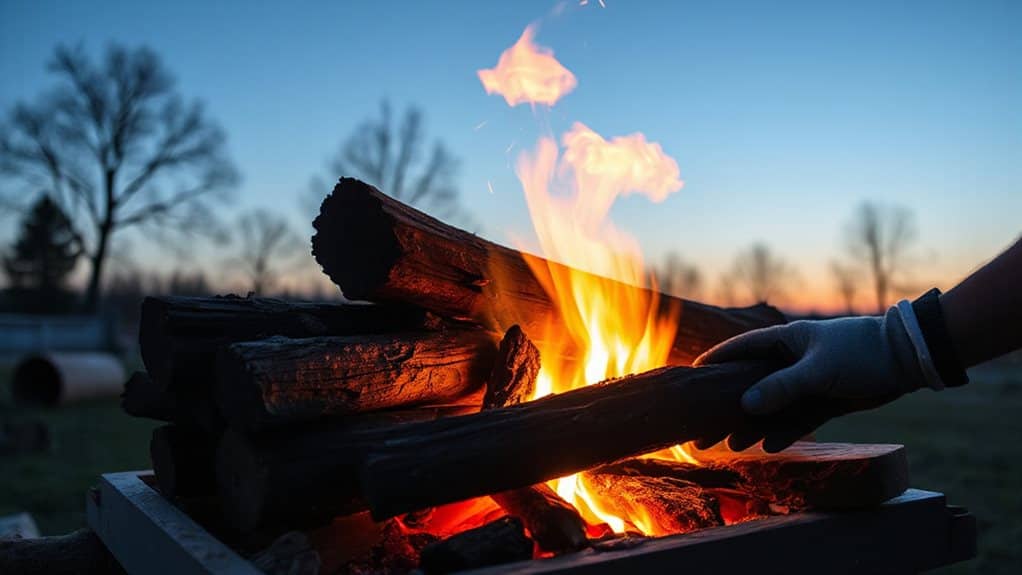
You can build a teepee of logs, leaving generous gaps between the sticks so air rushes up the center and fuels a clean burn. By spacing each piece just enough to create channels, you keep the fire hot and prevent the smoke‑filled smolder that comes from packed wood.
Always maintain a three-foot safety zone around the campfire to reduce burn risks and keep nearby debris clear.
Log Teepee Arrangement
When you build a log teepee, start with a small bundle of tinder and kindling at the center, then lean progressively larger sticks around it in a conical shape, because this arrangement creates a natural vertical draft that pulls fresh air up through the core and forces hot gases to rise, providing the oxygen needed for a clean, efficient burn.
Keep the cone open, avoid overpacking, use dry wood, and let the flame column rise, ensuring rapid ignition, minimal smoke, and a lively, unrestricted fire that respects your freedom to move and adjust.
Log Gap Spacing
By leaving intentional gaps between your stacked logs, you create a steady draft that pulls fresh air into the fire’s core, allowing the wood’s gases to combust fully and keep smoke to a minimum.
Aim for visible spaces—about a finger’s width—so flames reach undersides, while keeping logs close enough for heat transfer.
Offset layers, use crosswise patterns, and avoid tight packing; this balances airflow with heat, reduces smoldering, and lets you enjoy a clean, free‑spirited fire.
Gradual Fuel Addition
If you start with a hot, compact base of kindling and a few small dry splits, the fire will generate a strong draft that pulls oxygen through the logs, letting you add fuel gradually without choking the flames.
Add one or two logs at a time, matching each addition to the airflow.
This steady feeding keeps the flame hot, preserves draft, and prevents smoke, giving you a clean, efficient blaze.
Choosing a Site and Managing Wind for Campfire Smoke
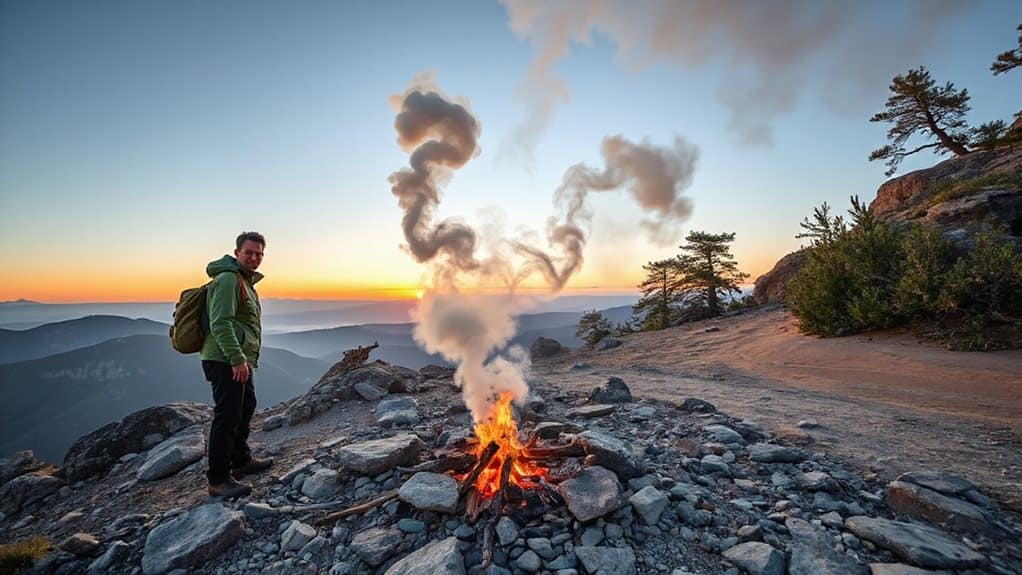
Ever wondered why some campfires seem to choke the air while others vanish into the sky? Choose an open, level spot with overhead clearance, clear a ten‑foot radius to mineral soil, and stay at least fifteen feet from tents or brush.
Check wind direction, place the fire upwind of people, avoid gusty ridgelines, and use a natural wind‑shielded hillside when possible.
Keep the fire small, and if wind shifts, adjust or extinguish promptly.
Aim for slightly elevated, well-drained ground to reduce smoke pooling and improve airflow, especially avoiding dry streambeds that can channel winds and sudden runoff.
Use the Smoke‑Reduction Checklist for Persistent Issues
When smoke keeps rising despite a good site and wind setup, the Smoke‑Reduction Checklist becomes your go‑to tool for troubleshooting persistent issues.
Check wood moisture, using dry hardwood under 20% moisture, and discard damp kindling.
Clear ash, debris, and char to restore airflow.
Build evenly, add logs gradually, and avoid contaminated material.
Reassess storage, keep fire steady, and consider a gas pit if smoke persists.
And Finally
By selecting dry, seasoned wood, arranging it for *ideal* airflow, and positioning your fire in a sheltered spot, you’ll cut smoke dramatically. Keep the fire small, add kindling gradually, and adjust the draft with a stick or a vent if needed. Regularly check for wet or resin‑rich logs, and replace them with lean, low‑smoke fuels. Follow these steps, and your campfire will stay warm and clean, letting you enjoy the night without choking haze.


