You feel metal colder outdoors because its high thermal conductivity and effusivity pull heat from your skin far faster than wood, plastic, or air, so even when the ambient temperature matches other surfaces, the rapid heat loss triggers your cold receptors and creates a chilling sensation. Wind strips the thin warm air layer from the metal, amplifying convection and accelerating cooling, while any moisture or larger contact area further enhances heat transfer. Sun‑heated metal can feel hot because solar radiation raises its temperature above ambient, but the same principles apply when it’s cool. If you keep searching, you’ll uncover more details.
TLDR
- Metal’s high thermal conductivity rapidly draws heat from skin, causing a quick temperature drop that feels “cold.”
- Its high thermal effusivity (conductivity × density × specific heat) accelerates surface heat exchange, intensifying the chill.
- Wind removes the thin warm air layer on metal, increasing convective cooling and speeding heat loss from the skin.
- Moisture or thin water films on metal conduct heat better than air, further enhancing the cold sensation.
- Even at ambient temperature, metal’s ability to transfer heat faster than wood or plastic makes the brain interpret the rapid skin cooling as cold.
Metal Feels Cold Because of High Thermal Conductivity
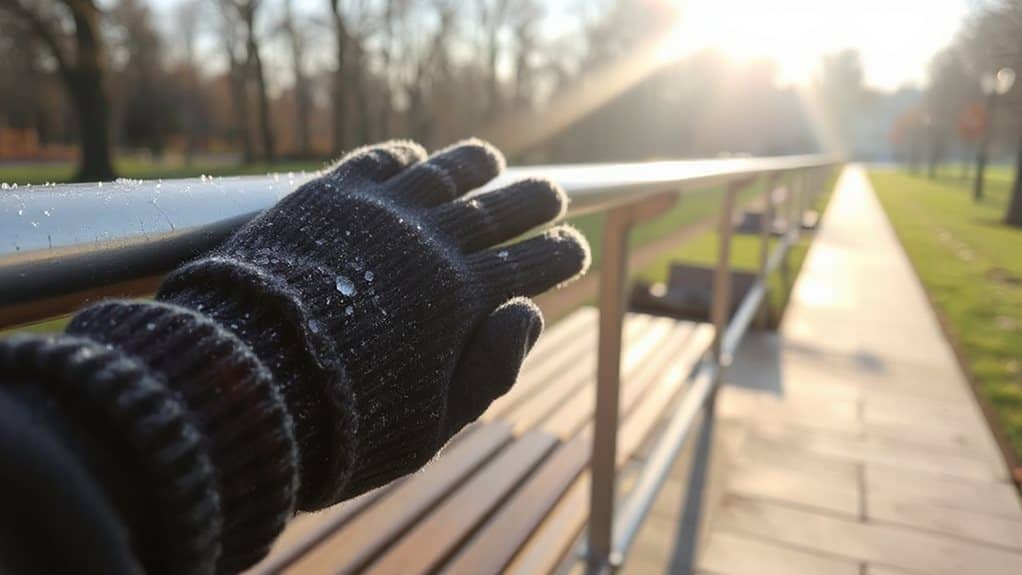
Feel the metal under your fingertips and you’ll notice it draws heat away faster than wood, and that’s because metal’s thermal conductivity is high. Its atoms transfer energy quickly, so skin loses heat at a rapid rate, making the surface feel cold even when ambient temperature matches wood’s. This fast flow spreads through the metal’s bulk, reinforcing the chill you sense. The direction of heat flow determines whether we perceive warmth or coldness.
Why Metal Feels Cold: Skin Receptors Detect Heat Flow
Metal’s high thermal conductivity isn’t the whole story; what really makes it feel colder is how your skin’s thermoreceptors respond to the rapid heat loss that occurs when you touch it.
Your receptors sense the temperature drop, not the metal itself, so when heat rushes out of your skin they fire intensely, sending a strong “cold” signal to your brain, which interprets the quick cooling as a chill.
Thermal Effusivity Explains Why Metal Feels Cold
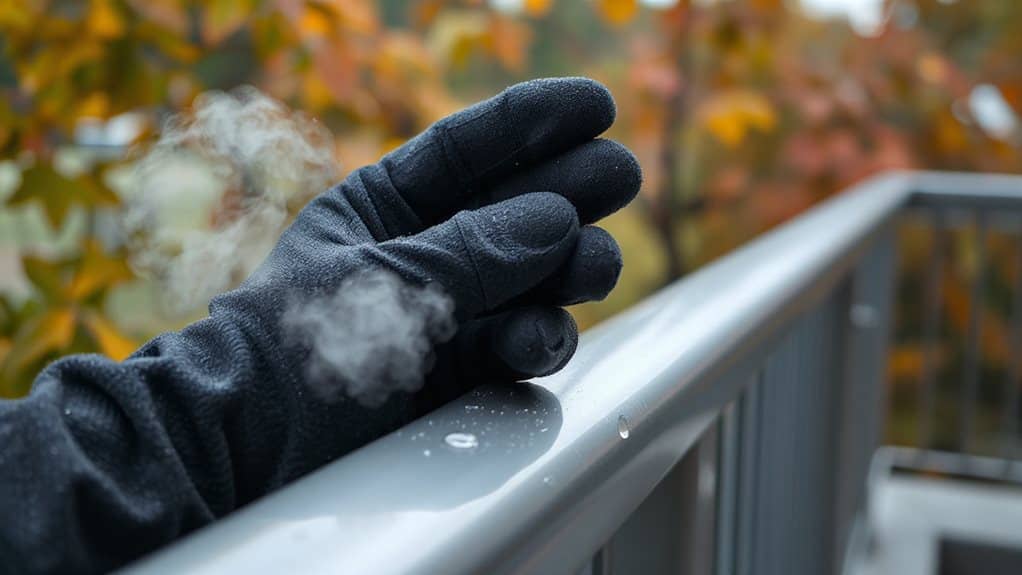
When you touch metal, its high thermal effusivity pulls heat from your skin faster than wood or plastic, so you instantly sense cold.
This rapid surface heat exchange rate depends on the material’s conductivity, density, and specific heat, all combined into one metric.
Because the metal’s effusivity is much larger, the brain interprets the quick loss of warmth as a stronger cold sensation.
High Effusivity Drives Sensation
If you touch a metal pole on a chilly morning, the sudden cold you feel isn’t just because the metal’s temperature matches the air; it’s the material’s high thermal effusivity pulling heat out of your skin at a rapid rate.
High effusivity means the surface resists temperature change, so it absorbs skin heat fast, making metal feel colder than wood, even when both read the same temperature.
Surface Heat Exchange Rate
Feel the metal’s surface cool your hand almost instantly because its high thermal effusivity drives a rapid heat‑exchange rate.
You’ll notice the skin’s temperature drops as the metal draws heat, its conductivity shuttling energy away while its density and specific heat keep the surface cool.
This near‑surface exchange dominates the contact, making metal feel colder than wood or plastic, even at identical ambient temperatures.
How Wind and Cold Air Boost Metal’s Chill
You’ll notice that a brisk wind strips away the thin warm layer that forms on metal, so convective cooling speeds up dramatically.
When the air is already cold, the temperature gap between your skin and the metal widens, making the heat flow from your body even faster.
Together, wind‑enhanced convection and low ambient temperatures mean the metal reaches the surrounding air temperature quickly, and it feels noticeably colder to the touch.
Wind also increases heat loss by accelerating evaporation and TEWL, which can make metal feel even colder and increase frostbite risk.
Wind‑Enhanced Convective Cooling
When wind whistles past a metal surface, it tears away the thin layer of warm air that normally clings to the object, forcing fresh, cooler air into direct contact and greatly enhancing heat loss.
You’ll notice that each 1 m/s adds about 4 W/m²K to the convection coefficient, turning a 5 m/s breeze into roughly 25 W/m²K, far above still‑air values, so the metal dumps heat dramatically faster, especially on curved or rough edges.
Cold Air Lowers Surface Temperature
Wind doesn’t just strip away the warm air layer; it also replaces it with colder air, and that replacement drives the metal’s surface temperature down.
When the breeze sweeps past, it scrapes away the insulating pocket of heated air, letting brisk, chillier air hug the metal.
Faster gusts increase molecular collisions, so heat leaves the surface quicker, especially when ambient temperatures are already low, making the metal feel icy.
Moisture and Contact Area Increase Metal’s Cold Feel
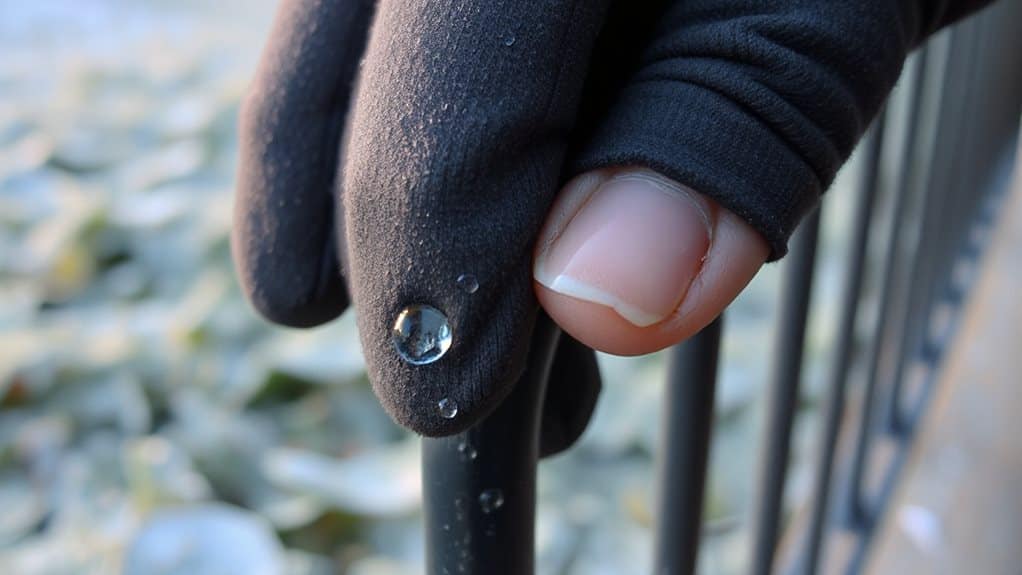
If a thin film of water coats a metal bench, the skin’s heat rushes away faster than it would on a dry surface, because water conducts heat far better than air.
Moisture fills gaps, eliminating insulating air, while a broad, wet contact area lets more skin transfer heat at once.
Humid air and condensation amplify this effect, making the metal feel noticeably colder despite identical temperature.
Monitoring body‑mass loss can help detect dehydration early and explain changes in skin moisture that affect how cold surfaces feel.
When Metal Feels Hot: Sun‑Heated Metal Explained
A thin film of water makes a metal bench feel colder because it conducts heat away faster than air, and the same principle flips when the metal is exposed to sunlight.
Direct solar radiation heats metal far beyond ambient air, especially dark or matte finishes, while its high conductivity shuttles that heat to your skin instantly, making it feel scorching hot.
True waterproof membranes like bonded membranes and sealed seams are critical for preventing water from soaking into materials and changing their thermal contact with skin.
Tips to Reduce How Metal Feels Cold Outdoors

Because metal conducts heat away from your skin far faster than wood or air, the first thing you’ll notice on a chilly day is a sharp, almost painful chill when you touch a bare rail or bench.
Wrap it in rubber or plastic covers, apply thick paint or powder coating, wear insulated gloves, limit contact time, and keep surfaces dry and wind‑shielded for a noticeably warmer feel.
Common Misconceptions About Why Metal Feels Cold
Wrapping metal in rubber, plastic, or paint can make it feel warmer, but the real issue isn’t the material’s temperature—it’s how quickly it pulls heat away from your skin.
You might think cold means low temperature, yet metal’s high conductivity draws heat fast, making skin receptors fire.
Shad often school in tidal freshwater areas during spring spawning, where they become easy bait to catch with bright lures and light tackle like shad darts.
And Finally
You’ve learned that metal feels colder outdoors because its high thermal conductivity and effusivity draw heat from your skin faster than other materials, while wind, moisture, and contact area amplify the effect. Remember, the same ambient temperature can feel very different depending on the object’s properties. By insulating or covering metal surfaces, you can reduce the chill, and recognizing when metal heats up—like under sunlight—helps you stay comfortable and safe.