
When you hike uphill, your gastrocnemius and soleus must generate stronger plantar‑flexion pushes than on flat ground, so they fatigue quickly; the repeated,‑off overload can cause localized cramps, especially if your calves are tight or ankle mobility is limited. Sweat strips sodium and chloride, thinning the fluid that helps nerves fire smoothly, while dehydration reduces blood volume, cutting oxygen and nutrient delivery to the working muscles. Eccentric loading on uneven terrain further strains the calves, and medical conditions like PAD or DVT can mimic these cramps. Keep hydrating, replace electrolytes, stretch, and train eccentric strength, and you’ll find more ways to prevent them.
TLDR
- Repeated plantar‑flexion on steep inclines overloads the calf muscles, causing localized fatigue and cramping.
- Excessive sweating depletes sodium and chloride, disrupting nerve signals that control calf contraction.
- Dehydration reduces blood volume, limiting oxygen and nutrient delivery to working calf fibers and increasing spasm risk.
- Eccentric loading during uneven ascents and descents strains calves beyond their accustomed capacity, especially with limited ankle mobility.
- Underlying conditions such as PAD, DVT, or nerve compression can mimic or exacerbate hiking‑related calf cramps.
Uphill Muscle Fatigue and Hiking Calf Cramps
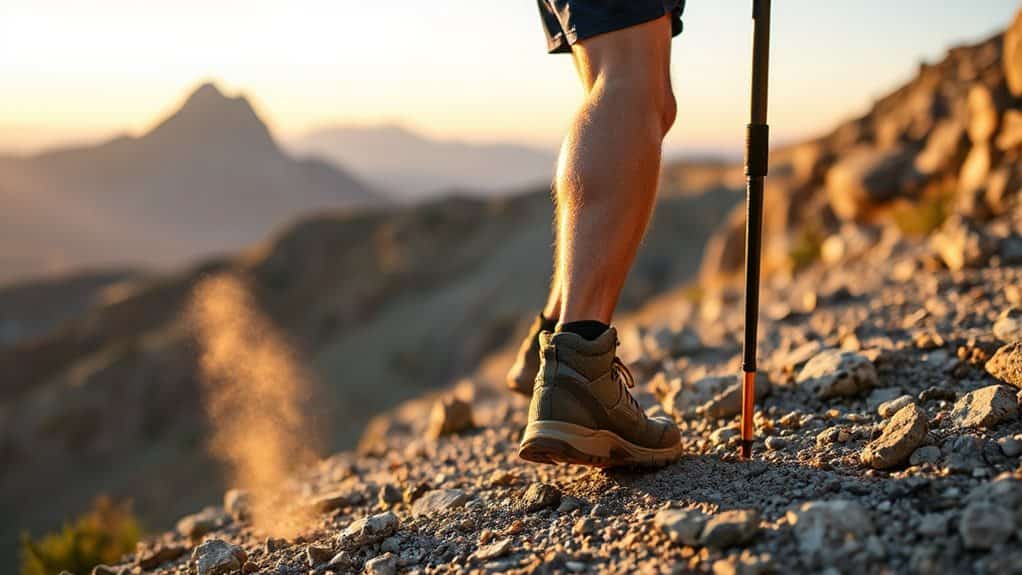
When you start a steep climb, the calf complex—especially the gastrocnemius and soleus—takes the brunt of the work, because each step demands a stronger plantar‑flexion push than level walking does.
The repeated push‑off overloads these muscles, causing localized fatigue that impairs coordination and triggers cramping.
Tight calves, limited ankle mobility, and unfamiliar terrain amplify the strain, so pacing, progressive training, and ankle flexibility keep you moving freely. Overload from sudden increase in workload can also contribute to calf tightness.
Carrying extra weight or poor footwear can increase demand on the calves and raise the risk of cramps, so consider proper footwear when preparing for hikes.
Sweat‑Induced Electrolyte Loss and Hiking Calf Cramps
If you’re hiking up a steep trail on a warm day, the sweat pouring off your brow isn’t just water—it’s also a hefty dose of sodium and chloride that your body needs to keep muscles firing smoothly.
Losing those electrolytes thins the fluid around your calves, disrupts nerve signals, and makes muscle fibers contract erratically.
Replenish sodium with salty snacks or electrolyte drinks to keep cramps at bay.
Heat-related muscle cramps can be an early warning sign of heat exhaustion and should prompt rest, cooling, and hydration.
Dehydration and Hiking Calf Cramps
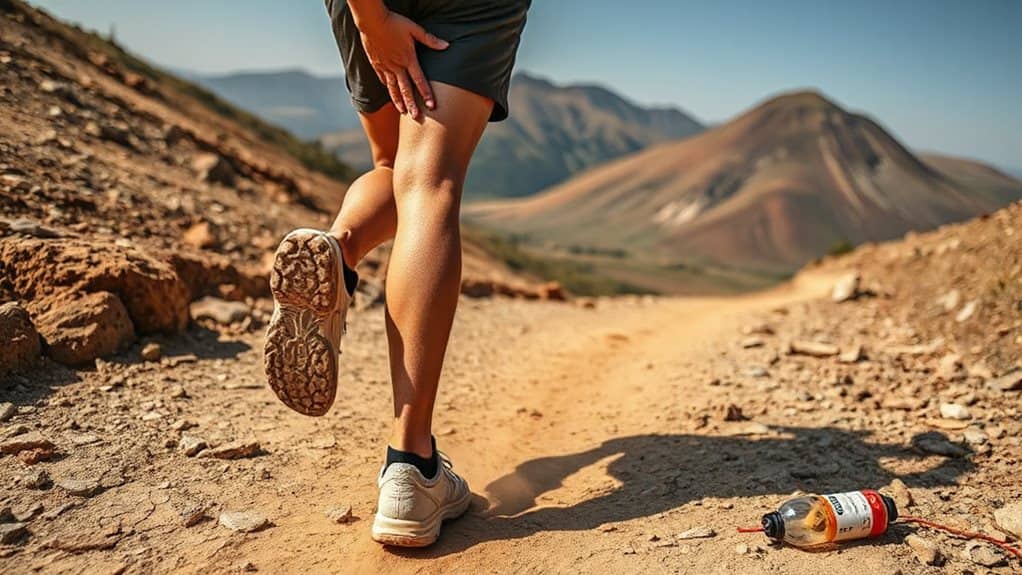
On steep, sun‑baked trails, dehydration silently shrinks your blood volume, throttling the flow of oxygen‑rich plasma to the calf muscles that are working overtime.
Less plasma means reduced oxygen and nutrient delivery, while waste removal slows, so fibers fatigue faster and misfire, sparking involuntary spasms.
Sweat‑driven electrolyte loss compounds the issue, making regular electrolyte‑rich sips essential to keep cramps at bay.
Treating clothing and gear with permethrin and using skin repellent can help reduce tick-related interruptions that might force sudden stops or exposed delays on the trail.
Eccentric Stress on Ascents/Descents and Hiking Calf Cramps
Dehydration may have thinned your blood, but the real strain on your calves comes from the way your muscles work while you’re moving up and down the trail.
Eccentric contractions during descents force calves to lengthen under load, while uneven terrain repeatedly shortens and lengthens them on ascents.
Limited ankle mobility and insufficient eccentric training amplify stress, leading to cramping.
Build downhill‑specific strength, stretch dorsiflexion, and pace recovery to keep your legs free and strong.
Begin training 7-8 weeks prior to the hike and include step-ups and other strength exercises to prepare your legs.
Medical Issues That Mimic Hiking Calf Cramps
Why do your calves feel like they’re seizing up even when you haven’t overexerted yourself?
PAD narrows arteries, causing claudication that eases with rest, while DVT brings one‑sided swelling, redness, and persistent pain.
Nerve compression, sciatica, or diabetic neuropathy mimic cramps with tingling and weakness.
Electrolyte loss, dehydration, and certain medications trigger sudden spams.
Osteoarthritis, Achilles issues, restless‑leg syndrome, and chronic venous insufficiency also masquerade as hiking‑related calf cramps.
Ticks can bite unnoticed and sometimes lead to systemic symptoms like fatigue or muscle pain, so be aware of tick-borne diseases after outdoor activity.
And Finally
By staying hydrated, replenishing electrolytes, and pacing yourself on steep climbs, you’ll reduce the likelihood of calf cramps. Warm up before you start, stretch after each ascent, and consider strengthening exercises to improve muscle endurance. If cramps persist despite these steps, consult a healthcare professional to rule out underlying conditions. Applying these practical tips will keep your legs comfortable and your hikes enjoyable.


