
You’ll find that fish leap mainly to uncover predators, chase prey, or escape stressful conditions like low oxygen, sudden light shifts, or overcrowding, not just for fun. Their streamlined bodies and rapid tail beats generate thrust, letting them break the surface with momentum. Species such as silver carp, mullet, salmon, and flying fish use these jumps for escape, feeding, or migration. In aquariums, poor water quality, ammonia spikes, or insufficient circulation can trigger similar behavior. Keep reading to discover how to manage and prevent these jumps.
TLDR
- Fish jump to escape predators, using rapid upward thrust to break sight lines and flee.
- Surface feeding or insect hunting prompts leaping behavior when prey is abundant above water.
- Low oxygen, poor water quality, or sudden temperature changes drive fish toward the surface for better respiration.
- Seasonal migrations and spawning runs trigger coordinated jumps as part of movement to breeding grounds.
- Species‑specific traits—streamlined bodies, powerful tail beats, and momentum generation—enable efficient breaching for escape, feeding, or reproduction.
Primary Reasons Fish Jump: Survival, Feeding, and Stress
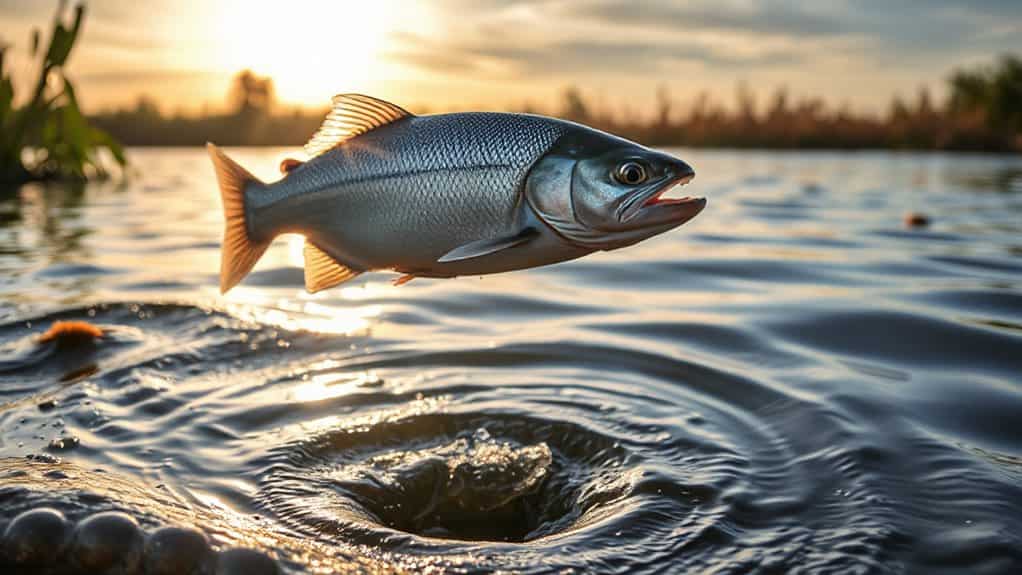
When you watch a fish launch itself out of the water, it’s usually not a random stunt; it’s a purposeful response driven by survival, feeding, or stress. Many species also use jumps as part of spawning migrations during seasonal movements to breeding grounds.
You’ll see jumps when predators loom, breaking sight lines for escape, especially in coordinated schools.
Low oxygen or polluted water pushes fish upward, while surface feeding or insect hunting sparks leaps.
Overcrowding, sudden light changes, or territorial fights also trigger frantic jumps. Blocked for security reasons may also cause the request to be denied.
Physics Behind How Fish Jump: Body Shape, Tail Beats, and Momentum
You’ve already seen why fish jump—predators, food, stress—but the mechanics behind the leap hinge on physics.
Your fusiform, streamlined shape cuts drag, letting rapid tail beats push water, create thrust, and generate alternating vortices.
Regular maintenance of fishing gear, including keeping hooks sharp at a consistent 30–45° angle, helps anglers land more fish and study jumping behavior effectively.
Fish Species That Jump Frequently and Their Specific Motives
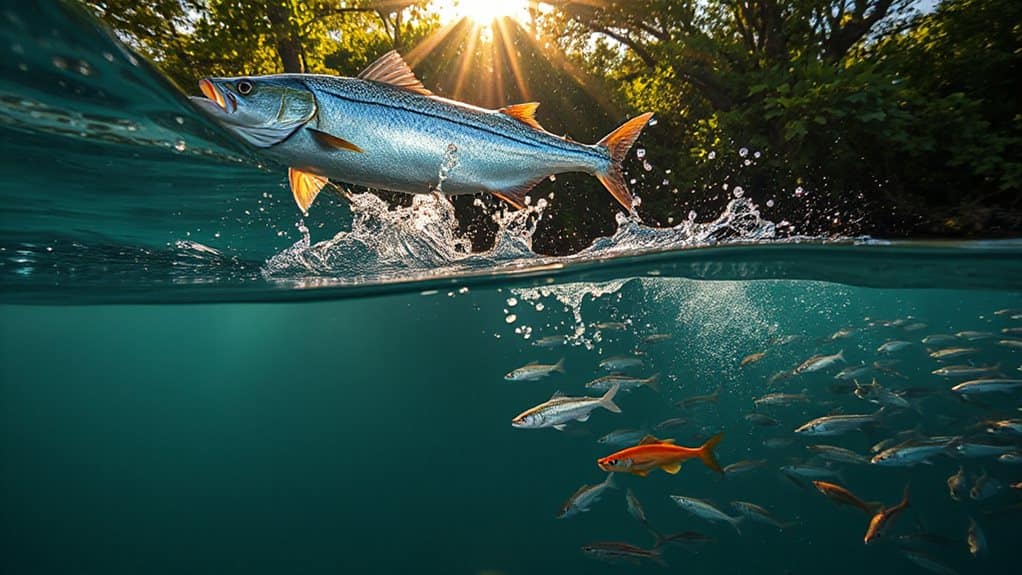
Across the aquatic world, several species have turned leaping into a signature behavior, each driven by distinct motivations that go beyond mere curiosity.
You’ll see silver carp exploding upward to dodge boat noise, mullet schools vaulting together to evade predators, salmon surging over rapids during spawning runs, and flying fish launching to glide away from threats.
Shad, needlefish, trout, and bass also leap for migration, feeding, or escape.
Crappies may also jump occasionally, especially when chasing baitfish or reacting to changes in light and water conditions, often influenced by bait choice and presentation such as color selection.
Aquarium Conditions That Make Fish Jump: Water Quality, Oxygen, and Disturbance
If water quality slips, fish will often head for the surface and sometimes leap out of the tank, and the culprits are usually spikes in ammonia, nitrite, or nitrate, unstable pH, and insufficient oxygen.
Warm water, low circulation, and overcrowding drain dissolved oxygen, while sudden vibrations or aggressive tankmates startle them.
Keep parameters stable, maintain proper filtration, and guarantee adequate surface agitation to preserve their freedom.
Managing Jumping Fish: Practical Tips for Anglers and Aquarium Owners
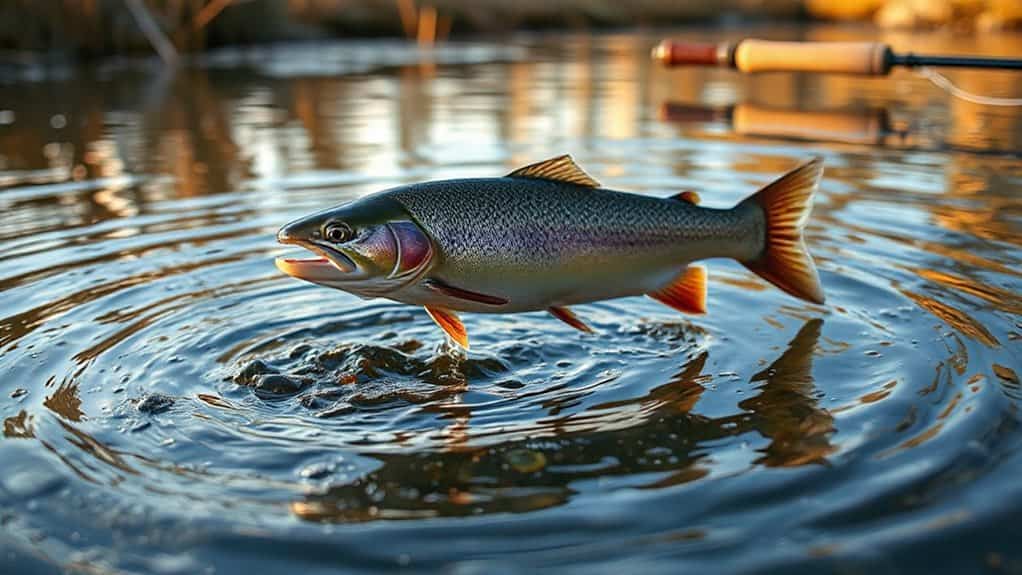
When a fish starts to leap, the key is to stay in control of the line and rod before the splash, because a sudden loss of tension lets the hook shake loose and the fish escape.
Lower the tip, keep a 45‑degree angle, use side pressure, and maintain steady tension.
Choose moderate‑action rods, match tackle, and secure aquarium lids to prevent jumps.
Also, when fishing for bass with plastic worms, maintaining bottom contact and using slow, controlled presentations can reduce frantic runs and improve hooksets.
And Finally
By now you’ve seen why fish leap—whether to escape predators, chase prey, or respond to stressors like low oxygen or poor water quality. Understanding the physics of their body shape and tail beats clarifies how they generate the momentum needed to clear the surface. Recognizing which species are prone to jumping helps you anticipate their behavior, while proper aquarium management—maintaining clean water, adequate aeration, and minimizing disturbances—reduces unwanted jumps. Apply these findings, and you’ll keep your fish safe and thriving.


