
You can camp during a thunderstorm, but you must treat tents as unsafe shelters, avoid low‑lying valleys that become flash‑flood channels, and stay clear of isolated tall trees, poles, or fences. Choose a well‑drained site on higher ground, keep your gear spread out, and be ready to move at the first rumble to a sturdy building, a basement bathroom, or a metal‑topped vehicle with windows shut. After the last clap, wait about 30 minutes before retrieving gear, and you’ll learn more essential tips.
TLDR
- Avoid camping in low‑lying areas or near drainage channels; flash floods can surge quickly during heavy rain.
- Do not rely on tents for lightning protection; metal poles and conductive parts can channel strikes into the shelter.
- Seek the nearest sturdy enclosed building, basement, or windowless interior room on the lowest level when thunderstorm begins.
- If a building is unavailable, use a metal‑topped vehicle with windows shut; stay inside until 30 minutes after the last thunderclap.
- Choose a campsite on higher ground, away from isolated tall trees or poles, and spread tents to reduce ground‑current exposure.
Assess How Thunderstorms Change Camping Safety
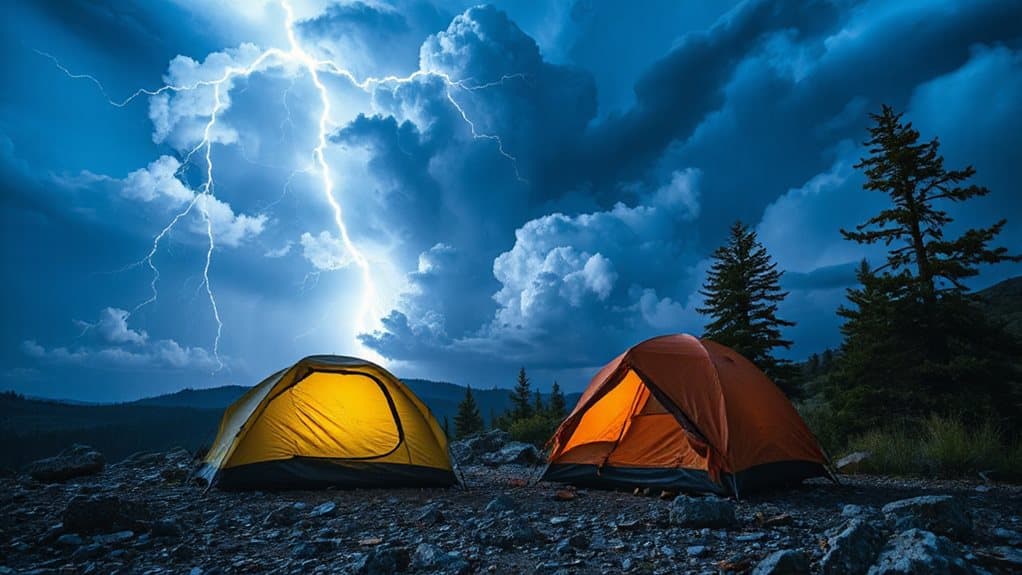
When a thunderstorm rolls in, the safety terrain of your campsite shifts dramatically, turning ordinary hazards into urgent threats.
You’ll see flash floods surge through low‑lying spots, heavy rain soak gear, and high winds rip tents loose, while hail can pummel shelters.
Exposed ridgelines and dry creek beds become torrent channels, demanding quick relocation to sturdy structures before conditions worsen.
Be sure to relocate at least 25 feet from tents, trees, and other structures and clear a three-foot safety zone if you must rebuild a fire or move camp.
Recognize Why Tents Offer No Lightning Protection
You might think the fabric of your tent shields you, but the metal poles and any conductive parts actually let lightning’s current flow straight through, while the ground current that spreads out from a strike can travel up through the thin floor and damp soil beneath you, increasing the risk of injury.
Because tents lack any grounding system or built‑in containment, there’s no safe path for the electrical energy to dissipate, so the structure itself becomes a hazard.
Understanding that both the metal skeleton and the surrounding ground can conduct dangerous voltages helps you see why a tent offers no real lightning protection.
Always plan to seek substantial shelter before storms arrive and follow real-time lightning alerts to act immediately.
Lightning Conducts Through Metal
If a lightning strike hits a metal pole, frame, or hardware on your tent, the electricity will travel through those conductive parts just as it would through any other piece of metal, and because standard camping tents lack the grounding, bonding, and surge‑diversion components of a true lightning‑protection system, that current has nowhere safe to go.
You’ll feel the surge through aluminum or steel poles, zippers, and guy‑lines, but without engineered grounding the energy can jump into the interior, igniting fabric or shocking occupants.
Metal alone isn’t a safety net; it merely becomes a dangerous conduit.
Ground Current Causes Injury
Although a lightning strike may hit the ground a few meters away, the resulting ground current can still reach you, and it’s the leading cause of lightning‑related injuries and deaths.
Current spreads across wet soil, lakes, and open ground, turning a nearby strike into a 50‑yard danger zone.
Your tent offers no grounding, so if you’re lying down or touching the ground at two points, voltage across your body rises, increasing injury risk.
Seek a building or vehicle shelter immediately.
Select the Best Shelters for Thunderstorm Safety
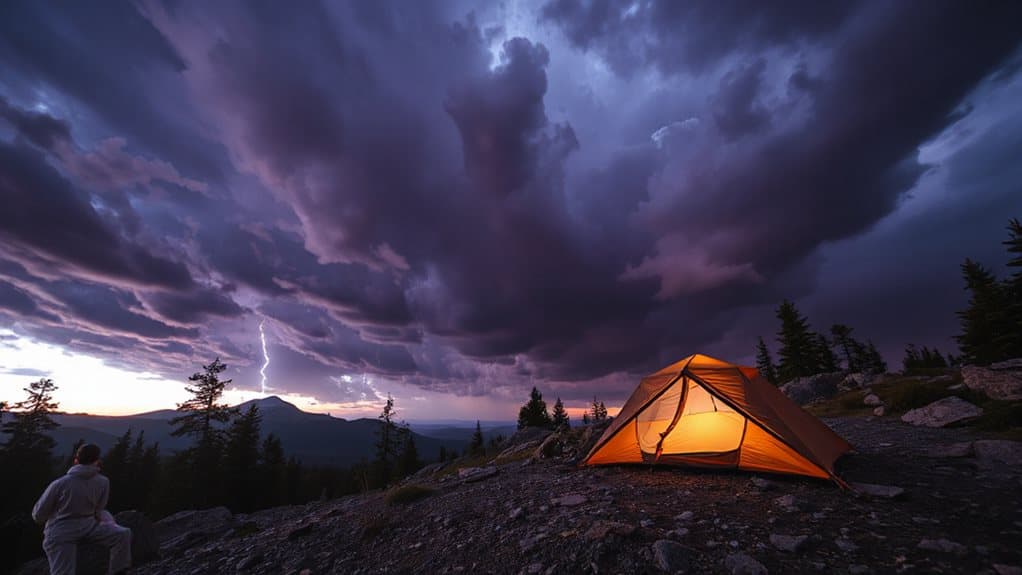
A sturdy enclosed building—like a house with electricity and plumbing or a metal‑topped car with the windows shut—offers the safest refuge when a thunderstorm rolls in.
Choose a basement, interior windowless room, or bathroom on the lowest level; these spaces lack exterior walls and protect you from wind and debris.
If a building isn’t reachable, a metal‑topped vehicle with windows closed is your next best option.
Regular practice with safety gear and avoiding electronic interference are crucial for reliable equipment use, especially when relying on metal surfaces for shelter.
Choose a Low‑Risk Campsite for Lightning Protection
Finding a low‑risk campsite starts with scanning the terrain for natural depressions—valleys, ravines, or any low‑lying spot that sits below surrounding ridges and tree canopies.
Choose a valley or ravine, keep your tent away from isolated tall trees, poles, or fences, and spread out across the depression.
This positioning keeps you beneath taller objects, reduces ground‑current exposure, and distributes people, lowering the chance of multiple injuries from a single strike.
Identify Flood and Heavy‑Rain Risks for Campers
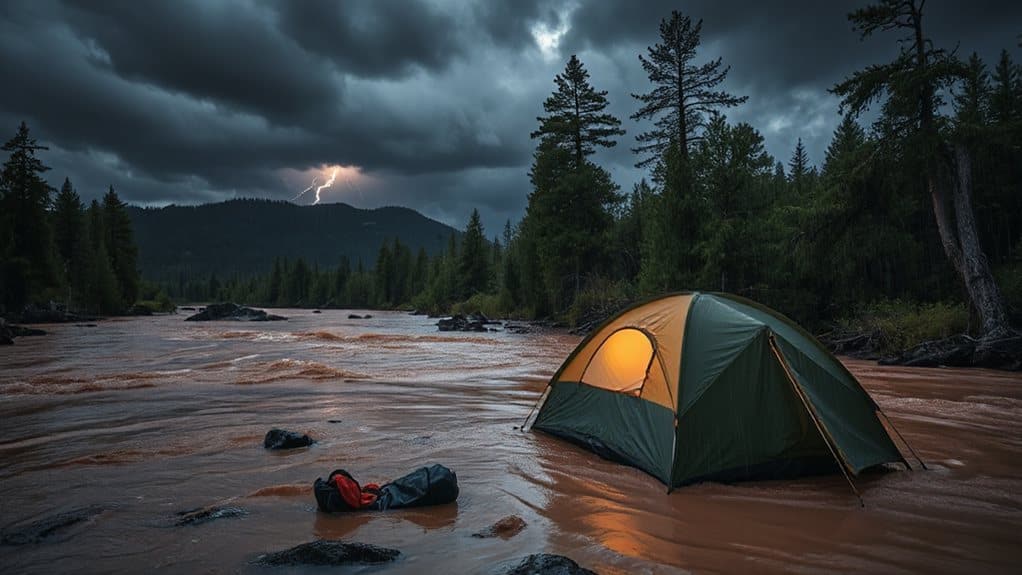
You should check the map for flood‑prone areas and avoid setting up near low‑lying streams or drainage channels, because flash floods can surge with little warning.
Keep an eye on the sky and the water level; even a quick rise of a few inches can turn a harmless puddle into a dangerous current that knocks you off balance.
When camping in heavy rain, place your site and gear on a slightly elevated spot and build a raised platform from dry materials to stay drier and reduce flood risk.
Risk Flood Zones
When you’re planning a camp near rivers or low‑lying terrain, the first thing to check is whether the site falls within a FEMA‑designated flood zone, especially Zone AE, which indicates a 1 % annual chance of flooding, and whether any part of the property lies in a floodway where water moves fastest and development is heavily restricted.
Verify current maps, note that 2011 data may be outdated, and remember that even outside designated zones, heavy rain or flash‑flood runoff can surge quickly, so always scout higher ground and keep alerts handy.
Rapid Water Level Rise
Even if you’ve confirmed the site isn’t in a FEMA‑designated flood zone, flash‑flood risk can still loom large, especially near streams, gullies, or low‑lying terrain.
Heavy rain upstream can turn a quiet creek into a torrent within minutes, flooding low ground while you sleep.
Six inches may knock you off balance; two feet can float a tent.
Stay alert, know escape routes, and move to higher ground instantly.
Take Immediate Action at the First Thunder Rumble
If you hear that first rumble, treat it as an immediate cue to seek solid shelter—nothing else will protect you as well as a fully enclosed building or, if none is nearby, a hard‑topped vehicle with the windows rolled up.
Drop camping tasks, abandon tents, and head for the nearest safe structure; avoid trees, ridgelines, and open fields, and leave metal gear behind if you can.
Prompt action cuts lightning risk dramatically.
Consider moving to low-lying terrain among trees or a valley for extra protection if a solid shelter isn’t available.
Stay Safe After the Storm: 30‑Minute Wait & Gear Recovery
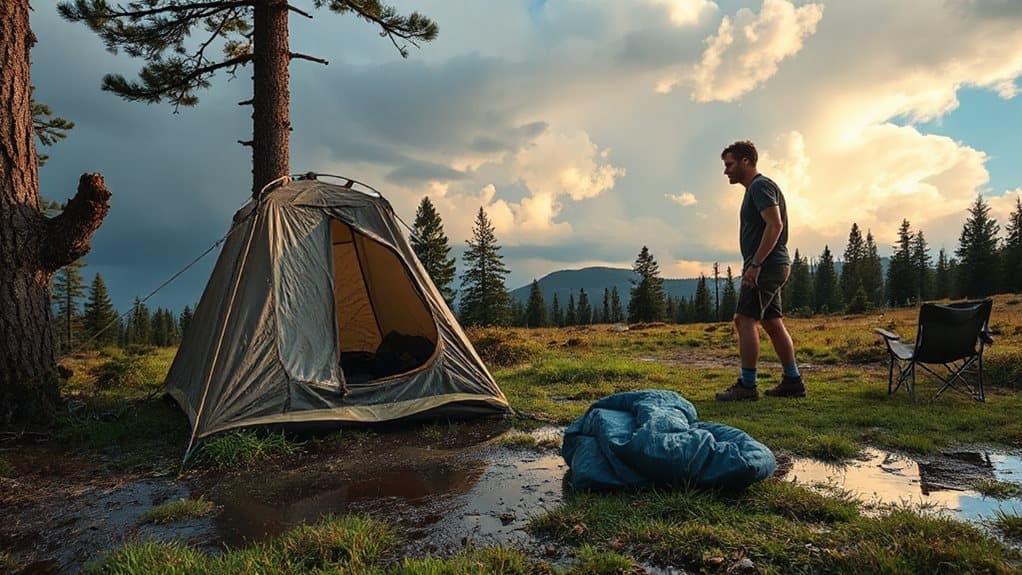
Because lightning can still strike after the rain stops, you should wait at least 30 minutes after the last clap of thunder before venturing back out to retrieve your gear.
Stay in a sturdy shelter, monitor the sky, and avoid metal tools or wet equipment until the thunder‑free window ends.
Once cleared, check for downed branches, slippery ground, and damaged tents before gathering belongings safely.
And Finally
By staying alert and choosing the right shelter, you can dramatically lower your lightning risk while camping. Remember, tents won’t protect you, so opt for a sturdy, grounded structure or a low‑lying area away from tall trees and metal objects. Pick a site with good drainage, watch the sky, and move to safety at the first rumble. After the storm, wait thirty minutes before resuming activities, then check your gear for damage. These steps keep you safe and your trip enjoyable.


