
Soak cotton balls in peppermint oil and tuck them near your cooler, then refresh after rain; sprinkle crushed garlic, coffee grounds, or cayenne around food stations for instant scent barriers, and spray a diluted vinegar solution on tables and tents. Store food in a hard‑sided canister or a tightly sealed Ursack, hanging it at least ten feet high and away from camp traffic. Add rubber snakes or owl decoys, and pair them with motion‑activated flashlights or sound emitters to create visual and auditory threats. Check your deterrents daily, reapply scents, and tighten any loose parts to keep squirrels out, and you’ll discover even more tricks ahead.
TLDR
- Store food in airtight, hard‑sided containers (e.g., BearVault) or tightly sealed odor‑blocking bags, and hang them at least 10 ft high.
- Apply natural repellents such as peppermint‑oil cotton balls, crushed garlic, or coffee grounds around storage sites, reapplying after rain.
- Use DIY spicy sprays (water, hot sauce, dish soap) and dusts (cayenne, chili flakes) to create pungent barriers around food stations.
- Deploy visual deterrents like rubber snakes, spinning owl decoys, and motion‑activated flashlights or sound emitters, moving them regularly.
- Inspect and maintain all barriers daily, tightening bolts, checking pole heights (≥5 ft), and ensuring no residue attracts wildlife.
How to Apply Natural Repellents for Immediate Squirrel Deterrence

Soak cotton balls in peppermint oil, place them near food storage, and refresh after rain.
Sprinkle crushed garlic or coffee grounds around coolers for instant scent barriers.
Spray diluted vinegar on tables and tents, reapplying regularly.
Combine these tactics, using cotton wool or spray bottles, to maintain a strong, natural deterrent while preserving your freedom to enjoy the outdoors. Use companion plants such as marigolds and hot pepper plants around the campsite to further discourage squirrels. A complementary approach is to create visible markers like ground signals to help rescuers and other campers recognize and avoid disturbed food areas.
DIY Spice Sprays and Dusts as Squirrel Deterrents
After soaking cotton balls in peppermint oil, you can enhance your campsite’s protection by mixing up spicy sprays and dusts that keep squirrels at bay.
Combine water, hot sauce, and a few drops of dish soap for a quick pepper spray; add garlic and chili powder for a pungent garlic‑spice blend.
Sprinkle ground cayenne or chili flakes around food stations, reapply after rain, and keep the scent strong, safe, and effective.
Consider wearing camouflage clothing to better blend into the surroundings while applying and reapplying your deterrents.
Physical Barriers for Squirrel Deterrence: Build Squirrel‑Proof Food Storage & Feeding Stations

Ever wondered why a simple rope can keep squirrels far from your snacks? Use a hard‑sided canister like the BearVault BV450 for ultimate protection, or a lightweight Ursack Major if you need flexibility; tie the opening shut, hang the bag 10 ft high on a sturdy branch, and keep it 200 ft from camp. Metal lockers at established sites and airtight odor‑blocking bags add extra security, ensuring squirrels stay out while you enjoy unrestricted freedom. Modern trail bikes often use 150–160mm travel for stability on rough descents and technical terrain, demonstrating how appropriate equipment design improves performance and safety for specific conditions, much like choosing the right storage system for wildlife protection suspension travel.
Predator Mimics & Motion Devices for Squirrel Deterrence
While sturdy canisters keep your food sealed, adding a visual and auditory threat can stop curious squirrels before they even reach the bag.
Place rubber snakes or spinning‑head owl decoys near your stash, move them often to keep effectiveness high, and pair them with motion‑activated flash lights or sound emitters that trigger when squirrels approach, ensuring they’re startled and deterred.
Maintenance Checklist for Squirrel Deterrents
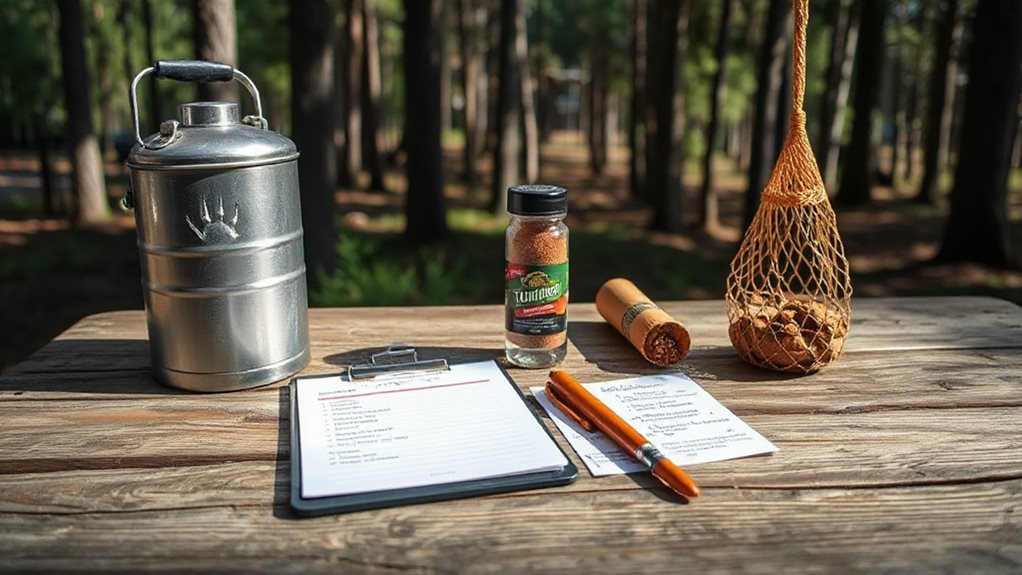
How do you keep your squirrel deterrents working flawlessly night after night? Inspect weight‑activated feeders daily, tighten any loose bolts, and verify baffles sit 4‑5 feet off the ground. Measure pole height, ensuring it exceeds jump reach and that poles stay at least 5 feet above the baffle. Reapply scents after rain, replace worn cages, and test distances with a tape measure to maintain freedom‑preserving protection. The use of protein-rich nutrients in some attractants means you should avoid leaving food residues that could draw wildlife back to your campsite.
Final Note
By using natural repellents, spice sprays, solid barriers, and predator mimics, you can protect your campsite food from squirrels without hassle. Apply the deterrents before you eat, keep storage containers sealed, and check the devices regularly. These steps work together, creating a layered defense that’s easy to maintain and effective. Stick to the routine, and you’ll enjoy meals uninterrupted, while the squirrels stay safely away from your supplies.


