
You’ll find raccoons, opossums, groundhogs, and white‑tailed deer in the Northeast, while the Pacific Northwest hosts Roosevelt elk, mountain goats, marmots, and otters; the Rockies showcase elk, moose, bighorn sheep, black bears, and yellow‑bellied marmots; the Southwest shelters great‑basin spadefoot toads and Mojave desert tortoises, and western parks teem with bald and golden eagles, ospreys, peregrine falcons, and songbirds like Clark’s nutcracker and American dipper; marine and freshwater habitats add whales, dolphins, and anadromous fish, and each region’s terrain supports unique small mammals and resilient species that you’ll explore as you delve further.
TLDR
- National parks host region‑specific mammals, from raccoons and deer in the Northeast to elk, mountain goats, and sea otters in the Pacific Northwest.
- Iconic Rocky Mountain species include elk, moose, bighorn sheep, black bears, and yellow‑bellied marmots, often highlighted as the “Big Five.”
- Southwest parks feature desert‑adapted reptiles and amphibians like the Great Basin spadefoot toad and Mojave Desert tortoise, which rely on burrows and limited water.
- Raptors such as bald and golden eagles, ospreys, and peregrine falcons, along with songbirds like Clark’s nutcracker and mountain chickadee, are common in western park habitats.
- Marine and freshwater wildlife, including whales, dolphins, and anadromous fish, congregate in coastal kelp forests, seagrass beds, and river estuaries, especially during seasonal migrations.
Mammals by Region in National Parks

Where do you start when exploring the mammals that call America’s national parks home? In the Northeast you’ll spot raccoons, opossums, fishers, groundhogs, and white‑tailed deer; domestic cats linger near trails. In winter, prioritize safety by recognizing how exposure risks can affect both people and animals, especially regarding shelter needs.
The Pacific Northwest offers Roosevelt elk, mountain goats, Olympic marmots, sea otters, and river otters. Each region presents distinct species, so follow local guides and stay observant for a truly free‑wheeling wildlife excursion. The region also supports Roosevelt elk populations that can reach up to 1,200 pounds in weight.
Iconic Mammals in the Rockies of National Parks
Ever wondered why the Rockies feel like a living museum of iconic mammals? You’ll hear elk bugling at sunrise, see moose grazing near Curecanti, spot bighorn sheep leaping cliffs, and watch black bears roam trails. Yellow‑bellied marmots whistle from alpine meadows, all part of the “Big Five” that defines freedom‑filled wilderness and unforgettable wildlife encounters.
Birds of Prey and Songbirds in Western National Parks

Curious about the soaring raptors and colorful songbirds that inhabit Western National Parks? You’ll see bald and golden eagles gliding over rivers, ospreys perched near fishable waters, and peregrine falcons diving at breakneck speed.
Uncommon hunters like Cooper’s hawk, goshawk, and northern harrier add intrigue, while songbirds such as Clark’s nutcracker, black‑billed magpie, Canada jay, mountain chickadee, and American dipper provide constant, lively choruses throughout the seasons. Many parks also support riparian habitats that attract both raptors and songbirds by providing water and abundant food sources.
Marine & Freshwater Wildlife: Where & When to Spot Them
You’ll want to time your visits to match seasonal migration patterns, because many marine mammals and freshwater species pass through park waters only during specific months. Early mornings and late evenings often provide prime viewing times, when calmer seas and lower light make spotting whales, dolphins, or anadromous fish easier. Focus on habitat hotspots—coastal kelp forests, seagrass beds, and river estuaries—where these animals gather to feed, breed, or rest. The Coral Triangle, including the Philippines, is a marine biodiversity hotspot home to over 2,000 fish species, offering unparalleled opportunities to observe diverse marine life.
Seasonal Migration Patterns
When do marine and freshwater creatures begin their seasonal ventures, and where can you catch a glimpse of them? You’ll find northern right whales along Florida’s Atlantic coast from December through March, while manatees linger in the Everglades and Biscayne parks.
Waterfowl funnel into the Mississippi delta and Padre Island, elk trek up to 100 miles into Yellowstone, and pronghorns stride 150 miles between Wyoming’s Upper Green River and Grand Teton.
Prime Viewing Times
Where and when you’ll see marine and freshwater wildlife hinges on seasonal migrations, park locations, and daily rhythms, so timing your visit can make the difference between a fleeting glimpse and a memorable encounter. Aim for early mornings to spot black‑tipped reef sharks in Pelekane Bay, winter months for humpback whales along the Pacific coast, and spring northbound migrations of gray whales at Point Reyes. Keep 100 yards from large whales, 50 yards from dolphins and turtles, and limit each sighting to thirty minutes for respectful, unobtrusive viewing.
Habitat Hotspots Across Parks
Everglades do habitats, Channel Islands, Death Valley, Alaska’s maritime refuge, and the Pacific marine national monuments each host distinct marine and freshwater hotspots where timing your visit can make the difference between a fleeting glimpse and a lasting encounter.
You’ll find American crocodiles and manatees in Florida Bay, island foxes and dolphin pods off California, pupfish in Death Valley springs, sea‑birdsouting mammals across Alaska’s islands, and deep‑sea diversity in Pacific monuments—plan early mornings or low tides for optimal sightings.
Reptiles and Amphibians of the Southwest National Parks
You’ll notice the Great Basin spadefoot toads popping up after summer rains, their rapid burrowing and distinctive calls marking seasonal wetlands across the desert.
At the same time, the Mojave Desert tortoise roams the arid scrub, its slow, deliberate movements and hardy shell adapted to extreme heat and scarce water.
Both species illustrate how the Southwest’s harsh environment shapes unique survival strategies, so keep an eye out for their subtle signs when you investigate these parks.
For nighttime navigation in these wide-open park landscapes, learn to locate Polaris to help you find true north.
Great Basin Spadefoot Toads
What makes the Great Basin spadefoot toad such a resilient dweller of the Southwest’s arid terrain? You’ll find it across sagebrush flats, alkali grounds, and high‑elevation spruce‑fir forests, burrowing 35‑45 cm into loose sand. It emerges at night, hunts insects, and travels up to five kilometers to breed in temporary pools, laying 300‑500 eggs. Its survival hinges on dry, burrowable soil and fleeting water sources.
Mojave Desert Tortoises
The Mojave Desert tortoise thrives in the arid valleys and washes that stretch between 1,000 and 4,000 feet, where creosote bushes, sandy flats, and rocky foothills provide both food and shelter. You’ll find it burrowing under cool soil, emerging after rains at 79‑93°F to graze grasses, flowers, and cactus fruit. It lives up to 80 years, yet faces habitat loss, disease, and predation, so protect its range in Mojave National Preserve and Joshua Tree.
Unique Small Mammals and Their Secret Habitats
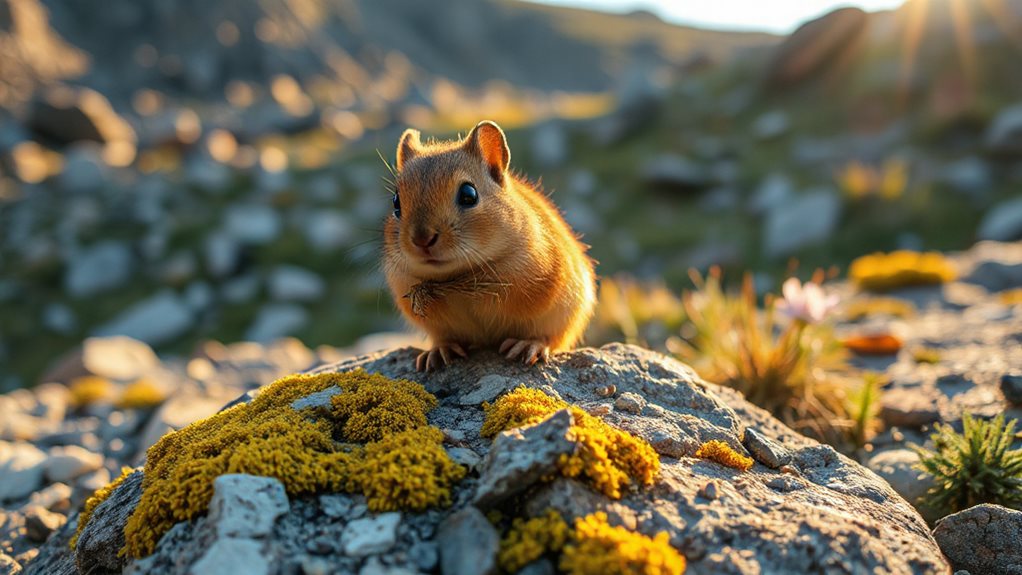
Ever wondered how tiny mammals thrive in the hidden corners of Yellowstone? You’ll find pikas hopping on talus, storing hay for winter, while shrews dart through moist willows, hunting insects.
Voles occupy meadows and riparian zones, and marmots hibernate on rocky slopes.
Forests shelter martens, ermines, weasels, and occasional flying squirrels, each excelling in secret microhabitats that sustain their unique lives.
All lines degrade over time due to UV rays, heat, and abrasion.
When to See Elk, Bison, and Bears in the Rockies
You’ll find elk, bison, and bears most visible during the seasonal windows when they move between high‑elevation summer pastures and lower‑elevation winter grounds, so timing your visit around these migrations maximizes sightings.
Aim for late summer in Kawuneeche Valley for elk, early fall on Highway 160 for bison, and November‑April for bears crossing the same corridors.
Spring returns bring elk back northward, while winter corridors stay active, giving you flexible, open‑range viewing options.
Conservation Wins and Visitor Takeaways
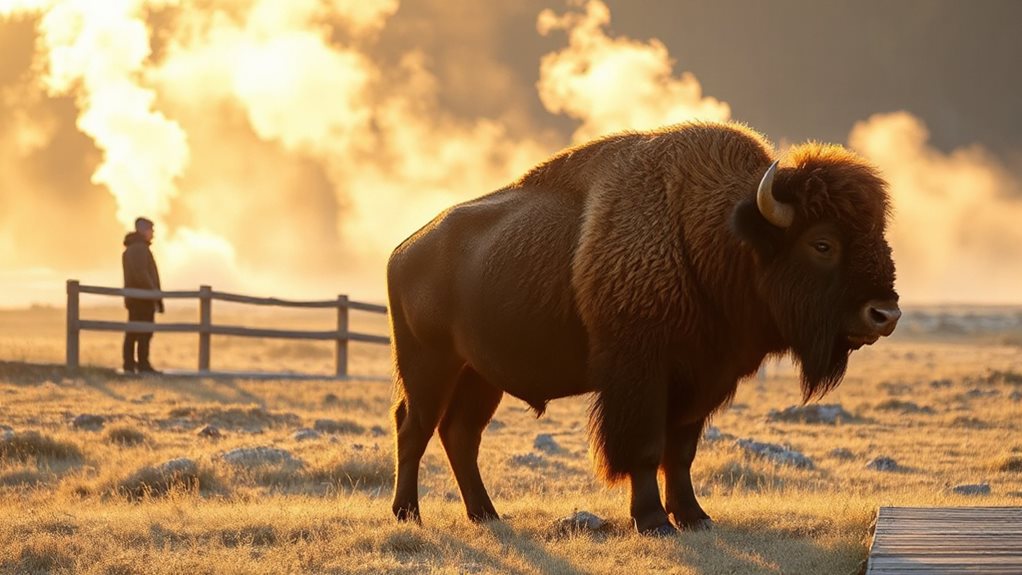
You’ll notice that each conservation success story not only strengthens ecosystems but also enhance the visitor experience, giving you clearer chances to observe thriving wildlife. Wolf reintroduction curbs elk grazing, reviving riparian zones and drawing eager birdwatchers. Ferret and condor recoveries showcase captive‑breeding power, while bison range expansions and delisted pupfish, geckos, and dace illustrate habitat restoration that lets you roam freely, spotting resilient species across park terrains.
Final Note
You’ll find that each national park offers a distinct mix of mammals, birds, fish, reptiles, and amphibians, shaped by its region and habitat. By timing your visits—early mornings for elk, late evenings for owls, spring for amphibian choruses—you maximize sightings while respecting wildlife. Remember to stay on trails, keep a safe distance, and follow park regulations; these simple steps protect the animals and preserve the experience for future visitors.


