
Spot poison oak by looking for three‑leaf clusters with smooth, rounded edges, glossy leaves on both sides, and a tiny stem on the central leaflet; they turn bright green in summer and red in fall, and mature plants bear light‑tan berries. Stay on designated, well‑groomed trails that skirt oak‑rich brush, especially in Douglas‑fir forests below 5,000 feet, to limit contact. Wear long‑sleeved, tightly woven shirts and pants, UV‑resistant tops, stretch spider pants, elbow‑length nitrile gloves, and rubber boots with gaiters; apply an invisible barrier cream before you start. If you touch the plant, rinse with lukewarm water and soap, then cool‑compress and use hydrocortisone or calamine for itching. Wash all gear and clothing separately afterward, and decontaminate pets and equipment to prevent re‑exposure. Continuing will reveal more detailed steps.
TLDR
- Identify poison oak by its three‑leaf clusters with smooth, rounded edges and glossy surfaces; look for upright shrubs or vines up to three feet tall.
- Stay on designated, well‑groomed trails that skirt oak‑rich brush, especially in Douglas‑fir forests below 5,000 feet.
- Wear long‑sleeved, tightly woven clothing (e.g., UV‑resistant Coolmax tops, stretch Spider Pants) and elbow‑length nitrile gloves with water‑resistant sleeves.
- Apply an invisible barrier cream before hiking and rinse any exposed skin with lukewarm water and soap immediately after contact.
- Wash and decontaminate all gear, clothing, and pets after the hike, laundering contaminated items separately and twice.
Spot Poison Oak Before You Hit the Trail
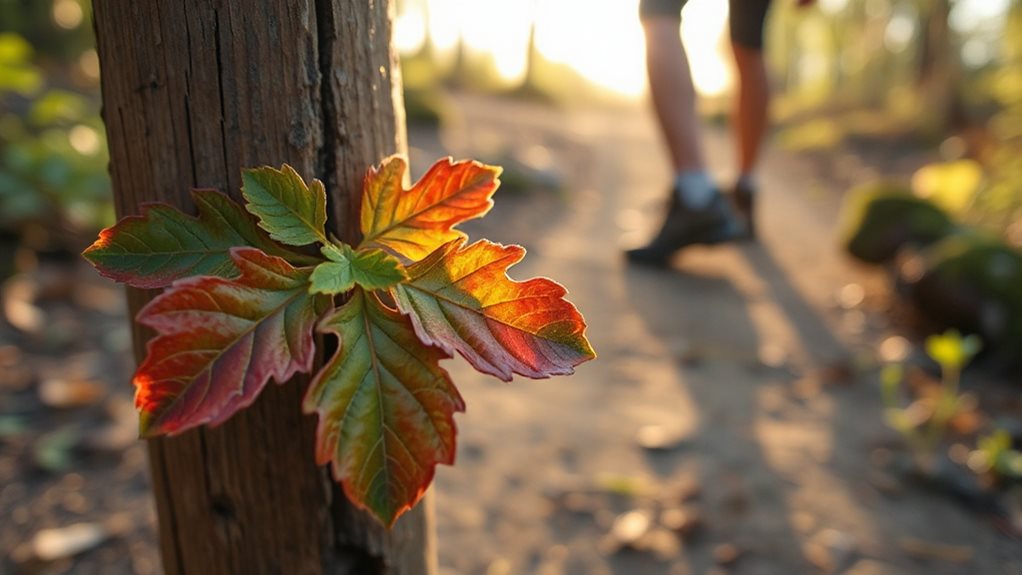
How can you spot poison oak before you even step onto the trail? Look for three‑leaf clusters with smooth, rounded edges and a tiny stem on the central leaflet, glossy on both sides. Notice upright shrubs about three feet tall, sometimes vines, with hairy stems. In summer they’re bright green; in fall they turn red. Berries appear light tan, confirming mature plants. Poison oak is found in both sun and shade, often in douglas fir forests.
Stay on Designated Paths to Bypass Oak‑Rich Areas
After learning how to recognize poison oak’s three‑leaf clusters, the next step is to let the trail itself do the work for you.
Stay on designated paths, because they skirt oak‑rich brush, especially below 5,000 feet where the plant thrives.
Well‑groomed routes keep exposure low, limit urushiol transfer, and preserve your freedom to explore without constant worry.
Wind can increase the risk of skin cooling and make exposed areas like hands and face more vulnerable, so cover exposed skin with layers and protective gear to reduce heat loss and the chance of skin damage from cold winds; see wind chill effects.
Pick Poison‑Oak‑Resistant Gear & Clothing

Ever wonder which gear actually keeps poison‑oak oil off your skin? Choose long‑sleeved, tightly woven shirts and pants, like UV‑resistant Coolmax tops and stretch Spider Pants, for full coverage and mobility. Pair gloves with elbow‑length nitrile protection, water‑resistant sleeves, and rubber boots with gaiters or over‑boot flaps. Apply an invisible barrier cream before you start, and launder contaminated items separately, twice. Plan ahead and pack out contaminated waste to help protect water and natural areas.
Take Immediate Action If You Touch Poison Oak
If you realize you’ve brushed against poison oak, act quickly—rinse the area with lukewarm water and soap, then scrub gently to lift the urushiol oil before it has a chance to bind to your skin.
Follow with a cold‑water rinse, apply a cool compress for fifteen minutes, and use over‑the‑counter hydrocortisone or calamine to calm itching.
Avoid scratching, and if the rash spreads or persists, seek medical care promptly.
Remember that urushiol can remain on surfaces for years, so also wash clothing and gear that may have contacted the plant to prevent re‑exposure and protect others wash clothing.
Decontaminate Gear, Clothes, and Pets After Hiking
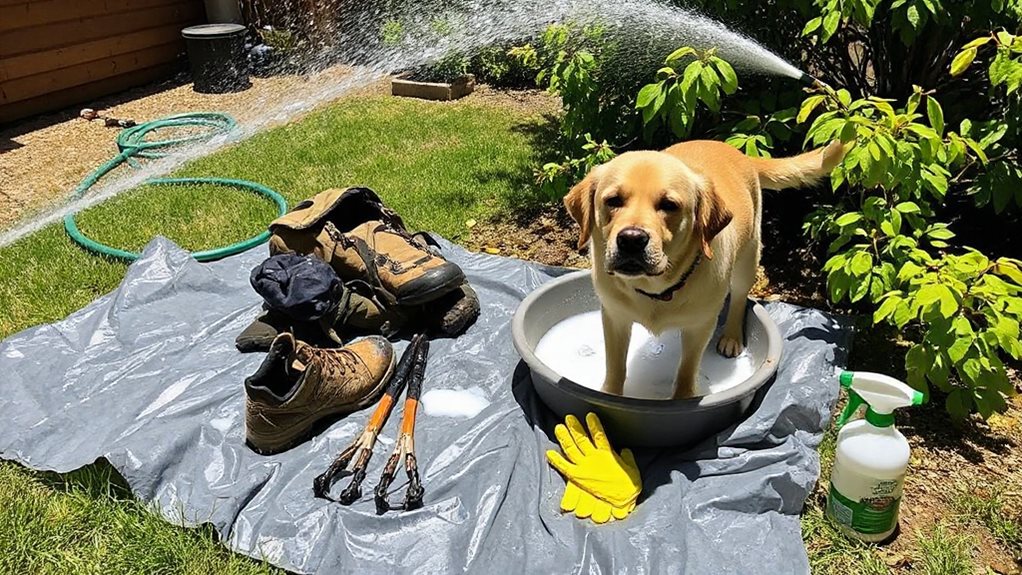
You’ve already rinsed your skin, but the next step is to make sure the poison oak oil doesn’t hitch a ride on your gear, clothes, or pets.
Toss contaminated clothes into hot, detergent‑filled cycles, separate them, run an empty hot rinse, then air‑dry outdoors.
Scrub boots, packs, and non‑washable gear with Tecnu, alcohol, or Dawn soap; soak rags in boiled jewelweed tea.
Bathe dogs with Dawn, wear gloves, rinse thoroughly, and keep cleaned items distant from human contact until fully dry.
Also consider rotating and regularly replacing contaminated items to reduce long‑term degradation of protective materials and maintain gear longevity.
Final Note
By staying alert, sticking to marked trails, and choosing resistant clothing, you’ll greatly lower your odds of a poison‑oak encounter. If you do brush against a plant, wash the area promptly with soap and water, and clean any gear or pets that might have contacted it. Consistently applying these steps guarantees you can enjoy the hike without the hassle of painful rashes, keeping your journey safe and comfortable.


