
Start by checking for common issues like cable tension, chain wear, or misaligned derailleurs before making adjustments. Set the L-screw to prevent chain drop, then align the H-screw with the smallest cog. Adjust the B-gap to about 5–6 mm for crisp high-gear shifts. Use the barrel adjuster to fine-tune cable tension and index each cog smoothly. Test all gears, fix lag or overshoot with small tweaks, and you’ll soon ride with precision and ease—there’s more where that came from.
TLDR
- Diagnose shifting issues first by checking cable tension, chain wear, and derailleur alignment to identify the root cause.
- Set the H-screw with the chain on the smallest cog, adjusting until the jockey wheel aligns perfectly under the cog.
- Adjust the B-gap using the B-screw so there’s a 5–6 mm space between the jockey wheel and largest cog.
- Fine-tune indexing by turning the barrel adjuster in small increments while pedaling to ensure smooth, accurate shifts.
- Test all gears, correct hesitation or overshoot with minor cable tension tweaks, and lubricate the chain for optimal performance.
Diagnose Your Shifting Issues First
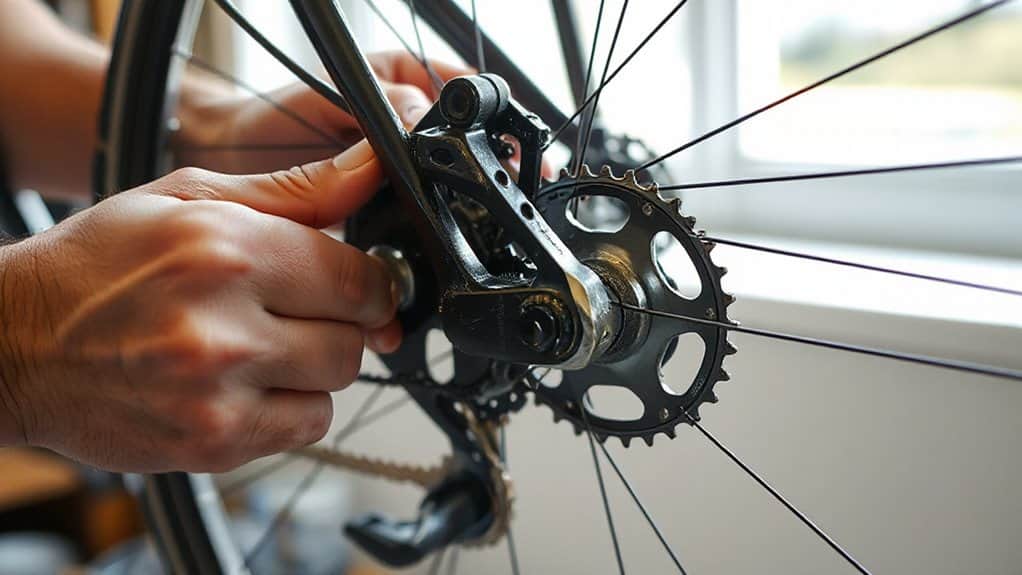
Before you start tweaking cables or adjusting derailleurs, take a moment to pinpoint what’s actually causing your shifting troubles—otherwise, you might end up fixing the wrong problem.
Are you dealing with hesitant upshifts, overshifting, or chain slip? Check cable tension, chain wear, derailleur alignment, and housing condition. Identify the real culprit first, so your ride stays smooth, reliable, and truly yours. A common cause of persistent shifting issues is a stretched gear cable, which often requires re-indexing the gears to restore precise shifting performance. Also consider checking your chain wear regularly, since a worn chain is a frequent source of poor shifting and can accelerate cassette wear.
Set the L-Screw to Prevent Chain Drop
You’ve already taken the time to figure out what’s causing your shifting problems, so now it’s time to tackle one of the most common culprits behind poor front shifts—chain drop on the small chainring.
Shift to the smallest ring and largest cog, then adjust the L-screw: tighten it slightly if the chain rubs inward, loosen it a quarter turn if it drops.
Test each change by pedaling and shifting through the gears, ensuring smooth, precise movement without overshifting or friction.
Align the H-Screw With the Smallest Cog
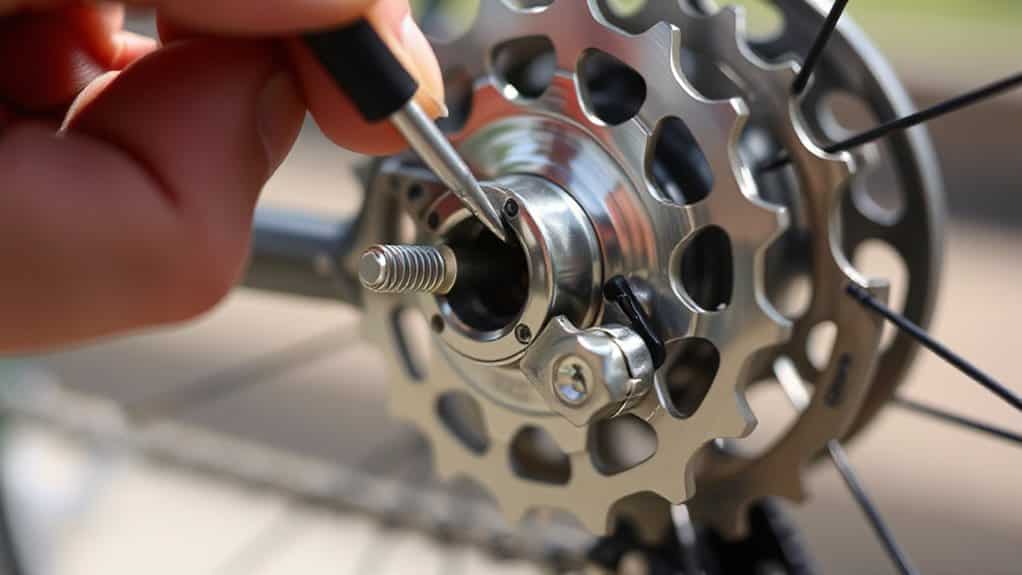
Shift your chain to the smallest cog before touching the H-screw, since this gives you a clear starting point.
Turn the screw clockwise with a 3mm hex wrench to move the derailleur inward, aligning the jockey wheel directly under the cog.
Make small tweaks as you spin the pedals, stopping when the chain runs smoothly without rubbing or risk of dropping.
Try adjustments when components are warm and your hands are steady, and remember to check boot fit principles like having thumbs width of space to avoid discomfort on long rides.
H-Screw Position Check
Grab your bike and flip it over—or better yet, place it in a repair stand—so you can clearly see the rear derailleur and cassette.
Shift into the smallest cog, then release all cable tension.
Check that the H-screw limits outward movement, aligning the derailleur just inboard of the smallest cog.
Turn it clockwise to restrict motion, counterclockwise to allow more range—ensure no chain noise or rubbing.
Clockwise For Inner Alignment
Start by turning the H-screw clockwise in small increments to fine-tune the derailleur’s alignment with the smallest cog. This tightens the limit, pulling the cage inward and preventing chain drop into the spokes.
Make sure the guide pulley lines up directly under the smallest sprocket, and check alignment from behind the bike for accuracy.
Set the B-Gap for Crisp High-Gear Shifts
When your bike’s high-gear shifts feel sluggish or noisy, the culprit mightn’t be your cables or limit screws—it could be the B-gap. Adjust it by shifting to the largest cog, then turn the B-screw: clockwise to increase the gap, counterclockwise to reduce it.
Aim for 5–6mm between the upper jockey wheel and biggest cog, just enough to clear. Use a hex key as a gauge, and check alignment with the cassette.
Proper B-gap guarantees crisp, clean shifts, especially on modern 11- and 12-speed drivetrains. You can also protect your bike from corrosion by rinsing off salt and grime regularly to extend component life and performance, especially after winter or coastal rides, since material durability affects longevity.
Dial in Cable Tension With the Barrel Adjuster
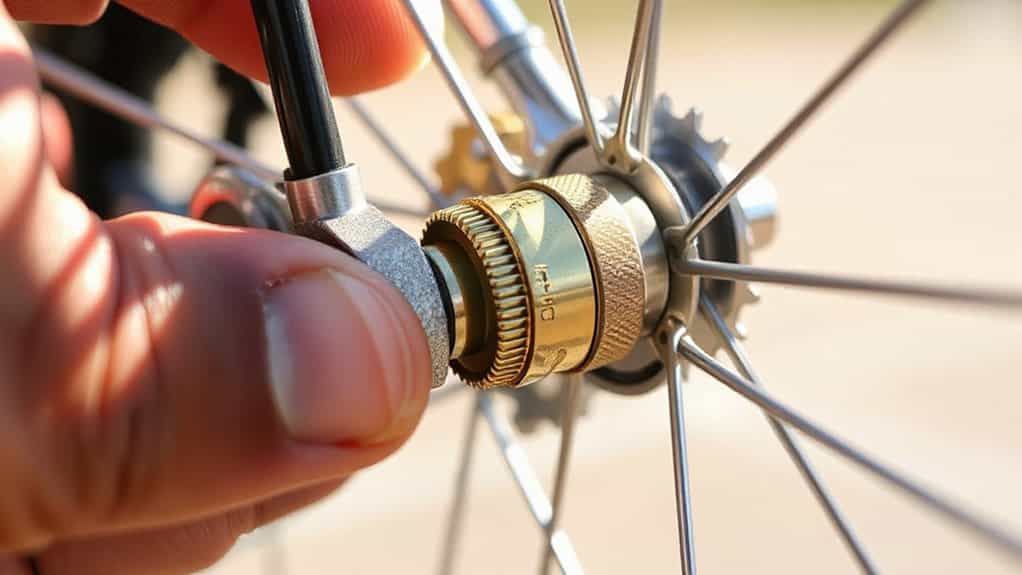
Fine-tuning your shifting performance starts with dialing in cable tension using the barrel adjuster—a small but mighty tool that puts precise control at your fingertips.
Turn it counter-clockwise to loosen the cable, easing shifts to larger cogs, or clockwise to tighten, moving the derailleur toward smaller gears.
Make half-turn adjustments while pedaling, then test shifts across the range for smooth, accurate performance.
Crocs float, providing buoyancy and a thick sole that can protect feet from hot surfaces and sharp objects.
Index Your Rear Derailleur for Perfect Shifting
Once your cable tension is close and the limit screws are properly set, you’re ready to index your rear derailleur for crisp, reliable shifts across the entire cassette.
Shift through all gears, checking for hesitation or noise. Fine-tune with the barrel adjuster in small turns—this aligns the derailleur precisely with each cog, ensuring smooth, accurate shifting whenever you ride.
Consider practicing these adjustments on a nearby trail like Yonah Mountain Trail to experience how precise shifting improves performance on steep climbs and sharp drop-offs.
Test Shifting Across All Gears and Fix Lag or Overshoot
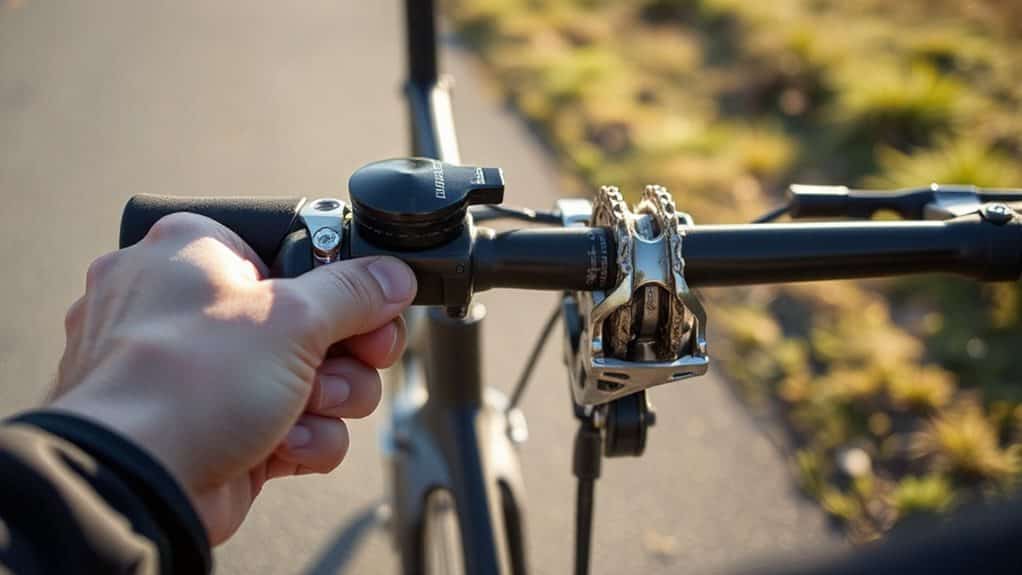
Pedal smoothly and shift through all gears to see where the chain hesitates or jumps.
If it’s slow to climb, add a little cable tension by turning the barrel adjuster counter-clockwise; if it overshoots, ease tension by turning it clockwise.
Keep testing with light pedal pressure, making quarter-turn tweaks until every shift is crisp and accurate.
Smooth Pedaling Test
You’ll often find that smooth pedaling isn’t just about leg strength or rhythm—it’s about how well your shifting responds when you need it. Test cadence at 85 rpm, adjusting gears to stay within ±2 rpm.
Use cadence drills, single-leg pedaling, and circle drawing to refine stroke. Eliminate dead spots, vary gears, and monitor power flow for seamless, efficient rides that keep you moving freely.
Fix Hesitant Shifts
Often, even a well-maintained bike can develop hesitant shifts, where the chain drags or overshoots when you click the shifter—disrupting your rhythm and reducing efficiency.
Turn the barrel adjuster counter-clockwise to increase tension if the chain lags, or clockwise to reduce it if it overshoots. Make quarter-turn tweaks, then test ride.
Check cable condition, derailleur alignment, and chain wear—they all affect shifting precision.
Correct Chain Overshoot
If your shifts still feel imprecise after addressing hesitation, it’s time to tackle chain overshoot—when the derailleur pushes the chain too far, skipping past the intended gear.
Shift through all gears under light pedaling, noting where overshoot occurs. Use barrel adjusters to fine-tune cable tension, turning clockwise in quarter turns until shifts land cleanly, then test thoroughly across all combinations.
Fine-Tune for Smooth, Silent Performance
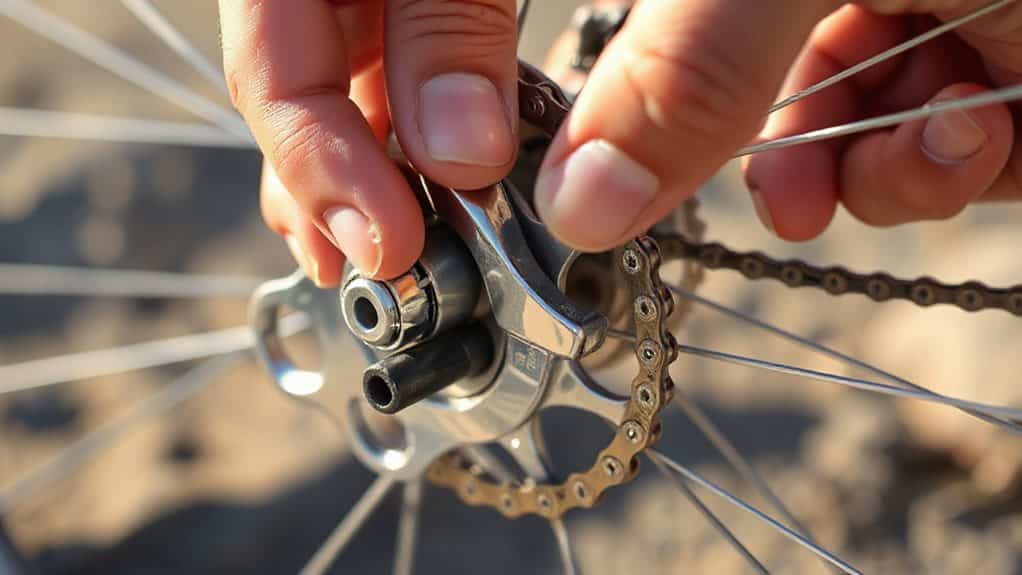
Once you’ve set the basic limits and cable tension, it’s time to fine-tune your drivetrain for smooth, silent performance—because even small misalignments can cause noise, hesitation, or dropped chains.
Shift through all gears, tweak barrel adjusters in small turns, check cage clearances, guarantee proper B-gap, and lubricate the chain. These final touches keep your ride free, fluid, and frictionless—exactly how it should be.
Final Note
You’ve now fine-tuned your bike’s gears for smooth, reliable shifting. By adjusting the limit screws, cable tension, and derailleur alignment, you’ve eliminated lag and chain drop. Test each gear while riding, making small tweaks as needed. A well-tuned drivetrain shifts quietly and precisely, making every ride easier. Keep your chain clean and lubricated, and check adjustments periodically—especially after new cable stretch. You’re ready for seamless shifting, mile after mile.


