
You need approach shoes when the trail turns rocky and technical. They give you sticky rubber soles for grip on slabs, precise edging on small holds, and durable protection from sharp stone. Lighter than hiking boots and tougher than trail runners, they handle scrambles, bouldering approaches, and fast alpine routes with ease. You’ll move confidently across wet rock, scree, and exposed terrain. Just know they’re built for agility, not long hikes with heavy packs—perfect when precision matters most, and there’s more to uncover about matching them to your explorations.
TLDR
- Approach shoes combine hiking comfort with climbing precision for rugged, technical terrain.
- Sticky rubber soles provide superior grip on rock, especially wet or slabby surfaces.
- They feature protective rands and durable uppers to withstand abrasion on rough terrain.
- Lightweight and agile, they excel on scrambles, bouldering approaches, and mixed routes.
- Less cushioned than boots, they’re best for light loads and short to moderate hikes.
What Are Approach Shoes?
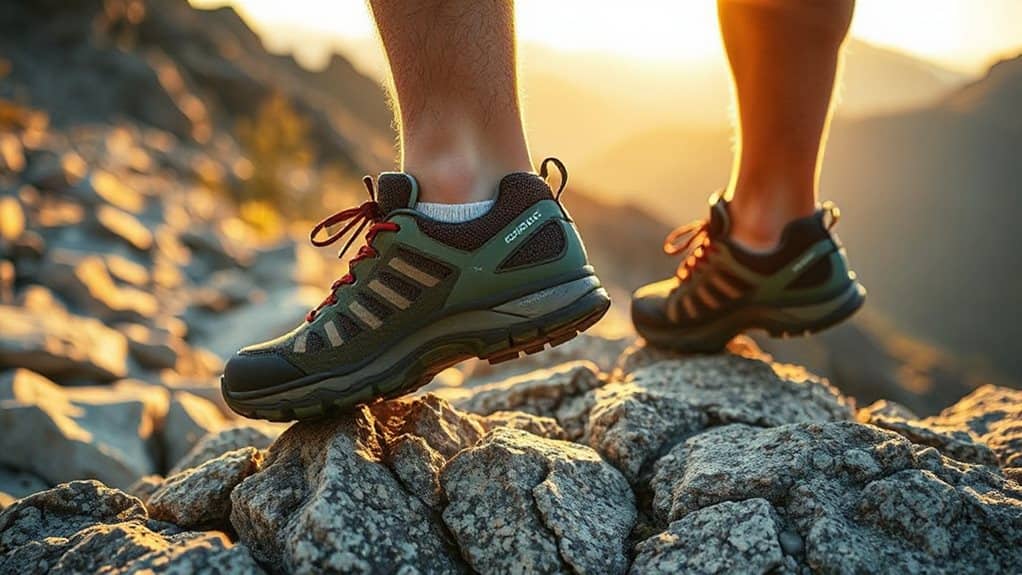
When you’re negotiating rugged trails one minute and edging across steep rock slabs the next, regular hiking shoes mightn’t cut it—enter approach shoes, the versatile hybrid built for exactly this kind of terrain.
They blend hiking comfort with climbing precision, featuring sticky rubber soles, protective toe rands, and snug, adjustable fits.
Lightweight and supportive, they’re your go-to for scrambling, bouldering approaches, or mixed mountain routes where agility and grip matter most.
They are also designed for use on technical terrain, making them ideal for approach hiking. Additionally, many approach shoes borrow sticky rubber and protective features from climbing footwear to improve grip and durability on rock.
Why Climbers Need Approach Shoes
You’ll quickly see why approach shoes aren’t just a nice-to-have—they’re essential gear for climbers who value performance and efficiency from trailhead to crag.
They grip slabs, edge on rock, and handle scree with ease.
Sticky rubber and stiff soles enhance control, while durable uppers shrug off abrasion.
You’ll move faster, stay secure on downclimbs, and skip switching shoes—perfect for mixed terrain and quick, confident ascents.
Approach shoes should fit snugly without pain to provide optimal feel and control, and many climbers prefer shoes with sticky rubber for better grip.
Why Approach Shoes Beat Hiking Boots on Rock
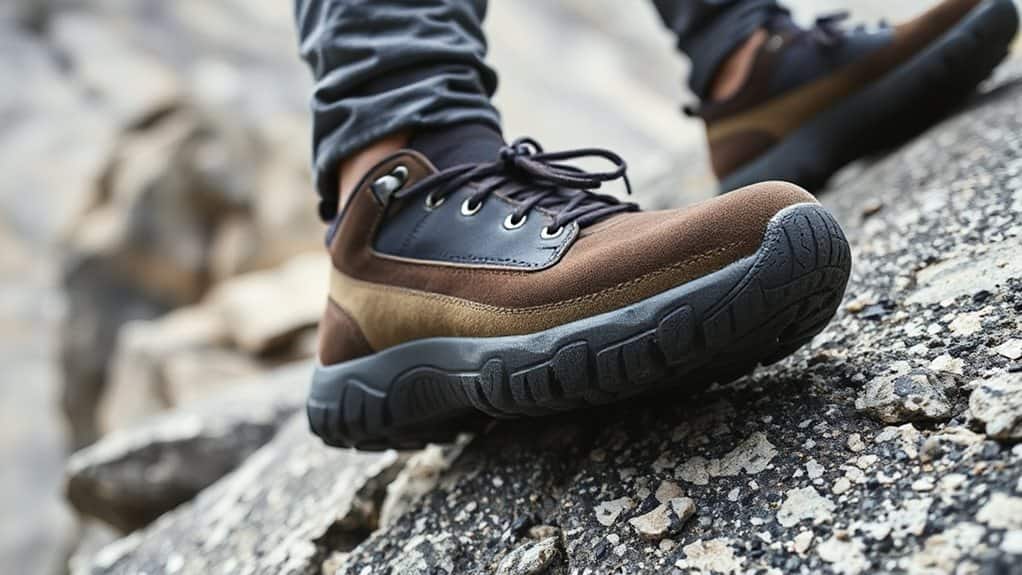
Approach shoes don’t just make the hike to the crag easier—they completely outperform hiking boots once the trail gives way to rock.
You’ll feel every nubbin and edge with sticky rubber soles and a flexible midsole, while shallow lugs and a full rubber rand enhance grip and precision. They’re lighter, quicker-drying, and more sensitive than boots, giving you freedom to move fast and confidently on technical terrain where boots would hold you back. Timberlands, however, are generally better suited to casual hikes and urban terrain rather than long, technical approaches, so consider casual hiking suitability when choosing footwear.
Key Features That Make Approach Shoes Unique
You get sticky rubber underfoot, so you can grip rock like a climber without slipping, even when it’s wet.
Reinforced zones around the toe and along the rand protect your shoe—and your feet—when you’re scrambling over rough terrain.
These features work together to keep you stable, safe, and moving confidently from trail to climb.
Approach shoes also often have a stiffer midsole for added stability on uneven ground.
Sticky Rubber For Grip
Often, the secret to staying sure-footed on rocky scrambles or slippery slabs comes down to one critical component: the rubber underfoot. You’ll find sticky Vibram compounds like Megagrip or Idrogrip providing reliable rock traction, while shallow lugs enhance surface contact.
These soft, tacky soles prioritize sensitivity and grip, letting you move confidently across technical terrain, wet stone, or dry slabs—without sacrificing trail durability when the path calls.
Reinforced Zones For Protection
While tackling rugged trails and scrambling over sharp rock, your shoes take a serious beating—so it’s no surprise that reinforced protection plays a key role in their design.
You’ll find rubber toe caps shielding your feet, full rands guarding against scrapes, stiff midsoles blocking sharp impacts, and tough uppers resisting punctures.
These reinforced zones work together, giving you the durability and confidence to move freely, mile after mile, without worrying about wear or injury.
When to Choose Approach Shoes Over Trail Runners
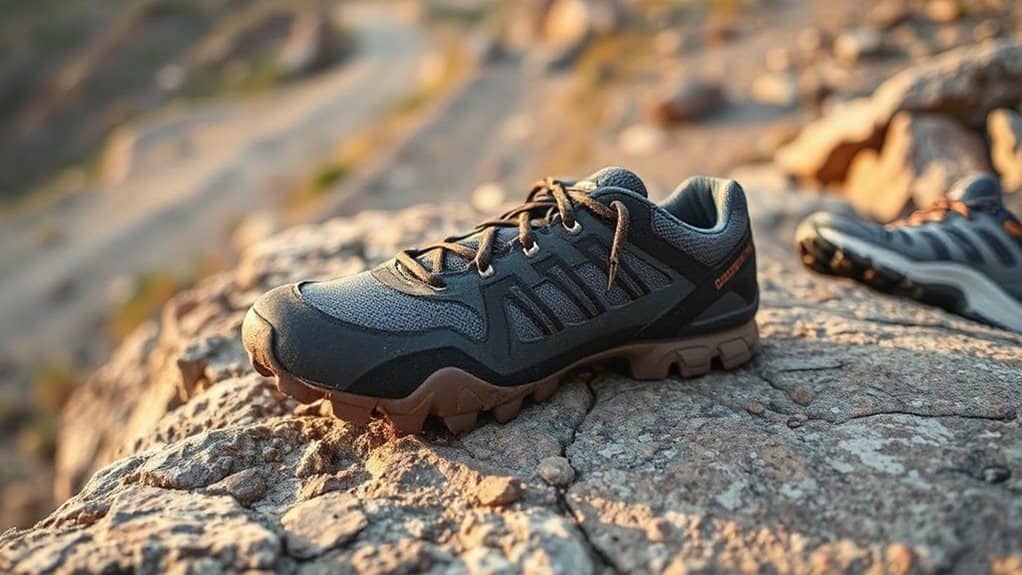
You’ll want approach shoes when tackling rocky terrain that demands grip and precision, like scrambling up slick or uneven surfaces.
Their sticky rubber soles and stiff build give you confidence on wet or loose rock, where trail runners would slip.
If you’re carrying a light pack and need agility on technical ground—think southern Utah’s canyons or alpine ridges—these shoes deliver the support and protection you need.
They’re especially useful when you need footwear that provides both protection and rugged soles for climbing wet rocks and unstable terrain.
Rocky Terrain Demands
When the trail turns steep and the path vanishes into a jumble of boulders, your footwear choice matters more than ever—this is where approach shoes shine.
You’ll want their sticky rubber soles and shallow lugs for confident smearing on wet, slick rock. Stiff midsoles enhance edging, while protective rands guard against scrapes, letting you move freely and safely over rugged, uneven terrain.
Lightweight Precision Advantage
If you’re eyeing a route that trades soft dirt trails for steep, rocky chutes and exposed scrambles, swapping your trail runners for approach shoes could be the smart move.
You’ll get lighter weight for speed, sticky rubber for grip, and a flexible yet precise feel on rock. Thinner midsoles enhance sensitivity, while stiff soles aid edging—giving you confidence when every step counts.
Where Approach Shoes Shine: Rock, Scree & Scrambles
While tackling rugged mountain approaches or weaving through rocky scrambles, your footwear makes all the difference—and that’s where approach shoes truly come into play.
They grip slick rock with sticky rubber and smart lug design, handle loose scree confidently, and let you smear on sandstone slabs without switching to climbing shoes.
Durable uppers and protective rands keep going where boots wear out, giving you freedom to move fast and light across mixed terrain.
Where Approach Shoes Struggle: Long Hikes & Heavy Loads
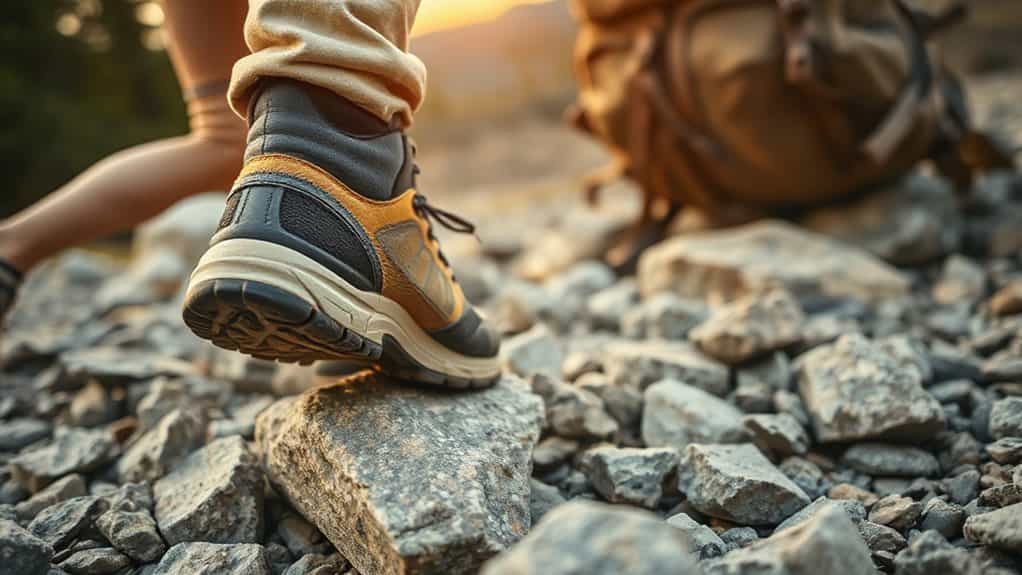
Though approach shoes excel on rocky scrambles and alpine link-ups, they start to show their limits once the trail stretches beyond a few miles or your pack weight climbs past 40 pounds.
You’ll feel the lack of cushioning and ankle support, especially on long hikes. Rigid soles and shallow lugs reduce comfort and traction, while narrow fits and poor load handling make them less ideal when you’re carrying more or covering serious distance.
How to Choose the Best Approach Shoes for Your Terrain
When tackling rugged mountain approaches, your terrain should guide every choice you make in footwear, starting with the sole and working upward.
Pick sticky rubber soles with shallow or dot lugs for rock grip, and deeper heel lugs for scree.
Choose stiff midsoles with shanks for stability on talus.
Opt for leather uppers with rands for durability, or mesh if you value breathability and speed.
Final Note
You now know approach shoes bridge the gap between hiking boots and climbing shoes, giving you grip, support, and sensitivity on rocky terrain. They’re light enough for trails but tough where it counts. Use them for short hikes, scrambles, and climbing approaches. While they struggle with heavy loads or long distances, they shine where precision and traction matter most—helping you move confidently from trail to rock.


