Set a clear budget that covers not just the purchase, but taxes, insurance, storage, and annual upkeep—aim for 10% of the boat’s value in maintenance alone. Choose a type that fits your lifestyle, whether fishing or cruising, and use tools like NADA and BoatWizard to compare values. Inspect listings carefully, prioritize boats with solid history, and always get a professional survey. Test every system on a sea trial, then negotiate using market data and survey findings to secure a smart deal that protects your investment. Smart preparation now leads to confident choices ahead.
TLDR
- Set a clear budget covering purchase price, taxes, insurance, storage, maintenance, and unexpected repairs to avoid financial strain.
- Choose a boat type that matches your intended use, whether for fishing, cruising, watersports, or living aboard.
- Research market values using tools like NADA and BoatWizard, and leverage current trends to negotiate a fair price.
- Inspect listings carefully for red flags like rushed sales, poor photos, corrosion, or incomplete maintenance records before proceeding.
- Always conduct a sea trial and hire a professional surveyor to uncover hidden issues and strengthen your negotiation position.
Set Your Used Boat Budget First
Start by setting a clear budget—knowing exactly what you can afford will guide every decision and help you avoid costly surprises down the road.
Factor in purchase price, taxes, registration, and insurance, plus ongoing costs like storage, maintenance, and repairs. A $20,000 budget opens many used options, especially since pre-owned boats cost 28%–34% less than new.
Plan ahead, stay flexible, and keep some funds reserved for upgrades or unexpected expenses. Consider that with this budget, you can target boats no more than about five years old to benefit from newer technology.
Also remember that marine engines often require higher-cost, corrosion-resistant parts, which can increase ongoing maintenance expenses.
Pick the Right Used Boat Type for Your Needs
You’ll want to pick a boat type that actually fits how you plan to use it, not just what looks nice.
Think about your favorite water activities—whether it’s fishing, cruising with family, or pulling kids on skis—and match the boat to that lifestyle.
Getting the right type means you’ll enjoy it more and avoid buyer’s remorse down the line.
Consider also features like storage options when matching a boat to your typical trips to ensure it carries what you need.
Boat Type Matters
What kind of boating experience are you really after? Choose a boat type that matches your lifestyle, since each has distinct costs and care needs.
Motorboats offer speed but need engine servicing, while sailboats demand sail and hull upkeep. Yachts and catamarans bring comfort at higher maintenance. Houseboats suit slow living, with dockage and hull care to contemplate. Pick wisely, and stay free on the water.
Match Vessel To Lifestyle
When choosing a used boat, aligning the vessel’s design with your everyday lifestyle isn’t just practical—it’s essential for long-term satisfaction on the water.
You’ll want a pontoon for calm lakes, family fun, and lounging, or a bowrider if speed and watersports call your name.
Anglers, go center console—its layout, storage, and seaworthiness match serious fishing needs.
Prioritize Intended Use
Choosing the right used boat starts with being honest about how you plan to use it—because a vessel that fits your routine turns every outing into a success.
You’ll want a pontoon for relaxed lake days, a bowrider for water sports, or a center console if fishing offshore.
Match the boat type to your goals, and you’ll enjoy more freedom, fewer compromises, and smarter long-term value on the water.
Use NADA and BoatWizard to Value a Used Boat
To get a clear image of a used boat’s worth, start by tapping into trusted valuation tools like NADA and BoatWizard—both offer reliable, data-driven understandings customized to your specific make and model.
Check NADA for historical pricing based on age, condition, and features, then use BoatWizard’s Price Checker for real-time market comparisons.
Review retail, wholesale, and loan values, compare local listings, and adjust for upgrades, usage, and location to make a confident, informed decision.
Also consider verifying the boat’s electronics and gear, especially items like GPS and sonar, since condition and capability can significantly affect value.
Compare Listings by Age, Hours, and Equipment
You’ve got a solid idea of your boat’s market value using tools like NADA and BoatWizard, but now it’s time to zero in on what actually sets one listing apart from another. Compare age, engine hours, and equipment closely—newer boats under 20 years old with low, verified hours hold value better.
Prioritize mechanical integrity, check for modern electronics and key upgrades like bow thrusters, and always spot-check for missing details in listings to make a smart, confident choice. Consider battery type and size, especially Group size when evaluating the boat’s electrical readiness.
Spot Hidden Red Flags in Seller Descriptions
Watch out for subtle warning signs hiding in plain sight when reading boat listings—what sellers leave out can be just as telling as what they include. If they push for cash, rush the sale, or give vague answers about maintenance, it’s a red flag.
Poor photos, corrosion clues, or signs of neglect mean hidden problems. Stay sharp, ask questions, and never skip inspections—your freedom on the water depends on it. Apply regular maintenance and proper storage to prevent issues like corrosion risk from developing.
Demand Full Maintenance and Title History
When buying a used boat, never underestimate the power of paperwork—demanding the full maintenance and title history protects you from hidden liabilities and costly surprises down the road.
Check the HIN, verify liens through UCC or DNR, and insist on a signed title or bill of sale.
Homemade? Get the MNZ number and proof.
Always confirm ownership and clear titles—your freedom on the water depends on it.
Inspect the Hull, Engine, and Systems Closely
You’ll want to check the hull’s integrity by scanning for cracks, dents, or soft spots, especially along the keel and deck joints.
Start the engine and listen for odd noises or smoke, while also inspecting belts, hoses, and the propeller for wear.
Don’t skip testing the electrical systems, through-hulls, and fuel filters—they’re key to smooth, safe operation.
Hull Integrity Check
Run your hand along the hull’s surface, feeling for soft spots or irregularities that could signal deeper issues beneath the gelcoat.
Check for cracks, crazing, or blisters, especially near fittings and joints.
Tap the hull-to-deck seam with a coin—hollow sounds may mean delamination.
Inspect chainplates and through-hulls closely, and document any flaws with photos to guarantee your excursions stay safe, smooth, and worry-free.
Engine Performance Test
Now that you’ve carefully evaluated the hull for signs of damage or structural concerns, it’s time to turn your attention to the heart of the boat—its engine.
Test compression with a gauge, ensuring consistent readings across cylinders, and check for metal shavings on spark plugs.
Run a sea trial to verify wide-open throttle performance, idle stability, and cooling function, while inspecting oil, fluids, and overall engine condition to avoid costly surprises.
Get a Pro Survey Before You Buy
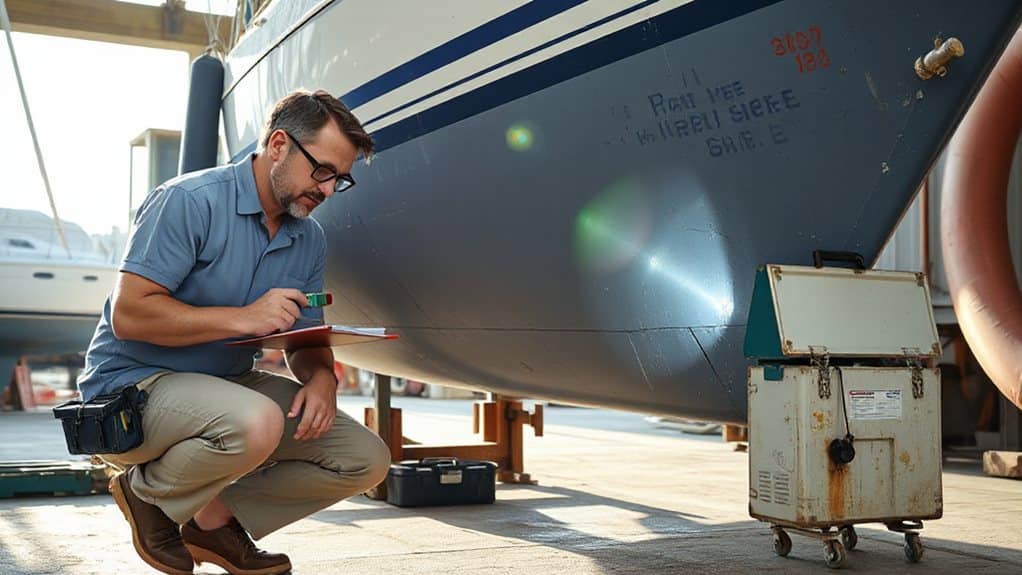
While it might be tempting to skip a professional survey to save a few hundred dollars, doing so could cost you far more down the line—often in unexpected repairs that turn your dream boat into a financial drain.
Get a pro survey to uncover hidden issues, meet lender and insurer requirements, and gain negotiation power. It’s a smart, freeing move that guarantees your boat truly sets you free—without costly surprises.
Test All Systems During a Sea Trial
Putting the boat through a thorough sea trial is your chance to see how everything performs under real conditions—don’t treat it like a casual joyride.
Start the engine cold, check oil and water temps, and verify the alternator charges to 14.4 volts.
Test wide-open throttle for RPM and GPS speed, inspect for leaks, and assess steering response with hard turns.
Confirm piloting electronics work, check for vibrations, and evaluate ride comfort, storage, and safety features—every system matters.
Negotiate With Market Data and Survey Results

Because you’re not just buying a boat—you’re making a smart investment—arming yourself with current market data and a professional survey gives you serious negotiating power.
With used boat prices up 4.2% but sales down, and up to 30% of listings possibly unsold, you’re in a strong position.
Use segment trends, like falling small boat prices, to your advantage.
Budget for Annual Used Boat Ownership Costs
A solid ownership budget can save you thousands and keep your time on the water hassle-free.
You’ll spend $200–$1,200 yearly on insurance, 10% of your boat’s value on maintenance, and $2,000–$10,000 on storage or mooring.
Fuel runs $2,000–$10,000 annually, while registration, supplies, and extras add more.
Plan ahead, so unexpected costs don’t anchor your freedom.
Final Note
You’ve done your homework, set a smart budget, and found a boat that fits your needs. By using tools like NADA and BoatWizard, checking for red flags, and getting a pro survey and sea trial, you’ve minimized the risks. Now, negotiate confidently with data behind you. Remember, ownership means ongoing costs—plan for them. With this approach, you’re not just buying a used boat; you’re investing in worry-free excursions on the water, season after season.