
Pick a safe, flat spot at least 200 feet from water to avoid floods and protect the environment. Avoid dead trees, animal trails, and low-lying areas that collect water. Choose durable ground like gravel or compacted soil, and clear debris for comfort. Position your tent out of the wind, cook downwind from sleeping areas, and use natural barriers for privacy and sun protection—there’s more to get right where experience meets preparation.
TLDR
- Choose flat, stable ground at least 200 feet from water to ensure safety from floods and protect the environment.
- Avoid low-lying areas, dry streambeds, and under dead trees to reduce risks from flooding, falling branches, and storms.
- Position your campsite on higher ground with natural windbreaks to stay dry and sheltered from strong gusts.
- Separate sleeping, cooking, and food storage areas by 100 feet, with cooking downwind to deter wildlife.
- Prioritize established sites with good drainage, morning sun, afternoon shade, and access to clean facilities for comfort.
Pick a Safe Campsite First
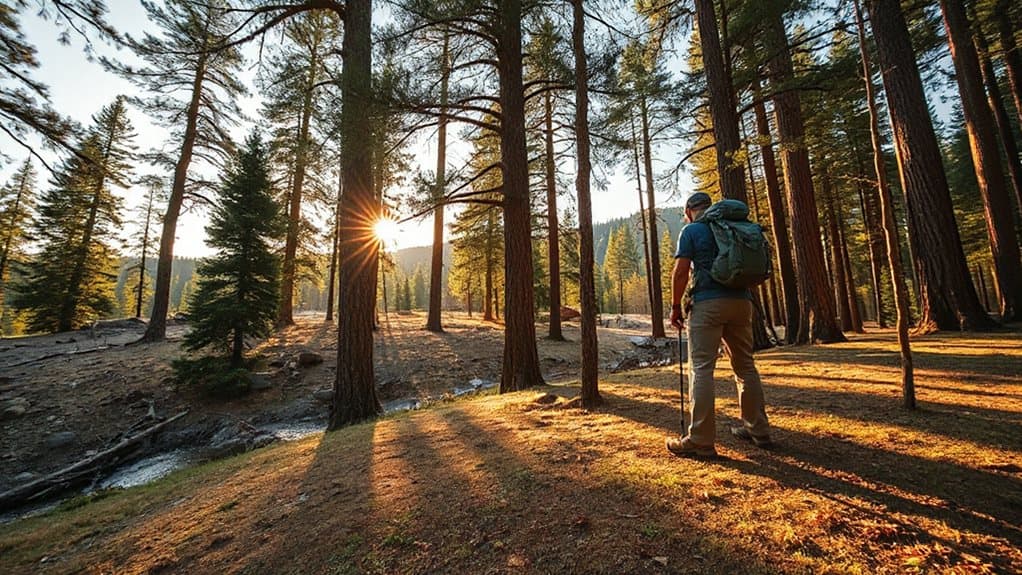
While your perfect campsite might seem like a matter of views and convenience, putting safety first guarantees your outdoor experience stays enjoyable and incident-free.
Stay 200 ft from water to avoid floods, skip spots under dead trees, and choose stable, durable ground.
Avoid animal activity zones, pick well-lit areas with clear sightlines, and always check campground rules, emergency access, and sanitation—your freedom depends on staying safe.
Understanding demographic trends can also inform safer site planning by revealing how different camper groups use spaces and what facilities they rely on.
Also remember to follow Leave No Trace practices to minimize impact on the environment and other visitors.
Check Weather and Terrain for Storm Risks
Always aim for higher ground when setting up camp, since higher spots are safer during heavy rain and less likely to flood.
Steer clear of natural funnel zones like gullies, dry streambeds, or narrow canyons, where water and debris can rush in fast from storms miles away.
Keep an eye on the sky and your surroundings, especially if the forecast mentions thunderstorms or flash flooding.
Avoid pitching tents directly under trees to prevent water drips and falling branches, and consider sites with good drainage to minimize water pooling.
Elevated Ground Preferred
When setting up camp, aiming for slightly higher ground gives you a real edge when storms roll in. Even a 15–30 cm rise helps prevent pooling and runoff from entering your tent.
Avoid dry streambeds and valley bottoms—they flood fast. Choose gentle, vegetated slopes or natural benches for stable, well-drained spots.
Sandy or gravelly soil drains better, while clay sheds water. Stay below ridgelines to reduce wind and lightning risks.
Avoid Natural Funnel Zones
You’ve picked higher ground to stay dry and safe from runoff, but elevation alone isn’t enough—your campsite’s position in the broader terrain matters just as much.
Avoid narrow valleys, canyons, and gullies that funnel strong winds, storm outflows, or flash floods. Steer clear of arroyos, dry washes, and steep drainages where water moves fast and escape is hard. Skip mountain passes and saddles that amplify wind. Stay out of floodplains, especially near river bends or junctions. Check weather upstream and watch for debris, scoured trees, or driftwood—signs floodwaters have passed before.
Monitor Sky And Surroundings
Often, the sky gives clear warnings—if you know where to look. Watch for dark, towering cumulonimbus clouds or fast-moving low layers, which signal storms.
Check wind shifts and gusts, and use your watch barometer to track falling pressure.
High humidity and rising heat mean afternoon thunderstorms, especially in mountains.
Trust radar, forecasts, and sky cues to stay safe and free.
Choose a Flat, Debris-Free Campsite
Most of the time, the key to a restful night outdoors starts with picking a spot that’s both flat and clear of debris—simple choices that make a big difference in comfort, safety, and gear longevity.
Choose level ground under 5–7 degrees to avoid sliding, clear rocks and sticks to protect your tent, and favor firm, well-drained soil for stability, drainage, and minimal environmental impact. Be mindful of campground rules to respect the environment and other campers.
Shelter From Wind and Manage Sun Exposure
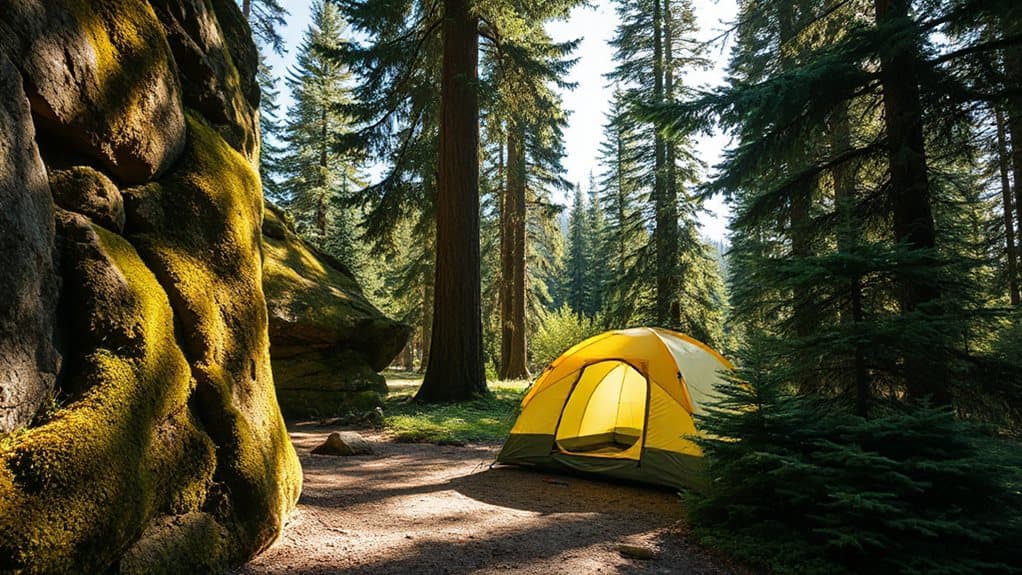
While wind and sun might seem like separate concerns, planning for both at once can make your campsite far more comfortable and safe.
Camp downwind of trees or rocks to block gusts, and pick leeward spots to avoid wind funnels. Pitch your shelter low, aligning its narrow side into the wind.
For sun, choose morning light with afternoon shade, use tree cover, and angle tarps to block heat while staying ventilated.
Pack down snow to create a stable tent platform and reduce melting from body heat, which also helps insulate the campsite and prevent tent damage from settling stable tent platform.
Stay 200 Feet From Water
After setting up your shelter to handle wind and sun, turn your attention to where you place your camp in relation to water. Stay at least 200 feet from lakes and streams to protect water quality, reduce erosion, and respect wildlife.
This buffer prevents pollution from waste and soap, preserves riparian habitats, and follows Leave No Trace principles—keeping nature clean and wild for everyone. Plan meals and create a grocery list to avoid forgetting food items, and remember to keep a consistent bedtime for children to ensure everyone gets enough rest.
Keep Cooking, Sleeping, and Food Storage Apart
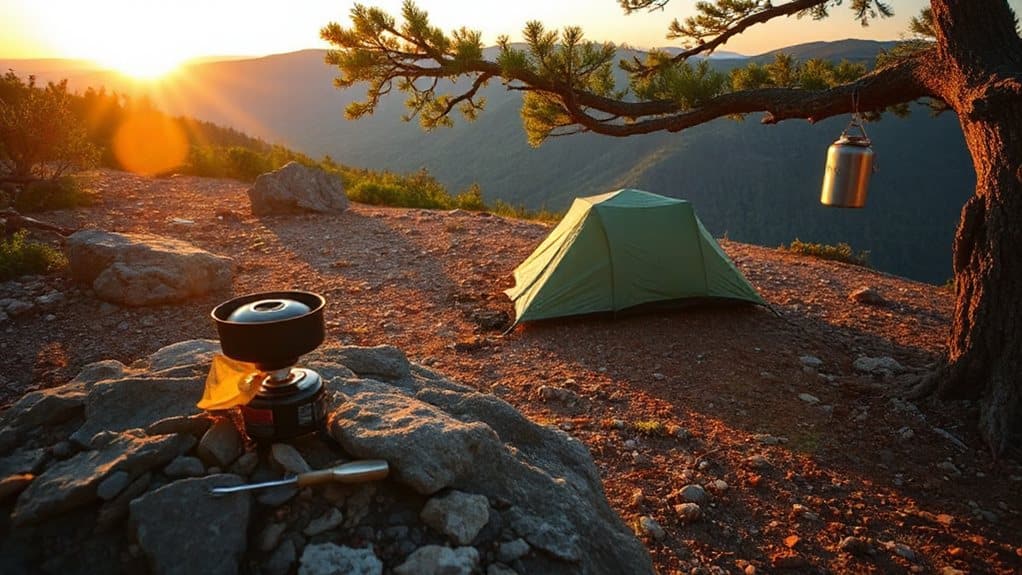
Because wildlife can be drawn to even the faintest food smells, you’ll want to set up a clear separation between where you cook, where you sleep, and where you store your food.
Keep each zone at least 100 feet apart, cook downwind from camp, and store food in bear-resistant containers—never in tents.
This simple triangle layout cuts scent risks, keeps animals at bay, and lets you enjoy the wild freely, safely, and on your own terms.
Camp on Durable Surfaces to Protect Nature
You’ll often find the best campsite by simply looking for a spot that can handle your presence without showing the wear.
Choose rock, sand, gravel, or compacted soil—they’re durable and resist damage.
Avoid trampling fragile vegetation, which can take years to recover.
Stick to established sites, and let nature stay wild, not worn.
Choose a Campsite With Privacy and Key Amenities
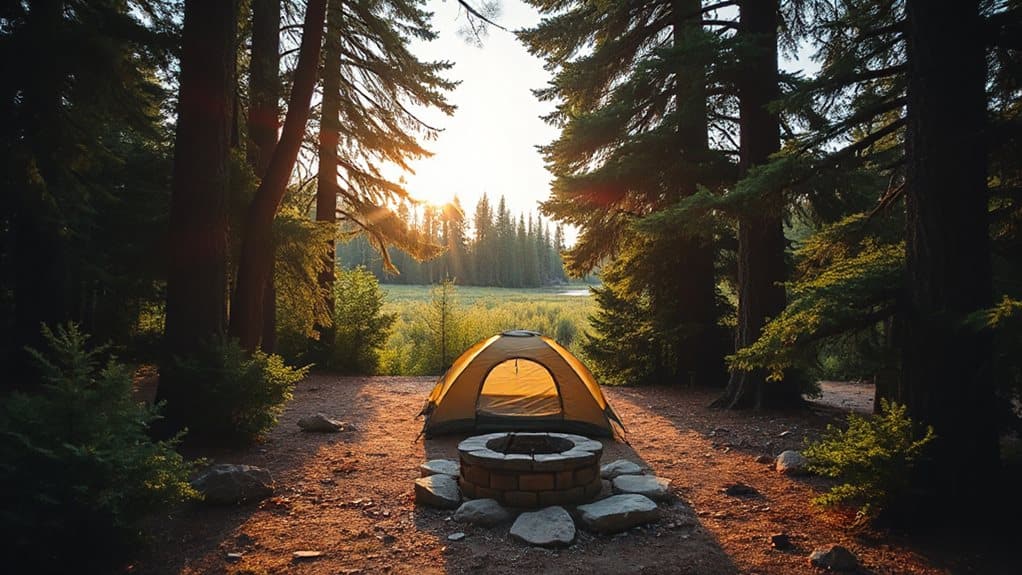
Picking a durable surface helps protect the land, but once you’ve considered the ground beneath your tent, it’s time to think about where you’re situated in relation to others and what’s within reach.
Choose sites with natural barriers like trees or rocks for privacy, avoid high-traffic spots near restrooms or roads, and prioritize key amenities like water, electricity, and clean bathrooms to stay comfortable and connected without sacrificing peace.
Final Note
You’ve got this—just remember to pick a safe, flat spot away from water and hazards. Check the weather, shield yourself from wind, and position cooking and sleeping areas apart. Camping on durable surfaces protects nature while keeping you comfortable. Choose a site with privacy and access to basics like water and trails. With these tips, you’ll stay safe, rest well, and enjoy the outdoors responsibly. Happy camping!


