
Hiking without enough water puts you at risk of dehydration, which can quickly impair your physical performance, leading to dizziness, muscle cramps, weakness, and increased core temperature. As dehydration worsens, you may experience heat exhaustion or heatstroke, with symptoms like nausea, confusion, and unconsciousness. Lack of hydration also hampers decision-making and safety, raising the chance of accidents. Staying properly hydrated helps prevent these dangers, and understanding how dehydration affects your body can keep you safer on the trail.
TLDR
- Dehydration causes fatigue, dizziness, muscle cramps, and impaired physical performance.
- Lack of water increases core temperature, raising the risk of heat exhaustion and heatstroke.
- Severe dehydration can lead to fainting, organ failure, or unconsciousness if untreated.
- Cognitive functions like concentration and decision-making deteriorate, risking accidents or injuries.
- Long-term dehydration may cause kidney damage, electrolyte imbalance, and other health complications.
Why Is Dehydration a Serious Risk When Hiking?
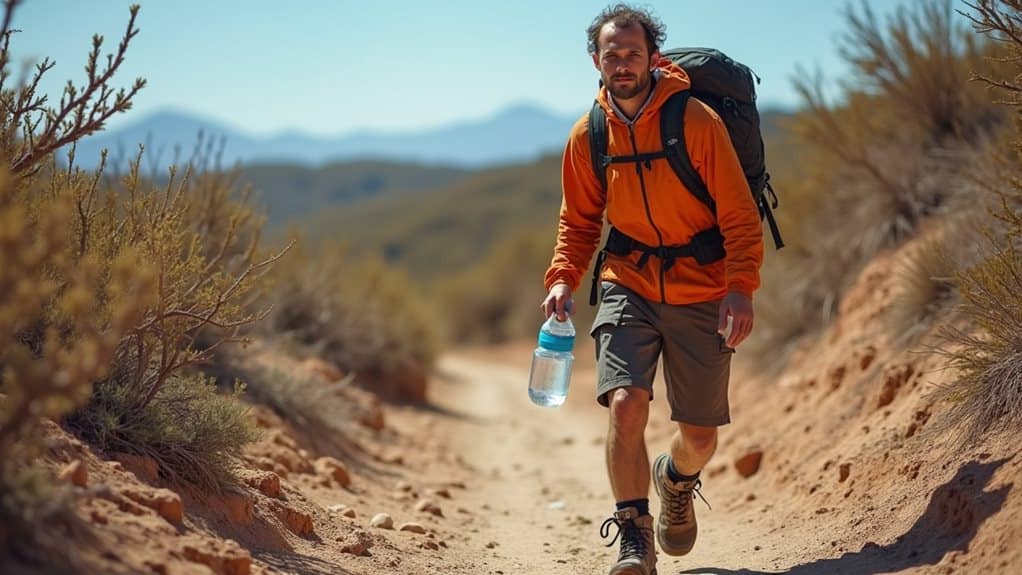
Dehydration is a serious risk when hiking because your body relies on water to regulate temperature, transport nutrients, and remove waste.
Without enough water, your core temperature can rise rapidly, increasing heatstroke risk.
Staying hydrated helps maintain performance, decision-making, and safety, especially in hot or dry environments where dehydration can set in quickly and endanger your health and survival.
How Does Lack of Water Affect Your Body and Performance?
When your body doesn’t get enough water during a hike, your physical performance can quickly decline. Dehydration impairs endurance, causes dizziness, muscle cramps, and weakness, and increases core temperature, risking heat exhaustion.
It also hampers cognitive functions like concentration and decision-making. Without adequate water, your body’s ability to perform and stay safe diminishes rapidly. Maintaining proper hydration is essential to preserve the body’s moisture balance and overall functionality during strenuous activity.
What Are the Early Signs of Dehydration and Heat Illness?

Noticing muscle cramps and nausea helps you catch heat exhaustion early, enabling prompt action. A safety concern to be aware of is that park water is safe to drink, but due to its high mineral content, many visitors prefer bottled water to stay properly hydrated.
What Happens During Severe Dehydration and Heatstroke?
During severe dehydration and heatstroke, your body struggles to maintain normal functions as fluids and electrolytes become critically depleted. This can lead to fainting, organ failure, or unconsciousness.
Proper hydration and cooling measures are crucial to prevent organ failure and other serious complications.
Heatstroke occurs when your core temperature exceeds 104°F, causing confusion, seizures, and potentially death if not treated promptly.
Recognizing these signs early and responding with immediate cooling and rehydration are essential to prevent permanent damage or fatal outcomes.
Signs of Critical Dehydration
Severe dehydration can quickly lead to serious health complications if left untreated, with the body’s essential functions beginning to shut down.
Signs of vital dehydration and heatstroke include dizziness, confusion, rapid heartbeat, very dark urine, and symptoms like muscle cramps or seizures.
Recognizing these warning signs early is essential to seek urgent cooling and medical help.
Emergency Response Measures
What should you do if someone shows signs of severe dehydration or heatstroke? Initiate emergency response by cooling the person quickly—use cool, wet cloths or immerse them in cool water if possible.
Provide hydration if they can swallow. Seek urgent medical help immediately, as prompt action can prevent irreversible organ damage or death.
How Does Dehydration Impact Your Decision-Making and Safety?
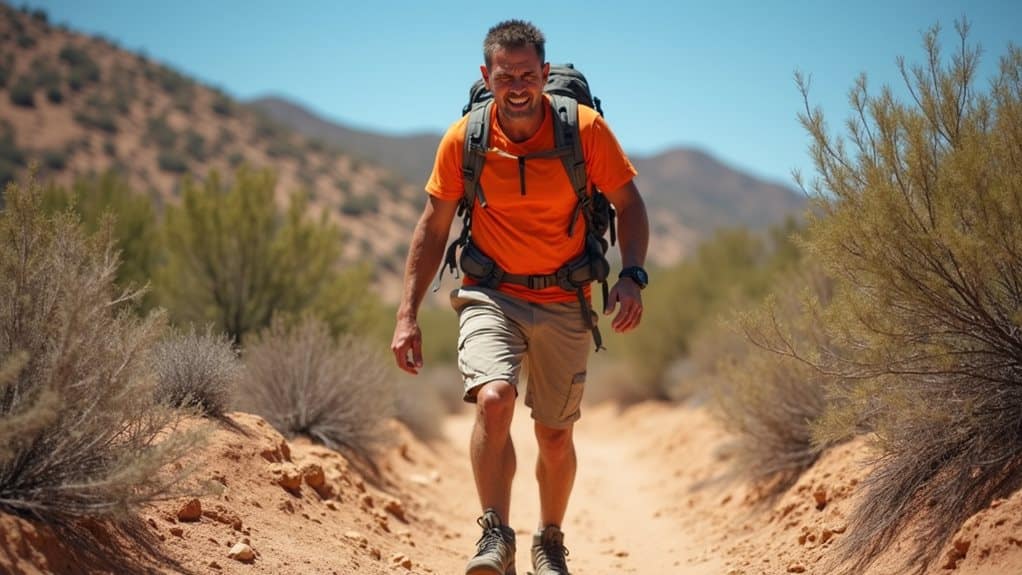
Dehydration can considerably impair your decision-making and safety on the trail, often in ways that aren’t immediately obvious.
As you hike, staying hydrated is essential, because dehydration reduces blood flow to your brain, impairing judgment, slowing response times, and increasing confusion.
Without proper hydration, you risk dizziness, disorientation, and accidents, making it imperative to stay hydrated throughout your hike.
What Are the Long-Term Health Risks of Hiking Dehydrated?
Hiking without enough water over time can increase your risk of kidney damage, including the formation of stones and impaired function, which may lead to serious health issues. Repeated dehydration episodes can also cause long-term damage to essential organs like your heart and brain, affecting their ability to work properly. Additionally, chronic dehydration can weaken your immune system, making you more vulnerable to infections and other health problems. Proper hydration is crucial to maintain overall health and prevent these long-term effects.
Kidney Damage Risks Increase
When you don’t drink enough water during a hike, your kidneys can become vulnerable to damage, especially if dehydration persists over time. Dehydration reduces blood flow and waste removal, risking kidney damage.
Severe dehydration may cause acute kidney injury, and repeated dehydration episodes can lead to scarring, increasing long-term risks like kidney stones and chronic kidney disease.
Chronic Dehydration Effects
Continuous inadequate hydration over time can lead to serious health issues by gradually impairing your body’s essential functions.
Chronic dehydration causes electrolyte imbalances, which can increase cardiovascular risks and affect muscle and organ health.
Repeated dehydration damages tissues, leading to fatigue and weakness, while also impairing mental clarity.
Staying properly hydrated helps prevent these long-term health risks.
Organ Function Impairment
Dehydration during extended physical activity can have serious long-term effects on your organs, especially if it becomes a recurring issue.
Repeated dehydration impairs organ function, risking kidney failure, damaging the heart and liver, and causing electrolyte imbalances.
These issues can lead to irreversible organ damage, reducing your overall health and resilience, and emphasizing the importance of proper hydration during hikes.
How Can I Prevent Dehydration on the Trail?
Ensuring you stay properly hydrated during your hike is essential for maintaining energy levels and preventing health issues. Carry enough water, and make sure to hydrate proactively before starting.
Recognize early signs of dehydration like headache or dizziness, and use filtration or purification methods when in remote areas.
Avoid alcohol and salty snacks to help maintain fluid balance.
What Should I Do If I Start Feeling Dehydrated or Heatstroke?

If you start feeling symptoms like dizziness, confusion, or nausea while hiking, it’s essential to act quickly to prevent more serious health issues such as heatstroke. Rest in shade, sip small amounts of water with electrolytes, and use cold packs on your neck, wrists, or forehead to cool down. Be aware that heat loss can occur rapidly in cold conditions, so dressing appropriately and monitoring your body’s response is crucial. Seek medical help if symptoms worsen or persist.
Final Note
Hiking without enough water can lead to serious health issues like dehydration, heat illness, and impaired judgment, which may jeopardize your safety on the trail. To prevent these risks, carry sufficient water, stay hydrated regularly, and recognize early signs of dehydration. If symptoms worsen, seek immediate relief and medical attention. Staying informed and prepared guarantees you can enjoy your hike safely, maintaining both your health and overall experience in outdoor environments.


