
Spending time outdoors can provide long-term mental health benefits by reducing stress, anxiety, and depression, while enhancing mood and cognitive function. Regular outdoor activities, even for just 15 minutes, help lower cortisol levels and improve mental resilience. Natural environments with water, greenery, and calming sounds support attention restoration and emotional well-being. While perceptions of nature’s benefits often overstate actual effects, consistent outdoor routines and engaging with nature-based therapies can sustain mental health improvements over time. If you’re curious, there’s more to learn about integrating nature into daily life.
TLDR
- Regular outdoor exposure reduces stress, anxiety, and depression, supporting long-term mental health.
- Natural environments promote attention restoration and emotional resilience through “soft fascination.”
- Empirical research shows measurable benefits like improved cognitive function and lower stress levels over time.
- Incorporating brief outdoor activities daily enhances mood and mental well-being consistently.
- Overcoming barriers and engaging in nature-based routines fosters sustained long-term mental health benefits.
What Does the Science Say About Outdoor Time and Mental Health?

Research clearly shows that spending time in natural environments can have significant benefits for mental health. Exposure to green spaces reduces stress, anxiety, and depression, while enhancing mood and cognitive function.
Nature exposure also lowers cortisol levels and blood pressure, supporting long-term mental well-being. Even brief outdoor activities provide lasting mental health improvements through positive neurochemical changes.
What Makes Natural Environments Restorative?
Natural environments are considered restorative because they feature “soft fascination,” which effortlessly captures your attention and allows your mind to recover without effort. Elements like water, greenery, and diverse sensory stimuli enhance this effect by creating a sense of escape and connection to nature.
Additionally, the specific characteristics of a scene, such as complexity and peacefulness, play an essential role in its ability to refresh your mental focus. Planning your outdoor experiences with environmental awareness can further enhance their restorative benefits by ensuring you select suitable locations that promote relaxation and mental clarity.
Features That Capture Attention
Certain features of natural environments are particularly effective at capturing your attention in a gentle, effortless way, which helps your mind recover from stress.
Elements like water, greenery, and natural sounds promote attention restoration through soft fascination. These features create a sense of being away and connectedness, enhancing the restorative effects of natural environments without overwhelming your cognitive resources.
Context and Perceived Restorative Power
The perceived restorative power of natural environments hinges on more than just their physical features; it’s also shaped by the surroundings and your personal beliefs about these settings.
Features like soft fascination, which effortlessly captures attention, and environment evaluation—considering “being away” and “extent”—play key roles.
These perceptions influence how restorative natural environments truly feel.
Do Our Perceptions of Nature Match Its Real Mental Health Benefits?

While many believe that spending time outdoors naturally enhances mental health, research shows our perceptions don’t always match reality. Perceived restorative qualities often overestimate actual benefits, as subjective perceptions can differ from measurable improvements in cognitive function or stress reduction. Incorporating activities like kayaking, which offer specific physical and mental engagement, can provide more tangible mental health benefits. Multiple factors influence mental health benefits, emphasizing the need for empirical research beyond just our perceptions.
How Much Outdoor Time Is Enough for Lasting Benefits?
Determining the right amount of outdoor time for lasting mental health benefits can vary depending on your schedule and preferences, but research suggests that spending time outdoors regularly is key. Just 15 minutes daily, or about two hours weekly, involving activities like gardening or exercise, can improve mood, reduce stress, and support the long-term benefits of nature for mental health. Incorporating regular outdoor exposure into your routine can also help sustain cognitive and emotional well-being over time.
How Can You Incorporate Nature Into Your Daily Routine?

You can incorporate nature into your daily routine by taking short outdoor breaks, such as a quick walk during lunch or stepping outside for a few minutes to enjoy fresh air. Indoor elements like houseplants, natural scents, and nature sounds can also create a calming environment and connect you to the outdoors. Incorporating offline hiking apps can enhance your outdoor experiences by providing navigation and route planning even in remote areas. These small, intentional practices can considerably enhance your mental well-being over time.
Short Outdoor Breaks
Incorporating short outdoor breaks into your daily routine is a simple yet effective way to enhance your mental well-being. Even five-minute escapes outdoors can improve focus, reduce stress, and elevate mood.
These brief moments in nature support mental health by providing stress reduction and mental restoration, helping you feel more refreshed and resilient throughout your day.
Indoor Nature Elements
Adding natural elements to indoor spaces is a practical way to bring the benefits of nature into your daily routine. Incorporate indoor plants to reduce stress.
Listen to natural sounds like rain or birds to promote relaxation.
Use natural scents such as lavender or pine to enhance mental clarity.
Integrate natural materials like wood or stone to create a soothing, restorative environment.
Overcoming Urban Barriers to Reap Nature’s Mental Health Rewards
Despite the widespread presence of urban environments, overcoming barriers to accessing natural spaces remains essential for reaping the mental health benefits of nature. Limited green space, pollution, and noise can hinder your connection to nature’s benefits. Incorporating Leave No Trace principles can help reduce environmental impact and make outdoor areas more accessible and welcoming for everyone.
How Can Nature-Based Therapies Support Long-Term Mental Well-Being?
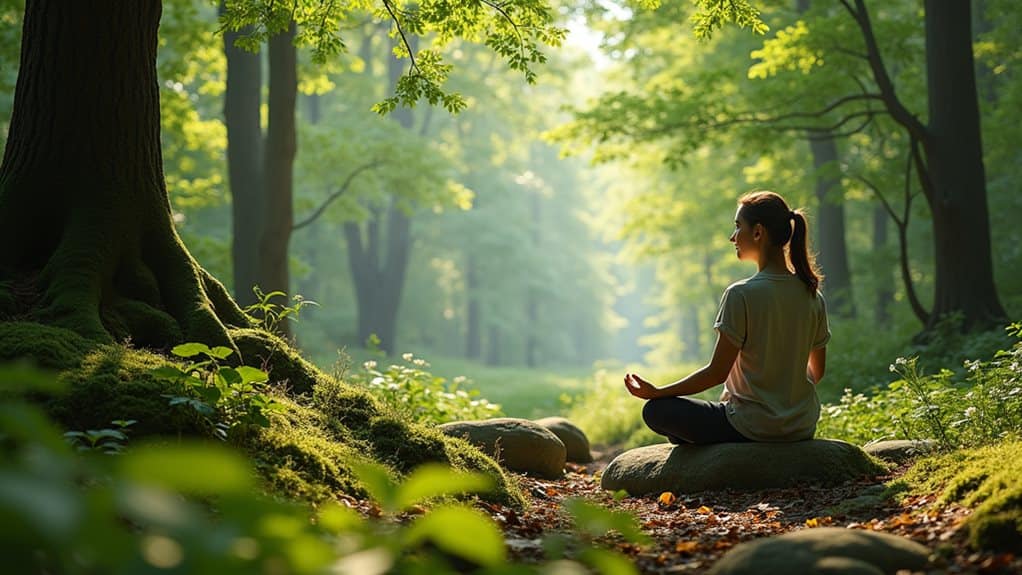
Nature-based therapies have gained recognition as effective tools for supporting long-term mental well-being by nurturing ongoing connection with the natural world.
Engaging regularly in outdoor activities, like gardening or ecotherapy, can lead to sustained mood improvements and emotional resilience.
These therapies often include mindfulness and physical activity, promoting lasting mental health benefits and deeper feelings of connection and purpose.
Why Are Community and Social Activities Important for Sustained Benefits?
Participating in community and social activities outdoors can considerably enhance your mental health over the long term.
Engaging in social interactions during outdoor activities encourages feelings of belonging, strengthens community involvement, and cultivates shared experiences.
These connections create support networks, which are linked to greater resilience, improved mood, and lasting reductions in depression, ultimately contributing to sustained mental health benefits.
Additionally, being in natural environments with minimal human noise can amplify these positive effects by reducing background distractions and promoting mindfulness ambient sound levels.
Tips for Maintaining a Consistent Outdoor Routine for Better Mental Health

Establishing a consistent outdoor routine is essential for reaping ongoing mental health benefits, and the key lies in making outdoor activities a regular part of your schedule.
To support this, aim for at least 15 minutes of outdoor time daily, schedule outdoor activities during the same part of the day, and gradually increase your time outside to promote sustained benefits through regular spending time outside.
Final Note
Incorporating regular outdoor time into your routine can considerably benefit your long-term mental health, especially when combined with social activities and nature-based therapies. Even small changes, like daily walks or outdoor breaks, help reduce stress and improve mood. Overcoming urban barriers and making nature accessible guarantees sustained benefits. By staying consistent and intentional about your outdoor activities, you can cultivate resilience and overall well-being, making nature a beneficial, lasting part of your mental health strategy.


