
When deer lose their antlers each year, it’s a natural process driven by hormonal changes, mainly declining testosterone levels after the breeding season. This causes the blood supply at the pedicle to weaken, leading to the antlers falling off, often with brief bleeding. The shed antlers decompose naturally, releasing essential nutrients back into the environment to support ecosystem health. As a new cycle begins in spring, your understanding of this fascinating seasonal change can deepen further.
TLDR
- Deer shed their antlers annually due to hormonal changes, signaling the end of the growth cycle.
- The shedding process involves weakening the connection at the pedicle, causing the antlers to fall off.
- After shedding, the pedicle begins remodeling, preparing for the next antler growth cycle.
- Shed antlers decompose naturally, releasing nutrients like calcium into the environment.
- The cycle of antler shedding and regrowth supports ecological nutrient cycling and deer reproduction.
Why Do Deer Shed Their Antlers Every Year?

Deer shed their antlers every year as part of a natural cycle driven by hormonal changes within their bodies.
When testosterone levels decline after the breeding season, the shedding process begins. This decrease weakens the connection at the base, causing antler detachment.
Typically, this occurs in late winter, signaling the end of that year’s antler growth cycle. Understanding the antler shedding process helps explain how deer adapt to seasonal changes and prepare for the next cycle of growth.
When Do Deer Usually Drop Their Antlers?
Antler shedding typically occurs between January and March, although the exact timing varies with climate and individual health. As testosterone levels decline after the breeding season, the connection at the pedicle weakens, prompting shedding. You’ll find that most deer drop their antlers during this period, with some shedding as early as late December or as late as April. Antler growth cycle also influences when deer shed their antlers, as the process is part of a natural annual renewal.
How Do Deer Shed Their Antlers : The Biological Process?
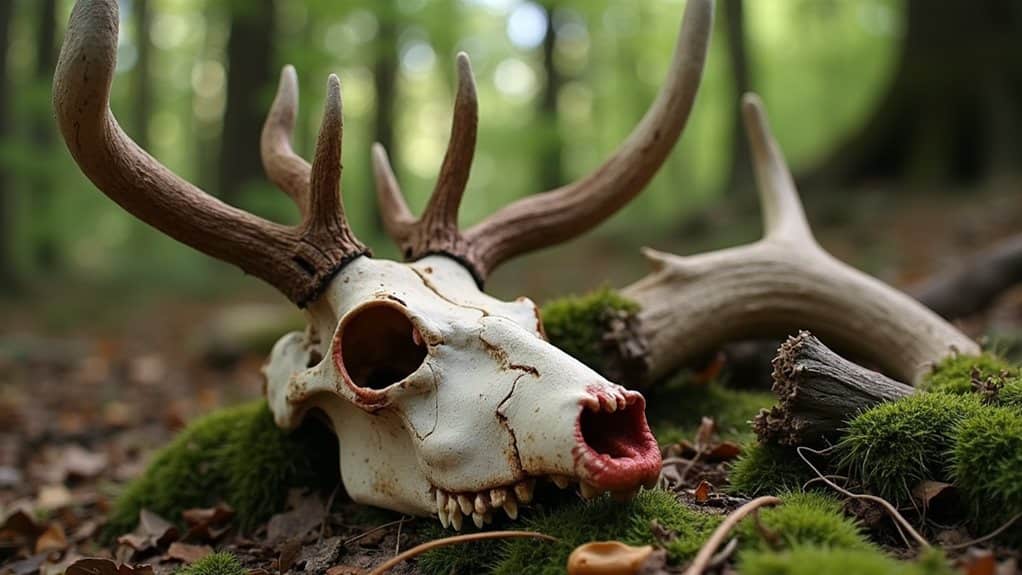
The process of shedding antlers involves a well-coordinated biological mechanism that begins with hormonal changes in the deer’s body.
As hormone levels decline, blood flow reduces at the pedicle, weakening the connection.
Osteoclasts then erode the abscission line, causing the antlers to fall, with brief bleeding.
The pedicle quickly starts remodeling for the next cycle.
How Do Antlers Regrow Each Year?
As daylight hours increase in spring, a complex biological process is triggered that signals the beginning of antler regrowth.
Antler growth starts under the velvet’s cover, which supplies nutrients and blood vessels essential for development.
As calcium is deposited, the antlers rapidly increase in size, eventually shedding the velvet to reveal the hardened bone structure, completing the cycle.
Additionally, this process is closely related to the deer’s hormonal changes, which regulate antler development and overall growth.
What Happens to Shed Antlers in Nature and the Ecosystem?
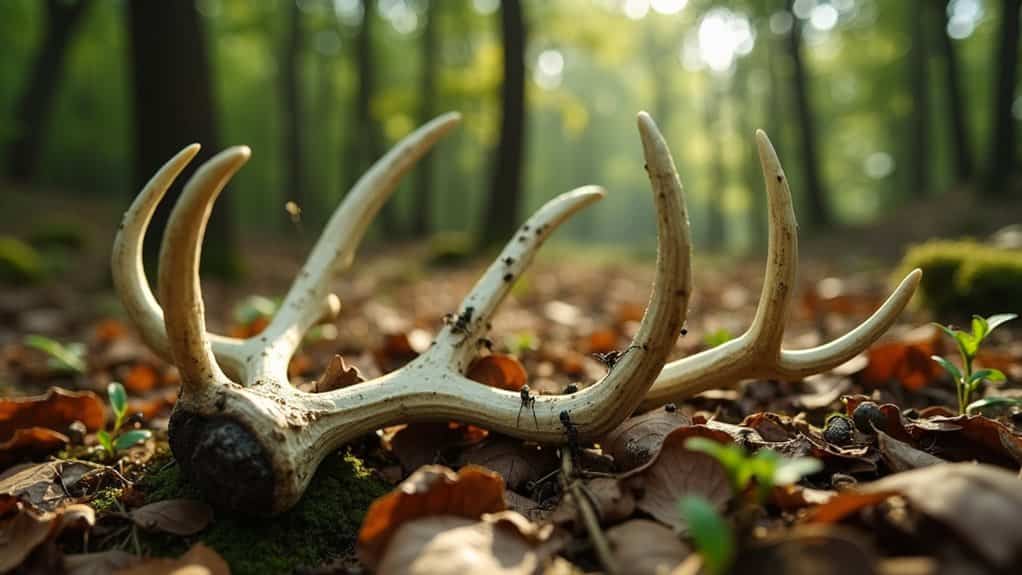
Have you ever wondered what happens to shed antlers once they fall to the ground? Shed antlers decompose naturally, releasing essential nutrients like calcium and phosphorus into the soil, fueling the mineral cycle.
Wildlife, including insects and small animals, gnaw on them for nutrients, supporting ecosystem health and aiding in the natural breakdown process.
Final Note
Understanding the cycle of antler shedding and regrowth helps you appreciate deer biology and their role in ecosystems. Each year, deer shed their antlers after the breeding season, allowing new, stronger ones to grow in their place. This process is driven by hormonal changes and seasonal cues, contributing to natural balance. Recognizing these patterns enhances your awareness of deer behavior and their environmental interactions, promoting a deeper respect for wildlife and the ecosystems they inhabit.


