
Tent zippers often fail because dirt, debris, and salt build up in the teeth, causing jams, misalignment, or wear. To avoid this, regularly clean your zippers with a brush and use lubrication like silicone spray or wax to reduce friction. Proper handling, including gentle zipping and avoiding yanking, also extends their life. Keeping up with maintenance helps guarantee smooth operation, and if you stick around, you’ll uncover key tips to keep your zippers functioning well longer.
TLDR
- Dirt, debris, and salt buildup cause zipper jams and misalignment, leading to failure.
- Regular cleaning and lubrication prevent dirt accumulation and reduce wear on zipper teeth.
- Damaged or worn sliders can cause zippers to separate or malfunction; timely replacement helps.
- For outdoor use, keep zippers free of sand and mud to avoid increased friction and damage.
- Handle zippers gently and avoid yanking to prevent teeth misalignment and slider damage.
Why Do Tent Zippers Fail? The Impact of Dirt and Debris
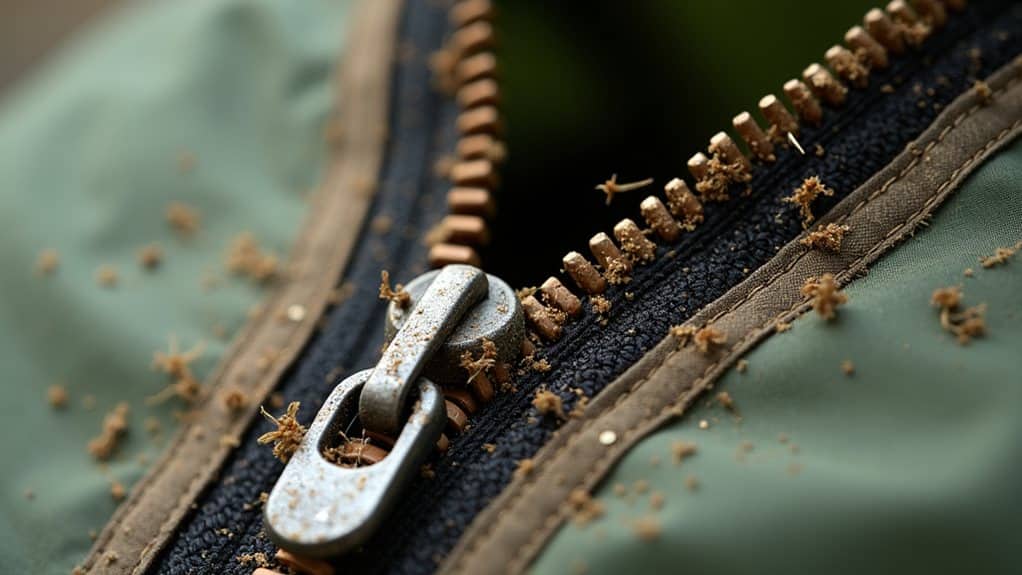
Dirt, grit, and debris are common culprits behind tent zipper failures, especially if they’re not regularly cleaned. Dirt buildup can settle into zipper teeth, causing debris accumulation that jams or stalls the zipper. Using lubrication techniques like applying wax paper, crayons, or candle wax can help maintain smooth zipper operation and prevent issues caused by dirt. Sand or mud particles lodge between teeth, increasing wear and risking breakage. Regular cleaning prevents these issues, ensuring your zipper stays smooth and reliable for every expedition.
How to Recognize When Your Tent Zipper Needs Repair
Recognizing when your tent zipper needs repair is essential to maintaining its functionality and preventing further damage.
Signs of zipper failure include uneven or misaligned teeth, difficulty sliding, or the zipper separating after closing.
Worn or loose sliders, damaged teeth, or debris buildup indicate that zipper maintenance or repairs are needed to keep your tent secure and functional.
Regular inspections can help identify necessary camper types and RV sizes that are more resistant to wear and tear, ensuring longer-lasting zipper components.
Preventing Zipper Failures: Cleaning and Lubrication Tips
Regular cleaning and proper lubrication are essential steps in preventing zipper failures on your tent.
Keep your zippers clean by brushing dirt, grit, and salt from the teeth.
Apply a silicone-based zipper lubricant or Zip Lube to reduce friction.
Rinsing with water and wiping dry, along with smooth zipper glides, helps maintain functionality and extends the life of your zippers.
Using a consistent tension while working on your zippers can help prevent misalignment and ensure smooth operation.
Quick DIY Fixes for Tent Zippers You Can Try Outdoors
When a zipper on your tent starts to stick or refuses to close properly, there are quick outdoor fixes that often restore smooth operation without replacing the entire zipper.
For a sticky zipper, clean debris from the teeth with a toothbrush, lubricate with candle wax or silicone spray, and gently squeeze the slider with pliers to realign the teeth.
A temporary fix can involve attaching a paracord to a broken pull tab.
When and How to Replace Zipper Sliders or the Entire Zipper
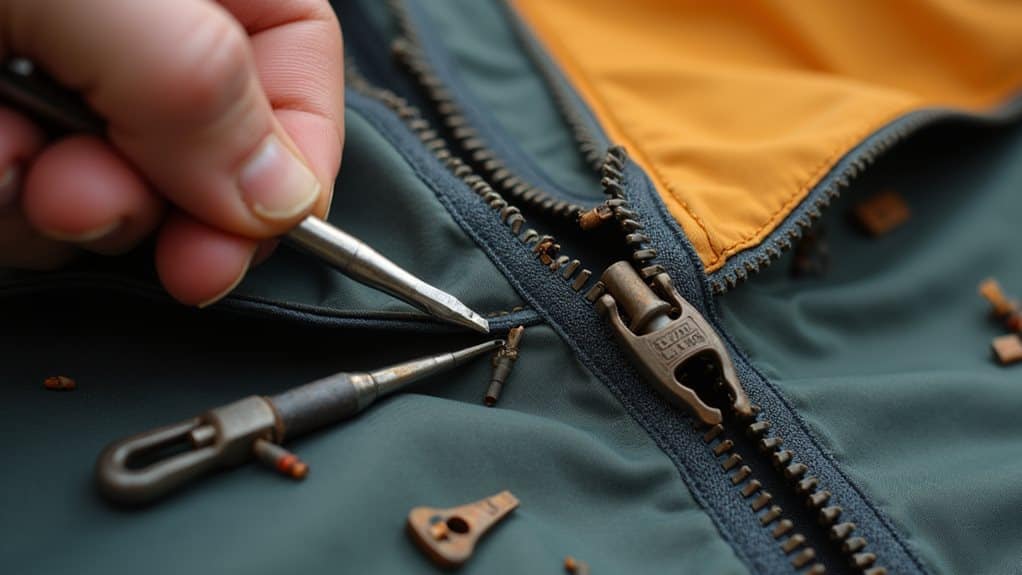
You should consider replacing the zipper slider when it becomes loose, wobbly, or no longer grips the teeth properly, which can cause slipping or difficulty zipping.
If multiple teeth are broken, missing, or the fabric tape is ripped beyond repair, a full zipper replacement is usually necessary.
Matching the new components to the original size and inspecting stamped numbers can help guarantee a proper fit.
Professional repair services are recommended for extensive damage or unsuccessful DIY fixes.
When to Replace Slider
Knowing when to replace a zipper slider is essential for maintaining smooth and reliable zipper function. If the slider becomes loose, wobbly, or fails to grip the teeth properly, it’s time for a replacement.
Check for broken teeth or coils; if these are damaged, replacing just the slider mightn’t suffice. You may need to replace a zipper entirely.
Signs Full Zipper Needed
Are your zipper issues becoming persistent despite attempts to fix the slider? If zipper failures continue, or if teeth are missing, broken, or the tape is ripped, a full zipper replacement is necessary.
Replacing the entire zipper guarantees reliable closure, especially when dealing with a broken zipper or extensive damage that slider repairs can’t fix.
Choosing the Best Tent Zipper Parts for Durability
When choosing tent zipper parts, focus on material quality, as high-grade components like YKK guarantee durability and resistance to corrosion.
Confirm the size and fit are correct, matching slider types with your zipper tape to prevent operational issues.
Buying from reputable sources assures you’re getting genuine parts that will stand up to outdoor use.
Material Quality and Durability
Choosing the right material for your tent zipper is essential for ensuring durability and long-lasting performance. High-quality zippers made from brass or heavy-duty plastic resist corrosion and wear better than cheaper options.
Larger coil sizes, like #5 or #8, enhance strength and longevity. Reputable brands such as YKK provide consistent quality, ensuring your zippers withstand demanding outdoor conditions.
Proper Size and Fit
Selecting the correct size and fit for your tent zipper parts is essential for guaranteeing long-term durability and smooth operation.
You need a zipper size that matches your tent’s requirements, and a zipper slider that fits properly.
Using incompatible or mismatched parts can cause misalignment, jamming, and premature wear, so always make certain your components work together for a secure, reliable closure.
Trusted Part Sources
Reliable sources for tent zipper parts are essential to guarantee durability and proper function over time. Trusted sources like LenZip and Tarptent offer high-quality sliders and replacement components that resist wear, especially in demanding outdoor conditions.
Choosing zipper replacement parts from authorized distributors guarantees authentic, compatible, and long-lasting sliders. This helps you extend your tent’s lifespan and prevent costly repairs.
Handling Tent Zippers Properly to Avoid Damage
Handling tent zippers properly is essential to prevent damage and prolong their lifespan. Always handle zippers gently, avoiding yanking or forcing them, especially if they’re sticky or jammed. Use appropriate pulls or tabs, keep zippers clean, and lubricate when needed. Fully closing zippers before packing reduces stress, helping you handle zippers properly and prevent damage. Acknowledging the importance of group behavior in animals like turkeys can remind us to treat our gear with patience and care, ensuring it remains in good condition.
Ongoing Maintenance Tips for Smooth, Long-Lasting Zippers
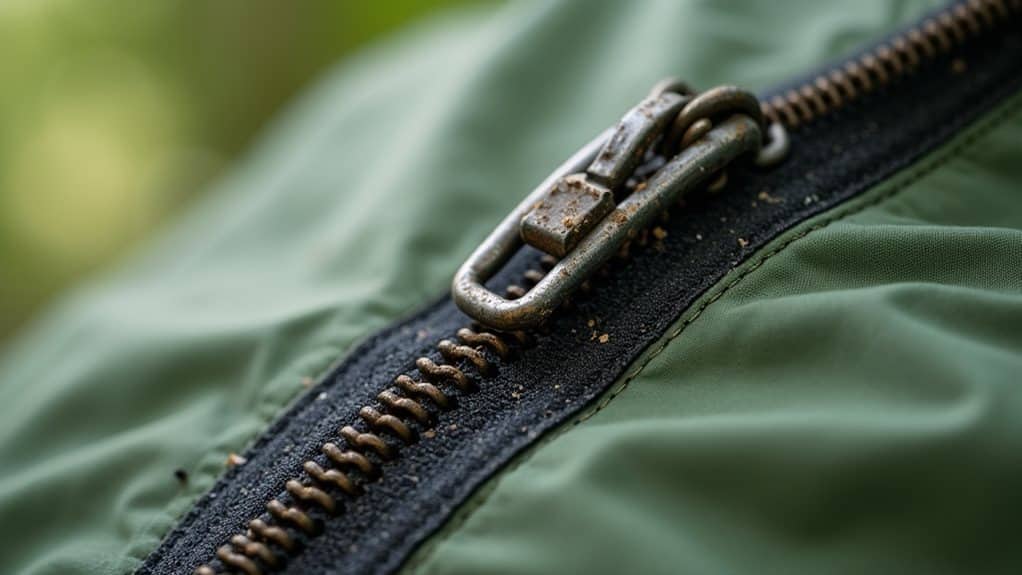
Maintaining your tent zippers regularly is key to ensuring they operate smoothly and last longer. You should clean the zipper with mild soap and water, then dry it thoroughly. Applying a silicone-based lubricant or zipper-specific wax after cleaning reduces friction, prevents sticking, and keeps the zipper moving freely. Periodically lubricate the zipper, especially after exposure to dirt or salt, to help maintain flexibility and longevity. Incorporating non-refrigerated food options into your camping routine can also minimize the need to open and close your tent frequently, reducing wear on the zippers.
Final Note
Regularly clean and lubricate your tent zippers to prevent dirt buildup and guarantee smooth operation. Handle zippers gently to avoid damage, and replace sliders or zippers promptly if they show signs of wear. Using high-quality parts and proper maintenance can extend their lifespan considerably. By staying attentive to zippers’ condition and performing routine care, you’ll keep your tent functioning reliably, protecting your investment and making outdoor experiences more comfortable and hassle-free.


