
Blisters while hiking mainly occur due to friction and shear stress between your foot and the shoe, often caused by poor fit, excessive moisture, or heat buildup. When shoes are too tight or too loose, your foot moves inside, increasing skin stress, which weakens the skin’s barrier. Repetitive rubbing and moisture from sweat further accelerate blister formation. Managing these factors and choosing proper footwear reduces risk, and exploring further can equip you with even more effective prevention tips.
TLDR
- Friction between the foot and shoe generates heat and shear stress, leading to blister formation.
- Excess moisture softens skin, increasing susceptibility to blisters from repeated rubbing.
- Poor shoe fit causes internal foot movement and shear forces that damage skin tissue.
- Hot spots from localized pressure and friction signal early blister development.
- Skin damage from shear stress weakens the protective barrier, making blisters more likely.
What Causes Friction and Shear Stress in Hiking Shoes: and How to Minimize Them
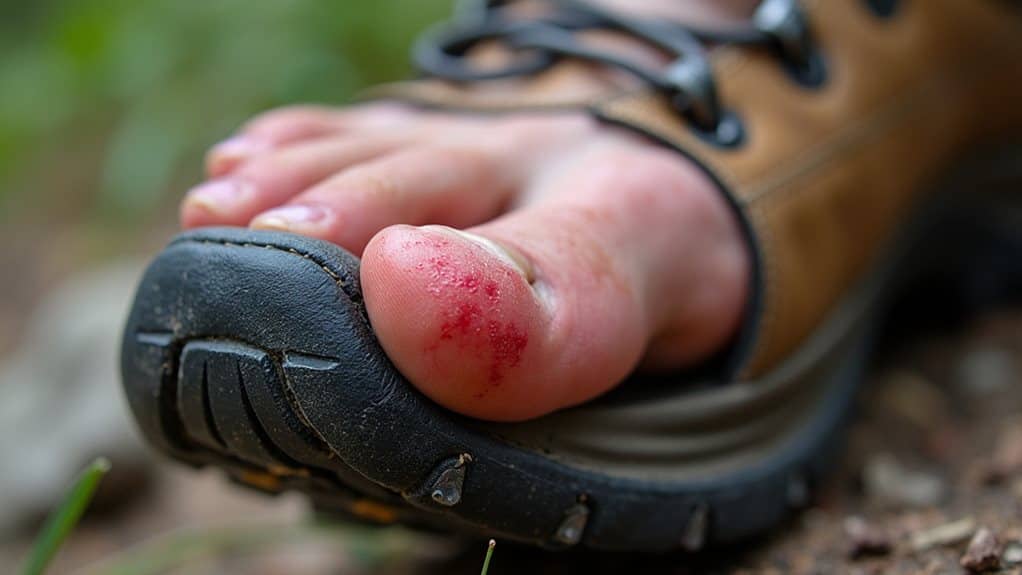
Friction and shear stress are common issues that can lead to blisters while hiking, and understanding what causes them is essential for prevention.
Excessive moisture softens the skin, increasing blister formation, while poor shoe fit and inadequate lacing allow unnecessary foot movement.
Ensuring proper fit, good foot support, and keeping feet dry reduces shear stress and minimizes skin damage.
Additionally, selecting appropriate footwear suited for your activity and terrain can further diminish the risk of blisters caused by proper footwear selection.
Why Poor Shoe Fit and Foot Movement Inside Shoes Increase Blister Risk
When your shoes don’t fit properly, it can lead to significant internal foot movement that increases the blister risk. Poor shoe fit causes foot slide and internal friction, as shear forces act on the skin, creating pressure points. Tight shoes restrict natural foot motion, leading to localized shear stress and blister formation beneath the shoe lining, raising your risk during hikes. Additionally, choosing an outdoor shower enclosure that fits well and allows comfortable movement can help prevent foot injuries caused by improper footwear.
Hot Spots: Early Signs That Blisters Are Coming
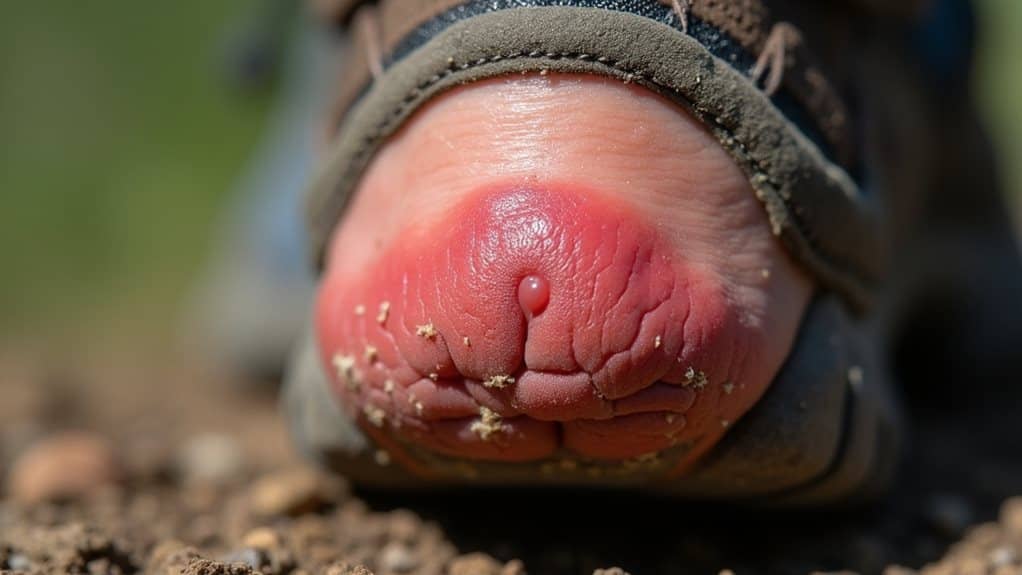
Hot spots are early warning signs that your skin is under stress and a blister may be on its way. Look for redness, tenderness, or warmth, which indicate increased friction and skin stress. Using appropriate protective gear like padded socks or tape can help reduce friction and prevent hot spots from developing into blisters. Recognizing hot spots warning signs enables hot spot management, such as drying and protecting the area, to prevent blisters and avoid painful, prolonged discomfort during your hike.
How Moisture and Heat Accelerate Blister Formation (And How to Manage Them)
Moisture and heat play significant roles in speeding up blister formation during hiking. Sweat and dampness weaken the skin barrier, making it more prone to friction and skin damage. Incorporating a first aid kit checklist pdf can help ensure you have the necessary supplies to treat blisters promptly. Excess heat increases tissue stress, causing maceration and microscopic tears. Managing moisture with moisture-wicking gear and proper ventilation helps reduce skin damage and delays blister development.
How Callouses and Skin Damage Affect Your Blister Risk
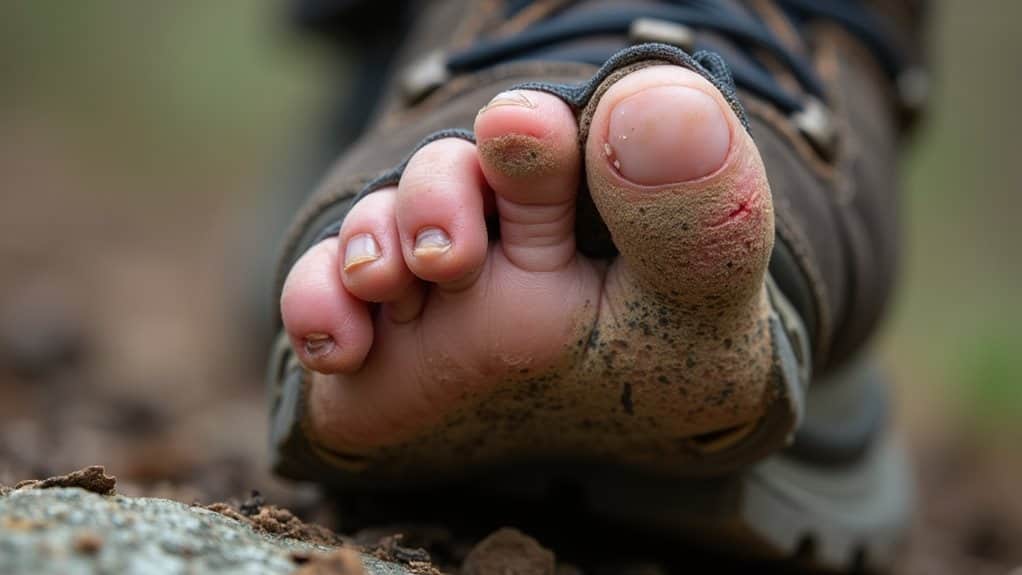
Callouses develop from repeated skin movement and signal areas experiencing high shear stress, which can actually increase your risk of blisters during sudden activity changes.
Contrary to popular belief, they don’t offer protection; instead, they highlight spots where your skin is more vulnerable.
Additionally, skin damage beneath callouses can weaken the skin’s barrier, making it easier for blisters to form and harder to treat existing ones effectively.
Understanding how footwear fit impacts skin health can help prevent blister formation and reduce skin damage during hikes.
Callouses Indicate Shear Stress
While callouses often develop as a natural response to repeated friction, they aren’t simply protective shields; instead, they serve as indicators of where your skin undergoes frequent shear stress.
These high shear zones cause skin deformation, making areas vulnerable to skin tears and blister formation.
Removing callouses without addressing shear increases skin vulnerability during sudden activity spikes.
Callouses Don’t Prevent Blisters
Although callouses form as a response to repeated shear stress to protect your skin, they don’t actually prevent blisters from developing. Calloused areas still experience shear forces, which can cause skin tears and blister formation.
Removing callouses without addressing underlying shear stress may increase blistering risk and hide skin damage, making blister prevention more difficult.
Skin Damage Increases Risk
Skin damage from shear forces plays a significant role in increasing your risk of blisters during hiking. Shear stress causes microscopic tears that weaken skin integrity, making blister formation more likely.
Callouses can mask hot spots, delaying detection, while uneven shear forces accelerate skin damage, ultimately raising the blister risk. Managing shear stress helps protect your skin and prevent blisters.
How Sock Choices and Shoe Conditions Impact Blister Development
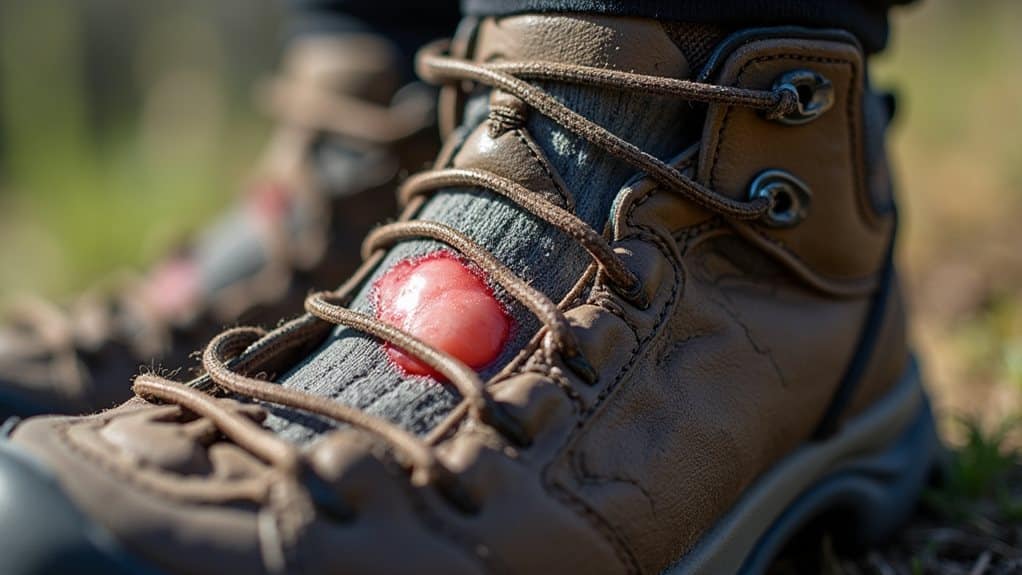
Your choice of socks and the condition of your hiking shoes play an essential role in preventing blisters on the trail. Proper footwear and sock choices, like moisture-wicking socks and fitting shoes, reduce blister causes by minimizing friction, pressure points, and moisture retention. This combination helps lower blister development, ensuring a more comfortable, blister-free hike through well-maintained, proper footwear. Incorporating instant meal options can also help maintain energy and hydration levels, supporting overall foot health on long hikes.
Final Note
To prevent blisters while hiking, prioritize proper footwear fit, choose moisture-wicking socks, and monitor hot spots early. Keep your feet dry and well-ventilated, and replace worn shoes promptly. Understanding how friction, heat, and skin condition contribute to blister formation allows you to take proactive steps, reducing discomfort and injury. With attentive preparation and mindful foot care, you can enjoy your hike with fewer worries about blisters disrupting your journey.


